

Illustrative patient and clinician discussing tooth spacing with a dental study model
Cosmetic Dentistry

Treatment for Gapped Teeth in Caledon

The bonding that closed your gap years ago has chipped, darkened at the edge, or started to look a little bulky. Treatment for gapped teeth in Caledon includes reviewing earlier work: whether to repair it, replace it, try a different approach, or let the space return.

Revisiting earlier gap treatment in Caledon

Repair it, redo it, or rethink it

Composite used to close a gap does not last forever. Over the years it can chip at the corners, pick up stains along the join, or start to feel thick when you run your tongue across it. When that happens, there are several reasonable paths, and the right one depends on the condition of the bonding, the teeth underneath, and what you would like now.

It also helps to revisit why the space was there in the first place. A diastema may have been a natural feature, related to tooth size, or connected to something that has since changed. If the teeth have shifted or the gums have altered, simply rebuilding the old work may not be the best answer. Movement, new bonding, a combination, or keeping the space are all worth comparing.

For households in Bolton and the villages across Caledon, one appointment can cover both the old restoration and the bigger picture. Bring what you remember about the original treatment. You will hear our findings and a plain list of the options, including letting a healthy gap return if that is what you would prefer.

Review earlier gap treatment
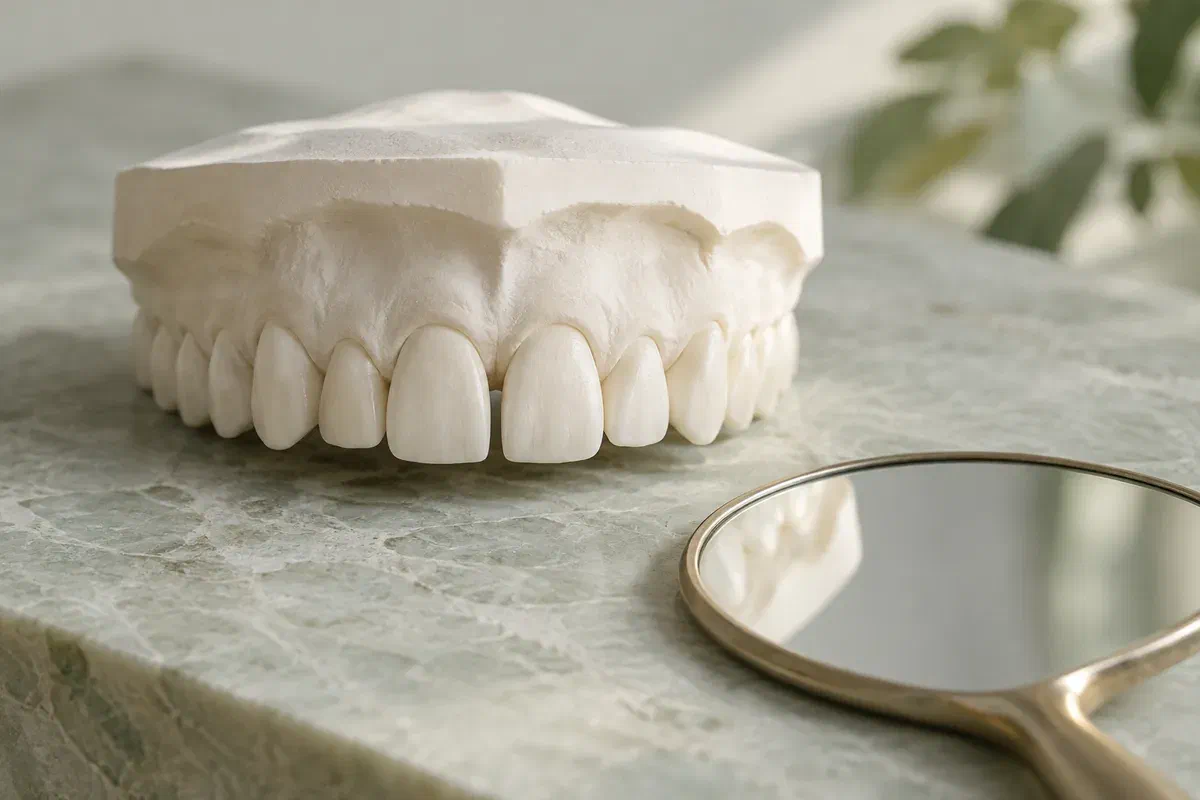
Illustrative upper dental cast with a small space between the central incisors beside a mirror
Signs the old work needs a look

Chips, stains, and changes underneath

Describe what has changed about the bonding, the gap, or the teeth around it, and mention any symptoms. Visible wear on a restoration can sit on top of other changes.

Bonding that has worn but the gap is steady

If the teeth have not moved and only the material has aged, the question is how to refresh it. Ask whether a repair, a full replacement, or a slimmer addition would suit you, and how each would affect the width and look of the teeth.

A space reopening beside the bonding

A gap appearing next to old work, or the teeth feeling different, may mean movement or gum changes. Mention bleeding, looseness, or soreness. The teeth and supporting tissues need assessment before the restoration is redone.

Old work around a small or missing tooth

Bonding is sometimes used to build up a narrow tooth beside a gap. If a tooth has since been lost, or the arrangement has changed, a different plan may be needed. Ask how space would now be shared across the smile.

Children's spacing is often part of normal development, and early bonding is rarely the first step. Ask whether a young person's gap simply needs monitoring.

Why reassess before replacing

The old answer may not be today's best one.

Replacing tired bonding like-for-like is sometimes ideal and sometimes not. The teeth may have shifted, your preferences may have changed, or a different approach might now give a slimmer, more balanced result. Orthodontic movement could reduce how much material is needed; a small repair might be enough. A review compares those possibilities before anything is removed.

Looking at the whole arch helps here too. Changes in the bite, a missing tooth, or new spacing elsewhere can all influence what should happen at the front. Understanding those links first means the next restoration is planned around the mouth as it is now.

An honest look at the old restoration

Ask what condition the bonding is in, whether the tooth underneath is healthy, and which findings need further records. That tells you whether repair, replacement, or another route makes sense.

Fresh options, not just a repeat

Ask whether moving teeth first, adjusting space toward a planned restoration, or choosing a different amount of material would suit you better now. Each stage should have a clear aim.

Realistic expectations for the next round

New bonding will also age, and moved teeth need retention. Ask how often reviews would happen, what typically leads to repair, and which fees are included.

How a review works

Check what is there, then plan what comes next.

The number of visits depends on the findings and the route chosen. Ask what the first appointment includes and whether further records or a specialist opinion may help.

  1. Describe the original treatment

    Tell us roughly when the gap was bonded, whether you had braces before or after, and whether you wore a retainer. Mention lost teeth or other work nearby. Share what you liked about the old result and what you would change.

  2. Examine the bonding and the teeth beneath

    The clinician checks the restoration, tooth health, gums, positions, and contacts. Records such as photographs or X-rays may help. Ask whether anything else needs treating first and how that affects timing.

  3. Compare repair, replacement, and alternatives

    Each realistic route is discussed with what it involves, its risks, upkeep, fees, and limits, so you can see how the visible teeth would change in width and position. If more than one clinician would be involved, clarify who plans the final result.

  4. Set up reviews for the new arrangement

    Once the work is done, we check how it feels, how it looks, and whether floss passes cleanly. Retention is arranged if teeth were moved, and a review rhythm is agreed for the new composite. If a space appears again, ask for reassessment before redoing the work.

Making new work last

Small habits help bonding age well.

Guidance differs depending on whether you had new bonding, tooth movement, or decided to let the gap return. Ask for instructions that suit the treatment you received.

Clean the margins carefully

Stains often start where bonding meets the tooth. Ask which brush and flossing technique suit the new edges. Mention food catching, floss tearing, or roughness, as early adjustments can help.

Hold any movement in place

If teeth were repositioned before rebonding, wear the retainer as instructed and ask about checks and replacement. Get in touch soon if it breaks or stops fitting. Avoid bands or other improvised methods.

Watch for the old warning signs

Chipping, darkening at the join, or a gap reappearing are all reasons to book a review. The cause should be looked at before assuming more material or more movement is the answer. Ask how to protect the edges, for example if you clench.

Patient information: British Orthodontic Society — maintaining positions with retainers

Choices for a previously closed gap

More than one way forward

Ask what each route would change about tooth position, shape, and future care. Worn bonding does not automatically mean veneers or orthodontics are needed.

When repositioning could reduce material

Moving teeth before rebonding

Orthodontic movement may close some space or arrange room so less material is needed. Discuss the bite, the appliance, and retention. Consider the full spacing pattern so the new result fits the whole arch.

When refreshing material suits the teeth

Repairing or replacing the bonding

A repair or new bonding may suit if the teeth are healthy and steady. Ask how wide the teeth would be, how the margins would clean, and how often reviews are needed. If veneers are suggested, ask why fuller coverage would help.

When oral health or a change of mind leads

Health care first, or letting the gap return

Gum problems or a lost tooth nearby may need dealing with before new work. You might also choose to have the old bonding removed and keep a healthy space. Ask what monitoring would follow.

Caledon questions about earlier bonding

When old gap treatment needs attention

Reviewing earlier work often raises questions about repair, replacement, and alternatives. You do not need to decide on anything before your visit.

(905) 876-4488
Can chipped bonding on a gap be repaired rather than replaced?
Sometimes. It depends on the extent of the chip and the condition of the remaining material. Ask what a repair would involve and how it compares with replacement.
Why has the edge of my bonding turned darker?
Staining can build up where composite meets the tooth over time. The clinician can check whether it is surface staining or a sign that the restoration needs attention.
If I remove old bonding, will my gap come back?
Usually the original space would be revealed, as long as the teeth have stayed where they were. Ask how it would look and whether that is an outcome you would be comfortable with.
Could braces or aligners mean less bonding next time?
Possibly. Moving teeth closer can reduce the space that material needs to fill. Ask whether that approach suits your bite and how long retention would be needed.
Is it normal for bonding to feel bulky after many years?
Wear, staining, or changes in the teeth can alter how a restoration feels. Mention it at your appointment so the shape and contacts can be checked.
Can a review of old bonding be combined with my regular checkup?
Often, yes. Mention it when booking so time can be set aside, which can be helpful if you are travelling from Caledon.
Spacing care for Caledon

Bring the old work and your new goals.

Visit our Bronte Street practice to have earlier gap treatment reviewed and to talk about what you would like now. We will explain the findings and compare repair, replacement, movement, or monitoring options with you.

The condition of earlier work, oral health, treatment suitability, timing, and fees require individual assessment. Letting a healthy gap return is a valid choice.

Visit Milton Dental Clinic
Unit 1, 342 Bronte St. S, Milton, ON L9T 5B7
Get directions Clinic hours
Monday–Thursday
11am–7pm
Friday–Sunday
By appointment only

Areas we serve

  • Milton
  • Oakville
  • Mississauga
  • Georgetown
  • Halton Hills
  • Acton
  • Campbellville
  • Brampton
  • Burlington
  • Puslinch
  • Rockwood
  • Erin
  • Caledon
  • Etobicoke
  • Old Milton
  • Bronte Meadows
  • Timberlea
  • Dorset Park
  • Dempsey
  • Clarke
  • Beaty
  • Coates
  • Harrison
  • Scott
  • Willmott
  • Ford
  • Bowes
  • Cobden
  • Walker
  • Mountain View
  • Milton Heights
  • Hawthorne Village
  • Valley View
  • Fallingbrook
  • Nassagaweya
  • Trafalgar
  • Esquesing
  • Nelson
  • Brookville
  • Moffat
  • Glen Williams
  • Norval
  • Limehouse
  • Stewarttown
  • Ashgrove
  • Hornby
  • Silver Creek
  • Speyside
  • Scotch Block
  • North Oakville
  • River Oaks
  • Glen Abbey
  • West Oak Trails
  • Palermo
  • Bronte Creek
  • College Park
  • Joshua Creek
  • Uptown Core
  • Preserve
  • Iroquois Ridge
  • Lisgar
  • Meadowvale
  • Meadowvale Village
  • Churchill Meadows
  • Erin Mills
  • Central Erin Mills
  • Streetsville
  • East Credit
  • Creditview
  • Heartland
  • Sheridan
  • Mount Pleasant
  • Credit Valley
  • Huttonville
  • Churchville
  • Springbrook
  • Northwest Brampton
  • Bram West
  • Fletcher's Meadow
  • Fletcher's Creek South
  • Alton Village
  • Orchard
  • Millcroft
  • Headon Forest
  • Tansley
  • Brant Hills
  • Tyandaga
  • Kilbride
  • Lowville
  • Aberfoyle
  • Morriston
  • Arkell
  • Hillsburgh
  • Freelton
  • Carlisle
  • Waterdown
  • Flamborough
  • Mountsberg

How can we help?

Milton Dental Clinic

Have a question about your smile? Choose the option that works best for you.

For urgent dental concerns, please call.
Messages are reviewed during clinic hours.