

Illustrative patient and clinician discussing tooth spacing with a dental study model
Cosmetic Dentistry

Treatment for Gapped Teeth in Campbellville

Someone mentioned the little fold of tissue under your lip, or suggested a procedure, and now you are not sure what the gap really needs. Treatment for gapped teeth for Campbellville adults sorts out the cause first, so any recommendation makes sense to you.

Campbellville, clearing up the cause

Understand the recommendation before you accept it.

Front gaps have several possible explanations, and the band of tissue that joins the upper lip to the gum is only one of them. Tooth size, the way the teeth have grown in, the bite, gum health, and missing teeth can all play a part. When a procedure is suggested, you are entitled to understand why it would help and whether it is truly needed.

A diastema can also be nothing more than a feature of your smile. Where people do want a change, the options range from moving teeth to adding material to dealing first with an underlying cause. These approaches affect proportions, contacts, cleaning, and the bite differently, and the right order depends on what an assessment finds.

For a household in Campbellville, it can make sense to plan a visit that covers the questions in one go. Bring any notes or recommendations you have been given. We will explain our own findings, which factors seem to be involved, and the options that follow, including leaving a healthy, stable gap as it is.

Get a clear view of the cause
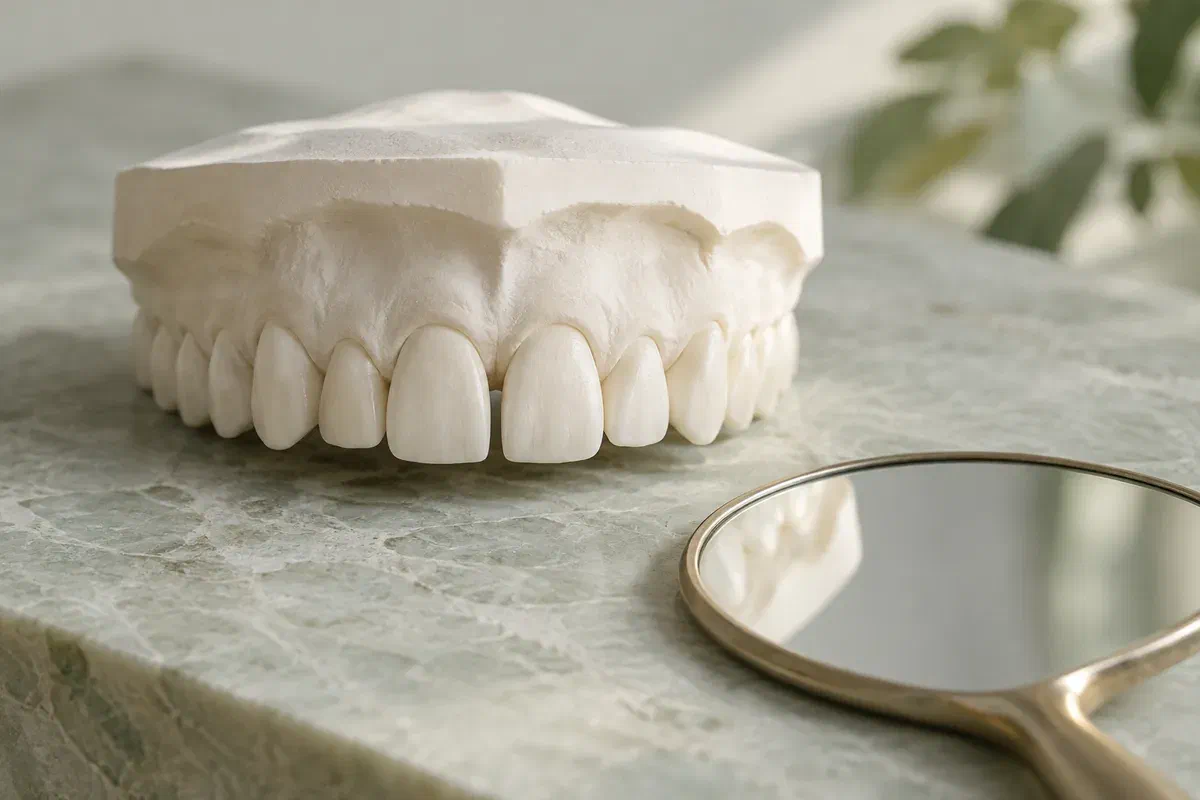
Illustrative upper dental cast with a small space between the central incisors beside a mirror
Possible contributors

More than one thing can hold teeth apart.

Describe which spaces you notice, how they have changed, and any symptoms. The appearance of a front gap is not enough on its own to show why it is there.

A gap you have had for as long as you remember

If you want to change a lifelong space, think about whether you would prefer it closed, narrowed, or shared more evenly. Ask how each would affect the width of your front teeth and whether any contributing factor would need addressing first.

Spacing that has widened or is new

Changes like this point toward the teeth and their supporting tissues as the first place to look. Mention bleeding, looseness, soreness, or shifts elsewhere. A cosmetic or tissue procedure should not be chosen before this has been assessed.

Space around a narrow or absent tooth

The size and presence of the teeth on either side of a gap can explain a lot. Restoring or replacing a tooth could sit in the plan next to orthodontic work. Find out where the leftover room would end up once everything is finished.

Young children commonly have a gap between the upper front teeth while others are still coming in. Ask whether a child's space should simply be monitored before any treatment is considered.

What an assessment can sort out

A reasoned plan rather than a single assumption

The most useful outcome of a consultation is an explanation you can follow. If the lip tissue is thought to play a role, you should hear why, what else was considered, and how any procedure would fit with closing or keeping the gap. If other factors are more important, the plan should reflect them instead.

Treatment choices then build on that reasoning. Orthodontic movement changes where teeth sit; bonding changes how wide they look. Considering the whole arch, the bite, and any health needs before starting helps you avoid treating a symptom while missing the cause.

A plain-language account of the findings

Ask whether the gap appears stable or linked to something that needs care, and which factors seem to be contributing. Clarify what is certain and what would need further records or an opinion from another clinician.

Options that connect to the cause

Ask how closing, narrowing, or moving space would relate to what was found. Sometimes room is moved toward a future restoration rather than closed immediately. Each stage should have a clear reason behind it.

An outline of what follows treatment

Retainers often follow movement, and bonded additions may need repair in time. Ask what review visits involve and which fees are included. Upkeep is part of the plan, not something to learn afterwards.

Steps to a clear answer

Hear the reasoning at every stage.

The number of visits depends on the findings and the approach you choose. Ask whether your first appointment is a consultation only and whether records or a specialist view might be recommended.

  1. Share what you have been told

    Bring any previous recommendations and describe the gap's history. Mention earlier braces, bonding, lost teeth, or retainers. Explain what you like about your smile so it is kept in mind throughout planning.

  2. Examine all the contributing factors

    The clinician looks at the teeth, gums, lip tissue, positions, and contacts. Photographs, models, or X-rays may be suggested. Ask which factors seem most important and whether anything should be treated first.

  3. Discuss options and why they are suggested

    We go through what each suitable route would involve: preparation, possible risks, fees, upkeep, and what it cannot do. You can ask how it would alter the width and position of your front teeth. If a tissue procedure or specialist is involved, ask how it fits the sequence.

  4. Follow up and maintain the result

    During and after treatment, discuss comfort, appearance, cleaning, and contacts. Confirm retention if teeth moved and a review plan for any bonding. If spacing returns, ask for reassessment before adding further treatment.

After any treatment

Follow the plan that matches the care you had.

Movement, bonding, a tissue procedure, or monitoring each come with their own instructions. Ask for guidance written for the treatment actually provided.

Keep the area clean and comfortable

Once spacing changes, the way you clean between those teeth may need to change. Ask which tool suits the new contacts. Report food lodging, floss catching, or anything that feels rough or sore.

Stick with retention after movement

If teeth were moved, wear your retainer as directed and ask about cleaning and checks. Contact the provider promptly if it is lost, damaged, or no longer fits. Do not try improvised methods such as bands at home.

Mention new spaces or changes to bonding

Bonding may wear or stain, so ask which changes should prompt a visit. If the gap widens again or a new space appears, the cause should be reconsidered before more material or movement is used.

Patient information: British Orthodontic Society — maintaining positions with retainers

Possible routes

Choose with the cause in view.

Ask what each route changes about tooth position, shape, and later care. Neither a gap nor the tissue beneath the lip automatically means that a procedure, veneers, or orthodontics is required.

When repositioning suits the findings

Orthodontic movement

Moving teeth may close spaces or arrange room for another restoration. Discuss the bite, the appliance, and how the result would be retained. The full spacing pattern matters, so treating one gap does not leave the overall arrangement unclear.

When adding width is appropriate

Bonding at the gap

Tooth-coloured material may suit some gaps and tooth shapes. Ask about final width, cleaning, preparation, and upkeep. If veneers are suggested, ask why fuller coverage would be preferable and what a smaller addition could achieve.

When health, tissue, or preference comes first

Addressing a contributing factor, or keeping the gap

Gum care, a tissue assessment, or evaluation of a missing tooth may come before closure. Leaving a healthy space alone is also an option. If you go that way, agree on how it will be watched and which changes mean booking again.

Campbellville questions about gap causes

What lies behind a front gap?

Questions about causes often come before questions about treatment. You do not need to have decided anything before your visit.

(905) 876-4488
What is the band of tissue under my upper lip, and does it cause gaps?
It is a normal fold of tissue that attaches the lip to the gum. In some people it may be considered as a factor in spacing, but not in everyone. Its role needs assessment rather than assumption.
I was told I need a tissue procedure. Should I get another opinion?
It is reasonable to want a clear explanation. Ask why the procedure is recommended, what alternatives exist, and how it fits with any plan to close or keep the gap.
Can a front gap be caused by the way my teeth meet?
The bite can play a role in some cases. An examination of how the jaws meet and the positions of the teeth can help clarify whether it contributes to your spacing.
Would closing the gap without addressing the cause last?
It depends on what the cause is. Ask whether an underlying factor would make the space likely to return, and how retention or other care would be planned.
Can I arrange my assessment and any records in one trip from Campbellville?
Mention it when you book. Where records such as photographs or X-rays are needed, they can often be taken at the same appointment if time allows.
Is a gap between my lower teeth assessed the same way?
Similar factors are considered, including tooth size, position, gum health, and the bite. Mention all the spaces you notice so the whole arrangement can be looked at together.
Gap assessment for Campbellville

Get an explanation you can follow.

Bring your questions to our Bronte Street practice and we can go over the gap, any recommendations you have received, and the change you would want. We will explain what we find and compare movement, bonding, cause-focused care, or monitoring.

The cause of spacing, oral health, treatment suitability, timing, and fees need individual assessment. Keeping a healthy gap is always a valid choice.

Visit Milton Dental Clinic
Unit 1, 342 Bronte St. S, Milton, ON L9T 5B7
Get directions Clinic hours
Monday–Thursday
11am–7pm
Friday–Sunday
By appointment only

Areas we serve

  • Milton
  • Oakville
  • Mississauga
  • Georgetown
  • Halton Hills
  • Acton
  • Campbellville
  • Brampton
  • Burlington
  • Puslinch
  • Rockwood
  • Erin
  • Caledon
  • Etobicoke
  • Old Milton
  • Bronte Meadows
  • Timberlea
  • Dorset Park
  • Dempsey
  • Clarke
  • Beaty
  • Coates
  • Harrison
  • Scott
  • Willmott
  • Ford
  • Bowes
  • Cobden
  • Walker
  • Mountain View
  • Milton Heights
  • Hawthorne Village
  • Valley View
  • Fallingbrook
  • Nassagaweya
  • Trafalgar
  • Esquesing
  • Nelson
  • Brookville
  • Moffat
  • Glen Williams
  • Norval
  • Limehouse
  • Stewarttown
  • Ashgrove
  • Hornby
  • Silver Creek
  • Speyside
  • Scotch Block
  • North Oakville
  • River Oaks
  • Glen Abbey
  • West Oak Trails
  • Palermo
  • Bronte Creek
  • College Park
  • Joshua Creek
  • Uptown Core
  • Preserve
  • Iroquois Ridge
  • Lisgar
  • Meadowvale
  • Meadowvale Village
  • Churchill Meadows
  • Erin Mills
  • Central Erin Mills
  • Streetsville
  • East Credit
  • Creditview
  • Heartland
  • Sheridan
  • Mount Pleasant
  • Credit Valley
  • Huttonville
  • Churchville
  • Springbrook
  • Northwest Brampton
  • Bram West
  • Fletcher's Meadow
  • Fletcher's Creek South
  • Alton Village
  • Orchard
  • Millcroft
  • Headon Forest
  • Tansley
  • Brant Hills
  • Tyandaga
  • Kilbride
  • Lowville
  • Aberfoyle
  • Morriston
  • Arkell
  • Hillsburgh
  • Freelton
  • Carlisle
  • Waterdown
  • Flamborough
  • Mountsberg

How can we help?

Milton Dental Clinic

Have a question about your smile? Choose the option that works best for you.

For urgent dental concerns, please call.
Messages are reviewed during clinic hours.