

Illustrative patient and clinician discussing tooth spacing with a dental study model
Cosmetic Dentistry

Treatment for Gapped Teeth in Milton

You may have noticed the space between your front teeth in a photo, or you may have lived with it happily for years. Treatment for gapped teeth in Milton starts with understanding why the space is there and whether changing it, shrinking it, or leaving it suits you.

Spacing, explained close to home

A gap is part of your smile until you decide otherwise.

Plenty of people first think seriously about a tooth gap after seeing a family picture or a video call. Dentists call a space like this a diastema, and on its own it is not a sign that something is wrong. Some smiles carry one comfortably for life. The useful starting point is to learn whether yours is stable and healthy, or linked to a change that deserves a closer look.

When someone does want a change, there is more than one way to get there. Teeth can be moved, material can be added to their edges, or the two approaches can be combined. Each route shifts the width of the teeth, the way they touch, the bite, and the cleaning routine in its own way, so the plan has to begin with the source of the space.

For a Milton household fitting a dental visit between school runs and work, a first appointment can simply be a conversation. Tell us when you first noticed the gap and whether it has changed. We will explain what we find and which options are worth considering, and keeping a healthy space is always one of them.

Talk through the space in your smile
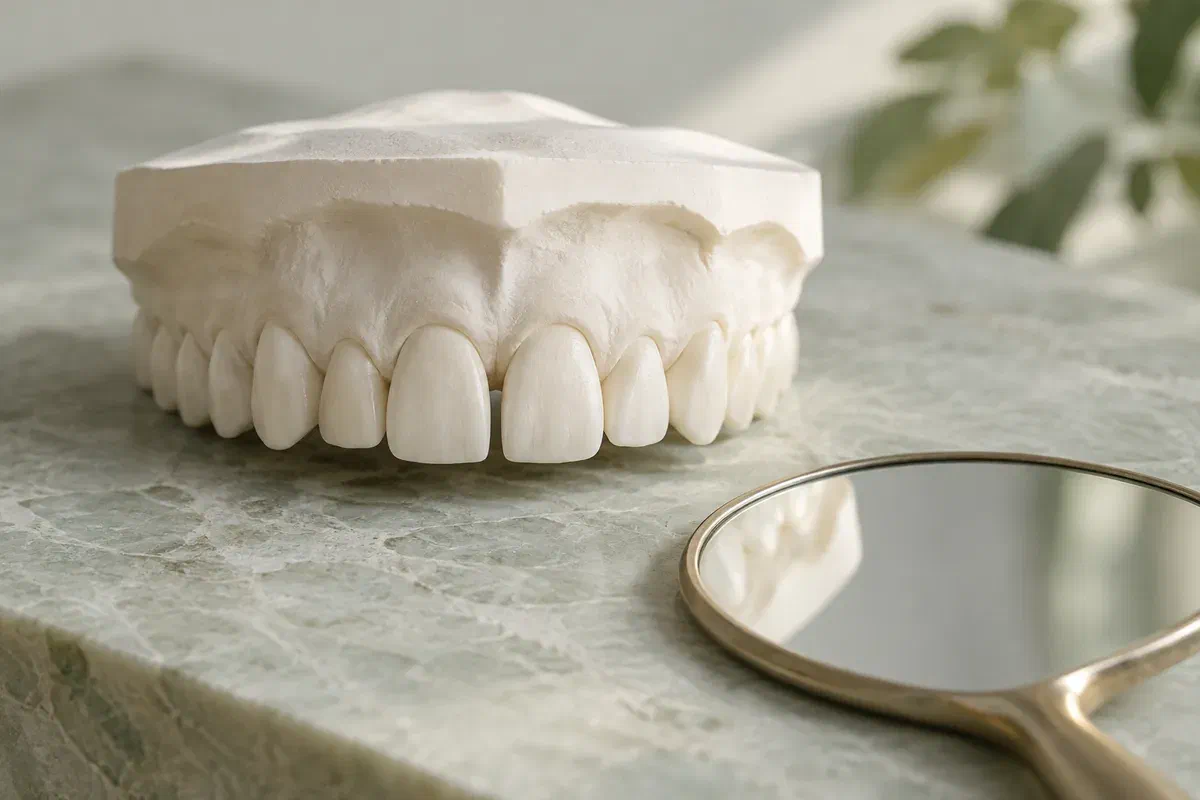
Illustrative upper dental cast with a small space between the central incisors beside a mirror
Signs worth mentioning in Milton

How long the gap has been there changes the conversation.

Let us know whether one space bothers you or several, whether anything has shifted, and whether you have any symptoms. A gap can look the same for very different reasons.

A gap you have always had

Think about the result you would actually like: no space at all, a narrower one, or spacing spread more evenly. Ask how each version would alter the look of the neighbouring teeth. Some people discover that a small amount of remaining space feels more like themselves.

A space that is new or getting bigger

Point out any gum bleeding, a tooth that feels loose, tenderness, or movement elsewhere. Those details mean the teeth and supporting tissues need checking before anyone talks about closing the gap. A recent change deserves a reason, not just a cosmetic cover.

Room left by a narrow or absent tooth

A tooth that is smaller than its partner, sits out of line, or never came in can all leave visible room. Planning might then include restoring or replacing a tooth alongside any movement. Ask how the space would be shared so one tooth is not doing all the work.

Young children often have spaces while their teeth are still developing. If you are unsure about a child's gap, ask whether it simply needs watching and when to have it looked at again.

What you leave the consultation knowing

Clarity about the cause, the options, and the upkeep.

The value of a planning visit is in matching what you want with a realistic way to achieve it. Bonding or another addition makes a tooth look wider, while orthodontic movement changes where the teeth sit. Ask which approach actually suits the space you see in the mirror, and whether the end result would keep proportions you like.

A good plan also looks past the single gap that caught your eye. The other teeth in the arch, the way they meet, and any health care that should come first all affect the outcome. Seeing those links laid out before treatment helps you decide with fewer surprises.

A plain account of what the findings show

You should hear whether the space looks like a stable variation or is tied to something that needs treatment. Ask which conclusions are firm and which need more records or time. That separates a health priority from an optional change in appearance.

Options beyond simply shutting the gap

Sometimes the better idea is to move space to a more useful spot, for example ahead of a planned restoration. Ask how that would connect with tooth size and the final arrangement. Each stage should have a clear target you can picture.

An honest outline of future commitments

Moved teeth usually need a retainer, and added material may eventually need repair or replacement. Ask what reviews would look like and what fees are included. Knowing the ongoing care in advance is part of choosing well.

How planning usually unfolds

Listen, examine, compare, then agree on the result.

The number of visits depends on what is found and which route you choose. Ask whether the first appointment is a consultation only, and whether further records or another clinician's opinion might help.

  1. Start with your story and your goal

    Show us the spaces that matter to you and describe how they have changed over time. Mention any past braces, bonding, extractions, or retainers. Say what you would like to keep, too, so the plan reflects your taste rather than a generic idea of a closed smile.

  2. Check health, shape, and how the teeth meet

    Your teeth, gums, tooth positions, and contacts are examined. Photographs, models, or other records may be suggested to understand the spacing or map out a change. Ask whether anything needs attention first and how that would affect the timing of cosmetic care.

  3. Weigh the routes side by side

    Compare each suitable option for preparation, risks, maintenance, fees, and limits. Ask how each would change the width and position of the teeth people see. If more than one clinician is involved, find out who designs the final arrangement and how the steps connect.

  4. Look back at the result and plan ongoing care

    Along the way and afterwards, talk about appearance, comfort, cleaning access, and how the contacts feel. Confirm the retention plan if teeth were moved and the review plan for any restorations. If a space returns, ask for a reassessment before trying something new.

Keeping the change in place

Clean carefully and stick with whatever holds the result.

What you do afterwards depends on whether teeth were moved, built up with material, or simply monitored. Ask for instructions that fit the care you actually received.

Look after the new contacts

Once spacing changes, the way you clean between those teeth may need to change as well. Ask which tools or technique suit the new arrangement. Let us know if food keeps catching, floss shreds, or a contact feels odd, because comfort and cleaning matter as much as looks.

Wear the retainer as directed

If teeth were moved, follow the retainer instructions and ask about checks, cleaning, and replacements. Contact the provider promptly if it is lost, cracked, or stops fitting. Never try elastic bands or other home fixes to hold a gap closed.

Report wear or a space that reopens

Bonded edges can wear or stain over time, so ask which changes should bring you back in. Mention a new gap elsewhere or one that grows. The reason should be reviewed instead of assuming more material or more movement is the fix.

Patient information: British Orthodontic Society — maintaining positions with retainers

Routes to consider

Which option fits depends on why the space is there.

Ask how each approach changes the position, shape, and future care of your teeth. Seeing a gap does not mean veneers or braces are automatically required.

When moving teeth makes sense

Moving teeth to close or share out space

Appropriate movement can bring teeth together or set aside room for another treatment. Ask about the bite, what appliance would be used, and how the result would be retained. The whole pattern of spacing deserves attention so fixing one gap does not leave the rest of the smile uncertain.

When reshaping tooth size suits the gap

Adding tooth-coloured material to the edges

Adding material may suit some gaps and tooth shapes. Compare the planned width, cleaning access, preparation, and upkeep. If veneers come up, ask why fuller coverage is being suggested and what a smaller addition could or could not do.

When health or personal taste comes first

Treating the cause, or leaving the space alone

Gum treatment, assessment of a missing tooth, or another investigation may need to happen before any closure. You might also decide to keep healthy spacing. Ask what monitoring makes sense and which changes would be a reason to come back.

Milton questions about gaps

Questions people bring to a spacing visit

A spacing conversation can cover your preferences, tooth proportions, oral health, and long-term upkeep. You do not need to have a treatment in mind before you book.

(905) 876-4488
Is it fine to leave a gap I have had since childhood?
Often, yes. If the teeth and gums are healthy and the space is stable, keeping it is a reasonable choice. Ask what signs would suggest a change worth checking, so you know what to watch for between routine visits.
How do I know if bonding or braces would suit my gap better?
That depends on the size of the space, the shape of the teeth, and the bite. Ask the clinician to explain how each route would change tooth width and position. Sometimes a combination is discussed when neither alone gives balanced proportions.
Should a gap that showed up in the last year be checked first?
Yes. A recent space may reflect a change in the teeth or the tissues supporting them. Mention bleeding, looseness, or discomfort. Finding the cause first helps decide whether health care should come before anything cosmetic.
Can whitening be done before bonding closes a space?
Ask about the order early. Bonding material is matched to the current shade of your teeth, so a planned whitening is usually discussed before the colour is chosen. The clinician can explain whether that sequence suits your situation.
Will I need to bring photos or records from a previous dentist?
They are not required, but older photos or notes about past braces or bonding can help show how the space has changed. Bring what you have, and the clinician will explain whether any new records would be useful.
Does a gap mean I have to change how I floss?
Not necessarily, but ask how to clean the area well, both now and after any change. Wider spaces and new contacts can each call for a different tool or technique. Mention any area where food tends to collect.
Gapped teeth care in Milton

Come in with an open mind about the space.

Book a visit at our Bronte Street practice to talk about the gap, the proportions of your teeth, and what kind of change would feel worthwhile to you. We will explain the findings and help you compare movement, restorative, or monitoring options that suit them.

The reason for a gap, oral health, suitability for treatment, timing, and fees all need individual assessment. Choosing to keep a healthy space is always valid.

Visit Milton Dental Clinic
Unit 1, 342 Bronte St. S, Milton, ON L9T 5B7
Get directions Clinic hours
Monday–Thursday
11am–7pm
Friday–Sunday
By appointment only

Areas we serve

  • Milton
  • Oakville
  • Mississauga
  • Georgetown
  • Halton Hills
  • Acton
  • Campbellville
  • Brampton
  • Burlington
  • Puslinch
  • Rockwood
  • Erin
  • Caledon
  • Etobicoke
  • Old Milton
  • Bronte Meadows
  • Timberlea
  • Dorset Park
  • Dempsey
  • Clarke
  • Beaty
  • Coates
  • Harrison
  • Scott
  • Willmott
  • Ford
  • Bowes
  • Cobden
  • Walker
  • Mountain View
  • Milton Heights
  • Hawthorne Village
  • Valley View
  • Fallingbrook
  • Nassagaweya
  • Trafalgar
  • Esquesing
  • Nelson
  • Brookville
  • Moffat
  • Glen Williams
  • Norval
  • Limehouse
  • Stewarttown
  • Ashgrove
  • Hornby
  • Silver Creek
  • Speyside
  • Scotch Block
  • North Oakville
  • River Oaks
  • Glen Abbey
  • West Oak Trails
  • Palermo
  • Bronte Creek
  • College Park
  • Joshua Creek
  • Uptown Core
  • Preserve
  • Iroquois Ridge
  • Lisgar
  • Meadowvale
  • Meadowvale Village
  • Churchill Meadows
  • Erin Mills
  • Central Erin Mills
  • Streetsville
  • East Credit
  • Creditview
  • Heartland
  • Sheridan
  • Mount Pleasant
  • Credit Valley
  • Huttonville
  • Churchville
  • Springbrook
  • Northwest Brampton
  • Bram West
  • Fletcher's Meadow
  • Fletcher's Creek South
  • Alton Village
  • Orchard
  • Millcroft
  • Headon Forest
  • Tansley
  • Brant Hills
  • Tyandaga
  • Kilbride
  • Lowville
  • Aberfoyle
  • Morriston
  • Arkell
  • Hillsburgh
  • Freelton
  • Carlisle
  • Waterdown
  • Flamborough
  • Mountsberg

How can we help?

Milton Dental Clinic

Have a question about your smile? Choose the option that works best for you.

For urgent dental concerns, please call.
Messages are reviewed during clinic hours.