

Illustrative patient and clinician discussing tooth spacing with a dental study model
Cosmetic Dentistry

Treatment for Gapped Teeth in Oakville

Bonding or braces? It is usually the first thing people ask about a gap, and the honest answer depends on the cause. Treatment for gapped teeth for Oakville adults begins by sorting out why the space exists, how your teeth are proportioned, and which route fits.

Choosing a route from Oakville

Add to the teeth, or move them?

Most people who ask about closing a gap already have a solution in mind, often bonding because it sounds quick, or clear aligners because a friend had them. Both can be appropriate, but they work in opposite ways. Bonding makes teeth wider so they meet; orthodontics moves them closer. Which one suits you depends on the space, the teeth around it, and your bite.

A diastema, as dentists call a gap, can be a harmless feature or a sign of something that has changed. Before comparing routes, it helps to know which applies to you. A space that has been the same since your teens raises different questions from one that opened recently, and the plan should reflect that.

Coming from Oakville for a first visit, you can expect a discussion rather than a commitment. Describe the history of the gap and the look you are hoping for. We will explain the findings, outline suitable options, and make it clear that keeping a healthy space is a legitimate outcome too.

Compare your options for a gap
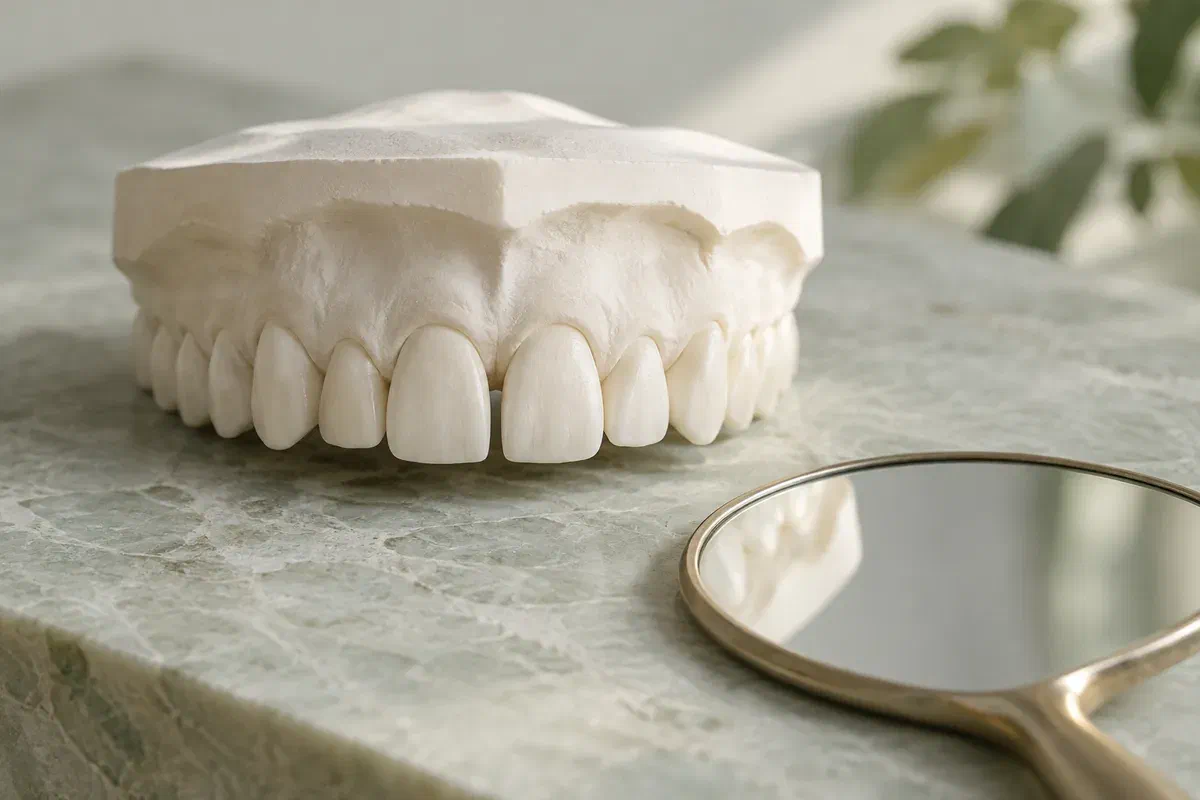
Illustrative upper dental cast with a small space between the central incisors beside a mirror
Before picking a method

Three situations that steer the choice

Mention whether a single gap or several bother you, how long they have been there, and anything that feels different. Two spaces that look alike can have unrelated causes.

A stable gap you have decided to change

Think about whether you want the space gone, reduced, or spread more evenly. Ask how bonding would change each tooth's width compared with moving the teeth. A modest leftover space sometimes keeps proportions that look more balanced than complete closure.

Spacing that has appeared or widened

Let the clinician know about bleeding, a tooth that shifts, discomfort, or crowding elsewhere. The teeth and their supporting tissues need assessment before any cosmetic method is chosen. Covering a newly opened gap without knowing why it opened is not a sound plan.

A gap beside a slim or missing tooth

When a tooth is narrower than its neighbour or absent altogether, adding material or moving teeth alone may not look right. Replacement or restoration might belong in the plan. Ask how space would be distributed so the result looks even.

Spaces between children's teeth are common during development. If a young family member has a gap, ask whether it should be monitored and when to review it, rather than planning cosmetic closure.

Why compare first

The fastest option is not always the most proportionate one.

Speed is a reasonable thing to value, but it is only one factor. Bonding can often change a smile in fewer appointments, yet it adds width that cannot be taken back without removing material. Orthodontics takes longer and needs retention, but leaves tooth shape alone. Ask how each would look on your teeth specifically, not in general.

A comparison also reveals whether one gap is part of a wider pattern. Spaces elsewhere, crowding, or bite issues can make a single-area fix look out of place. Seeing the full arrangement before you begin gives you a fairer basis for deciding.

A clear reading of the cause

Ask whether the spacing looks like a stable variation or something linked to a condition that needs treatment. Clarify what is known and what needs further records. That tells you whether you are choosing a cosmetic option or addressing a health concern first.

Side-by-side trade-offs

Bonding, aligners or braces, and combined approaches each have different effects on width, contacts, time, and upkeep. Ask how they compare for your gap. Sometimes moving space to a better spot before bonding gives a more even result.

The long-term commitment for each

Retainers usually follow tooth movement, and bonded material may need repair or replacement in time. Ask what reviews each route involves and which fees are included. The maintenance attached to a choice is part of its real cost.

How a comparison visit works

From your first question to a plan you can weigh up

The sequence depends on what we find and the route you prefer. Ask whether the first appointment is for assessment alone and whether records or another clinician's view may be needed.

  1. Explain what you have heard and what you want

    Tell us which treatments you have read about and what draws you to them. Describe the gap's history and any earlier braces, bonding, or lost teeth. Say what you like about your smile so a plan does not change more than you intend.

  2. Assess health, tooth shape, and the bite

    The clinician examines the teeth, gums, positions, and contacts. Photographs, scans, or models may be suggested to plan accurately. Ask whether anything needs treating first and how that would affect timing for cosmetic or orthodontic work.

  3. Walk through each route honestly

    Each suitable option is explained with its preparation, risks, upkeep, fees, and limits. Ask how the visible teeth would change in width and position. If an orthodontist or other clinician would be involved, find out who coordinates the final plan.

  4. Review progress and plan the long term

    As treatment goes on, discuss comfort, appearance, cleaning access, and contacts. Confirm retention after movement and review arrangements for any bonding. If the space reopens or the result is not what you expected, request a reassessment first.

Living with the result

Each route has its own upkeep.

Instructions differ depending on whether teeth were moved, built up, or simply monitored. Ask for guidance that fits the treatment you actually received.

Adjust how you clean between teeth

New contacts may need a different flossing technique or a small interdental brush. Ask what suits the new arrangement. Mention food catching, floss tearing, or a contact that feels rough, since these affect daily comfort as well as appearance.

Keep up with retainers after aligners or braces

Wear your retainer as advised and ask about cleaning, checks, and replacements. If it is lost, broken, or no longer fits well, contact the provider promptly. Do not use rubber bands or other home methods to hold teeth together.

Watch bonded edges and new gaps

Bonding can chip, wear, or stain over time. Ask which changes should prompt a visit. If a space opens somewhere else or the original gap grows, the reason should be reviewed before more material or movement is assumed.

Patient information: British Orthodontic Society — maintaining positions with retainers

The three main paths

Match the method to the reason, not the trend.

Ask what each route changes about tooth position, tooth shape, and future care. Having a visible gap does not by itself mean you need veneers or orthodontics.

When moving the teeth suits the plan

Aligners or braces

Tooth movement can close spaces or arrange room for another treatment. Ask about the bite, the appliance, how long it might take, and how the result would be retained. The whole arch should be considered so closing one gap does not create uncertainty elsewhere.

When extra width suits the teeth

Composite bonding at the gap

Adding material may work for some gaps and tooth shapes. Compare the planned width, cleaning access, preparation, and maintenance. If veneers are proposed instead, ask why broader coverage is suggested and what a smaller addition could achieve.

When oral health or preference comes first

Health care first, or no change at all

Gum treatment, assessment of a missing tooth, or another investigation may be needed before closure. You may also simply prefer to keep a healthy gap. Ask what monitoring suits you and what changes would mean booking a review.

Questions about gap routes

Bonding, aligners, and the questions in between

A gap consultation can cover your preferences, proportions, oral health, and long-term care. You do not need to have picked a method before booking.

(905) 876-4488
Is bonding a faster way to close a gap than aligners?
It often involves fewer visits, but speed is only part of the decision. Bonding adds width to teeth, while aligners move them. Ask how each would change your proportions and what upkeep each would need.
Can clear aligners close a single gap at the front?
They may, depending on the size of the space, the bite, and how the other teeth are arranged. Ask whether a limited movement plan suits you and how the result would be held afterwards.
Could a combination of movement and bonding look better?
Sometimes. Moving teeth to share space more evenly and then adding small amounts of material can help when one approach alone would leave uneven widths. Ask whether that applies to your teeth.
How do I know if my gap is cosmetic or a sign of a problem?
An examination of the teeth, gums, and bite helps answer that. Mention whether the gap is new, has grown, or comes with bleeding or looseness. Health-related causes are usually addressed before appearance.
Would veneers ever be suggested just for a gap?
They are sometimes discussed, often when shape or colour is also a concern. Ask why veneers would be preferred over bonding or movement, how much tooth preparation would be involved, and what maintenance follows.
Can I plan appointments around a commute from Oakville?
Yes. Mention your schedule when booking. Some stages, such as fitting or reviews, can be grouped, while others depend on how treatment progresses. Weekday evening hours and weekend appointments by arrangement may help.
Gap treatment for Oakville

Bring the question, and we will work through the answer together.

Book a consultation at our Bronte Street practice to discuss your gap, the proportions of your teeth, and the change you would find worthwhile. We will explain what we see and compare movement, bonding, or monitoring options that fit.

The cause of a gap, oral health, suitability, timing, and fees all need individual assessment. Keeping a healthy space is also a valid choice.

Visit Milton Dental Clinic
Unit 1, 342 Bronte St. S, Milton, ON L9T 5B7
Get directions Clinic hours
Monday–Thursday
11am–7pm
Friday–Sunday
By appointment only

Areas we serve

  • Milton
  • Oakville
  • Mississauga
  • Georgetown
  • Halton Hills
  • Acton
  • Campbellville
  • Brampton
  • Burlington
  • Puslinch
  • Rockwood
  • Erin
  • Caledon
  • Etobicoke
  • Old Milton
  • Bronte Meadows
  • Timberlea
  • Dorset Park
  • Dempsey
  • Clarke
  • Beaty
  • Coates
  • Harrison
  • Scott
  • Willmott
  • Ford
  • Bowes
  • Cobden
  • Walker
  • Mountain View
  • Milton Heights
  • Hawthorne Village
  • Valley View
  • Fallingbrook
  • Nassagaweya
  • Trafalgar
  • Esquesing
  • Nelson
  • Brookville
  • Moffat
  • Glen Williams
  • Norval
  • Limehouse
  • Stewarttown
  • Ashgrove
  • Hornby
  • Silver Creek
  • Speyside
  • Scotch Block
  • North Oakville
  • River Oaks
  • Glen Abbey
  • West Oak Trails
  • Palermo
  • Bronte Creek
  • College Park
  • Joshua Creek
  • Uptown Core
  • Preserve
  • Iroquois Ridge
  • Lisgar
  • Meadowvale
  • Meadowvale Village
  • Churchill Meadows
  • Erin Mills
  • Central Erin Mills
  • Streetsville
  • East Credit
  • Creditview
  • Heartland
  • Sheridan
  • Mount Pleasant
  • Credit Valley
  • Huttonville
  • Churchville
  • Springbrook
  • Northwest Brampton
  • Bram West
  • Fletcher's Meadow
  • Fletcher's Creek South
  • Alton Village
  • Orchard
  • Millcroft
  • Headon Forest
  • Tansley
  • Brant Hills
  • Tyandaga
  • Kilbride
  • Lowville
  • Aberfoyle
  • Morriston
  • Arkell
  • Hillsburgh
  • Freelton
  • Carlisle
  • Waterdown
  • Flamborough
  • Mountsberg

How can we help?

Milton Dental Clinic

Have a question about your smile? Choose the option that works best for you.

For urgent dental concerns, please call.
Messages are reviewed during clinic hours.