Illustrative patient and clinician discussing tooth spacing with a dental study model
Cosmetic Dentistry

Treatment for Gapped Teeth in Puslinch

Not one gap but a scattering of small ones, from the front of the mouth toward the back. Treatment for gapped teeth for Puslinch adults looks at spacing across the whole arch, why it has formed, and whether closing, gathering, or keeping the spaces makes the most sense.

Puslinch, seeing the whole arch

Many small spaces, one connected picture

Generalized spacing, where several teeth sit slightly apart, is a different situation from a single front gap. It can come from teeth that are small relative to the jaw, from a habit or bite pattern, from changes in the gums, or from a missing tooth that has let others drift. Each space is part of the same arrangement, so treating them one by one rarely makes sense.

None of this is necessarily a problem. Spaces, collectively called diastemas, can be stable and healthy for life. When people want a change, the possibilities include moving teeth together, gathering space in one spot for a restoration, adding material to several teeth, or a blend of these, each affecting proportions, contacts, and cleaning differently.

Rural households often prefer to plan dental care in fewer, longer visits. From Puslinch, you can book a consultation that looks at the full arch at once. We will explain what we see, how the spaces relate to each other, and the options worth weighing, including leaving healthy spacing as it is.


Discuss spacing across your smile
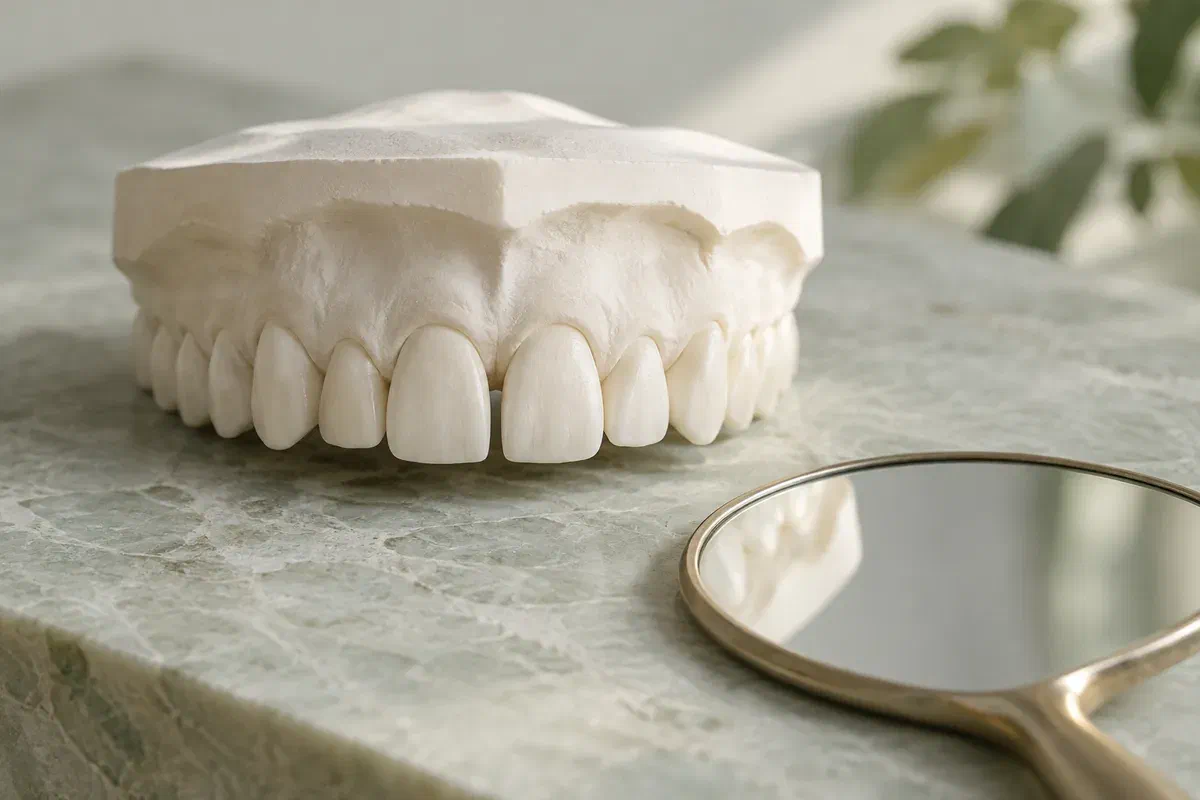
Illustrative upper dental cast with a small space between the central incisors beside a mirror
Looking at the pattern

Where are the spaces, and are they changing?

Point out every gap you are aware of, including any toward the back. Mention how long they have been there and any symptoms. The pattern tells us more than any single space does.

Even spacing you have always had

Some people have small spaces throughout and simply want them less visible at the front. Others would like them all closed. Think about which spaces matter to you and ask how changing them would affect tooth width and the balance of your smile.

Spaces that are new or spreading

Teeth fanning apart, new gaps, bleeding gums, or a tooth that feels loose need attention before any cosmetic idea. The gums and supporting bone should be checked first. Several teeth moving at once is a reason to look carefully at the cause.

Drift around a gap left by a lost tooth

When a tooth has been removed, neighbours can tip or slide and open spaces nearby. Planning may involve a replacement as well as movement. Ask where space would be gathered and how the remaining teeth would be arranged.

Children can have spacing throughout their baby teeth, which often helps make room for adult teeth. Ask whether a child's spacing is part of normal development and when to review it.

Why the full picture helps

Treat the arrangement, not just the most visible gap.

With several spaces, the total amount of room has to be accounted for. Closing the front gap may simply push space toward the sides unless the plan considers where it all goes. Orthodontics can gather or close spaces; bonding can widen several teeth. The choice depends on tooth sizes, the bite, and the look you want.

A full-arch view also brings any health concerns into focus. Spacing that has developed gradually across many teeth may relate to gum changes that need care first. Seeing that clearly before cosmetic planning avoids building on an unstable base.

A clear diagnosis for the pattern

Ask whether the spacing is a stable variation, related to tooth size, or tied to a condition that needs treatment. Find out what is known and what needs further records. That decides whether health care comes first.

Where the spare room would go

Some plans close all the spaces; others gather them where a replacement or restoration will sit. Ask how each approach would look and function, and what each stage of treatment is designed to achieve.

Upkeep that matches the scope

Treating several spaces means more contacts to clean and, possibly, more material to maintain or a longer retention period. Ask what reviews involve, how often they happen, and which fees are included.

Planning in fewer trips

Survey, explain, decide, maintain.

Visit numbers depend on the findings and the treatment selected. When booking, mention that you would like to group appointments where possible, and ask what records may be needed at the first visit.

  1. Map the gaps you know about

    Show us all the gaps you notice and how they have changed. Mention past orthodontics, bonding, extractions, or retainers. Let us know which spaces bother you most and which you are happy to leave.

  2. Assess the arch as a whole

    The clinician examines the teeth, gums, bone support, positions, contacts, and how the jaws meet. Full-mouth photographs or X-rays can help show the pattern. Ask whether any condition should be treated before spacing is addressed.

  3. Weigh full closure against gathering space

    Options are discussed in terms of what they involve, their risks, maintenance, fees, and what they can and cannot achieve. Ask how widths would change across the smile. If an orthodontist is involved, clarify who designs the final arrangement.

  4. Plan reviews and retention together

    During and after treatment, check comfort, appearance, cleaning, and contacts. Confirm retention if teeth moved and review intervals for any bonding, ideally combined with routine care. If spaces reopen, ask for reassessment first.

Caring for several contacts

More contacts mean a little more attention.

Instructions differ for orthodontic closure, bonding, or keeping the spaces under observation. Ask for guidance that reflects the treatment you actually had.

Clean every new contact

When several gaps close, cleaning between those teeth becomes part of your routine. Ask which floss or brush suits each area. Report any spot where food collects or floss shreds.

Wear retention faithfully

Teeth moved across a whole arch rely on retention to stay put. Wear the retainer as directed, keep it clean, and ask about checks. If it is lost or no longer fits, call the provider promptly, and never use bands or home methods.

Review bonded teeth and new spacing

If several teeth were built up, ask which signs of wear or staining should bring you in. Mention any space that reappears. The reason should be reassessed before more material or movement is added.

Patient information: British Orthodontic Society — maintaining positions with retainers

Approaches for multiple spaces

The total space decides the method.

Ask how each approach would change where your teeth sit, how they are shaped, and what care follows. Spacing does not automatically mean veneers or orthodontics are needed.

When repositioning across the arch suits the plan

Closing or gathering space with orthodontics

Movement can bring several teeth together or collect space where a replacement will go. Bring up the bite, the appliance, and how long retention would last. The whole arch is planned together, so no gap is closed at another's expense.

When added width suits the tooth sizes

Bonding several teeth

Material may be added to more than one tooth where sizes and shapes suit it. Consider how wide each tooth would become, how the contacts would clean, and the upkeep. If veneers are proposed, ask what a smaller approach could achieve.

When the gums need care or you like the spaces

Health care first, or keeping the spacing

Gum treatment or a replacement for a lost tooth may need to come before anything cosmetic. You might also decide the spaces are fine. Ask how they should be monitored and which changes would warrant a visit.

Puslinch spacing questions

When there is more than one gap

Questions about multiple spaces often involve the bite, tooth size, gum health, and upkeep. No treatment decision is needed before you come in.

(905) 876-4488
Why do I have small spaces between many of my teeth?
Common reasons include teeth that are small relative to the jaw, bite patterns, gum changes, or missing teeth. An examination can help show which apply to you.
Can all my spaces be closed, or only the front ones?
It depends on the total space, tooth sizes, and the bite. Ask how closing some or all of them would affect proportions, and where any remaining space would end up.
Does spacing throughout the mouth mean my gums are unhealthy?
Not necessarily, but gum health is an important part of the assessment. Mention bleeding, tenderness, or looseness so it can be checked before cosmetic planning.
Would bonding several teeth make them look too large?
It could if too much width is added. Ask how each tooth would change and whether moving teeth first, or gathering space, would give more natural proportions.
Could space be saved for a tooth replacement instead of closed?
Yes, in some cases. Ask how keeping room for a replacement compares with closing the space, and coordinate those decisions before any movement begins.
Is a widely spaced smile harder to keep clean?
Spaces and new contacts each need suitable cleaning methods. Ask which tools suit your teeth now and after any change, and point out areas where food tends to collect.
Spacing care for Puslinch

One visit to look at every gap.

At our Bronte Street practice, a single consultation can cover all the spaces in your smile, the bite, and your preferences. We will explain what we find and compare closing, gathering, bonding, or monitoring options with you.

Causes, gum and tooth health, which options suit you, timing, and fees all require individual assessment. Keeping healthy spacing is a reasonable decision.

Visit Milton Dental Clinic
Unit 1, 342 Bronte St. S, Milton, ON L9T 5B7
Get directions Clinic hours
Monday–Thursday
11am–7pm
Friday–Sunday
By appointment only

Areas we serve

  • Milton
  • Oakville
  • Mississauga
  • Georgetown
  • Halton Hills
  • Acton
  • Campbellville
  • Brampton
  • Burlington
  • Puslinch
  • Rockwood
  • Erin
  • Caledon
  • Etobicoke
  • Old Milton
  • Bronte Meadows
  • Timberlea
  • Dorset Park
  • Dempsey
  • Clarke
  • Beaty
  • Coates
  • Harrison
  • Scott
  • Willmott
  • Ford
  • Bowes
  • Cobden
  • Walker
  • Mountain View
  • Milton Heights
  • Hawthorne Village
  • Valley View
  • Fallingbrook
  • Nassagaweya
  • Trafalgar
  • Esquesing
  • Nelson
  • Brookville
  • Moffat
  • Glen Williams
  • Norval
  • Limehouse
  • Stewarttown
  • Ashgrove
  • Hornby
  • Silver Creek
  • Speyside
  • Scotch Block
  • North Oakville
  • River Oaks
  • Glen Abbey
  • West Oak Trails
  • Palermo
  • Bronte Creek
  • College Park
  • Joshua Creek
  • Uptown Core
  • Preserve
  • Iroquois Ridge
  • Lisgar
  • Meadowvale
  • Meadowvale Village
  • Churchill Meadows
  • Erin Mills
  • Central Erin Mills
  • Streetsville
  • East Credit
  • Creditview
  • Heartland
  • Sheridan
  • Mount Pleasant
  • Credit Valley
  • Huttonville
  • Churchville
  • Springbrook
  • Northwest Brampton
  • Bram West
  • Fletcher's Meadow
  • Fletcher's Creek South
  • Alton Village
  • Orchard
  • Millcroft
  • Headon Forest
  • Tansley
  • Brant Hills
  • Tyandaga
  • Kilbride
  • Lowville
  • Aberfoyle
  • Morriston
  • Arkell
  • Hillsburgh
  • Freelton
  • Carlisle
  • Waterdown
  • Flamborough
  • Mountsberg

How can we help?

Milton Dental Clinic

Have a question about your smile? Choose the option that works best for you.

For urgent dental concerns, please call.
Messages are reviewed during clinic hours.