

Illustrative patient and clinician discussing front-tooth overlap with a dental model
Cosmetic Dentistry

Treatment for Overbite in Puslinch

A sore jaw and a deep bite can seem like obvious partners, but the link is not always there. For people in Puslinch, an overbite assessment looks at the overlap and contacts on their own merits, and treats jaw symptoms as a separate question that deserves its own answer.

Puslinch · bite and jaw, separately

Two questions that are easy to blur into one

Maybe your jaw aches by evening, or clicks when you yawn, and you have read that a deep overbite could be to blame. It is an understandable leap. In reality, jaw symptoms have many possible causes, and an overbite is only sometimes part of the picture. Keeping the two questions apart leads to clearer, more honest answers for both.

On the bite side, overbite simply means how far the upper front teeth overlap the lower ones vertically. Some overlap is normal. It becomes a treatment question when it is excessive or connected to findings such as teeth meeting gum or palate, wear, or difficulty with cosmetic work. Teeth that protrude toward the lip are measured separately as overjet.

If you are making the trip from Puslinch, list every symptom you have noticed, including those that may have nothing to do with your teeth. We will examine the bite, explain which findings matter, and tell you whether an orthodontic or other opinion would help. You should understand any proposed change before appliances are mentioned.

Book a bite and jaw discussion
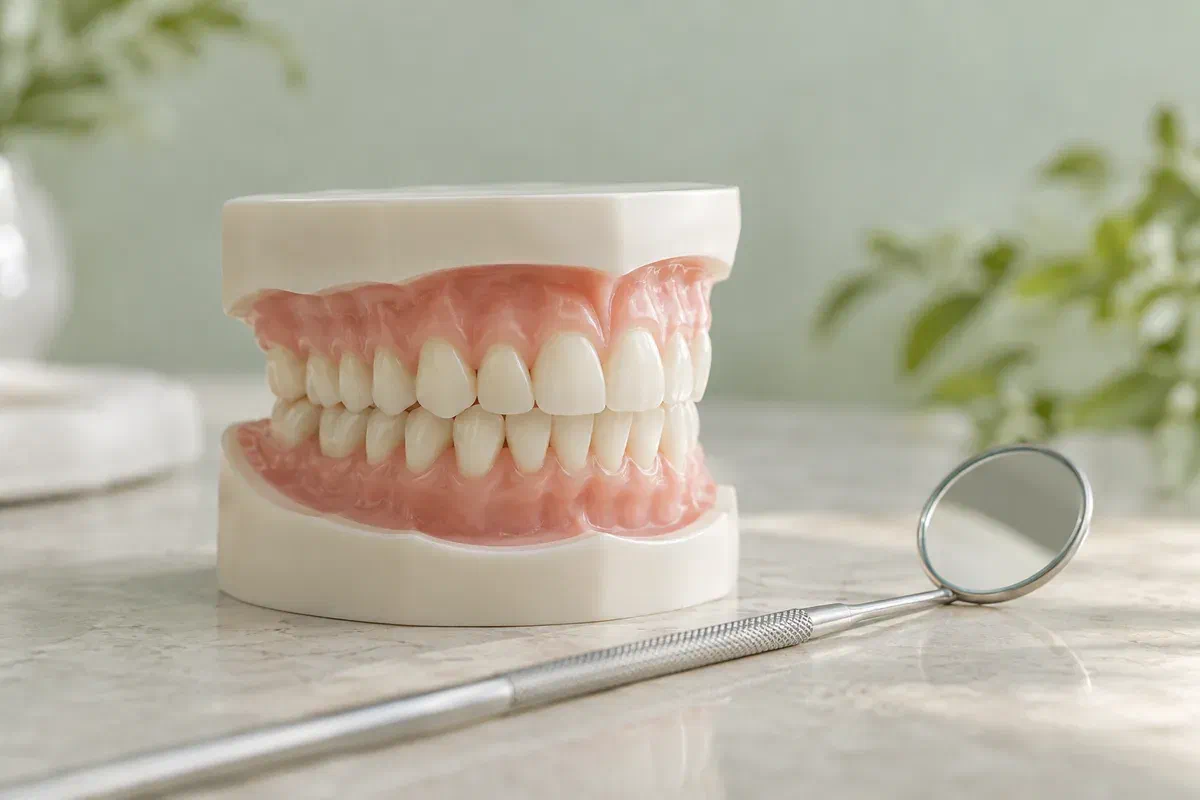
Illustrative paired dental teaching model viewed from the side to show front-tooth overlap
Symptoms worth listing

Note everything, and let the exam sort it out.

Your smile’s appearance is one input. Comfort, wear, and changes over time help the clinician judge what the overlap is, and is not, responsible for.

A deep-looking overlap

Say what looks excessive to you and ask how depth will be assessed. A photograph can open the conversation, but it does not establish whether treatment is warranted. The clinician considers the overlap alongside the full bite and your goals.

Teeth meeting the gum or palate

If a spot on the roof of your mouth or the gum below your lower teeth gets sore when you close, describe it. Ask whether overlap is involved and what to handle first. This kind of contact is a bite finding in its own right.

Worn edges, chips, or repair plans

Point out flattened or chipped front teeth, earlier bonding or crowns, and any plans for veneers. Ask how your contacts would affect those. Restorations and the bite they live in should be considered together.

Clicking, jaw pain, and headaches need an assessment of their own. Please do not assume an overbite explains them, or that adjusting the overlap will make them go away.

The benefit of separating concerns

Each problem gets the right kind of attention.

When the bite and the jaw are looked at separately, you are less likely to start treatment for the wrong reason. The assessment should explain how your teeth meet and whether the clinician would monitor or treat the overlap. If treatment is proposed, ask what it is designed to change and what it is not expected to change.

There is also a cosmetic dimension. Wanting front teeth that look neater is a reasonable goal, but it is not the same as reducing a vertical overlap, and neither is a promise of jaw comfort. Being clear about which goal a plan addresses helps you compare options realistically.

Findings that explain the advice

Ask which tooth or soft-tissue contacts matter and how the recommendation addresses them. Check whether existing damage needs separate care. The plan should rest on clear observations rather than a measurement or a hoped-for side benefit.

Recommendations suited to the individual

In children and teens, growth and erupting teeth can affect timing. In adults, jaw relationships, gum health, and past dental work shape the choices. Ask how these factors apply to you instead of assuming a standard approach.

Restorations planned with the bite

If crowns, bonding, or veneers are being considered, ask whether the bite should be assessed first. Learn which steps depend on that review, so new work is not designed without understanding the contacts it will meet.

How the assessment runs

Listen broadly, examine carefully, recommend narrowly.

Next steps may include monitoring, orthodontic records, or input from a specialist. Ask what the first visit covers and how findings about the bite and any jaw symptoms will be explained.

  1. Share the full list of concerns

    Describe the overlap you notice, any jaw or tissue discomfort, and changes in chewing or appearance. Mention past orthodontics, injuries, clenching or grinding, wear, and restorations. Tell us your goals and any treatment already planned.

  2. Examine the bite and related structures

    The clinician checks how upper and lower teeth meet and reviews oral health. Records may be suggested. Ask which findings relate to overbite, which to overjet, and whether anything points toward a separate jaw assessment.

  3. Discuss what would help, and what would not

    Review proposed movements, appliance options, risks, responsibilities, and alternatives, including observation. Ask whether a limited or full orthodontic plan is suggested and whether another specialist should be involved. Confirm stages and fees; timelines are not guarantees.

  4. Review comfort and finish with retention

    The treating clinician tracks progress and responds to difficulties. Report appliance trouble or changes in comfort. Toward the end, review where the teeth now touch, whether repairs are still needed, and the retainer plan that helps hold teeth in position.

While treatment is underway

Keep notes on comfort as well as progress

What you are responsible for depends on the appliance and stage. Ask to be shown each task and to take written instructions home.

Follow the appliance plan exactly

Wear the appliance and any elastics or extras for the prescribed time, and confirm where each piece goes and why. Changing the set-up yourself can cause problems, so ask what to do after missed wear rather than improvising.

Look after teeth, gums, and comfort

A floss threader or small interdental brush may help; ask which tools suit your appliance. Keep routine dental visits going. If jaw discomfort, gum soreness, or bleeding develops, mention it so it can be assessed instead of quietly endured.

Hold the result once correction ends

Agree on how retainers will be worn and reviewed, and whether restorative work remains. Report any later change in how your teeth meet or a retainer that no longer fits. A finished course should leave you with a maintenance routine.

Patient information: British Orthodontic Society — retention after active treatment

Possible directions

What the bite findings might lead to

Ask what each option would alter, what it would leave as it is, and why it fits. No appliance or duration suits everyone.

When moving teeth can meet the bite goal

Orthodontic tooth movement

Depending on the movements needed, fixed braces or appropriate clear aligners could be options. Ask what extra components or stages might be required. Mention any preference, but expect suitability to follow the findings.

When jaw position or growth plays a part

Specialist planning

A more detailed orthodontic assessment may be recommended, with other specialists involved as needed. Ask whether the plan concerns teeth, jaws, or both. Jaw surgery is not implied by an overbite and would need a specific diagnosis to be raised.

When active correction is not chosen

Monitoring alongside other care

Observation, or addressing a separate dental or jaw concern first, may be suggested. Ask what will be watched and when to return. Caring for your oral health still matters even if you decline elective alignment.

Patient information: British Orthodontic Society — comparing limited and comprehensive treatment aims

Puslinch overbite questions

Bite, jaw, and what connects them

Deep bite, overjet, and jaw problems are often lumped together. Ask the clinician to explain each finding separately and what any change is intended to do.

(905) 876-4488
Will correcting my overbite stop my jaw from aching?
Not necessarily. Jaw pain has many possible causes, and changing the overlap does not guarantee relief. Ask the clinician to assess your symptoms separately and explain what may be contributing.
Could grinding or clenching be connected to my bite?
Clenching and grinding can affect teeth and jaw comfort, and they are worth mentioning. The clinician can look for signs of wear and discuss whether they relate to your bite or need separate care.
Why would my jaw click if my teeth look fine?
Clicking can happen for reasons unrelated to how the teeth look. It needs its own assessment. Ask whether your findings suggest a referral or simply monitoring.
What counts as an excessive overlap?
There is no single number that applies to everyone. The clinician considers depth along with contacts, tissue health, and your goals. Ask what makes your overlap significant or not.
Can I have an overbite assessment if I already see a dentist elsewhere?
Yes. You can request an assessment and share the findings with your regular dentist. Ask how records will be passed on so your care stays coordinated.
Who should I see first for jaw pain, a dentist or a doctor?
A dental assessment is a reasonable starting point, and the clinician can advise if medical input seems appropriate. For sudden or severe symptoms, seek prompt care.
Overbite care for Puslinch

Get a straight answer about your bite.

Visit our Bronte Street practice to have your front-tooth overlap and contacts examined, with any jaw symptoms noted for separate attention. Afterwards we will walk you through the results and say whether monitoring, an orthodontic referral, or other coordinated care is the logical next step.

Recommendations on treatment, appliances, scheduling, referral, and cost are made only after an exam. Relief from jaw or bite symptoms cannot be promised.

Visit Milton Dental Clinic
Unit 1, 342 Bronte St. S, Milton, ON L9T 5B7
Get directions Clinic hours
Monday–Thursday
11am–7pm
Friday–Sunday
By appointment only

Areas we serve

  • Milton
  • Oakville
  • Mississauga
  • Georgetown
  • Halton Hills
  • Acton
  • Campbellville
  • Brampton
  • Burlington
  • Puslinch
  • Rockwood
  • Erin
  • Caledon
  • Etobicoke
  • Old Milton
  • Bronte Meadows
  • Timberlea
  • Dorset Park
  • Dempsey
  • Clarke
  • Beaty
  • Coates
  • Harrison
  • Scott
  • Willmott
  • Ford
  • Bowes
  • Cobden
  • Walker
  • Mountain View
  • Milton Heights
  • Hawthorne Village
  • Valley View
  • Fallingbrook
  • Nassagaweya
  • Trafalgar
  • Esquesing
  • Nelson
  • Brookville
  • Moffat
  • Glen Williams
  • Norval
  • Limehouse
  • Stewarttown
  • Ashgrove
  • Hornby
  • Silver Creek
  • Speyside
  • Scotch Block
  • North Oakville
  • River Oaks
  • Glen Abbey
  • West Oak Trails
  • Palermo
  • Bronte Creek
  • College Park
  • Joshua Creek
  • Uptown Core
  • Preserve
  • Iroquois Ridge
  • Lisgar
  • Meadowvale
  • Meadowvale Village
  • Churchill Meadows
  • Erin Mills
  • Central Erin Mills
  • Streetsville
  • East Credit
  • Creditview
  • Heartland
  • Sheridan
  • Mount Pleasant
  • Credit Valley
  • Huttonville
  • Churchville
  • Springbrook
  • Northwest Brampton
  • Bram West
  • Fletcher's Meadow
  • Fletcher's Creek South
  • Alton Village
  • Orchard
  • Millcroft
  • Headon Forest
  • Tansley
  • Brant Hills
  • Tyandaga
  • Kilbride
  • Lowville
  • Aberfoyle
  • Morriston
  • Arkell
  • Hillsburgh
  • Freelton
  • Carlisle
  • Waterdown
  • Flamborough
  • Mountsberg

How can we help?

Milton Dental Clinic

Have a question about your smile? Choose the option that works best for you.

For urgent dental concerns, please call.
Messages are reviewed during clinic hours.