

Illustrative patient and clinician reviewing upper and lower dental models during a bite discussion
Cosmetic Dentistry

Treatment for Underbite in Acton

Front teeth that keep chipping or wearing flat can point back to the way they meet. From Acton, you can have an underbite assessed alongside the damage, so repairs, orthodontic options, and any specialist referral are planned around the actual cause.

When repairs keep failing

A chipped edge is sometimes a clue about the bite.

Some people only learn they have an underbite when a dentist asks why the same front tooth keeps breaking. If the lower incisors close ahead of the upper ones, the edges may meet in ways they were not shaped for. Tooth position, jaw position, or both can be responsible.

Repairing the chip is one job; understanding the forces is another. The clinician looks at where the back teeth land, whether the jaw glides forward on closing, the health of the gums and remaining tooth structure, and growth if the patient is young. Wear patterns help, though they don’t tell the full story alone.

Coming from Acton, you can raise a repair, a wear concern, or a broader question about your bite in the same visit. We will explain what the assessment covers and how the findings could shape the next step. Asking does not commit you to orthodontics, and surgery is not where the conversation begins.

Have the bite checked with the repair
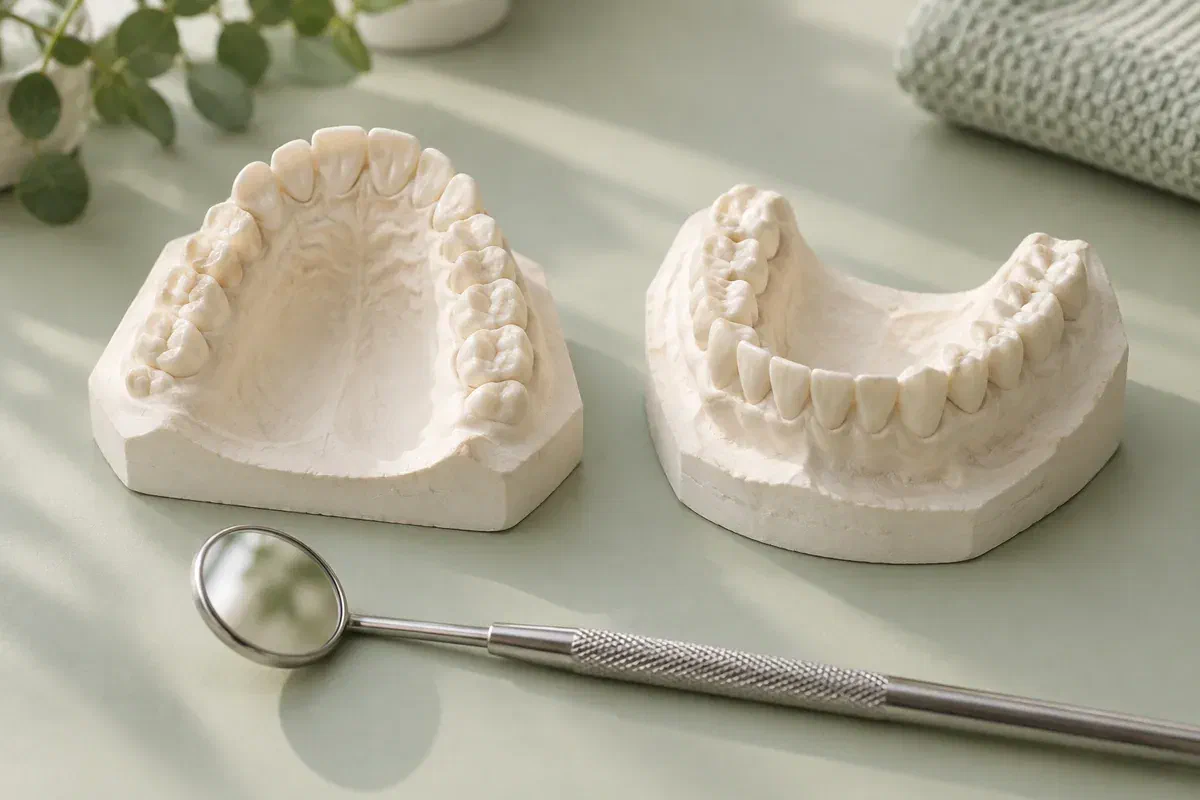
Illustrative upper and lower dental study casts arranged for a bite-planning discussion
Damage and the bite behind it

Where is the wear, and when did it start?

Tell the clinician which teeth have chipped or worn, how often repairs have been needed, and whether the bite has always looked this way or seems to be changing.

Edges that meet head-on or in reverse

Describe how the front teeth come together when you bite into food and whether any contact feels sharp or heavy. That helps separate tooth-position effects from jaw factors before deciding how to protect the teeth.

A child chipping the same tooth

Repeated chips in a child with a reversed front bite are worth raising at a checkup. Ask whether an orthodontic opinion would help. Timing depends on growth, and an early look may lead to monitoring rather than immediate treatment.

Fillings, crowns, or bonding that won’t last

Mention every repair that has failed, earlier braces, and any change in how you close. These details may alter the plan or call for separate care. Grinding, decay, and other causes also need ruling out, so the underbite should not be assumed responsible.

Underbite describes how the front teeth appear to meet, not one specific jaw problem. Ask whether your findings are mostly dental, mostly skeletal, or both, and how the pattern relates to the wear you see.

Why the bite deserves attention

Repairs last longer when the forces are understood.

A new filling or crown on a tooth that keeps taking an awkward load may face the same problem again. Some plans change tooth position so the teeth meet differently; others address the jaw relationship. Asking what each would change, and what it would not, helps you weigh repair against correction.

There is no single right answer for everyone. Tooth response, gum health, how much enamel remains, and how often you can attend appointments all affect the choice. Seeing those factors helps you decide deliberately and understand when more records or a specialist view would genuinely add something.

A link between the damage and the bite, explained

Ask the clinician to show you the wear and describe what is contributing in plain words. Is it the teeth, the jaws, a closing shift, grinding, or a mix? That explanation shapes how repairs are designed.

Repair, correction, or both

Discuss what restoring the teeth could achieve without changing the bite and what moving teeth might add. Ask which compromises each path carries. You should not have to work out the difference from fee estimates.

Specialist care with a defined role

If an orthodontist is suggested, ask what they will help decide and what happens next. Agree who handles repairs in the meantime. Knowing why each visit matters helps people travelling from Acton keep trips purposeful.

Working through it

Four questions, answered in order

The sequence depends on findings, growth, and what you want. Some answers come at the first visit; others need records or a specialist opinion.

  1. What has happened so far?

    List the chips, repairs, and wear you have noticed and roughly when. Add earlier orthodontics, jaw injuries, grinding, and family history. Explain whether protecting the teeth, appearance, or chewing matters most.

  2. How do the teeth and jaws actually meet?

    The clinician examines the teeth, gums, wear facets, and closing pattern and decides which records would explain the bite. Ask what each record shows. Decay or cracks needing attention first are identified here.

  3. Which approach fits the cause?

    Review repair-only, orthodontic, and wider options with their risks, responsibilities, stages, and fees. Ask whether specialist input is needed and whether a route limits itself to tooth movement. Think carefully before irreversible steps like crown preparation.

  4. How will the result be protected?

    Settle who is responsible for each piece of work and how the providers will stay in touch. Follow your instructions and attend reviews. At the end, discuss retainers, a night guard if recommended, remaining needs, and monitoring for further wear.

Protecting teeth during treatment

The right care depends on what was done.

Restorations, orthodontic appliances, growth-based approaches, and surgery need different routines. Use the guidance from the provider managing your particular treatment.

Clarify the routine each time

Check wear time, cleaning, home adjustments, and your next review. For a child, agree which steps need help. Raise problems early, such as an appliance rubbing or a repair feeling high, instead of waiting.

Keep restorations and checkups in view

Continue cleanings and checkups, and tell every provider about the others’ work. Agree who should see a chipped filling, sore tooth, or gum issue between specialist visits so repairs are not delayed.

Plan for what follows active treatment

Once teeth have been moved, expect a retainer and follow-up checks, and possibly a protective appliance. If surgery is part of the plan, the surgeon’s recovery guidance comes first. Ask how wear and the bite will be monitored long term.

Options to compare

Fix the damage, change the bite, or plan both

Each option addresses certain findings and leaves others. Growth, how marked the jaw relationship is, the condition of your teeth, and your priorities all guide the discussion.

When repositioning teeth can change how they meet

Orthodontic tooth movement

Braces or a suitable aligner plan may be considered after assessment, sometimes before repairs are finalised. Ask how the bite would change with the jaws unaltered and whether a trade-off remains. Choose the method around that goal.

When development is still underway

Early approaches for growing patients

For some children, a specialist may suggest an early phase. Ask what it is meant to achieve, how it might reduce stress on the front teeth, and what may still follow. It cannot guarantee how growth will go.

When the jaw relationship drives the problem

Combined orthodontic and surgical care

Where the skeletal difference is significant, orthodontic and surgical specialists may jointly compare correction against what non-surgical approaches can manage. That is a weighty, separate choice. Discuss the order of steps, recovery, risks, and alternatives with them.

Patient information: American Association of Orthodontists — coordinated surgical orthodontic care

Wear and repair questions

Chips, crowns, and the underbite

A useful consultation connects the damage you see to the way the teeth and jaws meet. It should also let you decide how much treatment you want to take on.

(905) 876-4488
Can an underbite cause front teeth to wear down faster?
It can contribute when teeth meet edge to edge or in reverse, though grinding, acid, and other factors may also play a part. Ask the clinician what the wear pattern suggests in your case.
Should my bite be treated before a chipped front tooth is repaired?
Not always. Many chips are repaired promptly, while a longer-term plan is discussed separately. Ask whether the repair should be temporary or definitive, given what the bite assessment shows.
Would a night guard help if I have an underbite?
A guard may be suggested if grinding or clenching adds to wear. It does not correct the bite. Ask whether one is appropriate and how it should be designed for the way your teeth meet.
Is it worth fixing the bite if my teeth are already worn?
That depends on how much tooth remains, your goals, and what the options would change. Ask the clinician to compare protecting what is there with correcting the relationship.
Can a crown be designed to cope with an underbite?
Restorations can sometimes be shaped and made from materials suited to the forces involved, but limits remain. Ask what the risks are for your bite and how long a repair might reasonably be expected to last.
Can repairs and a bite assessment be booked together from Acton?
Often, yes. Mention both when booking so enough time is set aside. If the repair is urgent, say so, and we can advise on what can be handled first.
From Acton

Repair the tooth. Understand the bite.

Arrange a visit to our Bronte Street practice for chipped or worn front teeth, a reversed front bite, or a child’s developing underbite. We will look at the damage and the bite together and outline sensible next steps.

Whether treatment is needed, its extent, timing, specialist involvement, and fees all require assessment. No repair or appliance can guarantee that damage won’t recur.

Visit Milton Dental Clinic
Unit 1, 342 Bronte St. S, Milton, ON L9T 5B7
Get directions Clinic hours
Monday–Thursday
11am–7pm
Friday–Sunday
By appointment only

Areas we serve

  • Milton
  • Oakville
  • Mississauga
  • Georgetown
  • Halton Hills
  • Acton
  • Campbellville
  • Brampton
  • Burlington
  • Puslinch
  • Rockwood
  • Erin
  • Caledon
  • Etobicoke
  • Old Milton
  • Bronte Meadows
  • Timberlea
  • Dorset Park
  • Dempsey
  • Clarke
  • Beaty
  • Coates
  • Harrison
  • Scott
  • Willmott
  • Ford
  • Bowes
  • Cobden
  • Walker
  • Mountain View
  • Milton Heights
  • Hawthorne Village
  • Valley View
  • Fallingbrook
  • Nassagaweya
  • Trafalgar
  • Esquesing
  • Nelson
  • Brookville
  • Moffat
  • Glen Williams
  • Norval
  • Limehouse
  • Stewarttown
  • Ashgrove
  • Hornby
  • Silver Creek
  • Speyside
  • Scotch Block
  • North Oakville
  • River Oaks
  • Glen Abbey
  • West Oak Trails
  • Palermo
  • Bronte Creek
  • College Park
  • Joshua Creek
  • Uptown Core
  • Preserve
  • Iroquois Ridge
  • Lisgar
  • Meadowvale
  • Meadowvale Village
  • Churchill Meadows
  • Erin Mills
  • Central Erin Mills
  • Streetsville
  • East Credit
  • Creditview
  • Heartland
  • Sheridan
  • Mount Pleasant
  • Credit Valley
  • Huttonville
  • Churchville
  • Springbrook
  • Northwest Brampton
  • Bram West
  • Fletcher's Meadow
  • Fletcher's Creek South
  • Alton Village
  • Orchard
  • Millcroft
  • Headon Forest
  • Tansley
  • Brant Hills
  • Tyandaga
  • Kilbride
  • Lowville
  • Aberfoyle
  • Morriston
  • Arkell
  • Hillsburgh
  • Freelton
  • Carlisle
  • Waterdown
  • Flamborough
  • Mountsberg

How can we help?

Milton Dental Clinic

Have a question about your smile? Choose the option that works best for you.

For urgent dental concerns, please call.
Messages are reviewed during clinic hours.