

Illustrative patient and clinician reviewing upper and lower dental models during a bite discussion
Cosmetic Dentistry

Treatment for Underbite in Brampton

Spotted your child’s lower front teeth closing outside the top ones? Parents in Brampton often wonder whether to act now or wait. An assessment looks at teeth, jaws, and growth so timing and options are explained for your child rather than guessed.

For parents in Brampton

Act now, or watch and wait?

It is often a parent who notices first, perhaps while brushing a child’s teeth or looking at a school photo. The lower front teeth seem to sit outside the upper ones. That can happen because of how particular teeth are erupting, how the jaws are growing, or a combination, and the right response differs for each.

A dentist will want to see more than the front of the smile. How the side teeth fit, whether your child pushes the jaw forward to close, the health of baby and adult teeth, and the stage of growth all count. A sibling or parent with a similar bite is worth mentioning, but it does not decide anything.

Adults with their own underbite questions are welcome too. Bring whatever you have noticed, along with any earlier dental notes. We will explain what an assessment covers and what might follow. Coming in does not mean an appliance is required, and it certainly does not mean surgery lies ahead.

Have your child’s bite checked
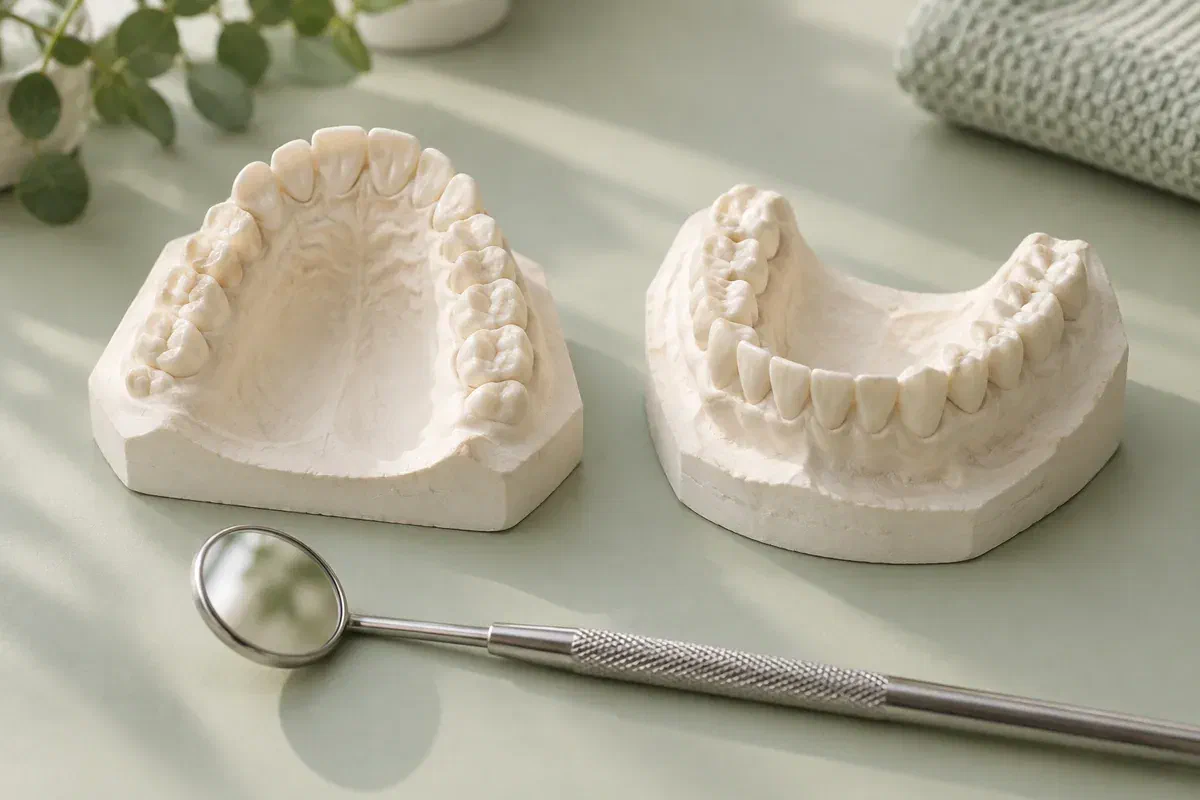
Illustrative upper and lower dental study casts arranged for a bite-planning discussion
What parents and adults notice

Small observations make the assessment better.

Tell the clinician when you first noticed the bite, whether it seems to be changing as new teeth arrive, and anything your child mentions about eating or comfort.

Trouble biting into sandwiches or fruit

Children rarely complain directly, so watch how they manage foods that need the front teeth. Share what you see. The examination can then sort tooth-position findings from jaw factors before any talk of correction.

Lower front teeth closing ahead as adult teeth arrive

This is a good reason to ask at the next checkup whether an orthodontic opinion would help. Growth shapes both timing and options, so advice is individual. An early look may simply set up monitoring with clear signs to watch.

Chipping, wear, or a bite that shifts

Mention chipped edges, worn baby teeth, a jaw that seems to slide forward, or any earlier appliance. These details can change the plan or need their own treatment. Each concern deserves its own look instead of being put down to the underbite.

Underbite describes what you can see, not one specific jaw problem. Ask the clinician to explain whether the findings are dental, skeletal, or both, and whether the front teeth are part of a wider pattern.

Why an early look can help

Knowing the cause helps you judge the timing.

For a growing child, the question is not only what to do but when. An approach aimed at teeth works differently from one aimed at how the jaws develop. Ask what a suggested plan would change and what it would leave for later. That tells you more than the look of an appliance.

Families also deserve a clear sense of what is uncertain. Growth can be unpredictable, children respond differently, and wearing an appliance as directed takes commitment at home. Seeing those factors helps you make a calm decision and understand why a specialist opinion or more records may be suggested.

An explanation a parent can pass on

Ask to see the findings and have the main contributors described plainly. Is the concern mostly the teeth, the jaws, a forward shift on closing, or a mix? You should be able to explain it to the rest of the family afterward.

A view of what each stage can achieve

Discuss what an early phase could do and what it could not. Ask whether further treatment might be needed as your child grows and why. Plans should be told apart by their aims, not by their names or fees.

Coordinated care across providers

If an orthodontist is suggested, ask what question they will help answer and what happens next. Confirm who continues checkups and fillings in the meantime. Knowing each visit’s purpose helps Brampton households plan around school and work.

What happens at the clinic

A child’s bite is assessed in stages.

The sequence depends on findings, growth, and your family’s goals. Ask which questions can be answered at the first visit and which need time or more information.

  1. Share what you have seen at home

    Describe when the bite first appeared, how it has changed, and any eating or comfort problems. Mention family history, injuries to the mouth or jaw, and past dental work. Write down your growth questions so none are missed.

  2. Check teeth, gums, and how the jaws close

    The dentist examines baby and adult teeth, the gums, and the closing pattern, then decides which records would help. Ask what each record shows. Cavities or other issues that should be dealt with first are noted at this point.

  3. Discuss whether to treat, refer, or monitor

    Options are reviewed with their responsibilities, risks, stages, and fees. Ask whether an orthodontic opinion is advised and whether a plan aims at teeth or at jaw growth. Take time to understand the commitment before agreeing.

  4. Follow the plan and keep reviewing

    If treatment starts, confirm which provider leads each stage and how they will keep you informed. Follow the appliance instructions and attend reviews. As treatment ends, ask about retention, remaining dental needs, and continued monitoring through growth.

Supporting a child through treatment

Home routines depend on which appliance is used.

A growth appliance, braces, aligners, and any surgical plan each come with specific directions. Follow the guidance from whoever is providing the treatment your child is actually having.

Agree who does what at home

Check wear time, cleaning, any adjustments, and the next review date. Decide which tasks your child can manage and which need a parent’s help. Call early if something isn’t working rather than changing the routine yourselves.

Keep checkups and cleanings going

Regular preventive care still matters during orthodontic or other treatment. Tell each provider about the others’ work. Agree who should see a broken filling, a loose baby tooth causing trouble, or sore gums between specialist visits.

Plan for retention and growth checks

After teeth move, retainers and follow-up visits are usually part of the plan. For older teens or adults with surgery involved, the surgeon’s recovery instructions come first. Ask how the bite will be watched as growth continues.

Possible paths for a growing bite

Some plans work with growth, some work with teeth.

Every route addresses certain findings and not others. A child’s stage of development, the type and severity of the bite, oral health, and your family’s priorities guide the discussion.

When moving teeth can reach the goal

Orthodontics focused on tooth position

Braces, suitable aligners, or other orthodontic methods may be considered once the bite is assessed. Ask what would improve while the jaw relationship is unchanged and whether a trade-off is involved. Choose the appliance around those aims.

When development offers a window

Early treatment during growth

After specialist evaluation, some growing children may be offered an early phase. Ask what it is designed to achieve and what care may still be needed later. Early treatment cannot guarantee how growth will proceed.

When a significant jaw difference persists after growth

Combined orthodontic and surgical planning later on

For some older teens and adults, orthodontic and surgical specialists compare possible correction with non-surgical limits. That is a separate, careful decision, never assumed from the word underbite alone. Ask about sequence, recovery, risks, and alternatives.

Patient information: American Association of Orthodontists — coordinated surgical orthodontic care

Questions parents ask

Children, growth, and the forward bite

A helpful visit explains how teeth, jaws, and growth interact in your child’s case. It also gives you room to say how much treatment your family is ready to consider.

(905) 876-4488
Can baby teeth show an underbite before the adult teeth come in?
Yes, a reversed front bite can appear in the baby teeth. It is worth mentioning at a checkup so a dentist can assess it and advise whether to monitor or seek an orthodontic opinion.
Will my child grow out of a reversed front bite?
Some bites change as teeth erupt, and others do not. There is no way to predict that from appearance alone. Ask what the assessment suggests and what signs would prompt a closer look.
Is an underbite usually inherited?
Family patterns are common, especially for jaw-related bites, but tooth position and habits can also contribute. Share any family history, and ask how it fits with what the examination shows.
How will my child cope with wearing an appliance at school?
Many children adjust with time and support. Ask the treating provider how the appliance affects speaking and eating, what to do if it is uncomfortable, and how wear can fit around the school day.
What should I do if my child’s appliance breaks?
Contact the provider who fitted it, describe the damage, and follow their advice. Don’t try to repair or adjust it at home. If there is an injury or significant pain, seek prompt care.
Can siblings from Brampton have checkups booked on the same day?
Often, yes. Ask when booking whether appointments can be grouped, and tell us which child needs the bite assessment so enough time is set aside.
From Brampton

Start with a clear look at your child’s bite.

Arrange an assessment at our Bronte Street practice for lower front teeth that close ahead, chewing difficulties, or a bite that seems to be changing as teeth come in. We will explain the findings and any orthodontic referral that may help.

Whether treatment is needed, when, how far it goes, who provides it, and what it costs all depend on assessment. No appliance can guarantee how growth unfolds or rule out later care.

Visit Milton Dental Clinic
Unit 1, 342 Bronte St. S, Milton, ON L9T 5B7
Get directions Clinic hours
Monday–Thursday
11am–7pm
Friday–Sunday
By appointment only

Areas we serve

  • Milton
  • Oakville
  • Mississauga
  • Georgetown
  • Halton Hills
  • Acton
  • Campbellville
  • Brampton
  • Burlington
  • Puslinch
  • Rockwood
  • Erin
  • Caledon
  • Etobicoke
  • Old Milton
  • Bronte Meadows
  • Timberlea
  • Dorset Park
  • Dempsey
  • Clarke
  • Beaty
  • Coates
  • Harrison
  • Scott
  • Willmott
  • Ford
  • Bowes
  • Cobden
  • Walker
  • Mountain View
  • Milton Heights
  • Hawthorne Village
  • Valley View
  • Fallingbrook
  • Nassagaweya
  • Trafalgar
  • Esquesing
  • Nelson
  • Brookville
  • Moffat
  • Glen Williams
  • Norval
  • Limehouse
  • Stewarttown
  • Ashgrove
  • Hornby
  • Silver Creek
  • Speyside
  • Scotch Block
  • North Oakville
  • River Oaks
  • Glen Abbey
  • West Oak Trails
  • Palermo
  • Bronte Creek
  • College Park
  • Joshua Creek
  • Uptown Core
  • Preserve
  • Iroquois Ridge
  • Lisgar
  • Meadowvale
  • Meadowvale Village
  • Churchill Meadows
  • Erin Mills
  • Central Erin Mills
  • Streetsville
  • East Credit
  • Creditview
  • Heartland
  • Sheridan
  • Mount Pleasant
  • Credit Valley
  • Huttonville
  • Churchville
  • Springbrook
  • Northwest Brampton
  • Bram West
  • Fletcher's Meadow
  • Fletcher's Creek South
  • Alton Village
  • Orchard
  • Millcroft
  • Headon Forest
  • Tansley
  • Brant Hills
  • Tyandaga
  • Kilbride
  • Lowville
  • Aberfoyle
  • Morriston
  • Arkell
  • Hillsburgh
  • Freelton
  • Carlisle
  • Waterdown
  • Flamborough
  • Mountsberg

How can we help?

Milton Dental Clinic

Have a question about your smile? Choose the option that works best for you.

For urgent dental concerns, please call.
Messages are reviewed during clinic hours.