

Illustrative patient and clinician reviewing upper and lower dental models during a bite discussion
Cosmetic Dentistry

Treatment for Underbite in Georgetown

Many people first think about an underbite because of how their smile or profile looks in photos. From Georgetown, you can find out how much of that appearance comes from the teeth, how much from the jaws, and which kinds of treatment could realistically change it.

Appearance and the bite beneath it

What the camera shows is only the surface.

A forward lower smile or a prominent chin in side-on photos can be the moment someone decides to ask. What you are seeing may come from the lower front teeth tipping forward, the upper teeth sitting back, the jaws themselves being out of step, or several of these at once.

That is why cosmetic goals still start with a bite assessment. How the back teeth meet, whether the jaw pushes forward to close, gum and tooth health, and growth in younger people all influence what can change. Comparing yourself with a relative or an online image won’t reveal which factor is doing the work.

You can come in simply wanting to understand your smile. Bring photos you dislike, questions about bonding or veneers, or details of earlier braces. We will explain what an assessment covers and which directions might fit your goals. Asking is not a commitment, and no one will assume you need surgery.

Ask about your smile and bite
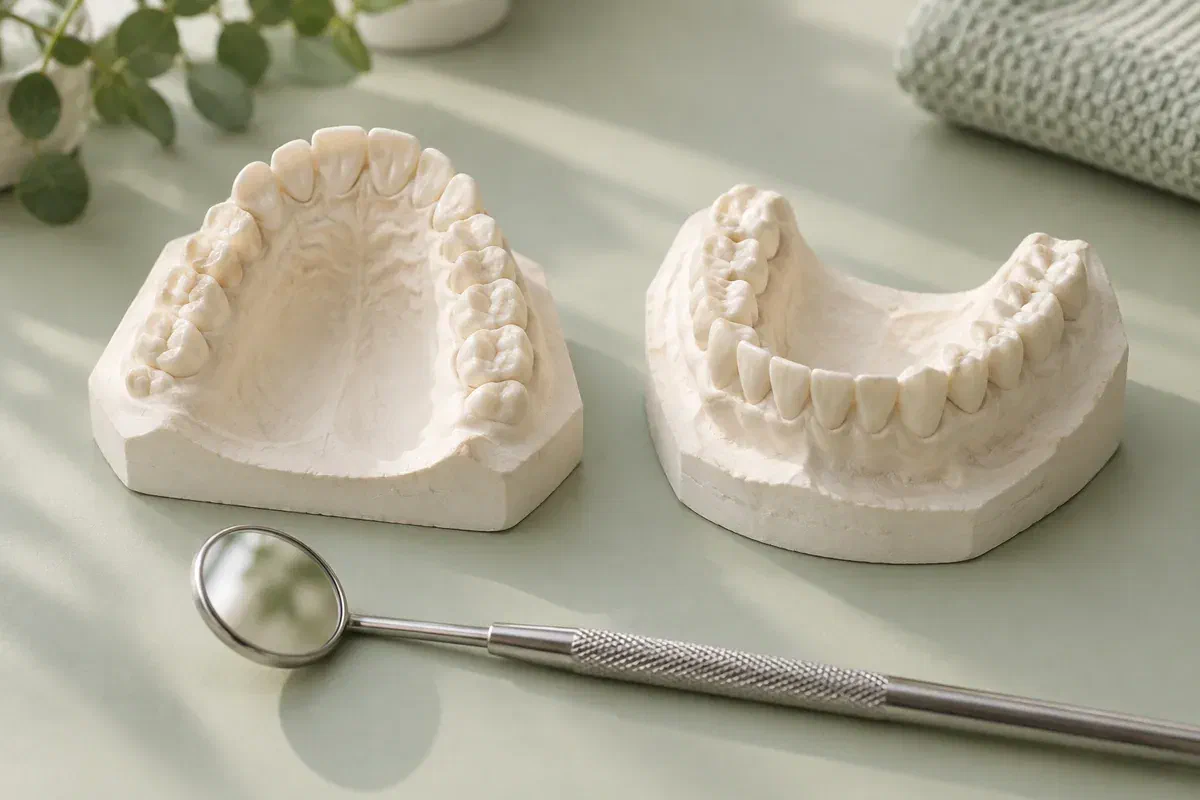
Illustrative upper and lower dental study casts arranged for a bite-planning discussion
Concerns that start in the mirror

Looks matter. So does how the teeth work.

Share what bothers you visually, and also how the bite behaves when you eat. Mention whether things have always looked this way or whether you have noticed a change.

Front teeth that don’t overlap the usual way

Describe both the look and what happens when you bite into food. The clinician can then judge which features come from tooth position and which from the jaws. That understanding should come before any cosmetic or orthodontic change is suggested.

A child’s smile that looks reversed

If the concern is a child’s, raise it at a checkup and ask whether an orthodontic opinion would help. Growth affects timing, so the advice is individual. Sometimes the plan is to watch and review rather than treat straight away.

Worn, chipped, or uneven front edges

Uneven edges often draw attention in photos. Mention chipping, previous bonding that keeps breaking, earlier appliances, or any change in your bite. These may need their own care, and not every problem is caused by the underbite itself.

Underbite is a visual description rather than a single diagnosis. Ask which parts of your appearance relate to the teeth and which to the jaws, and whether the front teeth reflect a broader bite pattern.

What an assessment tells you

Realistic expectations about the change you want

Cosmetic and orthodontic work can improve the look of the front teeth, but they do not move the jaws. Approaches that address the jaw relationship have a different aim and a bigger commitment. Asking what each plan would change, and what would stay the same, protects you from expecting a result it was never designed to give.

Some of the outcome is uncertain. Tooth response, gum health, existing restorations, and how well you can keep up with treatment all play a part. Knowing that from the beginning makes it easier to choose with confidence and to see why records or a specialist opinion might be advised.

A clear account of your bite

Ask to be shown what was found, and to have the main factors described in plain terms. Is it the teeth, the jaws, a closing shift, or a mix? Your cosmetic goals can then be matched against that explanation.

The visual limits of each option

Find out what bonding, veneers, or tooth movement could improve and what they could not, such as the profile. Ask which compromises are involved. You should not have to guess the difference from price or photos of other people.

Specialist input when it adds something

If an orthodontist or surgeon is suggested, ask what they would clarify and what would follow. Agree who looks after routine care and repairs. For anyone coming from Georgetown, knowing each visit’s purpose keeps planning manageable.

From photo to plan

How a cosmetic underbite concern is worked through

The order of steps depends on what the bite shows and what you want to achieve. Ask which questions can be answered at the first visit.

  1. Explain your goals, with photos if helpful

    Show what bothers you and describe how the bite feels when eating. Mention earlier orthodontics, cosmetic work, any jaw injury, and family history. Say whether appearance, function, or both matter most to you.

  2. Examine the bite behind the smile

    Teeth, gums, and the way the jaws close are examined, and the clinician decides whether photos, images, or models would help. Ask what each record shows. Any decay or gum problem needing care first is identified.

  3. Compare cosmetic, orthodontic, and wider options

    Review responsibilities, risks, stages, and fees for each suitable route. Ask whether specialist input is advisable and whether a proposal changes only the teeth or involves jaw correction. Be sure about irreversible steps, such as tooth preparation, before agreeing.

  4. Carry it out, then keep the result stable

    Confirm which provider handles each stage and how they will coordinate. Follow instructions for any appliance or restoration and attend reviews. Before finishing, discuss retention, care of any cosmetic work, and how the bite will be monitored.

Caring for the result

Aftercare follows the treatment you chose.

Orthodontic appliances, restorations, growth-based approaches, and surgery each need different care. Use the instructions from the provider responsible for your particular treatment.

Note the instructions at every stage

Confirm wear time, cleaning, any home adjustments, and the next review. If a child is involved, agree which tasks need help. Get in touch early about problems instead of changing the routine without advice.

Protect cosmetic work and natural teeth alike

Keep up with cleanings and checkups, which matter for bonding and veneers as well as natural teeth. Tell each provider about the others’ work. Agree who should see a chipped restoration, gum issue, or sore tooth between specialist visits.

Plan for after active treatment

Retainers and reviews usually follow tooth movement. After any surgery, the surgeon’s instructions take priority. Ask how the bite and the appearance you have worked toward will be maintained.

Matching treatment to the goal

Surface, tooth position, or jaw relationship?

Each route improves some things and leaves others. Growth, how marked the jaw difference is, oral health, and your own priorities determine which are worth discussing.

When moving teeth can create the improvement

Orthodontics where teeth are the main issue

Braces or suitable clear aligners may be considered after assessment, sometimes alongside cosmetic finishing. Find out how the smile could look with the jaws left untouched, and what compromise that leaves. Let those aims guide the method.

When a child or teen is still developing

Growth-related care for younger patients

A specialist may suggest an early approach for some growing patients. Ask what it aims to accomplish and what may follow. It cannot promise how the face and jaws will develop.

When the jaws are the main contributor

Orthodontic and surgical treatment together

If the appearance you want depends on changing the jaw relationship, orthodontic and surgical specialists may weigh that correction against what non-surgical care can offer. It is a significant decision in its own right. Ask about sequence, recovery, risks, and alternatives.

Patient information: American Association of Orthodontists — coordinated surgical orthodontic care

Smile and appearance questions

Questions about how an underbite looks

A good consultation separates teeth, jaws, and growth so your goals can be matched to realistic options. It should also let you say how much treatment you want.

(905) 876-4488
Can bonding make lower teeth that sit in front look less noticeable?
Bonding can change the shape or length of teeth, but it does not move them or the jaws, and the bite may limit what is safe to add. Ask whether bonding has any role and what it would not change.
Why does my underbite look more obvious in side photos?
A side view shows the relationship of the lips, chin, and jaws, not just the teeth. Ask whether your profile reflects tooth position, jaw position, or both, and what each kind of treatment could change.
Can veneers be placed when the lower teeth close over the upper ones?
It depends on how the teeth meet. Restorations on teeth under unusual forces may be at greater risk of chipping. Ask the clinician whether the bite would need attention first.
Will treating the teeth alone change how my smile looks when I talk?
Moving or reshaping teeth can change how they show when you speak or smile. Ask for a realistic description of what would and would not look different, so expectations match the plan.
Can I see a preview of what treatment might achieve?
Some providers use photos, models, or digital planning to discuss possible changes. Ask how closely any preview reflects a likely result, since it is a planning aid rather than a promise.
What should I bring from Georgetown to a cosmetic bite consultation?
Photos that show what bothers you, records from any earlier orthodontic or cosmetic work, and a list of questions. That helps us focus the visit on your goals.
Visit from Georgetown

Understand your smile before changing it.

Arrange a consultation at our Bronte Street practice to discuss lower teeth that sit ahead of the upper ones, the way your smile looks in photos, or a child’s developing bite. You will hear what the examination shows and which next steps may suit.

Need, scope, timing, specialist involvement, and fees can only be set out after an assessment. No restoration or appliance can guarantee a particular appearance or the avoidance of future care.

Visit Milton Dental Clinic
Unit 1, 342 Bronte St. S, Milton, ON L9T 5B7
Get directions Clinic hours
Monday–Thursday
11am–7pm
Friday–Sunday
By appointment only

Areas we serve

  • Milton
  • Oakville
  • Mississauga
  • Georgetown
  • Halton Hills
  • Acton
  • Campbellville
  • Brampton
  • Burlington
  • Puslinch
  • Rockwood
  • Erin
  • Caledon
  • Etobicoke
  • Old Milton
  • Bronte Meadows
  • Timberlea
  • Dorset Park
  • Dempsey
  • Clarke
  • Beaty
  • Coates
  • Harrison
  • Scott
  • Willmott
  • Ford
  • Bowes
  • Cobden
  • Walker
  • Mountain View
  • Milton Heights
  • Hawthorne Village
  • Valley View
  • Fallingbrook
  • Nassagaweya
  • Trafalgar
  • Esquesing
  • Nelson
  • Brookville
  • Moffat
  • Glen Williams
  • Norval
  • Limehouse
  • Stewarttown
  • Ashgrove
  • Hornby
  • Silver Creek
  • Speyside
  • Scotch Block
  • North Oakville
  • River Oaks
  • Glen Abbey
  • West Oak Trails
  • Palermo
  • Bronte Creek
  • College Park
  • Joshua Creek
  • Uptown Core
  • Preserve
  • Iroquois Ridge
  • Lisgar
  • Meadowvale
  • Meadowvale Village
  • Churchill Meadows
  • Erin Mills
  • Central Erin Mills
  • Streetsville
  • East Credit
  • Creditview
  • Heartland
  • Sheridan
  • Mount Pleasant
  • Credit Valley
  • Huttonville
  • Churchville
  • Springbrook
  • Northwest Brampton
  • Bram West
  • Fletcher's Meadow
  • Fletcher's Creek South
  • Alton Village
  • Orchard
  • Millcroft
  • Headon Forest
  • Tansley
  • Brant Hills
  • Tyandaga
  • Kilbride
  • Lowville
  • Aberfoyle
  • Morriston
  • Arkell
  • Hillsburgh
  • Freelton
  • Carlisle
  • Waterdown
  • Flamborough
  • Mountsberg

How can we help?

Milton Dental Clinic

Have a question about your smile? Choose the option that works best for you.

For urgent dental concerns, please call.
Messages are reviewed during clinic hours.