

Illustrative patient and clinician reviewing upper and lower dental models during a bite discussion
Cosmetic Dentistry

Treatment for Underbite in Halton Hills

Teenage years bring a particular underbite question: start treatment now, or let growth finish first? Families across Halton Hills can have tooth positions, jaw relationship, and growth stage assessed so that timing is explained with reasons, not guesswork.

Teens and timing

Growth is still part of the picture for teenagers.

By the teenage years, most adult teeth are in, but the jaws may not have finished developing. That matters when the lower front teeth close ahead of the upper ones. If tooth position is the main factor, orthodontics may be discussed now. If the jaws are involved, the stage of growth can change what is sensible.

No single sign tells you which case applies. The clinician considers how the back teeth fit, whether the jaw slides forward on closing, the health of teeth and gums, and clues about remaining growth. A family resemblance or a selfie might raise the question, yet neither can answer it.

From Georgetown, Acton, Glen Williams, or one of the smaller hamlets, bring your teen, any earlier dental records, and the questions you both have. Adults are equally welcome. We will explain what an assessment involves and what might follow. Being assessed does not commit anyone to an appliance, and surgery is not assumed.

Book a teen bite assessment
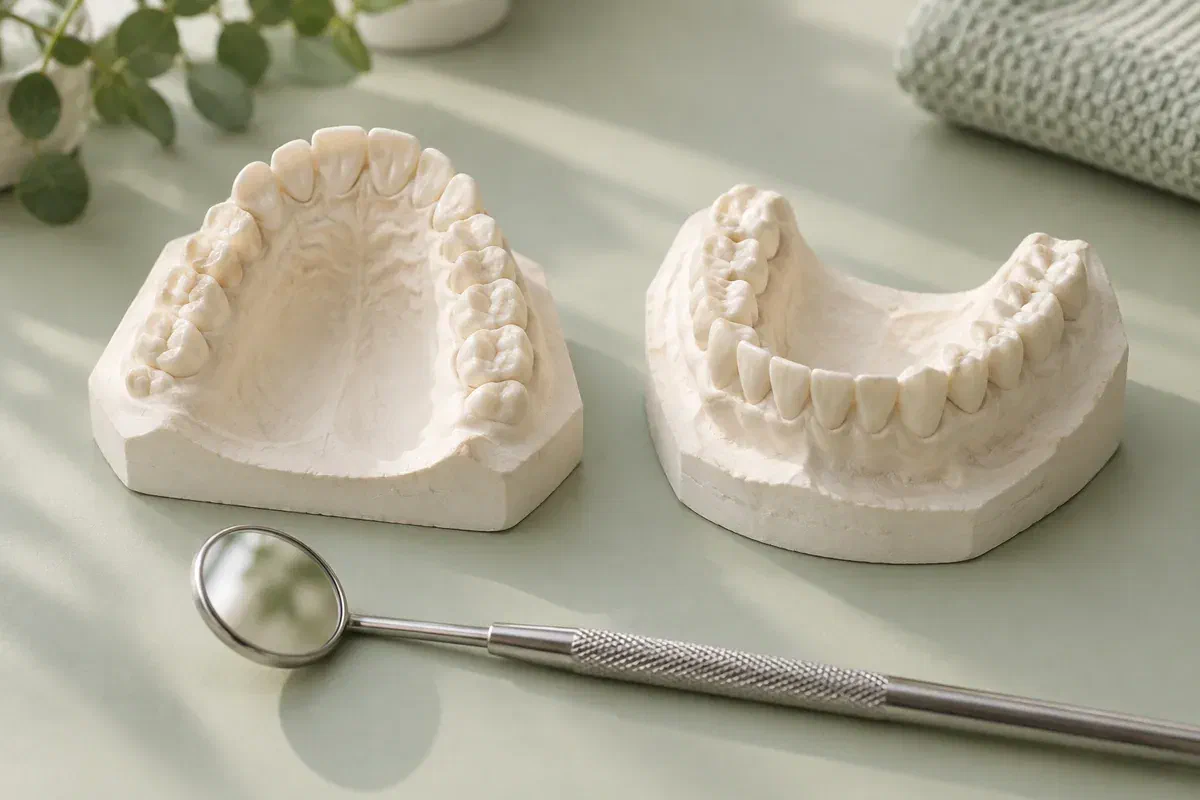
Illustrative upper and lower dental study casts arranged for a bite-planning discussion
What teens and parents mention

Function, confidence, and change

It helps to hear from both the teen and the parent. Say whether the bite has looked the same for years, seems to be getting more noticeable, or changed during a growth spurt.

Front teeth that won’t cut food cleanly

Teens often adapt without mentioning it, so ask how they bite into things like pizza crust or fruit. Their answer helps the clinician tell tooth-position findings from jaw factors before correction is discussed.

A bite that seems more obvious after a growth spurt

Mention when you first noticed the change and ask whether an orthodontic opinion is appropriate. Timing depends on growth, so it is decided case by case. Sometimes the right step is monitoring with planned reviews.

Chips, wear, or problems after earlier appliances

Point out chipped edges, earlier expanders or braces, or a bite that has shifted since treatment. These details can alter the plan or need their own care. Each issue should be assessed rather than blamed on the underbite automatically.

The word underbite does not identify one jaw problem. Ask whether the findings in your teen’s case are mostly dental, mostly skeletal, or both, and whether the front teeth are part of a broader pattern.

Why assess before choosing

Timing makes more sense once the cause is clear.

A teen’s options depend heavily on what is driving the bite. Repositioning teeth may be reasonable during the teenage years, while a jaw-related bite may call for a different conversation about when and how to act. Asking each plan what it changes, and what it leaves, gives a fairer comparison than appliance style.

There is uncertainty to acknowledge as well. Growth may continue in ways nobody can predict precisely, teeth respond differently, and wearing appliances consistently is a real commitment for a busy teenager. Understanding that helps families decide together and see why records or a specialist opinion may be recommended.

An explanation your teen understands too

Ask the clinician to show the findings and describe the main contributors in plain words. Is it teeth, jaws, a forward shift, or a mix? When your teen understands the reason, they are better placed to take part in the decision.

Honest limits for each option

Discuss what tooth movement could not change and whether waiting for growth to finish would open different choices. Ask which compromises come with each path. Plans should be distinguished by aims, not by appliance names.

A coordinated route if specialists are needed

If an orthodontist or other specialist is suggested, ask what they will help decide and what happens next. Agree who handles routine checkups and repairs. Knowing each visit’s role helps households in Halton Hills plan around school terms.

Assessing a teenage underbite

History, examination, options, then follow-through

The order of care depends on findings, growth stage, and goals. Ask what can be decided straight away and what is better revisited after a period of monitoring.

  1. Hear from the teen and the parent

    Describe the bite, when it became noticeable, and what matters most, whether that is chewing, appearance, or comfort. Share earlier orthodontic treatment, any sports injuries to the face or jaw, dental work, and family history.

  2. Examine the bite and consider growth

    The clinician checks teeth, gums, and the closing pattern and decides which records would clarify the bite and growth stage. Ask what each record is for. Any other dental need that should be handled first is noted.

  3. Weigh treating now against waiting

    Review options with their responsibilities, risks, stages, and fees. Ask whether a specialist is needed, and whether the proposal is limited to tooth movement or anticipates a later jaw correction. Take time with the decision, especially for irreversible steps.

  4. Follow the plan and review through growth

    If treatment begins, confirm who leads each stage and how they will share updates. Follow appliance instructions and attend reviews. Toward the end, discuss retainers, remaining dental needs, and how the bite will be watched as growth finishes.

During a teen’s treatment

Routines a teenager can actually stick to

Braces, aligners, growth appliances, and surgical plans each have their own instructions. Follow the guidance from the provider managing your teen’s actual treatment.

Set expectations together

Confirm wear hours, cleaning, any adjustments, and the next review before leaving. Decide which tasks your teen owns and where a parent checks in. Report problems early rather than letting wear time slip or adjusting anything without advice.

Keep regular dental visits going

Cleanings and checkups remain important, as brackets and aligners can make cleaning harder. Let each provider know what the others are doing. Agree who handles a broken filling, sore gum, or tooth pain between orthodontic visits.

Plan for retainers and beyond

Retainers and follow-up usually come after tooth movement. If jaw surgery is considered once growth is complete, the surgeon’s recovery instructions apply. Ask how the bite and dental health will be monitored into adulthood.

Routes for a teenage bite

Some plans act now; others plan for later.

Ask what each option addresses and what it leaves in place. The stage of growth, the nature of the bite, oral health, and what your teen wants all shape the conversation.

When repositioning teeth can meet the goal

Orthodontics for tooth-position problems

Braces or appropriate aligners may be discussed after assessment. Ask what would improve without any change to the jaw relationship and what compromise might remain. The goal should guide the choice of appliance.

When development is not yet complete

Approaches that use remaining growth

For some teens, a specialist may consider an approach timed around growth. Ask what it would accomplish and what may still be needed later. It cannot guarantee how the jaws will finish developing.

When a significant jaw difference remains

Orthodontic and surgical planning after growth

Some young adults are advised to hear orthodontic and surgical opinions together, comparing correction with non-surgical limits. This is a separate, careful decision, often made once growth has finished. Ask about sequence, recovery, risks, and alternatives.

Patient information: American Association of Orthodontists — coordinated surgical orthodontic care

Teen underbite questions

What families in Halton Hills want to know

A helpful appointment explains how teeth, jaws, and growth interact for your teen. It also gives everyone space to say how much treatment feels right.

(905) 876-4488
How can a dentist tell whether a teenager is still growing?
Age is only a rough guide. The clinician may consider dental development, records, and medical or family information. Ask how growth stage is being judged in your teen’s case and how certain that judgment is.
Is it better to wait until growth stops before treating a teen’s underbite?
Sometimes waiting is sensible, and sometimes treatment during the teenage years is appropriate. It depends on what is driving the bite. Ask what waiting would gain or lose.
Can contact sports continue during underbite treatment?
Often, with suitable protection. Ask the treating provider about mouthguards that work with braces or other appliances, and what to do if there is an impact to the face.
Will braces for an underbite change the shape of my teen’s chin?
Moving teeth alone usually has limited effect on jaw shape. Ask what change in appearance, if any, a proposed plan is expected to bring, so expectations are realistic from the start.
What happens if my teen stops wearing an appliance as directed?
Progress may slow or the plan may need changing. Contact the treating provider early so they can adjust the approach rather than discovering the problem at a later review.
Can we arrange visits from Halton Hills around the school calendar?
Our Bronte Street practice is open Monday to Thursday, 11am to 7pm, with Friday to Sunday by appointment. Ask when booking about times that suit school schedules.
From Halton Hills

Get the timing question answered with reasons.

Bring your teen to our Bronte Street practice if their lower teeth close ahead of the upper ones, chewing seems awkward, or the bite looks different than it did a year or two ago. You will leave knowing what we found, whether an orthodontic opinion makes sense, and what to watch.

Whether to treat, how far to go, when to start, who should be involved, and the cost can only be set out after an assessment. No appliance can guarantee how growth will proceed or rule out further care.

Visit Milton Dental Clinic
Unit 1, 342 Bronte St. S, Milton, ON L9T 5B7
Get directions Clinic hours
Monday–Thursday
11am–7pm
Friday–Sunday
By appointment only

Areas we serve

  • Milton
  • Oakville
  • Mississauga
  • Georgetown
  • Halton Hills
  • Acton
  • Campbellville
  • Brampton
  • Burlington
  • Puslinch
  • Rockwood
  • Erin
  • Caledon
  • Etobicoke
  • Old Milton
  • Bronte Meadows
  • Timberlea
  • Dorset Park
  • Dempsey
  • Clarke
  • Beaty
  • Coates
  • Harrison
  • Scott
  • Willmott
  • Ford
  • Bowes
  • Cobden
  • Walker
  • Mountain View
  • Milton Heights
  • Hawthorne Village
  • Valley View
  • Fallingbrook
  • Nassagaweya
  • Trafalgar
  • Esquesing
  • Nelson
  • Brookville
  • Moffat
  • Glen Williams
  • Norval
  • Limehouse
  • Stewarttown
  • Ashgrove
  • Hornby
  • Silver Creek
  • Speyside
  • Scotch Block
  • North Oakville
  • River Oaks
  • Glen Abbey
  • West Oak Trails
  • Palermo
  • Bronte Creek
  • College Park
  • Joshua Creek
  • Uptown Core
  • Preserve
  • Iroquois Ridge
  • Lisgar
  • Meadowvale
  • Meadowvale Village
  • Churchill Meadows
  • Erin Mills
  • Central Erin Mills
  • Streetsville
  • East Credit
  • Creditview
  • Heartland
  • Sheridan
  • Mount Pleasant
  • Credit Valley
  • Huttonville
  • Churchville
  • Springbrook
  • Northwest Brampton
  • Bram West
  • Fletcher's Meadow
  • Fletcher's Creek South
  • Alton Village
  • Orchard
  • Millcroft
  • Headon Forest
  • Tansley
  • Brant Hills
  • Tyandaga
  • Kilbride
  • Lowville
  • Aberfoyle
  • Morriston
  • Arkell
  • Hillsburgh
  • Freelton
  • Carlisle
  • Waterdown
  • Flamborough
  • Mountsberg

How can we help?

Milton Dental Clinic

Have a question about your smile? Choose the option that works best for you.

For urgent dental concerns, please call.
Messages are reviewed during clinic hours.