

Illustrative patient and clinician reviewing natural tooth shades for an existing veneer concern
Cosmetic Dentistry

Veneer Replacement

A chipped, loose, or mismatched veneer calls for a review of more than its surface. Discuss veneer replacement in Milton to assess the existing material, the tooth underneath, and whether repair, rebonding, or a new restoration is the appropriate next step.

A closer look at veneer replacement

Understand why the veneer needs attention before making another.

Veneer replacement involves assessing an existing covering and deciding whether a new one is needed. The concern may be a chip, a loose bond, an unsatisfactory shade, or a change around the edge. The veneer and the tooth beneath it need to be considered together before the next treatment is chosen.

Replacement is not automatically the answer to every defect. Depending on the material, damage, and tooth condition, the discussion may include polishing, repair, rebonding, monitoring, or another type of restoration. Understanding why the current veneer has a problem can help shape a more appropriate plan.

At Milton Dental Clinic, bring the history you have, including when the veneer was placed and any previous repairs. If it has come off, keep it safe and contact the team for advice. We can discuss the assessment needed and help you understand the choices before further tooth preparation is undertaken.

Discuss an existing veneer
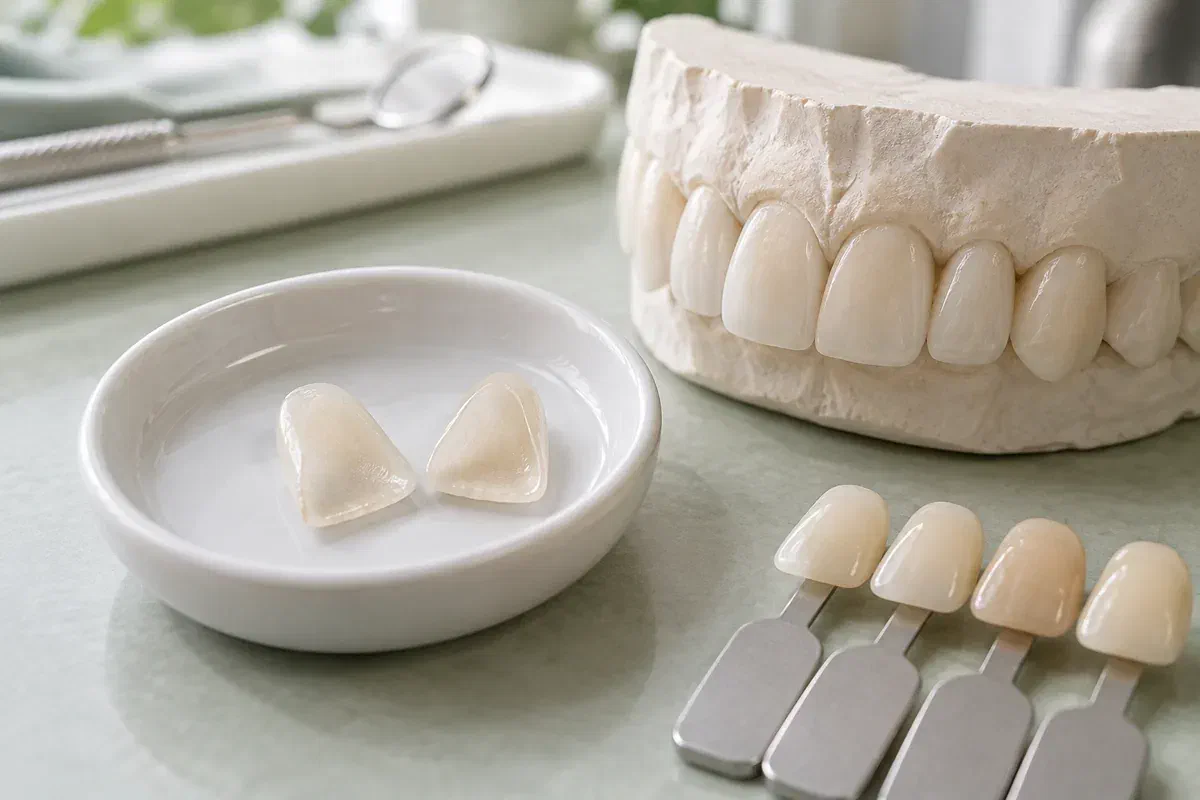
Illustrative thin ceramic veneer samples in a dish beside a dental cast and shade guide
What has changed about the veneer?

Describe the damage, the appearance, and how the tooth feels.

The next step depends on more than the age of the restoration. Explain when the concern began, whether there was an injury or biting event, and what result you hope for.

A chip, crack, or detached veneer

Contact the clinic and describe the damage, sharpness, and any symptoms. Keep a detached piece in a safe container if available. Ask what to do until assessment; do not try to bond it back with household glue or alter the tooth yourself.

An edge, stain, or shade difference

Point out the area and explain whether the appearance changed gradually or suddenly. Ask whether the concern comes from the surface, the margin, the surrounding teeth, or another finding. A visible line does not by itself establish that the whole veneer must be replaced.

Sensitivity, soreness, or an uncomfortable bite

Mention cold sensitivity, pain on biting, gum irritation, or a contact that feels different. These symptoms need examination rather than an appearance-only solution. The tooth and supporting tissues may require care before a new cosmetic covering is considered.

A veneer is a restoration attached to a natural tooth. The tooth can still develop dental problems, so a replacement discussion should include its health and remaining structure rather than focus only on colour.

What a replacement assessment can clarify

Choose the next restoration with the cause and the alternatives understood.

A useful review explains what is wrong with the existing veneer and whether the issue can be managed conservatively. Ask what would be preserved with repair or refurbishment and what replacement would involve. The recommendation should be based on the findings, not simply an assumed lifespan.

If a new veneer is appropriate, planning gives you an opportunity to discuss the shape and shade you want alongside the tooth's practical needs. That includes contacts, cleaning, and future maintenance. A new appearance should be considered with the conditions that the restoration must work within.

Patient information: FDI World Dental Federation — evaluating repair before total replacement

A reason for repair or replacement

Ask which part of the veneer or tooth makes the recommended approach appropriate. If a smaller intervention is unsuitable, request an explanation of why. Understanding the tradeoff helps you compare the expected benefit with the implications of removing existing material.

A coordinated shade and shape discussion

Tell the clinician whether you want to match the current smile or are considering a broader colour change. Ask how one replacement would relate to neighbouring teeth and restorations. Any proposal to change additional veneers should be explained as a separate decision.

Attention to the reason for failure

Discuss whether bite contacts, clenching, injury, decay, or another finding needs attention alongside the veneer. Ask how the new plan responds to that information. Repeating the previous restoration without reviewing the problem may leave an important part of the decision unexplained.

Planning a veneer replacement

Review the restoration, reassess the tooth, and agree on the final design.

The visits depend on the existing material, findings, and proposed replacement. Ask about the assessment, any temporary stage, laboratory work, and what is included in the fee.

  1. Review the veneer and its history

    Explain when it was placed, what has changed, and any earlier repairs or sensitivity. Bring available records or details of the material if you have them. The clinician examines the restoration, margins, bite, and surrounding tissues and considers any additional investigation needed.

  2. Compare conservative options and a new restoration

    Discuss whether monitoring, polishing, repair, or rebonding is feasible before agreeing to removal. If replacement is recommended, ask about tooth preparation, possible findings underneath, and alternative restorations. The final plan may need to account for information revealed when old material is removed.

  3. Prepare and arrange the selected replacement

    The existing material is managed according to the agreed plan and the tooth is reassessed. Discuss shade, shape, records, and any temporary protection required. Confirm the expected appointment sequence without assuming a particular scanner, laboratory system, or same-day service.

  4. Review the fit and establish continuing care

    Before final placement, discuss the appearance and fit at the appropriate stage. Afterward, the contacts and finish are checked and care instructions explained. Ask when a review is recommended and how to report a bite, cleaning, or appearance concern.

Between visits and after replacement

Protect the restoration while continuing to care for the tooth beneath it.

Instructions differ for a temporary covering, a repaired veneer, and a newly bonded restoration. Confirm which advice applies to your stage and whom to contact if something changes.

Follow the instructions for any temporary stage

Ask about eating, cleaning, and what to do if a temporary loosens. Keep the practice contact information available and report a problem before the next appointment if needed. Do not use a temporary stage as a reason to attempt home cementing or adjustment.

Keep the margins and contacts clean

Continue the brushing and interdental-care routine recommended for you. Ask for help if floss catches, food traps, or the gum beside the veneer feels sore. A smooth-looking surface does not remove the need for routine dental examinations and cleaning.

Discuss protection and review any new symptoms

Avoid using teeth to open packaging or bite hard objects. If clenching, grinding, or sport-related protection is relevant, ask what advice fits your case. Report a changed bite, loosening, or persistent sensitivity rather than assuming the new restoration only needs time.

Choosing care for an existing veneer

The whole restoration does not always need the same response.

Compare the material, defect, tooth condition, and intended appearance. Ask how the proposed option balances preserving structure with a dependable and maintainable result.

When the existing restoration can reasonably be retained

Polishing, repair, or suitable rebonding

A localized concern may be manageable without complete replacement, depending on the findings. Ask about the limits, expected appearance, and follow-up of that approach. A conservative option still needs appropriate assessment and should not be mistaken for a guaranteed permanent fix.

When replacement fits the tooth and the problem

A new veneer with a considered design

Discuss the proposed material, preparation, shade, contour, and maintenance. Ask whether the replacement will match one tooth or form part of a wider plan. The condition of adjacent veneers should be considered individually rather than automatically replacing the entire set.

When the underlying tooth needs a different approach

Another restorative plan or further assessment

A tooth with substantial damage or another clinical problem may need care beyond a new veneer. Ask why a different restoration or specialist opinion is recommended and what it would involve. The original veneer type does not dictate every future treatment decision.

Veneer-replacement questions

Ask what can be kept, what needs changing, and why.

Bring the details of your existing restoration and the outcome you hope for. The examination determines whether replacement is appropriate and what alternatives deserve consideration.

(905) 876-4488
Does a small chip mean my entire veneer needs replacing?
Not always. The material, location of damage, bite, and tooth condition affect whether polishing or repair is suitable. Ask what the smaller option can achieve and why replacement is or is not recommended for the particular defect.
If my veneer comes off intact, can it simply be bonded back?
Rebonding may be considered in a suitable situation, but the veneer and tooth need examination first. Keep the piece safe and contact the clinic. The cause of detachment, fit, and condition need review before deciding whether reuse is appropriate.
Must all my veneers be replaced if only one has a problem?
No automatic rule requires replacing the full set. Ask about the condition of each veneer and the challenge of matching a single replacement. Any broader appearance plan should have its own explanation, alternatives, and consent rather than being assumed.
Can I whiten an old veneer instead of replacing it because of its shade?
Veneer materials do not bleach like natural teeth. Ask whether surface cleaning or polishing could address staining and how the shade relates to nearby teeth. Replacement for colour alone is an elective decision that should include its preparation and maintenance implications.
Could the plan change after the old veneer is removed?
Yes. Removal may reveal information about the tooth or existing preparation that affects the options. Discuss that possibility beforehand, including temporary protection and how any changed recommendation would be explained. A new veneer is not guaranteed to be suitable in every case.
Is a veneer's age alone enough reason to replace it?
Age is part of the history, but the current condition, fit, symptoms, and your preferences matter. Ask what specific finding justifies replacement and whether monitoring or a smaller intervention is reasonable. There is no universal replacement date for every veneer.

Patient information: Canadian Dental Association — bleaching and existing restorative materials

Veneer replacement in Milton

Bring the veneer concern and review the tooth behind it.

Contact our Bronte Street practice about a damaged, loose, or unsatisfactory veneer. We can assess the existing restoration, discuss what may be preserved, and explain a suitable plan for repair, replacement, or further care.

Material choice, repairability, tooth preparation, temporary needs, timing, and fees depend on assessment. A new veneer or exact shade match cannot be guaranteed in advance.

Visit Milton Dental Clinic
Unit 1, 342 Bronte St. S, Milton, ON L9T 5B7
Get directions Clinic hours
Monday–Thursday
11am–7pm
Friday–Sunday
By appointment only

How can we help?

Milton Dental Clinic

Have a question about your smile? Choose the option that works best for you.

For urgent dental concerns, please call.
Messages are reviewed during clinic hours.