

Illustrative patient and clinician reviewing natural tooth shades for an existing veneer concern
Cosmetic Dentistry

Veneer Replacement in Acton

Some veneers are intact and healthy, but you simply don't like them: too bright, too bulky, or the wrong shape for your face. From Acton, an assessment looks at the restoration and the tooth beneath it, so you can weigh refinement, replacement, or leaving it alone with a clear picture of what each involves.

Nothing's broken, but it isn't right

When the issue is how the veneer looks, not how it's holding up

Not every veneer conversation starts with damage. Sometimes a restoration that is perfectly secure looks chalky beside your natural teeth, sits a little thick, or has an outline you've never quite liked. Wanting it changed is a reasonable goal. Because replacement usually means removing the existing veneer, the choice deserves careful thought.

There may be gentler ways to improve things. Surface polishing can sometimes soften a dull finish, and minor contour adjustments may be possible depending on the material. In other situations, replacement is the realistic route to the look you want, or a different restoration is better suited to the tooth. The examination and your goals together shape the advice.

From Acton, it helps to bring photos of your smile you like and dislike, along with any history of the veneer and repairs. Be ready to describe exactly what bothers you. If the veneer happens to loosen or come off before your visit, keep it in a small container and call first for advice.

Discuss the look of your veneer
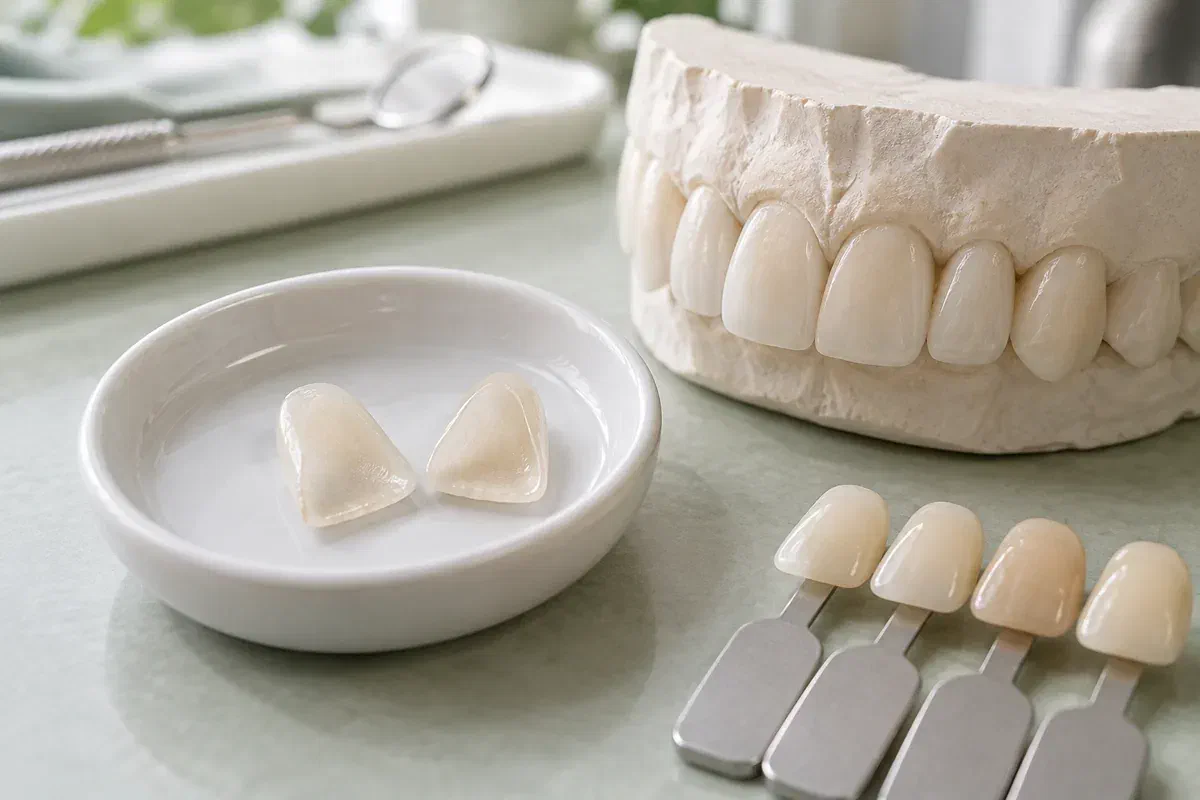
Illustrative thin ceramic veneer samples in a dish beside a dental cast and shade guide
Putting it into words

What exactly would you change?

The age of the veneer matters less here than what you see and feel. Describe the specific features that bother you, when you first noticed them, and what a better result would look like to you.

Small damage alongside a cosmetic concern

If there's also a chip, crack, or looseness, mention it when you call, along with any sharpness or discomfort. Keep a detached piece safe. Ask for interim advice, and avoid home adhesives or trying to smooth anything yourself.

Shade, translucency, or outline

Point to what seems off: a shade that's too light or too dark, an opaque look, a visible edge, or a shape that doesn't match its neighbour. The cause may lie in the veneer, the margin, or the surrounding teeth. Seeing it clearly helps decide whether replacement is necessary.

Comfort, sensitivity, or bite

Even when the main goal is appearance, mention cold sensitivity, soreness, gum irritation, or a bite that feels different. These need examining. The tooth or gums may require care before any elective change is considered.

A veneer is attached to a natural tooth that can still develop problems. Even an elective replacement should consider that tooth's health and remaining structure, because removing a veneer can affect what's left.

Making an elective choice well

Understand the cost to the tooth before changing the look.

With a cosmetic concern, the assessment's job is to show what's realistically achievable and what each route would involve. Ask whether refinement of the current veneer could get you close enough, and what a full replacement would mean for preparation and future maintenance. The advice should reflect your tooth, not a general preference for new work.

If you decide on a new veneer, planning is where shape, shade, and proportions are discussed in detail, alongside the tooth's practical demands. Contacts, how you'll clean around it, and long-term upkeep are part of the design. A more natural look still needs to function comfortably every day.

Patient information: FDI World Dental Federation — evaluating repair before total replacement

An honest view of the options

Ask whether polishing or adjustment could address your concern and what its limits would be. If replacement is the only realistic way to reach your goal, ask why. Knowing the tradeoff helps you decide whether the benefit is worth the preparation involved.

A shared picture of the result

Describe the tooth you're picturing, using photos if that helps. Ask how a single replacement will sit beside your natural teeth and other restorations. Changing additional teeth is a separate choice and deserves its own discussion.

Attention to function as well as looks

Discuss whether bite contacts, clenching, gum health, or another finding should influence the design. Ask how the plan takes these into account. A veneer chosen for appearance alone may overlook something important.

Planning an elective change

Talk, examine, design, and then decide

The number of visits depends on the existing material, the findings, and the restoration chosen. Ask what the consultation covers, whether a temporary is likely, how lab work affects timing, and what the fee includes.

  1. Explain what you'd like to change

    Describe the features that bother you and share the veneer's history if you know it. Bring photos or records. The dentist examines the restoration, edges, bite, and gums, and discusses what is realistic given the tooth's condition.

  2. Consider refinement before replacement

    Find out whether polishing, adjustment, or leaving it as it is would be sensible. If replacement is the better route, discuss preparation, what might be found underneath, and alternative restorations. Findings after removal can change the plan.

  3. Design the new veneer with you

    Once the old material is managed as agreed and the tooth rechecked, shade, shape, and records are discussed in detail. Ask about any temporary covering and the appointment order, without assuming same-day or lab-specific timing.

  4. Review the appearance before it's final

    At the appropriate stage, you'll have a chance to see the look and fit before permanent bonding. Afterward, the bite and surface are checked and care explained. Ask when to return and how to raise any concern about appearance, bite, or cleaning.

After a refinement or replacement

Keeping a new look looking right

A temporary stage, a polished or adjusted veneer, and a freshly bonded replacement each have their own instructions. Ask which apply to you and whom to contact with concerns.

Look after any temporary

Ask which foods to avoid, how to clean around it, and what steps to take if it moves. Keep the clinic's number handy, and phone ahead of your next visit if something goes wrong. Never attempt home cementing or reshaping.

Keep the area clean

Continue brushing and cleaning between your teeth as recommended. If floss catches, food collects, or the gum next to the veneer is sore, let us know. Regular checkups and professional cleaning are still part of looking after it.

Protect your investment in appearance

Avoid opening packaging with your teeth or biting very hard objects. If grinding or contact sports are a factor, ask about protection. Report a change in bite, looseness, or persistent sensitivity instead of waiting.

Weighing it up

Refine it, replace it, or leave it be

Think about the material, what bothers you, the tooth's condition, and how much change you're after. Ask how each option compares in preserving natural structure and delivering a result you can maintain.

When a modest improvement may be enough

Polish or adjust the current veneer

Depending on the material and findings, surface or contour refinement may soften a concern without removal. Ask what it can achieve and what it can't. Like any conservative option, it needs assessment and has limits.

When a new look requires a new restoration

Replace it with a redesigned veneer

Discuss material, preparation, shade, contour, and maintenance in detail. Ask whether this change is for one tooth or part of a larger plan. Other veneers should be judged on their own condition and your wishes, not replaced by default.

When the tooth is better suited to another option

Choose a different restoration

Damage or another clinical issue found during assessment may make a different restoration or a specialist opinion more appropriate. Ask why and what it would involve. Having a veneer now doesn't commit you to another.

Questions from Acton

Changing a veneer you're not happy with

Bring your goals and whatever you know about the veneer. The examination clarifies whether replacement is appropriate and what else might help.

(905) 876-4488
Is it reasonable to replace a veneer just because I don't like how it looks?
It can be, as an elective choice. Ask what replacement would involve for the tooth, including preparation and future maintenance, and whether a smaller refinement could address the concern first.
My veneer looks too thick. Can it be made thinner?
Sometimes contour can be adjusted, depending on the material and how much is safe to reshape. In other cases, a new veneer is needed to change the profile. The dentist will explain what applies.
Can I see what a new veneer will look like before it's bonded?
There is usually an opportunity to review appearance and fit at the appropriate stage before final placement. Ask how this works in your case and what can be changed at that point.
Can the shade of my old veneer be lightened?
Veneer materials don’t bleach like natural teeth. Polishing may help with surface stain, but changing the underlying shade usually means replacement. Ask about the tradeoffs.
Will removing a sound veneer harm my tooth?
Removal is planned carefully, but it can involve taking away bonded material, and what’s found underneath may affect options. Ask what preparation is expected and how the tooth will be protected.
Can the consultation and design visits from Acton be booked close together?
Ask when booking. Some steps can be scheduled close together, though timing depends on the findings, any lab work, and the plan you choose.

Patient information: Canadian Dental Association — bleaching and existing restorative materials

An appearance consultation for Acton

Show us what you'd change.

Arrange a visit to our Bronte Street practice to talk about a veneer whose shade, shape, or finish doesn't suit you. We'll look at it and the tooth it covers, discuss whether refinement could help, and explain what a replacement would involve.

What can be achieved, preparation, temporaries, timing, and fees depend on assessment. A particular appearance, new veneer, or exact shade match can't be guaranteed in advance.

Visit Milton Dental Clinic
Unit 1, 342 Bronte St. S, Milton, ON L9T 5B7
Get directions Clinic hours
Monday–Thursday
11am–7pm
Friday–Sunday
By appointment only

Areas we serve

  • Milton
  • Oakville
  • Mississauga
  • Georgetown
  • Halton Hills
  • Acton
  • Campbellville
  • Brampton
  • Burlington
  • Puslinch
  • Rockwood
  • Erin
  • Caledon
  • Etobicoke
  • Old Milton
  • Bronte Meadows
  • Timberlea
  • Dorset Park
  • Dempsey
  • Clarke
  • Beaty
  • Coates
  • Harrison
  • Scott
  • Willmott
  • Ford
  • Bowes
  • Cobden
  • Walker
  • Mountain View
  • Milton Heights
  • Hawthorne Village
  • Valley View
  • Fallingbrook
  • Nassagaweya
  • Trafalgar
  • Esquesing
  • Nelson
  • Brookville
  • Moffat
  • Glen Williams
  • Norval
  • Limehouse
  • Stewarttown
  • Ashgrove
  • Hornby
  • Silver Creek
  • Speyside
  • Scotch Block
  • North Oakville
  • River Oaks
  • Glen Abbey
  • West Oak Trails
  • Palermo
  • Bronte Creek
  • College Park
  • Joshua Creek
  • Uptown Core
  • Preserve
  • Iroquois Ridge
  • Lisgar
  • Meadowvale
  • Meadowvale Village
  • Churchill Meadows
  • Erin Mills
  • Central Erin Mills
  • Streetsville
  • East Credit
  • Creditview
  • Heartland
  • Sheridan
  • Mount Pleasant
  • Credit Valley
  • Huttonville
  • Churchville
  • Springbrook
  • Northwest Brampton
  • Bram West
  • Fletcher's Meadow
  • Fletcher's Creek South
  • Alton Village
  • Orchard
  • Millcroft
  • Headon Forest
  • Tansley
  • Brant Hills
  • Tyandaga
  • Kilbride
  • Lowville
  • Aberfoyle
  • Morriston
  • Arkell
  • Hillsburgh
  • Freelton
  • Carlisle
  • Waterdown
  • Flamborough
  • Mountsberg

How can we help?

Milton Dental Clinic

Have a question about your smile? Choose the option that works best for you.

For urgent dental concerns, please call.
Messages are reviewed during clinic hours.