

Illustrative patient and clinician reviewing natural tooth shades for an existing veneer concern
Cosmetic Dentistry

Veneer Replacement in Oakville

Your natural teeth got brighter, or a veneer slowly turned a shade darker, and now the two no longer agree. Coming from Oakville, you can have the old veneer and the tooth beneath it examined, then hear plainly whether polishing, repair, rebonding, or a new restoration fits.

When shades drift apart

The veneer stayed the same. Your smile moved on.

A colour mismatch is one of the most common reasons people start asking about a new veneer. Natural enamel can be whitened or can darken with age, while porcelain and composite largely keep their original shade. Before anything is changed, the veneer, its edges, and the natural tooth behind it deserve a careful look together.

Sometimes the answer is simpler than a replacement. Surface stain may respond to professional cleaning or polishing, a chipped corner may be repairable, and a sound veneer that has lifted may be suitable for rebonding. In other cases, a different restoration or a period of monitoring is wiser. The reason behind the change guides the choice.

If you're coming from Oakville, it helps to arrive with what you already know: roughly when the veneer was made, what it is made of, and any repairs. A veneer that has come off should be kept in a clean container, and a quick call beforehand lets the team advise you before any further preparation is discussed.

Talk to us about a mismatched veneer
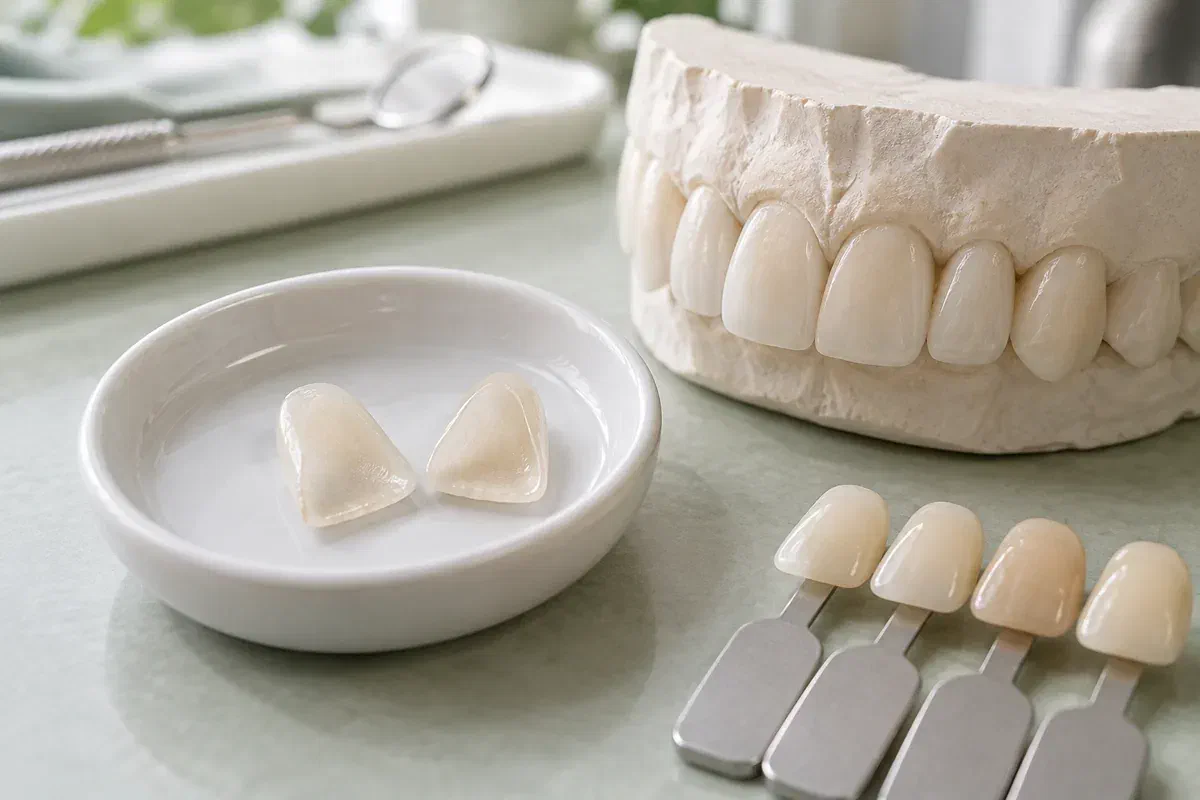
Illustrative thin ceramic veneer samples in a dish beside a dental cast and shade guide
What brings you in

Colour, damage, or discomfort: each tells us something different

A veneer's age tells only part of the story. Share when you first noticed the issue, whether an injury or a hard bite came first, and what you'd like the finished smile to look like.

A damaged or detached veneer

Call ahead and describe the break, any sharp spots, and how the tooth feels. Keep a loose veneer or fragment in a safe container. Ask how to protect the tooth until your visit, and don't reach for superglue or a nail file.

A shade that no longer blends in

Show us whether the difference is across the whole veneer, near the gumline, or limited to a stain. Mention whether you've whitened nearby teeth. The cause could be the veneer, its margin, the teeth around it, or another finding, and a mismatch alone doesn't settle the plan.

Discomfort when eating or drinking

Tell us about sharp cold sensitivity, pain when chewing, sore gums, or a bite that feels high. Discomfort points to something that needs examining, not just a colour change. The tooth and gums may need treatment before any cosmetic work.

Even a well-made veneer covers a living tooth that can develop decay, cracks, or gum problems. Replacement planning should account for that tooth's health and remaining structure, not only how the front surface looks.

Clarity before commitment

What a careful assessment can tell you

Above all, an assessment should identify exactly what has changed and whether a modest step could manage it. You can ask what a repair or refresh would preserve and what removing the old veneer would mean for the tooth. The advice should rest on what is found today rather than an expected lifespan.

When a replacement is the better option, the planning stage is your chance to describe the colour and shape you're after while the dentist considers what the tooth requires. Bite contacts, ease of flossing, and upkeep over time are part of that conversation. A brighter or better-matched result still has to work day to day.

Patient information: FDI World Dental Federation — evaluating repair before total replacement

Clear grounds for the recommendation

Ask which feature of the veneer or tooth makes the suggested approach the right one. If a lighter option has been ruled out, ask why. Knowing the tradeoff helps you weigh the improvement against removing existing tooth or material.

Colour decisions made deliberately

Decide whether you want the new veneer to match your current shade or to support a broader brightening plan. Ask how one veneer will compare with its neighbours. Changing other teeth or veneers is a separate decision with its own discussion.

The cause of failure addressed

Ask whether clenching, your bite, a past injury, decay, or something else contributed. Find out how the new plan takes that into account. Making a copy of the old veneer without understanding what went wrong may leave the same problem in place.

What the appointments involve

Assessment, choice, preparation, and review

How many visits you need depends on the old material, what the examination shows, and the replacement chosen. Ask what the first assessment covers, whether a temporary may be needed, how lab work is timed, and what the fee includes.

  1. Assess the existing restoration

    Share when the veneer was placed, how it has changed, and any repairs or sensitivity. Records or material details are useful if you have them. The dentist examines the veneer, margins, bite, and gums, and may recommend additional investigation.

  2. Compare the options openly

    Discuss whether polishing, repair, rebonding, or monitoring is realistic before any removal. If replacement is advised, ask about preparation, what might lie underneath, and other restoration types. The plan can change once old material is removed.

  3. Prepare and record the details

    The previous veneer is managed as agreed, and the tooth is assessed again. You'll talk through shade, shape, records, and temporary protection. Ask how the appointments will be sequenced rather than assuming a same-day or specific lab approach.

  4. Try in, place, and follow up

    You'll have a chance to review the look and fit at the appropriate stage. After placement, contacts and finish are checked and home care is explained. Ask when your review should be and how to report a bite, cleaning, or appearance concern.

Care at every stage

How to look after a temporary, a repair, or a new veneer

Each stage has its own instructions. Confirm which ones apply to you right now and who to call if something shifts, loosens, or starts to hurt.

Temporaries need extra caution

Ask what to avoid eating, how to brush around it, and what to do if it comes loose. Save the clinic's number and call if a problem appears before your next appointment. Avoid home cements or trying to adjust it yourself.

Clean the margins carefully

Follow the brushing and interdental routine suggested for you. Mention it if floss catches, food gets trapped, or the nearby gum is tender. Polished surfaces still need routine dental exams and professional cleaning.

Prevent damage and report changes

Skip using teeth as tools and avoid biting very hard objects. If grinding, clenching, or sports put the veneer at risk, ask what protection makes sense. Let us know about a bite change, loosening, or ongoing sensitivity instead of waiting.

Comparing approaches

Three ways forward for an existing veneer

Consider the material, the defect, the condition of the tooth, and the result you want. Ask how each option balances keeping natural structure with something dependable and easy to maintain.

When the current veneer can stay in service

Polishing, repair, or rebonding

A localized issue may not require a complete replacement, depending on the findings. Ask what this approach can and can't do, how it may look, and what follow-up is needed. Conservative care still needs assessment and isn't a permanent guarantee.

When replacement suits both tooth and concern

A new veneer planned around your goals

Discuss the material, preparation, colour, contour, and care involved. Ask whether the new veneer is meant to match one tooth or support a larger plan. Each neighbouring veneer should be judged on its own condition.

When the tooth beneath needs another approach

A different restoration or more investigation

Extensive damage or another clinical concern may call for treatment beyond a veneer. Ask why a different restoration or a specialist opinion is suggested and what it would involve. Your previous veneer type doesn't decide every future step.

Questions from Oakville

Mismatched, chipped, or loose? Here's what to ask.

Bring what you know about your existing veneer and the result you're hoping for. The examination shows whether replacement is right and what else is worth considering.

(905) 876-4488
I whitened my teeth and now one veneer looks darker. What are my options?
Veneer materials won’t lighten with whitening, so the contrast is common. Options may include polishing, accepting the difference, or replacing the veneer to suit the new shade. Ask the dentist what each would involve before deciding.
Should I whiten my natural teeth before getting a new veneer?
If you plan to whiten, it is often discussed before the new veneer’s shade is chosen, so the two can be matched. Ask about timing and whether whitening suits your teeth. The dentist will explain what applies to you.
Can a chipped veneer edge be smoothed instead of replaced?
A small chip can sometimes be polished or repaired, depending on where it is and what the veneer is made of. Ask what that would look like and whether it would hold up under your bite.
Coming from Oakville, can the replacement appointments be grouped?
It depends on the findings and the restoration chosen. A new veneer often involves an assessment, a preparation visit, and a placement visit. Ask how appointments could be grouped to reduce trips, and what to do if a temporary loosens between them.
Will my gums look different with a new veneer?
The gum line around a veneer depends on gum health and how the margin is designed. If you’ve noticed recession or a visible line, mention it. Ask how the new restoration’s edge will be planned and what limits apply.
If one veneer is replaced, do my other veneers need to change?
Not automatically. Each veneer is assessed on its own condition. If changing more than one is suggested, ask for a separate explanation of why, the alternatives, and what that broader plan would involve.

Patient information: Canadian Dental Association — bleaching and existing restorative materials

Planning a visit from Oakville

Get a straight answer on your veneer.

If your veneer now looks a shade off, or has chipped or loosened, give our Bronte Street practice a call. We'll check it alongside the tooth beneath, discuss what might be kept, and explain whether repair, replacement, or another plan fits.

Material, repair options, preparation, temporary needs, scheduling, and fees depend on your assessment. We can't promise a new veneer or a precise shade match in advance.

Visit Milton Dental Clinic
Unit 1, 342 Bronte St. S, Milton, ON L9T 5B7
Get directions Clinic hours
Monday–Thursday
11am–7pm
Friday–Sunday
By appointment only

Areas we serve

  • Milton
  • Oakville
  • Mississauga
  • Georgetown
  • Halton Hills
  • Acton
  • Campbellville
  • Brampton
  • Burlington
  • Puslinch
  • Rockwood
  • Erin
  • Caledon
  • Etobicoke
  • Old Milton
  • Bronte Meadows
  • Timberlea
  • Dorset Park
  • Dempsey
  • Clarke
  • Beaty
  • Coates
  • Harrison
  • Scott
  • Willmott
  • Ford
  • Bowes
  • Cobden
  • Walker
  • Mountain View
  • Milton Heights
  • Hawthorne Village
  • Valley View
  • Fallingbrook
  • Nassagaweya
  • Trafalgar
  • Esquesing
  • Nelson
  • Brookville
  • Moffat
  • Glen Williams
  • Norval
  • Limehouse
  • Stewarttown
  • Ashgrove
  • Hornby
  • Silver Creek
  • Speyside
  • Scotch Block
  • North Oakville
  • River Oaks
  • Glen Abbey
  • West Oak Trails
  • Palermo
  • Bronte Creek
  • College Park
  • Joshua Creek
  • Uptown Core
  • Preserve
  • Iroquois Ridge
  • Lisgar
  • Meadowvale
  • Meadowvale Village
  • Churchill Meadows
  • Erin Mills
  • Central Erin Mills
  • Streetsville
  • East Credit
  • Creditview
  • Heartland
  • Sheridan
  • Mount Pleasant
  • Credit Valley
  • Huttonville
  • Churchville
  • Springbrook
  • Northwest Brampton
  • Bram West
  • Fletcher's Meadow
  • Fletcher's Creek South
  • Alton Village
  • Orchard
  • Millcroft
  • Headon Forest
  • Tansley
  • Brant Hills
  • Tyandaga
  • Kilbride
  • Lowville
  • Aberfoyle
  • Morriston
  • Arkell
  • Hillsburgh
  • Freelton
  • Carlisle
  • Waterdown
  • Flamborough
  • Mountsberg

How can we help?

Milton Dental Clinic

Have a question about your smile? Choose the option that works best for you.

For urgent dental concerns, please call.
Messages are reviewed during clinic hours.