A cracked, chipped, or knocked-off veneer
Call and describe the impact, any sharp edges, and pain. Gather any pieces into a container. Ask how to protect the area until you're seen, and resist using household glue or smoothing the edge yourself.


A slip on the ice, an elbow during a game, or a fall off a bike can crack a veneer in a second. From Rockwood, the first concern is the tooth and any injury, then whether the damaged veneer can be repaired or rebonded, or whether a new restoration makes sense once things have settled.
When a veneer breaks because of an impact, the restoration is only part of what needs attention. The tooth behind it may have taken a blow too, and so may the gum, lip, or jaw. Those come first. Once any injury has been assessed and managed, attention can turn to the veneer itself and what would suit the tooth from here.
A cracked or chipped veneer after an accident doesn't always mean a full replacement. A small defect may be repairable, an intact veneer that popped off might be rebonded, and some teeth are best watched for a while before anything permanent is decided. In other cases, a new veneer or a different restoration is the right step.
In Rockwood, if the accident involved a hard hit to the face, significant pain, bleeding that won't settle, or a loose or broken tooth, call promptly or seek urgent care. Otherwise, phone the clinic to describe what happened. Keep any veneer pieces in a small container, and note when the veneer was first placed if you know.
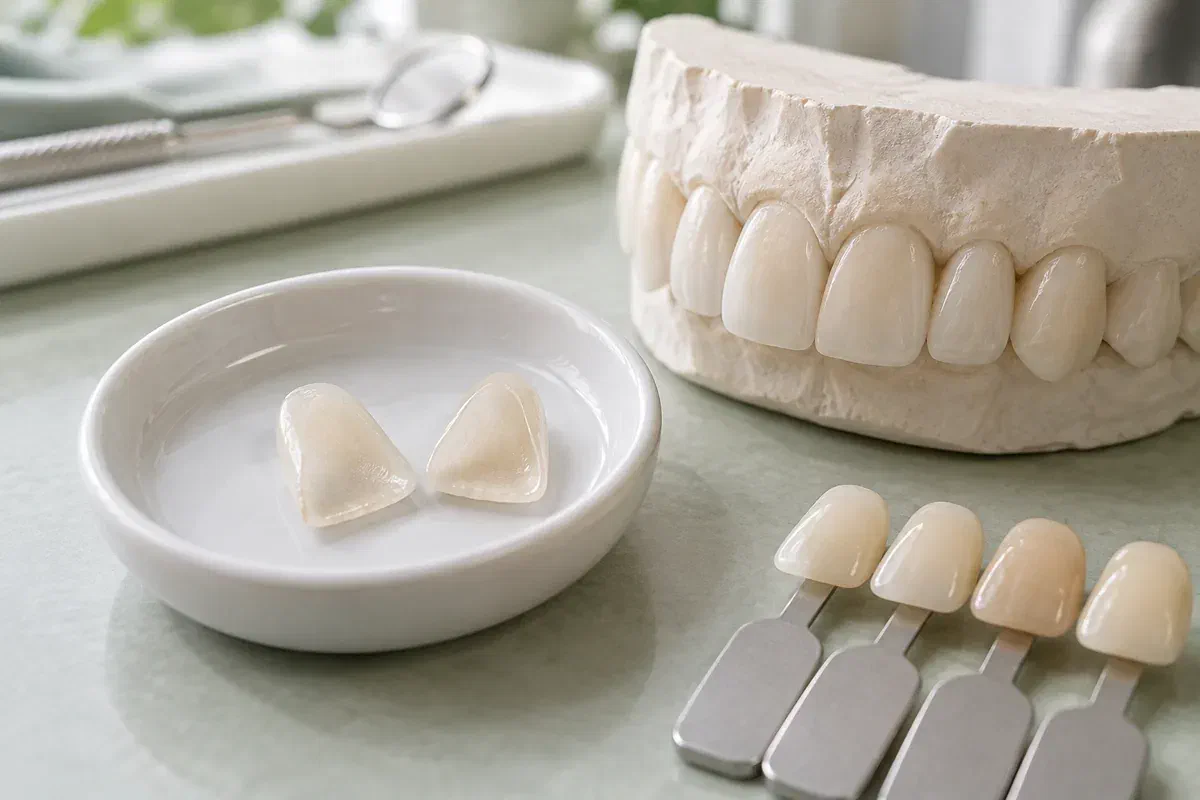
How the veneer broke is often more useful than its age. Tell us what happened, whether other teeth or your lips were hurt, how the tooth feels now, and what result you'd like in time.
Call and describe the impact, any sharp edges, and pain. Gather any pieces into a container. Ask how to protect the area until you're seen, and resist using household glue or smoothing the edge yourself.
Point out any new line, shadow, or shade shift, and whether it appeared right away or in the weeks since. It could come from the veneer, its margin, or a change in the tooth underneath. The dentist will explain what the finding means before discussing replacement.
Mention pain on biting, sensitivity, swelling, or a tooth that feels loose or meets the others differently. Injured teeth need examination and sometimes monitoring. Any cosmetic decision should wait until the tooth and gums have been assessed.
A veneer sits on a living tooth, and an injury can affect that tooth even when the veneer takes the visible damage. Planning should consider the tooth's health and structure, not just how the front looks.
After an injury, an assessment shows what has happened to both the veneer and the tooth beneath it. That determines whether a conservative step is reasonable now, whether a period of monitoring is wise, and what a replacement would eventually involve. Decisions follow the findings rather than the urge to fix the appearance quickly.
When a new veneer is appropriate, you can discuss the look you want while the dentist weighs what the tooth can support after its injury. How it meets the opposite teeth, cleaning access, and long-term care all shape the plan. Protection against another knock may be part of the conversation too.
Patient information: FDI World Dental Federation — evaluating repair before total replacement
Ask which part of the veneer or tooth damage leads to the suggested approach. If a smaller step won't work, ask why. Understanding this helps you weigh the benefit against removing more of what's left.
Say whether you'd like the restored tooth to match its neighbours as before or whether you're open to a change. Ask how one new veneer will compare with the teeth around it. Other teeth hurt in the accident may need their own plan.
Ask whether sport, work, bite contacts, or another factor puts the tooth at ongoing risk. Find out how the plan responds, such as with a mouthguard for activities where knocks are likely. Replacing the veneer alone may not reduce that risk.
Timing depends on the injury, the veneer material, and the restoration you and the dentist settle on. Ask what the first visit will check, whether the tooth needs a monitoring period, if a temporary is likely, and how fees are structured.
Tell the dentist what happened and bring the veneer pieces. The tooth, gums, bite, and surrounding area are examined, and imaging or further tests may be suggested. Any urgent treatment is dealt with before cosmetic plans.
Once the tooth's condition is clearer, discuss whether a repair, rebonding, or a period of monitoring makes sense. If a new veneer is advised, ask about preparation, what removal could reveal, and alternatives such as a different restoration.
Any remaining veneer material is managed as planned and the tooth reassessed. Shade, shape, records, and temporary coverage are agreed. Ask how many appointments to expect rather than assuming same-day results or a particular lab.
Before final bonding, you'll see the appearance and fit at the right stage. After placement, the bite is confirmed and care explained. An injured tooth may need periodic review, so ask how often and what changes to report.
Advice differs for a tooth being monitored, a temporary, a repaired veneer, and a new one. Confirm which applies to you and how to reach the team if anything changes.
Ask which foods to avoid, how to clean the area, and what to do if a temporary moves. Keep the clinic's phone number nearby and call ahead if a problem comes up. Avoid home cements or reshaping anything yourself.
Brush and clean between the teeth as recommended, gently if the gum is tender. If floss catches, food collects, or soreness persists, mention it. Ongoing exams and cleanings remain important.
Wear a mouthguard for contact sports or activities where a fall is likely, if it's recommended. Avoid biting hard objects. Report new pain, darkening of the tooth, looseness, or a change in your bite rather than waiting.
Bring the details of the accident, your veneer's history, and what you'd like to achieve. The examination will show whether replacement is right and which alternatives to consider.
Patient information: Canadian Dental Association — bleaching and existing restorative materials
Phone our Bronte Street practice to describe the accident and the damage. We'll advise on the next step, examine the tooth and veneer when you come in, and explain whether repair, rebonding, replacement, or monitoring suits you.
The plan, materials, preparation, temporaries, timing, and fees depend on the examination and how the tooth recovers. A new veneer or exact shade match can't be guaranteed in advance.
