

Illustrative patient discussing smile preferences and appointment planning with a clinician
Cosmetic Dentistry

Wedding Smile Consultations in Georgetown

Sometimes it is just one tooth: a chipped corner, a darker shade, an old filling that shows when you laugh. A wedding smile consultation for people coming from Georgetown looks closely at that single feature, your overall oral health, and whether a small, well-timed step makes sense at all.

That one tooth

A small detail can deserve a careful answer.

Many people do not want a new smile. They want one particular tooth to stop catching their eye in photographs. That might be a front tooth with a tiny chip from years ago, a single tooth that has turned slightly grey, or a filling that has not aged as well as its neighbours.

Focusing on one feature is sensible, but it still starts with an examination. The tooth itself, and the teeth and gums around it, need to be healthy enough for any change. Sometimes a minor concern turns out to have a health explanation; other times it is purely cosmetic and entirely your choice to address.

From Georgetown, a single-tooth question can often be handled with a short, focused plan. Share your wedding date, other events, and travel. We will explain what might be done for that tooth, how it would sit alongside the others, and when leaving it exactly as it is would be the better choice.

Ask about a single tooth
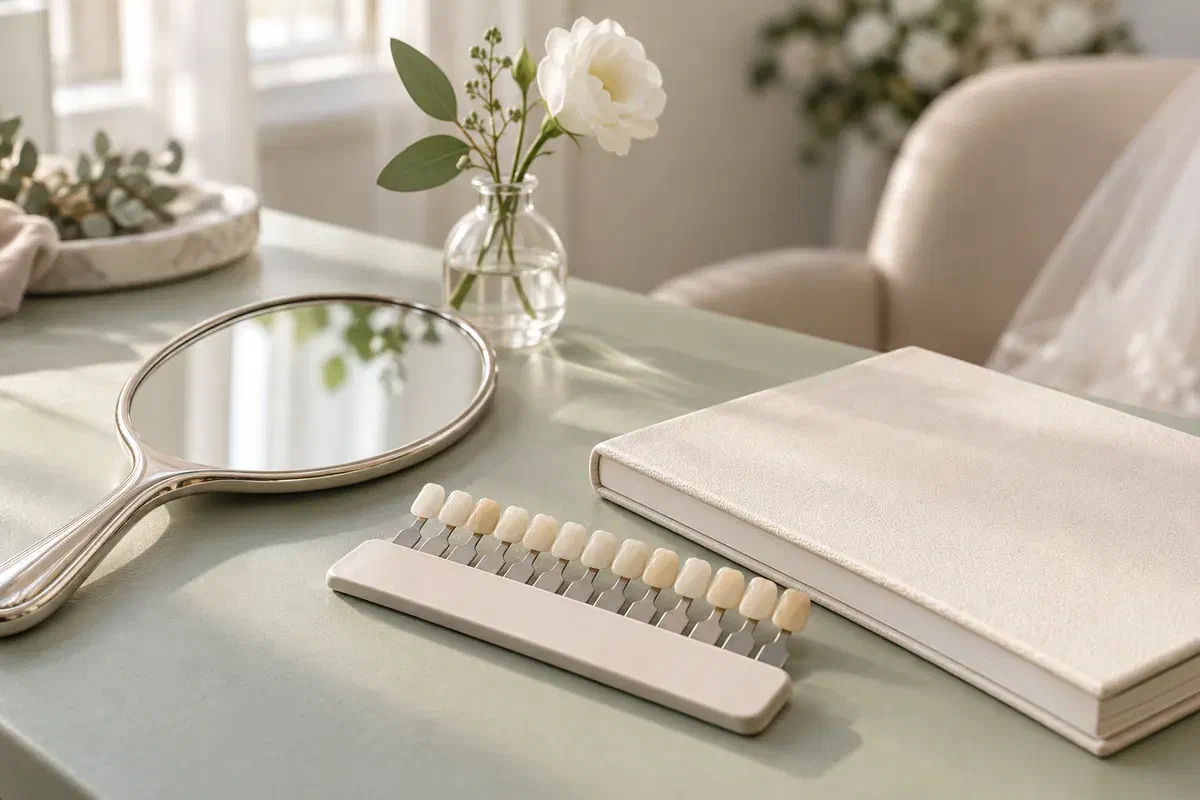
Illustrative consultation mirror and natural tooth shade samples beside a planner and white flower
Pointing to the spot

What is it about that tooth?

Describe the specific thing you notice. Colour, shape and comfort each lead to different questions, and how much upkeep you are willing to take on matters too.

It looks darker than the others

A single tooth that has darkened may relate to an old injury, a large filling or changes inside the tooth. It may not lighten the same way as the rest. Mention when you first noticed it and whether anything happened to that tooth in the past.

It has a chip, edge or old filling

Show exactly where the issue is. Ask whether it could be smoothed, repaired, covered, or simply left. A limited step may be possible, though some options involve more preparation than others. A photo of the look you want can guide the conversation, not the diagnosis.

It has started to feel different

Sensitivity, tenderness when biting, or a rough edge that bothers your tongue deserve attention before any cosmetic step. Raise them early, and mention which weeks will be hard for follow-up so the order of care can be planned sensibly.

A single noticeable tooth does not need changing for a wedding. Keeping it as it is, focusing on routine care, or planning a change after the celebration are all perfectly reasonable.

Why the neighbours matter

Changing one tooth means thinking about the ones beside it.

A tooth never appears on its own in a smile. If you plan to lighten your other teeth, any new filling or bonding on the problem tooth is usually matched afterwards, so the colours sit well together. Ask whether your plan has steps that depend on each other, which are optional, and where a pause to review makes sense.

Setting a clear goal helps too. You may want that tooth to blend in rather than become a feature. Agreeing on that target keeps a single-tooth plan from expanding into work on several teeth you were happy with.

A short plan with breathing room

Ask how many visits the work would need and whether lab steps, healing or a review are involved. Leave a gap before photos and travel. How much space is wise depends on the treatment and how the tooth settles.

An estimate for that tooth alone

Ask for the examination, necessary care and each option for the tooth to be listed separately. Find out what each fee covers, what might shift it, and whether the work will need maintenance or replacement in future.

Honest expectations about blending

Matching one restored or treated tooth to natural teeth around it is not always perfect. Ask what is uncertain about colour, shape or translucency. Another person’s single-tooth result cannot predict yours.

How a focused consultation runs

From one concern to one clear recommendation

You do not need to know the treatment in advance. The visit combines your dates and your concern with what the examination shows before any elective step is arranged.

  1. Tell us the tooth’s history

    Bring your wedding date, related events and any travel. Mention any knock, filling or root canal treatment on that tooth, past whitening, and any retainer. Explain whether you want it to blend in, feel better, or simply be checked.

  2. Assess the tooth and its surroundings

    The clinician examines the tooth, its neighbours and the gums, and explains whether an X-ray would help. Ask what the findings mean for health first. A single-tooth concern can have more than one cause.

  3. Compare small and larger options

    Review what each suitable option can achieve, its limits, fees and upkeep. Ask how many visits each takes and what happens if more are needed. If the date is close, consider the simplest route or waiting.

  4. Agree on a step and a check before the day

    Confirm the plan, any instructions, and when the result will be reviewed in good time before the wedding. If you start wanting more, talk with the team before adding another product or procedure.

After a small repair or check

Treat the new edge gently, and let it settle.

Care afterwards depends on the work you had, from routine treatment to bonding, whitening or a new restoration. Request instructions specific to that tooth and keep our number handy.

Keep the area clean

Brush and floss around the treated tooth as shown. If the gum nearby bleeds or food catches, ask about it. Wedding planning tends to rearrange routines, so choose simple habits you can keep.

Notice how it feels when you bite

If a repaired tooth feels high, sharp or sensitive, tell the team before any trip. Ask what to do if it chips or feels uncomfortable while you are travelling, and keep a note of the work that was done.

Avoid adding whitening around it

Whitening other teeth after a tooth has been repaired can change how well they match. Check before using any product. If something irritates your teeth or gums, stop using it and phone for advice.

Patient information: Canadian Dental Association — bleaching suitability, reactions, and professional advice

Options for one tooth

Leave it, improve it a little, or plan something fuller.

Compare care that focuses on health with a limited change and with a longer plan. Ask what each would mean for that tooth and the upkeep afterwards.

When the tooth is sound and you can live with it

Monitor it and keep things healthy

Treat any health needs and leave the tooth looking as it does. Ask whether a professional cleaning would help with surface stains and what it can realistically change. Preventive care should reflect your findings, not a wedding offer.

When a small step suits the tooth and the timing

A conservative, limited change

Bonding, a small repair, smoothing an edge or whitening may be discussed after assessment. Weigh the benefit against sensitivity, colour matching, upkeep and any preparation. No exact shade or photographic result can be promised.

For a tooth that needs more than a quick fix

A fuller restoration after the wedding

A crown, veneer or other restorative work may need several visits or lab time. Ask whether to begin now or later. Avoid irreversible preparation of a tooth simply because a gentler option would not finish before the date.

Patient information: Canadian Dental Association — bonding and veneers, including preparation and suitability

Single-tooth questions

Small concern, good questions

A consultation about one tooth may lead to treatment, a simple step, or a decision to leave it. Your wedding photos do not need a perfect tooth.

(905) 876-4488
What is the difference between bonding and a veneer for one tooth?
Bonding usually involves adding tooth-coloured material to the tooth, often with little or no preparation. A veneer generally means removing some enamel so a thin covering can be fitted, which is not reversible. The clinician can explain which, if either, suits your tooth.
Can a single darkened tooth be lightened on its own?
It depends on why it has darkened. Some causes call for a different approach from regular whitening, and some may be better addressed with a restoration. An examination and sometimes an X-ray help clarify the options.
If one tooth is repaired, will the teeth beside it look worse?
The aim is to blend the repaired tooth with its neighbours, but matching is not always exact. Ask about shade selection, and whether any planned whitening should come first.
Will I need an X-ray of the tooth that bothers me?
The clinician will decide based on what the examination shows. An X-ray can help explain colour changes or check for problems that are not visible, which may affect what is suitable.
Can I simply get advice and leave the tooth alone?
Absolutely. Understanding what is going on is a good reason to book. You can learn your options and decide not to change anything, now or ever.
How can I keep visits from Georgetown to a minimum for a one-tooth fix?
Mention your availability when booking, and ask at the consultation whether the work could be done in one appointment or would need more. The team can suggest a sequence that avoids unnecessary trips.
Wedding smile consultations in Georgetown

Get that tooth looked at properly.

Reach out to our Bronte Street practice and tell us about the tooth on your mind along with your wedding date. We will check it and your overall oral health, explain what suits you, and help you decide what to do next.

Suitability, timing, appearance changes, maintenance and fees are confirmed by assessment. Booking does not guarantee finished treatment by the wedding, nor any exact result.

Visit Milton Dental Clinic
Unit 1, 342 Bronte St. S, Milton, ON L9T 5B7
Get directions Clinic hours
Monday–Thursday
11am–7pm
Friday–Sunday
By appointment only

Areas we serve

  • Milton
  • Oakville
  • Mississauga
  • Georgetown
  • Halton Hills
  • Acton
  • Campbellville
  • Brampton
  • Burlington
  • Puslinch
  • Rockwood
  • Erin
  • Caledon
  • Etobicoke
  • Old Milton
  • Bronte Meadows
  • Timberlea
  • Dorset Park
  • Dempsey
  • Clarke
  • Beaty
  • Coates
  • Harrison
  • Scott
  • Willmott
  • Ford
  • Bowes
  • Cobden
  • Walker
  • Mountain View
  • Milton Heights
  • Hawthorne Village
  • Valley View
  • Fallingbrook
  • Nassagaweya
  • Trafalgar
  • Esquesing
  • Nelson
  • Brookville
  • Moffat
  • Glen Williams
  • Norval
  • Limehouse
  • Stewarttown
  • Ashgrove
  • Hornby
  • Silver Creek
  • Speyside
  • Scotch Block
  • North Oakville
  • River Oaks
  • Glen Abbey
  • West Oak Trails
  • Palermo
  • Bronte Creek
  • College Park
  • Joshua Creek
  • Uptown Core
  • Preserve
  • Iroquois Ridge
  • Lisgar
  • Meadowvale
  • Meadowvale Village
  • Churchill Meadows
  • Erin Mills
  • Central Erin Mills
  • Streetsville
  • East Credit
  • Creditview
  • Heartland
  • Sheridan
  • Mount Pleasant
  • Credit Valley
  • Huttonville
  • Churchville
  • Springbrook
  • Northwest Brampton
  • Bram West
  • Fletcher's Meadow
  • Fletcher's Creek South
  • Alton Village
  • Orchard
  • Millcroft
  • Headon Forest
  • Tansley
  • Brant Hills
  • Tyandaga
  • Kilbride
  • Lowville
  • Aberfoyle
  • Morriston
  • Arkell
  • Hillsburgh
  • Freelton
  • Carlisle
  • Waterdown
  • Flamborough
  • Mountsberg

How can we help?

Milton Dental Clinic

Have a question about your smile? Choose the option that works best for you.

For urgent dental concerns, please call.
Messages are reviewed during clinic hours.