

Illustrative clinician and patient discussing a tooth model during an enamel assessment
Cosmetic Dentistry

White Spot Treatment in Burlington

Worried that a chalky white patch means decay is starting? From Burlington, you can have the enamel examined, learn whether the mark is active, stable or developmental, and hear which next step fits before any cosmetic decision.

The first worry most people have

Is it decay?

Spotting a dull, chalky area while flossing tends to set off one thought: a cavity is on the way. Sometimes that instinct points in the right direction, because enamel that is losing minerals can look whiter before any hole appears. Just as often, the patch turns out to be something else entirely.

Developmental marks, fluorosis, and old areas of mineral loss that have since settled can all look similar to the eye. The colour by itself cannot settle the question. What matters is the texture, location and history of the spot, and whether anything is still feeding the process.

If you are coming from Burlington, we can examine the tooth, explain what we find in plain terms, and separate the health question from the appearance question. An early white spot is not automatically a reason to drill, and a stable one is not automatically a reason to cover it.

Have a chalky patch checked
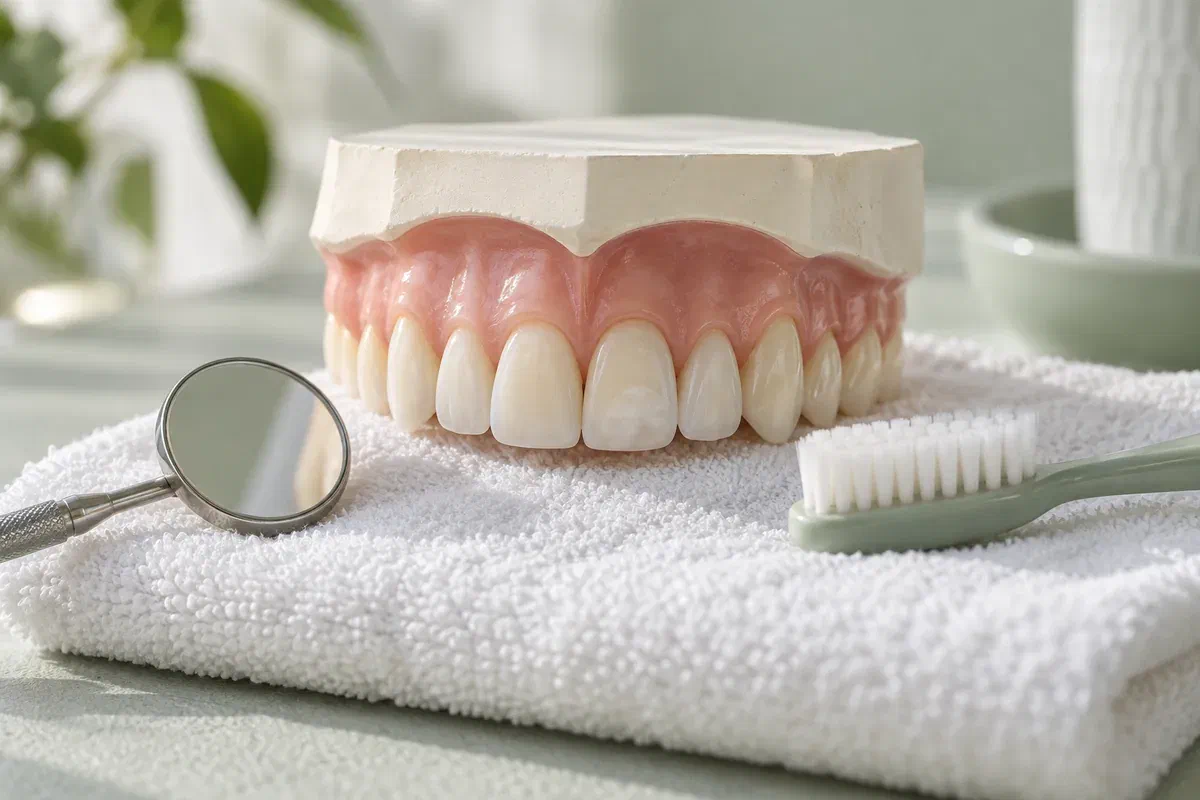
Illustrative dental teaching model with a subtle white enamel patch beside a mirror and toothbrush
Signs we pay attention to

Clues that point toward active, settled, or developmental

Our exam takes in the surface, nearby gums, and your cleaning routine. Even uncertain details are useful, so mention whatever you remember about when the mark appeared.

A dull patch in a spot plaque likes

Areas along the gumline, between teeth, or where brackets once sat collect plaque easily. A white patch there may mean minerals are being lost from the enamel. The first conversation is about what is driving that risk and how a preventive routine can slow or stop it.

Marks that seem to have always been there

Several teeth with a similar mottled or streaky look, or a mark you can see in old photographs, often trace back to how enamel formed. These are not decay, and they call for a different conversation about monitoring and appearance. Mention any history you know of.

A surface that has started to change

Sensitivity, a rough edge, a darker ring, or floss shredding at the site can signal that the surface is no longer intact. That changes the urgency. Please do not poke or scrape the area, and keep in mind a cosmetic product cannot repair a damaged surface.

Whiteness is a sign, not the full diagnosis. Some early mineral loss can be halted before a cavity forms; a broken surface or a different enamel condition may need its own treatment.

What a careful exam gives you

Health first, then the look, each judged on its own terms

Once the dentist knows what the patch is, the plan can name its goal. Stopping mineral loss is measured by whether the surface stays intact and stable. Improving the look is measured by how visible the mark is. Those two can move independently, so a spot that remains white may still be a success for the enamel underneath.

When appearance is on the table, ask how much the tooth would be changed. Some options keep enamel nearly as it is; others add material or require some preparation. Compare that against the likely gain and the maintenance. A smaller improvement can be a sensible aim, and doing nothing cosmetic to a healthy mark is a real option.

A diagnosis grounded in findings

Ask what the exam showed that supports the explanation, and whether imaging, photos or a recheck would help. Where the patch sits and how it feels count for more than its colour. If there is uncertainty, ask how it affects the decision to wait or to treat.

A preventive routine aimed at the cause

Go over how you clean the area, how often you snack or sip sugary or acidic drinks, and which fluoride products are recommended. A focused plan beats a cupboard of products. Agree on when the area will be checked and what changes should bring you in sooner.

Straight talk about appearance

Find out whether an option aims to blend, reduce contrast, or cover the mark with tooth-coloured material. Ask what may stay visible and whether more work would be a separate decision. A guarantee that the mark will vanish should not come before the response is known.

The path from worry to a plan

Diagnose, stabilise, choose, recheck

Some visits end with a prevention plan and a follow-up date. Others lead on to a separate discussion about whether a cosmetic step is suitable.

  1. Examine the spot and its surroundings

    Tell us how long you have noticed it, whether you had braces, any sensitivity, and what you have tried. The dentist checks the surface and the nearby teeth and gums, then explains whether the enamel is intact or whether more information is needed.

  2. Slow down any active mineral loss

    Where the exam suggests ongoing risk, the priority is a prevention routine you can manage, plus a review date. Each recommended product should come with a clear purpose. Ask what signs would show the area has settled enough for a cosmetic conversation.

  3. Look at appearance options, if wanted

    Monitoring, a limited enamel treatment, or a restoration may each be discussed where relevant. Ask about preparation, keeping the tooth dry during treatment, materials, and the limits of masking. Suitability depends on the type and depth of your particular mark.

  4. Recheck before adding anything

    Agree on when the result and the surface will be reviewed. If part of the mark is still visible, talk about whether further treatment is worthwhile. Any additional step should be a separate choice, not a default move to a larger restoration.

Home care that supports the plan

Keep the enamel well cared for until the next look

Instructions vary with whether you are on a prevention programme, had an enamel procedure, or received a restoration. Ask which apply to you and when your review is.

Clean and use fluoride as advised

Brush, clean between your teeth, and use fluoride the way it was recommended. If the patch is in a hard-to-reach area, ask us to show you a better technique. Mention any discomfort, so the routine can be tweaked instead of skipped.

Leave the comparing to the follow-up

Ask how the area will be tracked and whether clinical photographs would help. Lighting and moisture on the teeth can change how a patch looks from one moment to the next. Keep the appointment and report any change in texture, comfort or size.

No scraping, no unplanned bleaching

Avoid scrubbing, filing or using acidic home mixtures on the mark. Ask before starting whitening, particularly if another appearance treatment is planned. A deliberate approach is gentler on enamel than repeated attempts to fade the spot.

Comparing the routes

Protecting enamel and changing its look are separate jobs

Ask why an option fits the cause, the surface and your priorities. The least invasive approach that suits the mark should be weighed before anything bigger.

If stopping mineral loss is the goal

Prevention with regular checks

A tailored prevention plan and monitoring may suit early mineral loss or a mark that is not changing. Ask what improvement means clinically, since the patch may remain visible. Enamel does not need to be one perfect shade to be healthy.

If the surface is suitable

Resin infiltration or similar

A limited enamel technique such as resin infiltration may be considered for some unbroken lesions. Ask how it works, what preparation is involved, and how well it may blend your patch. Suitability varies, and a predictable cosmetic result is not assured.

If added material is justified

A tooth-coloured restoration

A damaged surface or a persistent cosmetic concern may lead to bonding or another restoration. Ask about the effect on tooth structure, future repairs and maintenance. A veneer is not the automatic answer for every visible mark.

Patient information: DMG — indications and limitations for smooth-surface resin infiltration

Burlington questions, answered

Decay, fluoride and what happens next

The answer in each case depends on the cause, the surface and your preferences. An exam helps sort a health issue from an optional cosmetic one.

(905) 876-4488
Can an early white spot heal on its own?
Early mineral loss can sometimes be halted, and the enamel may regain minerals with good cleaning and fluoride, but the mark does not always fade. The dentist can tell you whether the spot appears active and what routine gives it the best chance of staying stable.
Does fluoride toothpaste do anything for a white patch?
Fluoride helps protect enamel and is often part of a preventive plan for early mineral loss. Whether a stronger product is useful depends on your risk. Ask what is being recommended, how to use it, and what it is expected to achieve.
How is a white spot different from a stain?
A stain usually sits on the surface and often looks yellow or brown, while a white spot reflects a change in the enamel itself. They are handled differently, which is one reason an exam matters before choosing any product.
Will the dentist need to drill out a white spot?
Often not. Many white spots are managed with prevention and monitoring, and some appearance treatments involve little or no drilling. A restoration is usually considered only when the surface is damaged or other options are unsuitable.
Is the patch on my child’s new front tooth the same thing?
It could be developmental or related to early mineral loss, so bring your child in for an exam. The dentist can explain the likely cause and whether anything beyond good cleaning and monitoring is needed at this stage.
Could whitening even out the colour around a chalky area?
Results are unpredictable. Depending on the cause, bleaching might soften the contrast, leave it as it is, or make the patch stand out for a time. Talk through the sequence of treatments first, because whitening alone cannot promise an even result.

Patient information: American Dental Association — whitening responses and intrinsic enamel marks

For visitors from Burlington

Find out what that patch really is.

Reach our Bronte Street practice about a white mark, a change in your enamel, or patches noticed after braces. We will examine the tooth and explain the preventive, monitoring and cosmetic choices that fit.

Cause, surface condition, suitability, degree of blending, number of visits and fees all depend on an examination. We cannot promise a visible mark will disappear completely.

Visit Milton Dental Clinic
Unit 1, 342 Bronte St. S, Milton, ON L9T 5B7
Get directions Clinic hours
Monday–Thursday
11am–7pm
Friday–Sunday
By appointment only

Areas we serve

  • Milton
  • Oakville
  • Mississauga
  • Georgetown
  • Halton Hills
  • Acton
  • Campbellville
  • Brampton
  • Burlington
  • Puslinch
  • Rockwood
  • Erin
  • Caledon
  • Etobicoke
  • Old Milton
  • Bronte Meadows
  • Timberlea
  • Dorset Park
  • Dempsey
  • Clarke
  • Beaty
  • Coates
  • Harrison
  • Scott
  • Willmott
  • Ford
  • Bowes
  • Cobden
  • Walker
  • Mountain View
  • Milton Heights
  • Hawthorne Village
  • Valley View
  • Fallingbrook
  • Nassagaweya
  • Trafalgar
  • Esquesing
  • Nelson
  • Brookville
  • Moffat
  • Glen Williams
  • Norval
  • Limehouse
  • Stewarttown
  • Ashgrove
  • Hornby
  • Silver Creek
  • Speyside
  • Scotch Block
  • North Oakville
  • River Oaks
  • Glen Abbey
  • West Oak Trails
  • Palermo
  • Bronte Creek
  • College Park
  • Joshua Creek
  • Uptown Core
  • Preserve
  • Iroquois Ridge
  • Lisgar
  • Meadowvale
  • Meadowvale Village
  • Churchill Meadows
  • Erin Mills
  • Central Erin Mills
  • Streetsville
  • East Credit
  • Creditview
  • Heartland
  • Sheridan
  • Mount Pleasant
  • Credit Valley
  • Huttonville
  • Churchville
  • Springbrook
  • Northwest Brampton
  • Bram West
  • Fletcher's Meadow
  • Fletcher's Creek South
  • Alton Village
  • Orchard
  • Millcroft
  • Headon Forest
  • Tansley
  • Brant Hills
  • Tyandaga
  • Kilbride
  • Lowville
  • Aberfoyle
  • Morriston
  • Arkell
  • Hillsburgh
  • Freelton
  • Carlisle
  • Waterdown
  • Flamborough
  • Mountsberg

How can we help?

Milton Dental Clinic

Have a question about your smile? Choose the option that works best for you.

For urgent dental concerns, please call.
Messages are reviewed during clinic hours.