

Illustrative clinician and patient discussing a tooth model during an enamel assessment
Cosmetic Dentistry

White Spot Treatment in Georgetown

You have read about resin infiltration, bonding and veneers, and now you are trying to work out which one a white enamel patch actually calls for. From Georgetown, we can examine the mark first and help you compare the realistic choices.

Too many options online

Before you pick a treatment, pin down the mark.

Search for white spot treatment and you will find before-and-after pictures for half a dozen techniques. What those pictures rarely show is the diagnosis behind each one. A method that works beautifully on one kind of mark can do very little for another.

Broadly, white patches fall into a few groups: enamel that has recently lost minerals, enamel that formed differently while the tooth was growing, and surfaces that have started to break down. The group your mark belongs to largely decides which treatments are even worth considering, and whether the first step should be protective care instead.

When you come in from Georgetown, we examine the tooth, explain where the mark seems to fit, and then compare options side by side with you, including what each involves, what it might achieve, and what it would leave behind. Bring any screenshots that caught your eye; they are a helpful starting point for talking about what you hope to see.

Compare your white spot options
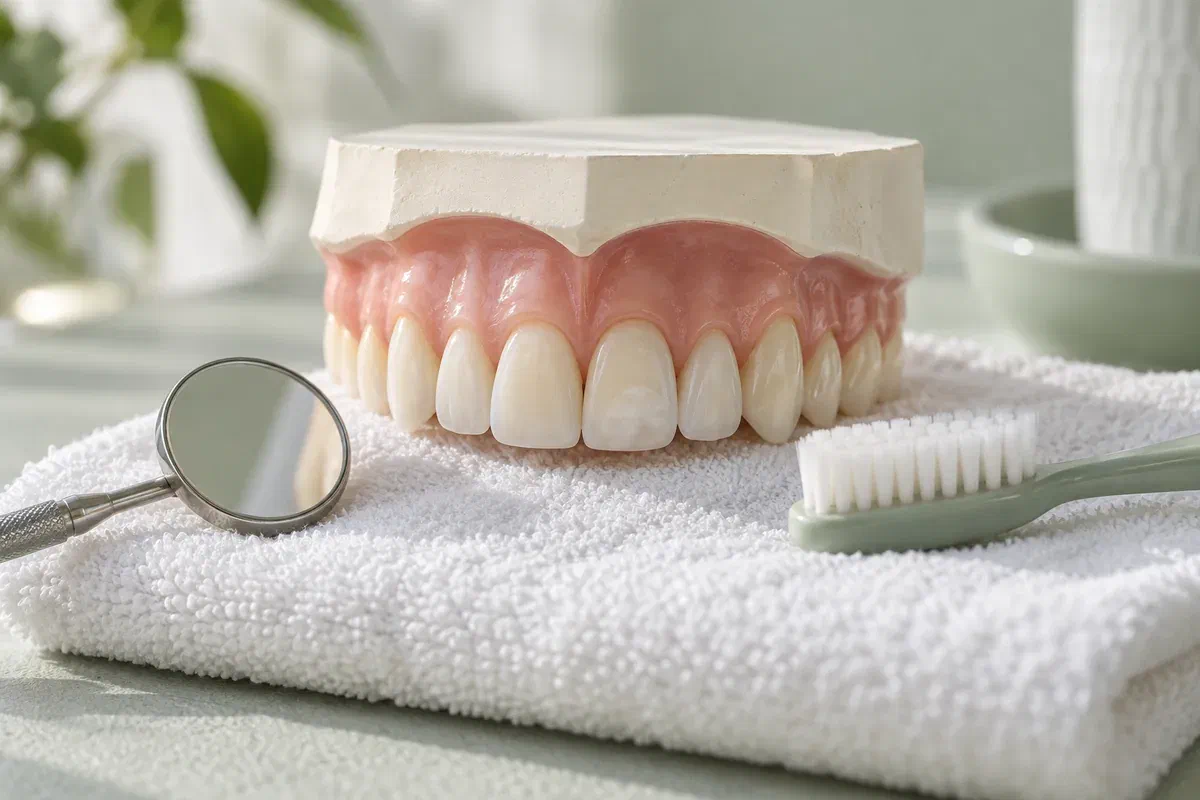
Illustrative dental teaching model with a subtle white enamel patch beside a mirror and toothbrush
What shapes the shortlist

Cause, depth and surface narrow the field quickly.

We examine the patch and the tissues around it, and ask how you care for your teeth. Partial answers still help the comparison.

A newer chalky area near the gums

Marks along the gumline or where brackets used to sit may reflect early mineral loss. If the process looks active, treatment choices wait until the enamel is protected. We will look at what is driving it and how a routine can calm it down.

Long-standing or patterned flecks

Marks that have been visible since childhood, or that repeat across several teeth, usually come from enamel development. Their depth and character influence how well a conservative technique might blend them, so the history you share is genuinely useful.

A rough, stained or tender patch

This is the group where a quick fix is least likely to help. If the area feels rough, has picked up a darker edge, catches food or causes sensitivity, the surface may have broken down. That can move a restoration up the list, or it may mean the tooth needs care unrelated to appearance. Please do not probe it at home.

Choosing a technique before knowing the cause is like buying the cure before the diagnosis. Early mineral loss may be stabilised first; developmental marks and damaged surfaces each point toward different options.

What a fair comparison looks like

Health goals and appearance goals, side by side

Every recommendation should state what it is for. Protective care is about keeping the enamel intact and stopping further loss. Appearance treatment is about reducing how visible the patch is. Sometimes you need both, sometimes only one, and a mark that still shows a little does not mean the protective part has not worked.

When comparing cosmetic choices, look past the photos. Ask how much enamel each one alters, whether material is added, how long results tend to last, and what maintenance follows. A partial improvement from a conservative method may suit you better than a bigger change, and leaving a healthy mark untreated is always one of the options.

Reasons, not just a recommendation

You should hear why the dentist thinks a particular cause is likely and whether photos or a later recheck would firm that up. If the answer is uncertain, ask how that affects choosing between a conservative technique and a restoration.

A protective base for any treatment

Talk through cleaning near the patch, sipping and snacking patterns, and any fluoride product suggested. Even a successful cosmetic step depends on healthy enamel around it. Agree on a review date and what to watch for between visits.

Clear expectations for each option

For each approach, ask whether it aims to blend the mark, lower its contrast or mask it beneath a restoration, and what might still be visible. Further work should be a separate decision. Complete disappearance cannot be promised in advance.

How the decision is made

Diagnose first, protect if needed, compare honestly, then review.

Some marks never reach the comparison stage because prevention and monitoring are the right answer. Others go on to a careful discussion of cosmetic techniques.

  1. Establish what the mark is

    We ask about its history, past braces, sensitivity and anything you have tried. The dentist examines the patch and the teeth around it, explains whether the surface is intact, and notes whether more information would help before choosing.

  2. Stabilise the enamel where necessary

    If ongoing mineral loss or plaque-related risk shows up, we agree on a home routine and review. Each product has a reason. We will explain what we need to see before the tooth is ready for a cosmetic technique.

  3. Line up the suitable techniques

    Monitoring, resin infiltration or a similar enamel approach, and bonding are compared for your particular mark. We cover preparation, isolation, materials, durability and the limits of each, so you can see the trade-offs clearly. Take time to think it over; there is rarely a need to choose on the spot.

  4. Judge the result, then decide again

    After any treatment, we review the appearance and the surface. If some of the mark is still visible, we discuss whether more is worth doing. A partial result from a conservative step does not automatically mean moving to a larger restoration.

After the decision

Care that matches the option you chose

Prevention, enamel treatment and restorations each come with their own instructions. We will tell you which apply and when you should return for a review.

Maintain the preventive routine

Keep brushing, cleaning between teeth and using fluoride as recommended. If the area is tricky to reach, ask to be shown. Tell us if the routine feels uncomfortable, because sticking with it supports whichever option you picked.

Wait for the review to judge results

Lighting and viewing angle change how a white mark appears. Clinical photographs, where used, give a steadier comparison. Keep the review appointment and mention any change in texture, comfort or the size of the patch.

Avoid scraping and unplanned bleaching

Do not file, scrub or apply acidic mixtures to the area. Ask before whitening, since it can affect how bonding or other treatments match. A planned sequence protects both the enamel and the result.

The main contenders

Monitor, infiltrate or bond: what each actually offers

We explain why an option suits the cause of your mark, the condition of the surface and your priorities. The most conservative approach that could meet your goal is always on the table first.

Often the best first choice

Monitoring alongside prevention

For a newer lesion or a long-stable mark, tailored home care and periodic checks can protect the enamel without changing it. The patch may remain visible. That is fine when the tooth itself is healthy and the appearance does not bother you much.

For suitable intact lesions

Resin infiltration or similar

This conservative approach may soften the appearance of certain unbroken patches with little change to tooth structure. How well it blends depends on the depth and cause of the mark, so we discuss your likely result before going ahead.

For broken surfaces or persistent concerns

Bonding or another restoration

Adding tooth-coloured material can repair a damaged surface or mask a mark that other methods do not reach. It brings upkeep and possible future repair. Veneers are a much larger step and are not the default for a single patch.

Patient information: DMG — indications and limitations for smooth-surface resin infiltration

Georgetown questions on choosing

Comparing white spot treatments

General answers to help you think through the options. The exam will show which choices genuinely suit your tooth.

(905) 876-4488
What is the difference between resin infiltration and bonding?
Infiltration aims to change how certain intact lesions reflect light, with little alteration to the tooth. Bonding adds tooth-coloured material on the surface. They suit different findings, and the dentist can explain which, if either, fits your mark. In some cases neither is needed and prevention alone is the better path.
Why might a dentist suggest monitoring when I want treatment?
If the enamel is losing minerals, protecting it first gives any later cosmetic step a better foundation. If the mark is stable, monitoring may simply be the least invasive option. You can always ask what would change that advice.
Does resin infiltration work on every white spot?
No. It is considered for selected non-cavitated lesions, and how well a mark blends varies. Some developmental marks or damaged surfaces respond less predictably, which is why assessment comes first.
How long does bonding over a white mark usually last?
It varies with the tooth, your bite and your habits. Bonding can chip or stain over time and may need repair or replacement. Ask the dentist what maintenance to expect for your situation.
Are veneers ever the right choice for white spots?
Occasionally they may be discussed when several teeth have broader concerns, but they involve more change to the teeth. For a single patch or a limited problem, more conservative options are normally considered first.
Should whitening come before or after a cosmetic white spot treatment?
The order matters, because bonding materials do not lighten with bleaching and whitening can alter contrast around a patch. Discuss the sequence with the dentist before starting either.

Patient information: American Dental Association — whitening responses and intrinsic enamel marks

Planning a visit from Georgetown

See the options laid out for your own tooth.

Contact our Bronte Street practice to discuss a white patch, an enamel change, or marks noticed after braces. We will examine the tooth and compare the preventive, monitoring and cosmetic routes that genuinely fit.

Cause, surface condition, suitability, how much blending is possible, the number of visits and fees are all confirmed only after an exam. A visible mark may not disappear completely.

Visit Milton Dental Clinic
Unit 1, 342 Bronte St. S, Milton, ON L9T 5B7
Get directions Clinic hours
Monday–Thursday
11am–7pm
Friday–Sunday
By appointment only

Areas we serve

  • Milton
  • Oakville
  • Mississauga
  • Georgetown
  • Halton Hills
  • Acton
  • Campbellville
  • Brampton
  • Burlington
  • Puslinch
  • Rockwood
  • Erin
  • Caledon
  • Etobicoke
  • Old Milton
  • Bronte Meadows
  • Timberlea
  • Dorset Park
  • Dempsey
  • Clarke
  • Beaty
  • Coates
  • Harrison
  • Scott
  • Willmott
  • Ford
  • Bowes
  • Cobden
  • Walker
  • Mountain View
  • Milton Heights
  • Hawthorne Village
  • Valley View
  • Fallingbrook
  • Nassagaweya
  • Trafalgar
  • Esquesing
  • Nelson
  • Brookville
  • Moffat
  • Glen Williams
  • Norval
  • Limehouse
  • Stewarttown
  • Ashgrove
  • Hornby
  • Silver Creek
  • Speyside
  • Scotch Block
  • North Oakville
  • River Oaks
  • Glen Abbey
  • West Oak Trails
  • Palermo
  • Bronte Creek
  • College Park
  • Joshua Creek
  • Uptown Core
  • Preserve
  • Iroquois Ridge
  • Lisgar
  • Meadowvale
  • Meadowvale Village
  • Churchill Meadows
  • Erin Mills
  • Central Erin Mills
  • Streetsville
  • East Credit
  • Creditview
  • Heartland
  • Sheridan
  • Mount Pleasant
  • Credit Valley
  • Huttonville
  • Churchville
  • Springbrook
  • Northwest Brampton
  • Bram West
  • Fletcher's Meadow
  • Fletcher's Creek South
  • Alton Village
  • Orchard
  • Millcroft
  • Headon Forest
  • Tansley
  • Brant Hills
  • Tyandaga
  • Kilbride
  • Lowville
  • Aberfoyle
  • Morriston
  • Arkell
  • Hillsburgh
  • Freelton
  • Carlisle
  • Waterdown
  • Flamborough
  • Mountsberg

How can we help?

Milton Dental Clinic

Have a question about your smile? Choose the option that works best for you.

For urgent dental concerns, please call.
Messages are reviewed during clinic hours.