

Illustrative clinician and patient discussing a tooth model during an enamel assessment
Cosmetic Dentistry

White Spot Treatment in Halton Hills

Has that pale patch grown, or does it only look bigger in certain light? For people across Halton Hills, we can examine it, set a reliable baseline, and explain what to protect and what you might change.

Is it changing?

Getting a true baseline for a mark that seems to shift

White marks are notoriously hard to judge at home. After a morning coffee the patch looks faint; under the bathroom light at night it seems twice the size. It is easy to end up checking the mirror every day and still not knowing whether anything has really changed.

That question matters, because a white area that is actively growing usually means enamel is losing minerals and needs protection. A mark that has stayed the same for years is more likely to be developmental or a settled old lesion, and the conversation becomes one about appearance and choice.

For households across Halton Hills, we start by examining the patch carefully and, where helpful, recording it with clinical photographs. That gives both of us a fair point of comparison for future visits, and it lets the plan respond to real change rather than a trick of the light.

Set a baseline for your white spot
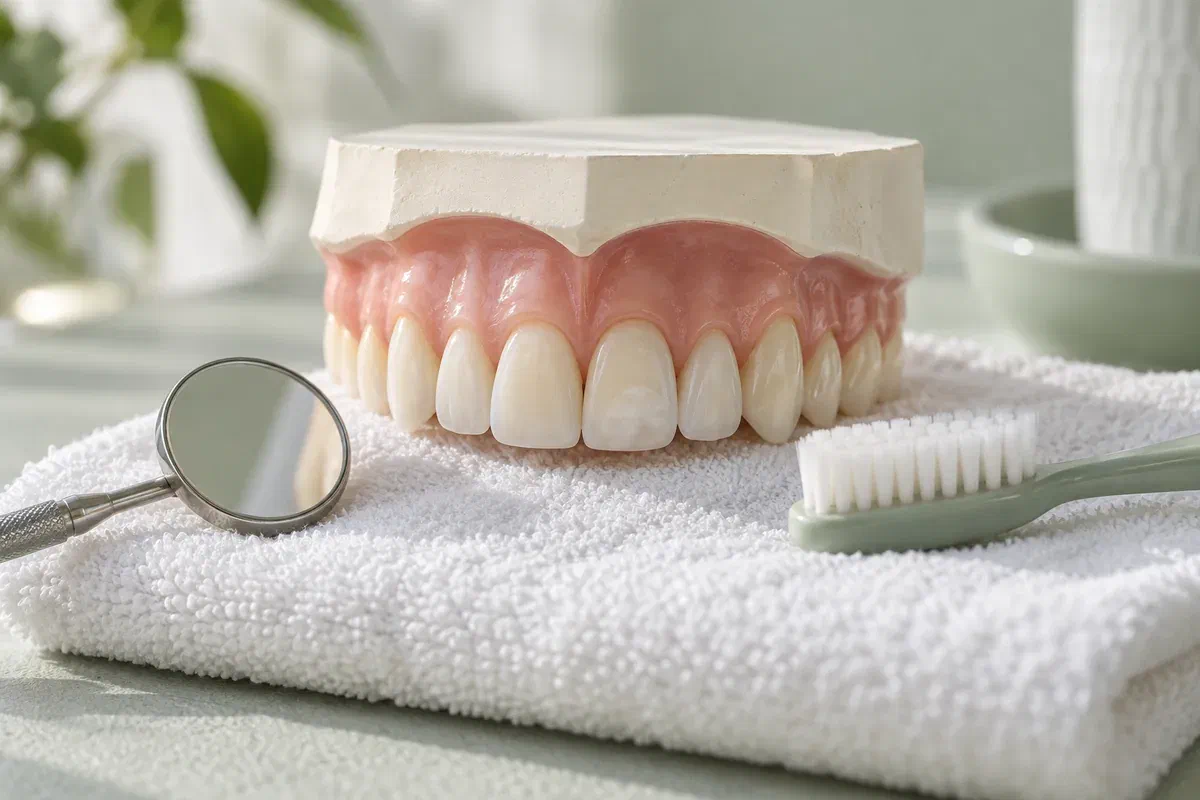
Illustrative dental teaching model with a subtle white enamel patch beside a mirror and toothbrush
Signs we look for

Growing, holding steady, or breaking down

Our exam covers the patch, the surrounding enamel and gums, and how you look after them. Rough timelines help, and any photos you have from months or years ago are especially useful.

Spreading near plaque traps

A chalky area that seems to be widening along the gumline or around old bracket sites may reflect ongoing mineral loss. In that case, slowing it down is the first goal. We will look for what keeps the risk going, from cleaning gaps to frequent sipping or snacking.

Unchanged for as long as you can recall

If old pictures show the same mark, or several teeth share a matching pattern, the cause is more likely to be how enamel formed. Such marks are generally stable, and the discussion shifts to whether you would like them to look different and which approaches tend to respond.

A new texture or colour at the edge

Roughness, sensitivity, a brownish rim or food snagging at the spot suggest the surface may no longer be intact. That makes the visit more about the tooth than its shade. Avoid picking at the patch, and keep in mind cosmetic products do not repair damaged enamel.

Change over time is one of the most useful pieces of information about a white mark. Early mineral loss can frequently be stabilised before it becomes a cavity, while a developmental difference usually stays as it is.

Why careful records help

Measure what matters, not what the mirror suggests.

A useful plan sets out what it is trying to do and how progress will be judged. If the aim is to stop mineral loss, success means the surface stays intact and the area does not grow. If the aim is to make the patch less visible, success is about contrast. The two do not always move together, so a mark that is still there can be a good sign for the enamel.

If appearance treatment becomes an option, ask what it would mean for the tooth over time. Some approaches barely alter enamel, while others add material that needs looking after. Compare the likely improvement with those commitments. A softer contrast may satisfy you, and continuing to monitor an unchanged mark is a sound choice.

A diagnosis linked to evidence

Ask what in the exam supports the suggested cause, and how photographs or a repeat look would confirm it. Location and history usually tell more than colour. If there is real uncertainty, find out whether waiting and comparing is the wiser step.

Prevention aimed at the actual risk

Go over your cleaning routine near the patch, eating and drinking patterns, and the fluoride product being suggested. A focused routine works better than piling up products. Agree on when the area will be photographed or examined again.

A grounded view of appearance results

Find out whether a treatment aims to blend the patch into its surroundings, reduce how much it stands out, or mask it with a restoration. Ask what may remain visible. Nobody can say the mark will vanish before seeing how it responds.

Step by step

Record it, protect it, then decide.

The path depends on what the exam shows and what the records reveal over time. Many people stop at prevention and periodic comparison; some go on to discuss a cosmetic option.

  1. Examine and document

    We ask about the mark’s history, any orthodontic treatment, sensitivity and home remedies tried. The dentist examines the tooth and its neighbours and may take clinical photos as a baseline. You will hear whether the surface looks intact.

  2. Address any active mineral loss

    Where the exam points to ongoing risk, we agree on a realistic home routine and a review. Each product has a stated purpose. We will explain what a stable result would look like before any appearance discussion begins.

  3. Weigh cosmetic options if you want them

    Continued monitoring, a limited enamel technique or a restoration may each come up, depending on the mark. We talk through preparation, keeping the tooth dry, materials and how far blending or masking can go for your particular patch.

  4. Compare against the baseline

    At the review, the area is examined and compared with the earlier records. If some of the patch remains, we discuss whether it matters to you. Anything more would be a separate decision rather than an automatic step up to a bigger restoration.

Until the next comparison

Steady care at home, honest comparisons at the clinic

Aftercare varies with whether you are on a prevention plan, had an enamel treatment, or now have a restoration. We will be clear about which instructions are yours and when to return.

Follow the agreed routine

Brush, clean between the teeth and use fluoride the way we recommended. Ask for a quick demonstration if the patch is awkward to reach. If the routine feels uncomfortable or unrealistic, say so and we will adjust it.

Resist daily mirror checks

Lighting, moisture on the teeth and phone cameras all change how a white mark looks. The clinical photos give a fairer comparison at review time. Just note any new roughness, discomfort or obvious change in size.

Hands off the patch

Do not scrub, file or use acidic home remedies to fade it, and ask before trying whitening, particularly if another cosmetic step is planned. Consistency protects the enamel; experiments make the next comparison harder.

What can be done

Monitoring, enamel treatment and restorations each have a place.

We explain why an option suits the cause of the mark, the condition of the surface and what you care about. The least invasive suitable step is always weighed first.

When the priority is keeping enamel stable

Ongoing monitoring with prevention

Tailored home care and regular comparisons may be all a white area needs, whether it is a newer lesion or a long-standing mark. The patch may stay visible while the enamel remains sound, which is a perfectly acceptable result.

When the lesion is intact and suitable

Resin infiltration and similar techniques

Some unbroken white lesions may respond to a conservative enamel technique. We discuss how it works, any preparation, and how much blending is realistic for your patch, because results vary between marks.

When repair or masking is justified

Bonding or another restoration

A damaged surface, or a mark that still bothers you after simpler steps, may lead to a restoration. This adds material that needs upkeep and may need repair later. Veneers are not the routine answer to a single patch.

Patient information: DMG — indications and limitations for smooth-surface resin infiltration

Halton Hills questions

Tracking a white mark over time

General answers about monitoring and treating white enamel patches. Your exam and records will show what applies to you.

(905) 876-4488
Why does my white spot look bigger some days than others?
Lighting, the angle you look from and how dry the tooth surface is can all change its appearance. That is why the dentist relies on examination and consistent clinical photos rather than everyday impressions.
How often should a white patch be rechecked?
It depends on whether the area appears active or stable and on your overall risk. The dentist will suggest a review interval, which can often line up with your regular checkups.
Can I take my own photos to help track it?
You can, but they are rarely consistent enough to compare reliably. If you do, try to use the same light and angle each time, and bring them along. Clinical photos remain the better reference.
What does it mean if the spot has stayed exactly the same for years?
A mark that has not changed is more likely to be developmental or an old, settled lesion. It is still worth examining to confirm the surface is sound, but observation is often a reasonable choice.
Can a treated white spot come back?
The appearance can change over time, and new mineral loss can occur if the risk factors return. Keeping up the preventive routine and attending reviews helps catch changes early.
Could whitening help me judge whether the spot is changing?
No, it tends to make comparisons harder because it shifts the contrast around the patch. Talk to the dentist before bleaching, especially while the area is being monitored.

Patient information: American Dental Association — whitening responses and intrinsic enamel marks

From anywhere in Halton Hills

Start with a baseline you can trust.

Contact our Bronte Street practice to have a white patch examined and recorded, whether it is new, long-standing or appeared after braces. We will explain prevention, monitoring and appearance options in plain terms.

What caused a mark, its condition, suitable treatment, how much it might fade, the number of appointments and fees all depend on an examination. We cannot guarantee a visible mark will disappear.

Visit Milton Dental Clinic
Unit 1, 342 Bronte St. S, Milton, ON L9T 5B7
Get directions Clinic hours
Monday–Thursday
11am–7pm
Friday–Sunday
By appointment only

Areas we serve

  • Milton
  • Oakville
  • Mississauga
  • Georgetown
  • Halton Hills
  • Acton
  • Campbellville
  • Brampton
  • Burlington
  • Puslinch
  • Rockwood
  • Erin
  • Caledon
  • Etobicoke
  • Old Milton
  • Bronte Meadows
  • Timberlea
  • Dorset Park
  • Dempsey
  • Clarke
  • Beaty
  • Coates
  • Harrison
  • Scott
  • Willmott
  • Ford
  • Bowes
  • Cobden
  • Walker
  • Mountain View
  • Milton Heights
  • Hawthorne Village
  • Valley View
  • Fallingbrook
  • Nassagaweya
  • Trafalgar
  • Esquesing
  • Nelson
  • Brookville
  • Moffat
  • Glen Williams
  • Norval
  • Limehouse
  • Stewarttown
  • Ashgrove
  • Hornby
  • Silver Creek
  • Speyside
  • Scotch Block
  • North Oakville
  • River Oaks
  • Glen Abbey
  • West Oak Trails
  • Palermo
  • Bronte Creek
  • College Park
  • Joshua Creek
  • Uptown Core
  • Preserve
  • Iroquois Ridge
  • Lisgar
  • Meadowvale
  • Meadowvale Village
  • Churchill Meadows
  • Erin Mills
  • Central Erin Mills
  • Streetsville
  • East Credit
  • Creditview
  • Heartland
  • Sheridan
  • Mount Pleasant
  • Credit Valley
  • Huttonville
  • Churchville
  • Springbrook
  • Northwest Brampton
  • Bram West
  • Fletcher's Meadow
  • Fletcher's Creek South
  • Alton Village
  • Orchard
  • Millcroft
  • Headon Forest
  • Tansley
  • Brant Hills
  • Tyandaga
  • Kilbride
  • Lowville
  • Aberfoyle
  • Morriston
  • Arkell
  • Hillsburgh
  • Freelton
  • Carlisle
  • Waterdown
  • Flamborough
  • Mountsberg

How can we help?

Milton Dental Clinic

Have a question about your smile? Choose the option that works best for you.

For urgent dental concerns, please call.
Messages are reviewed during clinic hours.