

Illustrative clinician and patient discussing a tooth model during an enamel assessment
Cosmetic Dentistry

White Spot Treatment in Old Milton

Some white marks have been part of a smile for decades, and others turn up without warning. Near Old Milton, our team can check which kind you have, whether the enamel needs any care, and what changing its look would involve.

An old mark, a new question

You have always had it. Is now the time to do something?

Plenty of people carry a cloudy fleck on a front tooth for most of their lives and barely think about it. Then a family photo, a retirement event, or a grandchild’s comment brings it back into view. Wanting to change it after all these years is a perfectly reasonable thing to raise.

Before choosing a treatment, it helps to know what the patch actually is. Marks that formed while the tooth was growing behave differently from areas where enamel has recently lost minerals. Older teeth may also have fillings, wear, or receding gums nearby, and each of those can shape which approaches are sensible.

For anyone in Old Milton, the town’s historic downtown, our Bronte Street practice is close at hand for an unhurried conversation. Tell us how long the mark has been there, whether it has changed, and what you hope for. We will examine it and explain the options, including the option of changing nothing.

Ask about a long-standing white mark
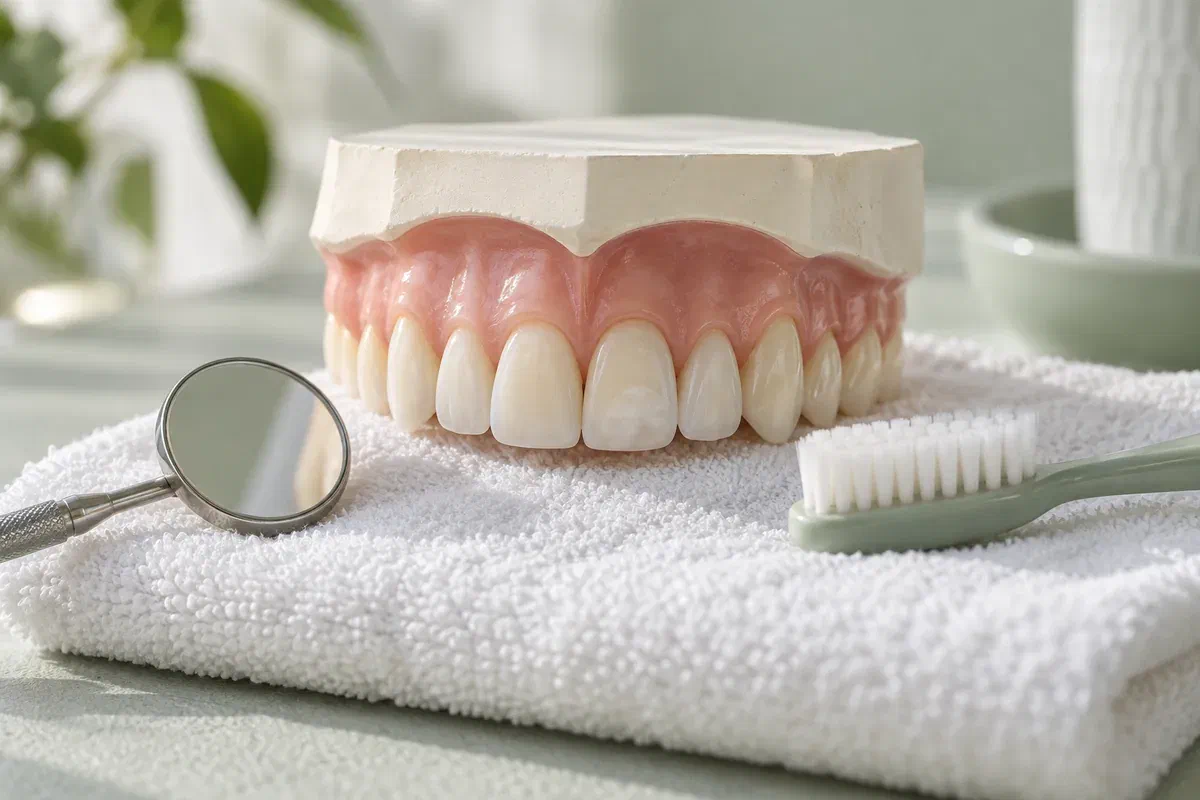
Illustrative dental teaching model with a subtle white enamel patch beside a mirror and toothbrush
Clues from your own history

How long it has been there may matter as much as how it looks.

The dentist examines the patch together with the teeth and gums around it. Even rough recollections help, such as whether it appeared in childhood, after a dental treatment, or only recently.

A spot that is new, even on familiar teeth

A fresh chalky area near the gums, beside an older filling, or where plaque tends to build can signal early mineral loss. Dry mouth from medications can add to the risk. Ask whether anything active needs attention and which preventive steps should come before any thought of colour.

A fleck that has been there since childhood

Marks visible in decades-old photographs, or a similar pattern across several teeth, often point to how the enamel formed. That history steers the conversation toward stability and appearance rather than decay. Ask how this origin affects which options are realistic and how the tooth might respond.

A surface that has started to feel or look different

Let us know about a new rough edge, sensitivity, a darker rim, or food catching at the area. Changes like these can mean the tooth needs attention for reasons beyond the colour. Resist testing the spot with a fingernail, and do not expect a cosmetic step to address every underlying concern.

The colour of the patch is a starting point, not an answer. Some early mineral loss can be managed before a cavity forms, while a broken surface or a long-standing enamel difference calls for a separate plan.

Why an assessment comes first

A healthy tooth and an even shade are different goals

Ask the dentist to say plainly what the plan is trying to achieve. It may be protecting enamel that is losing minerals, watching a mark that has looked the same for years, or making the patch less noticeable. These can overlap, yet each has its own measure of success. A patch that remains visible is not, by itself, a sign that prevention has failed.

Understanding the trade-offs matters just as much. Some appearance options leave the enamel almost untouched, while others add material or remove a little tooth. Weigh the likely improvement against upkeep, durability and the effect on your tooth. A softer contrast may be enough, and keeping a stable mark exactly as it is remains a valid choice.

A diagnosis you can follow

Ask which findings support the explanation you are given, and whether photographs or a second look later would help. Where the patch sits, how long it has been there, and how the surface feels all matter. If the cause remains unclear, ask what that means for picking a treatment.

Prevention that suits your daily life

Talk about how you clean near the mark, what you eat and drink through the day, and any fluoride product being suggested. Mention arthritis, a dry mouth, or anything else that makes brushing harder. Agree on when to review the area and which changes should prompt an earlier call.

A candid talk about appearance

Ask whether an option is meant to blend the patch, reduce its contrast, or cover it with tooth-coloured material. Find out what may still show and whether further work would be its own decision. No one can guarantee the mark will disappear before seeing how it responds.

What to expect

Examine, steady the enamel, compare the choices, then review.

Not every visit follows the full sequence. Sometimes prevention and a recheck are all that is needed, and sometimes the next step is a separate discussion about a cosmetic procedure.

  1. Start with the mark’s history

    Describe roughly when it appeared, any past braces or fillings, sensitivity, and anything you have tried to fade it. The dentist examines the tooth along with its neighbours and the gums. Ask whether the enamel surface is intact and whether more information is needed first.

  2. Address any active risk

    Should the exam turn up signs that enamel is still losing minerals, agree on a manageable preventive routine and a follow-up. Be clear about what each product does and how to use it. Ask what would show that the area is settled enough to talk about appearance.

  3. Discuss the cosmetic possibilities

    Observation, a limited enamel procedure, or a restoration may each be relevant. Ask how the tooth would be prepared and kept dry, which materials would be used, and how much masking is realistic. One technique will not suit every type or depth of mark, so the discussion should centre on yours.

  4. Check the result before going further

    Agree when the appearance and surface will be looked at again. If part of the mark is still visible, talk about whether it matters to you and whether more treatment is worthwhile. Any extra step is a fresh decision, not an automatic move to a bigger restoration.

Between appointments

Protect the area and let the review answer the questions

Your instructions depend on whether you are following a prevention plan, have had an enamel procedure, or now have a restoration. Ask which advice applies to you and when the area will be reviewed.

Keep up the recommended cleaning

Brush, clean between teeth, and use fluoride as advised. If bridges, crowns, or tight spaces make the area tricky, ask to be shown an easier method or a different tool. Tell the team if the routine is uncomfortable, so it can be adjusted rather than quietly set aside.

Compare at the review, not in the mirror

Ask how the area will be tracked and whether clinical photographs would help. Window light, lamps, and reading glasses can all change how the mark appears. Keep the follow-up and mention any new roughness, discomfort, or growth in the visible patch.

Leave the scraping and home remedies alone

Do not rub, file, or apply acidic household mixtures to lift the mark. Ask before using whitening products, especially while another appearance treatment is underway. Careful planning protects the enamel far better than repeated attempts to make the spot fade.

Choices for Old Milton smiles

Watch it, blend it, or cover it

Ask why a particular option fits the cause, the condition of the surface, and what you want. The most conservative approach that meets your goal is worth considering before anything larger.

When stability matters most

Leave it be and monitor

A personal prevention plan and periodic checks may be the whole answer for a fleck that has looked identical for decades. Ask what improvement would mean clinically and whether the patch will still show. Enamel can be healthy without being one uniform colour.

When the patch is a good candidate

A minimal enamel treatment

Resin infiltration or a similar limited enamel technique may be considered for some marks. Ask about the steps, any preparation, and how well it may blend your particular patch. Results vary, so a white colour or a smooth surface alone does not guarantee a predictable outcome.

When restorative material makes sense

Covering the patch with material

Where the enamel has worn or broken, or the fleck still catches your eye after simpler steps, bonding or another restoration may be raised. Ask about the effect on tooth structure, whether it can be repaired later, and ongoing care. A veneer is not the automatic answer for every patch or every partial result.

Patient information: DMG — indications and limitations for smooth-surface resin infiltration

Questions we hear from Old Milton

About marks you have lived with

Every answer depends on the cause, the state of the surface, and your preferences. An assessment can separate a health issue from a purely cosmetic decision.

(905) 876-4488
I have had this white fleck since I was a child. Can it still be treated?
Possibly. Age of the mark alone does not rule out options, but the cause, surface, and surrounding teeth all matter. The dentist can explain whether an enamel procedure, a restoration, or simply leaving it is most suitable.
Does a patch next to an old filling mean the filling needs replacing?
Not automatically. The dentist examines the filling edges and the enamel around them to see whether there is a problem. Ask what the findings show and whether monitoring, repair, or replacement is being suggested and why.
Can medications that dry my mouth affect white spots?
A dry mouth can raise the risk of mineral loss, so mention any medications you take. Ask whether extra preventive steps would help. The dentist can suggest ways to protect the enamel, and you may want to raise dry mouth with your physician too.
If the mark has never changed, is it still worth an exam?
Yes. An exam confirms whether it is stable and whether there is anything to protect. If no treatment is needed for health, observation is a reasonable choice, and an appearance difference alone does not oblige you to pursue cosmetic care.
Will a lighter overall shade from whitening hide the patch?
Not reliably. Depending on the cause, whitening may soften the contrast, leave it unchanged, or make the mark more noticeable for a while. Talk about the order of any treatments before bleaching, and expect no guarantee of an even result.
Can I have one tooth looked at without a whole-smile makeover?
Of course. Show us the tooth that bothers you and tell us how much you want done. Neighbouring teeth will be checked as part of the exam, but any broader plan would be presented separately, and leaving everything else as it is remains your call.

Patient information: American Dental Association — whitening responses and intrinsic enamel marks

Close to Old Milton

Bring the story of that mark with you.

Reach our Bronte Street practice to ask about a white patch, a change in your enamel, or a mark you have finally decided to look into. We can examine the tooth and outline prevention, monitoring and appearance options.

Cause, surface condition, suitability, degree of blending, number of visits and fees all depend on an examination. We cannot promise a visible mark will be removed entirely.

Visit Milton Dental Clinic
Unit 1, 342 Bronte St. S, Milton, ON L9T 5B7
Get directions Clinic hours
Monday–Thursday
11am–7pm
Friday–Sunday
By appointment only

Areas we serve

  • Milton
  • Oakville
  • Mississauga
  • Georgetown
  • Halton Hills
  • Acton
  • Campbellville
  • Brampton
  • Burlington
  • Puslinch
  • Rockwood
  • Erin
  • Caledon
  • Etobicoke
  • Old Milton
  • Bronte Meadows
  • Timberlea
  • Dorset Park
  • Dempsey
  • Clarke
  • Beaty
  • Coates
  • Harrison
  • Scott
  • Willmott
  • Ford
  • Bowes
  • Cobden
  • Walker
  • Mountain View
  • Milton Heights
  • Hawthorne Village
  • Valley View
  • Fallingbrook
  • Nassagaweya
  • Trafalgar
  • Esquesing
  • Nelson
  • Brookville
  • Moffat
  • Glen Williams
  • Norval
  • Limehouse
  • Stewarttown
  • Ashgrove
  • Hornby
  • Silver Creek
  • Speyside
  • Scotch Block
  • North Oakville
  • River Oaks
  • Glen Abbey
  • West Oak Trails
  • Palermo
  • Bronte Creek
  • College Park
  • Joshua Creek
  • Uptown Core
  • Preserve
  • Iroquois Ridge
  • Lisgar
  • Meadowvale
  • Meadowvale Village
  • Churchill Meadows
  • Erin Mills
  • Central Erin Mills
  • Streetsville
  • East Credit
  • Creditview
  • Heartland
  • Sheridan
  • Mount Pleasant
  • Credit Valley
  • Huttonville
  • Churchville
  • Springbrook
  • Northwest Brampton
  • Bram West
  • Fletcher's Meadow
  • Fletcher's Creek South
  • Alton Village
  • Orchard
  • Millcroft
  • Headon Forest
  • Tansley
  • Brant Hills
  • Tyandaga
  • Kilbride
  • Lowville
  • Aberfoyle
  • Morriston
  • Arkell
  • Hillsburgh
  • Freelton
  • Carlisle
  • Waterdown
  • Flamborough
  • Mountsberg

How can we help?

Milton Dental Clinic

Have a question about your smile? Choose the option that works best for you.

For urgent dental concerns, please call.
Messages are reviewed during clinic hours.