

Illustrative clinician and patient discussing a tooth model during an enamel assessment
Cosmetic Dentistry

White Spot Treatment in Puslinch

A white patch that used to be smooth now feels rough, twinges with cold water or catches your floss. If you are coming from Puslinch, we can check whether the enamel surface has changed and what the tooth needs before any talk of colour.

When the spot starts to feel different

Rough to the tongue? That changes the question.

For months the pale mark was just a cosmetic nuisance. Then one day your tongue finds a gritty edge, or a cold drink sends a brief zing through the tooth. Those small changes are worth paying attention to, because they hint that the surface itself may be changing.

Smooth white patches are often either early mineral loss with the outer surface still intact, or stable marks left over from how the enamel formed. A patch that has become rough, stained at the margin or sensitive may have moved beyond that stage. In that case the tooth needs care first, and appearance becomes a later conversation.

Travelling in from Puslinch, you can expect a careful exam of the patch and its surroundings, an explanation of whether the surface has broken down, and advice on what to do next. Not every change means a filling, and not every rough spot is serious, but it deserves a proper look. Bring a note of when the feeling began and what seems to set it off, because those small details often point the exam in the right direction.

Have a changing white patch checked
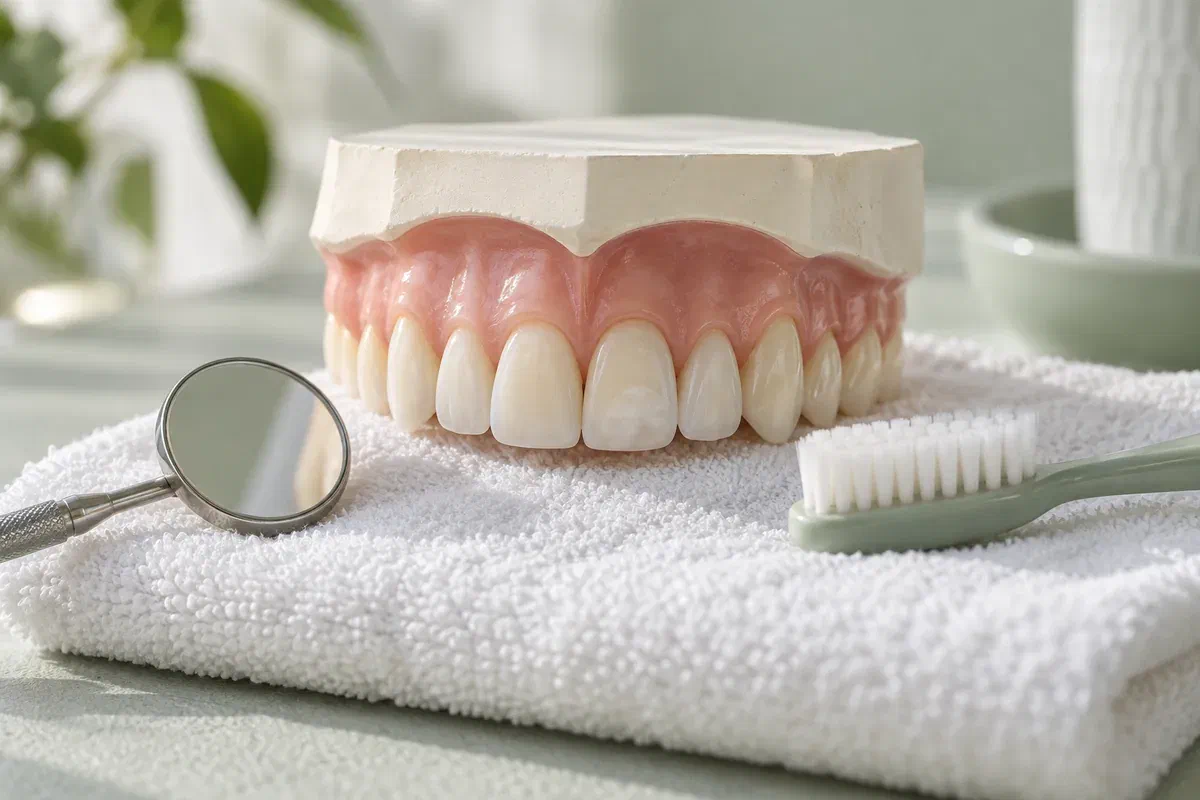
Illustrative dental teaching model with a subtle white enamel patch beside a mirror and toothbrush
Changes to report

What the patch feels like now, compared with before

We examine the area, the gums and the teeth around it, and ask about your routine. Describe the changes as best you can, even if they come and go.

A once-smooth area that now feels gritty

When a pale area near the gums or in a former bracket site starts to feel rough, it may reflect mineral loss progressing. The exam checks whether the surface is still intact. If it is, protective care may still be enough; if not, a repair may need to be discussed.

A stable mark with new symptoms nearby

Sometimes a long-standing developmental fleck is not the issue at all, and the sensitivity is coming from something else, such as gum recession or wear. Telling us how long the mark has looked the same helps separate the old finding from the new problem.

Stain, food trapping or lingering sensitivity

A darker margin, floss catching or discomfort that lingers after hot or cold may mean the tooth needs more than cosmetic attention. Please do not pick at the area or try to smooth it yourself, and avoid assuming a whitening or masking product will solve it.

Any shift in how a pale area feels or behaves is a reason for a timely exam. Early mineral loss can often be held in check before it becomes a cavity, but a surface that has broken down usually needs a different approach.

What the exam settles

Intact or broken? Active or settled? Then, and only then, appearance.

Once the surface has been checked, the plan can name its purpose clearly. It might be halting mineral loss on enamel that is still whole, repairing a small area that has broken down, or simply watching a mark that has not really changed. Each is judged differently, and a patch that stays visible after treatment can still be a sign that the tooth is doing well.

When appearance does come up later, it helps to know how much each option changes the tooth. A conservative enamel technique keeps structure largely as it is; bonding adds material that needs care. Balance any improvement against those trade-offs. A softer contrast may be enough, and leaving a sound mark untouched is a reasonable choice.

A clear read on the surface

You should hear whether the enamel is intact, what supports that view, and whether a later look or imaging would add anything. If the dentist is uncertain, ask what that means for choosing between watching and treating.

Steps that address the cause

Talk through cleaning around the area, frequency of snacks and drinks, and any fluoride or sensitivity product suggested. Knowing why each one is recommended makes it easier to stick with. Agree on when the tooth will be checked again and what should prompt a call.

Appearance, kept in proportion

If you would like the mark to be less visible, ask whether an option would blend it, reduce its contrast or mask it beneath bonding, and what may remain. Further steps are separate decisions. Nobody can promise the mark will vanish.

The order of things

Check the surface, treat the tooth, revisit the look

Where the surface is still intact, the plan may stop at prevention and review. Where it has broken down, repair comes first, and appearance is discussed afterwards.

  1. Examine what has changed

    Tell us when the patch first appeared, when it began to feel different, and what triggers any sensitivity. The dentist examines the tooth and neighbouring areas and explains whether the surface is intact or whether further information would help.

  2. Protect or repair as needed

    If the enamel is still whole, a targeted prevention routine and review may be enough. If it has broken down, a small restoration may be discussed. Either way, you will know what each step is for and what to watch for.

  3. Discuss appearance once the tooth is stable

    When the tooth is healthy, options such as monitoring, a limited enamel technique or bonding can be compared. We explain preparation, isolation, materials and how far blending or masking is likely to go for your mark.

  4. Review comfort and appearance

    At follow-up, we check whether the sensitivity has settled, whether the surface is holding and how the mark looks. Any additional treatment is a new decision based on what we see, not an automatic next stage.

While things settle

Gentle, consistent care and a scheduled recheck

A prevention plan, a small repair and a cosmetic step each carry their own advice. Before you leave, we will go over the version that matches your treatment and book the recheck.

Clean thoroughly but gently

Brush with a soft brush, clean between the teeth and use the fluoride or sensitivity product recommended. Scrubbing harder will not help a rough patch. If the routine is uncomfortable, tell us and we will adjust it.

Keep notes on comfort

Jot down when sensitivity happens and whether it is improving. That is more useful than judging the colour in the mirror, which changes with light. Bring your notes to the follow-up.

Do not try to smooth the spot yourself

Avoid filing, scraping or using acidic home remedies on the area, and ask before using whitening products, which can increase sensitivity in some people. Let the plan run its course.

Once the tooth is healthy

Choices for the mark that remains

We will explain how each option relates to the cause of the patch, the state of the surface and your own priorities. The lightest effective approach is discussed first.

When the enamel is intact and settling

Ongoing prevention and checks

A tailored routine with periodic reviews may be all an intact patch needs. Some whiteness may stay. Healthy enamel does not have to be perfectly uniform, and watching is a perfectly reasonable choice.

When an unbroken lesion qualifies

A conservative enamel technique

Resin infiltration or a similar approach may be considered for some intact patches. We discuss how it is done and how well your mark is likely to blend, since results vary from case to case.

When the surface has broken down

Bonding or a small restoration

A rough or damaged area may be repaired with tooth-coloured material, which can also mask the patch. It brings upkeep and possible future repair. Larger work such as veneers is not the standard next step.

Patient information: DMG — indications and limitations for smooth-surface resin infiltration

Puslinch questions

When a white patch starts to change

General answers about rough or sensitive white marks. The exam will confirm what is happening with your tooth.

(905) 876-4488
Why would a white spot suddenly feel rough?
A roughening surface can mean mineral loss has progressed, or that the area has been worn or damaged. Sometimes the roughness is nearby rather than on the patch itself. An exam is the way to find out.
Does sensitivity mean the white patch has become a cavity?
Not necessarily. Sensitivity has many possible causes, including gum recession and wear. The dentist checks the patch and the surrounding tooth to work out where the sensitivity is coming from.
Can a rough white patch still be treated without a filling?
Sometimes, if the surface is still intact. If it has broken down, a small restoration may be the better option. The dentist will explain which applies after examining it.
Would a sensitivity toothpaste help in the meantime?
It may ease some types of sensitivity, but it will not tell you why the tooth is sensitive. Use it if recommended, and still have the patch examined.
Should I stop whitening if my white spot has become sensitive?
It is wise to pause and ask first. Whitening can increase sensitivity for some people and can also change the contrast around the patch. The dentist can advise when, or if, it fits your plan.
How quickly should I book if the patch has changed?
Changes in feel, colour or comfort are worth booking soon rather than waiting for your next routine visit. If there is pain, a break or swelling, call promptly so we can advise you.

Patient information: American Dental Association — whitening responses and intrinsic enamel marks

Arranging care from Puslinch

A change in feel is a good reason to come in.

Contact our Bronte Street practice about a white patch that has turned rough, stained or sensitive, or any enamel change you are unsure about. We will examine the tooth and explain what it needs now and what can wait.

The cause, surface condition, suitable treatment, likely appearance change, number of visits and fees can only be confirmed by examination. Complete removal of a mark is not something we can promise.

Visit Milton Dental Clinic
Unit 1, 342 Bronte St. S, Milton, ON L9T 5B7
Get directions Clinic hours
Monday–Thursday
11am–7pm
Friday–Sunday
By appointment only

Areas we serve

  • Milton
  • Oakville
  • Mississauga
  • Georgetown
  • Halton Hills
  • Acton
  • Campbellville
  • Brampton
  • Burlington
  • Puslinch
  • Rockwood
  • Erin
  • Caledon
  • Etobicoke
  • Old Milton
  • Bronte Meadows
  • Timberlea
  • Dorset Park
  • Dempsey
  • Clarke
  • Beaty
  • Coates
  • Harrison
  • Scott
  • Willmott
  • Ford
  • Bowes
  • Cobden
  • Walker
  • Mountain View
  • Milton Heights
  • Hawthorne Village
  • Valley View
  • Fallingbrook
  • Nassagaweya
  • Trafalgar
  • Esquesing
  • Nelson
  • Brookville
  • Moffat
  • Glen Williams
  • Norval
  • Limehouse
  • Stewarttown
  • Ashgrove
  • Hornby
  • Silver Creek
  • Speyside
  • Scotch Block
  • North Oakville
  • River Oaks
  • Glen Abbey
  • West Oak Trails
  • Palermo
  • Bronte Creek
  • College Park
  • Joshua Creek
  • Uptown Core
  • Preserve
  • Iroquois Ridge
  • Lisgar
  • Meadowvale
  • Meadowvale Village
  • Churchill Meadows
  • Erin Mills
  • Central Erin Mills
  • Streetsville
  • East Credit
  • Creditview
  • Heartland
  • Sheridan
  • Mount Pleasant
  • Credit Valley
  • Huttonville
  • Churchville
  • Springbrook
  • Northwest Brampton
  • Bram West
  • Fletcher's Meadow
  • Fletcher's Creek South
  • Alton Village
  • Orchard
  • Millcroft
  • Headon Forest
  • Tansley
  • Brant Hills
  • Tyandaga
  • Kilbride
  • Lowville
  • Aberfoyle
  • Morriston
  • Arkell
  • Hillsburgh
  • Freelton
  • Carlisle
  • Waterdown
  • Flamborough
  • Mountsberg

How can we help?

Milton Dental Clinic

Have a question about your smile? Choose the option that works best for you.

For urgent dental concerns, please call.
Messages are reviewed during clinic hours.