

Illustrative patient describing a previous sensitivity experience during a dental consultation
Cosmetic Dentistry

Whitening for Sensitive Teeth

If a previous whitening attempt left you uncomfortable, start with a conversation about what happened. Discuss whitening for sensitive teeth in Milton to review the reaction, assess your current oral health, and decide whether another approach is appropriate.

A closer look at whitening for sensitive teeth

A previous reaction deserves attention before another attempt.

Whitening can be an elective way to change the colour of natural teeth, but the decision becomes more personal when an earlier attempt caused discomfort. You may remember brief sharp sensations, aching in one area, or irritation along the gums. Describing that experience is more useful than simply searching for a stronger or gentler product.

Whitening for sensitive teeth is not a separate procedure with a promise of no reaction. It is a discussion about suitability, the reason for current sensitivity, and whether an individually considered plan makes sense. Sometimes the useful next step is assessment or another kind of dental care before any bleaching is reconsidered.

At Milton Dental Clinic, bring the product details you have and tell us what happened, when you stopped, and whether the symptoms settled. You do not need to repeat the experience to prove there was a problem. We can review your concerns and explain the choices, including the choice not to whiten.

Discuss whitening after a sensitivity reaction
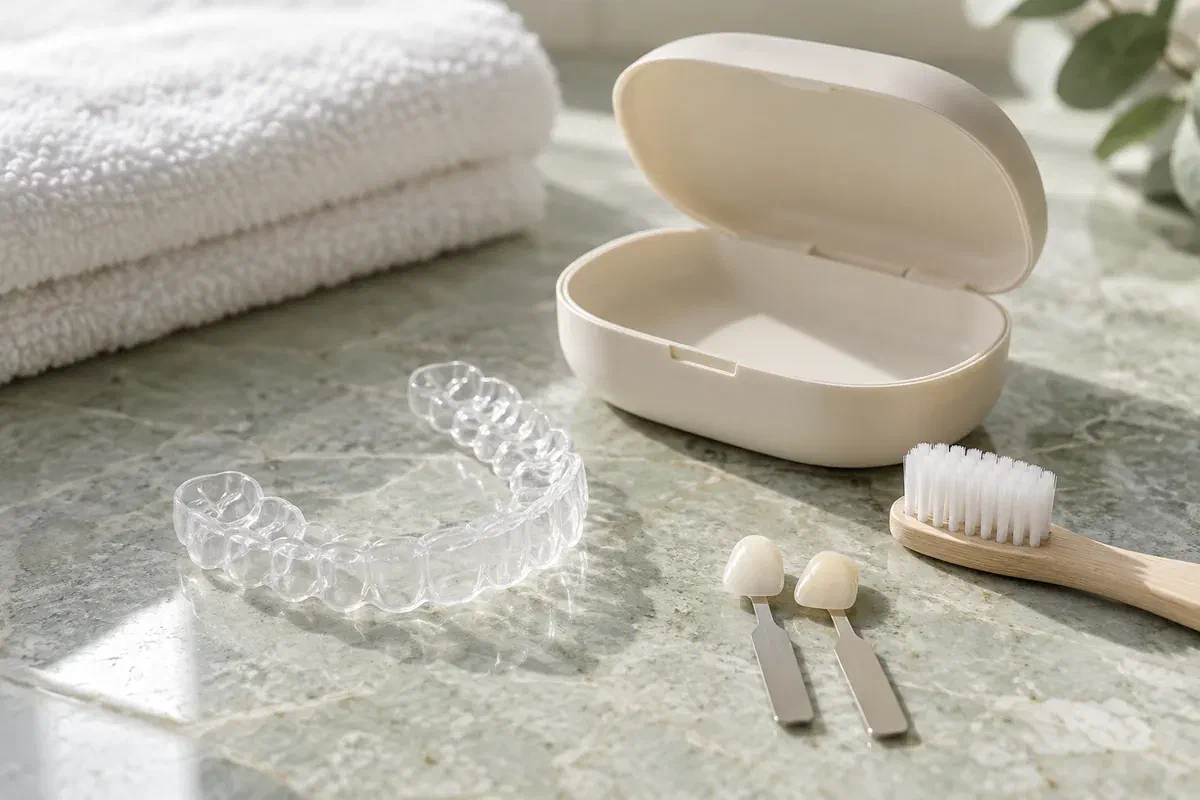
Illustrative empty whitening tray, open case, soft toothbrush, and natural shade samples
Describe the reaction in practical terms

Where it hurt, when it started, and what you used can guide the discussion.

Different symptoms can sound similar when described simply as sensitivity. The history helps the clinician decide what needs examination before discussing whether to try whitening again.

Discomfort that followed a particular product

Bring the packaging or a clear record of the product name and instructions if available. Explain how you used it and whether you combined it with another whitening method. There is no need to guess the concentration or recreate the reaction before your appointment.

Sensitivity that was already present

Mention cold, sweet, brushing, or biting discomfort that occurred before whitening. Decay, worn or damaged teeth, existing restorations, and exposed root surfaces are among the issues that may need assessment. A product marketed for sensitive teeth does not establish why a tooth hurts.

Sore gums or one persistently painful tooth

Distinguish irritation of the soft tissues from discomfort inside a tooth as best you can. Report symptoms that linger, recur without whitening, or affect a single area. These details may change the priority from an appearance consultation to investigation of a dental problem.

If whitening causes an adverse reaction, stop using the product and contact a dental professional. Do not keep increasing exposure to finish a course or reach a particular shade.

What a sensitivity-focused conversation can offer

Make the decision with your previous experience taken seriously.

An assessment can help separate the wish for a lighter shade from the question of whether whitening is appropriate now. Ask what needs attention first and which findings affect the recommendation. A consultation is useful even if the outcome is to defer treatment or leave your tooth colour unchanged.

If another attempt is considered, you should understand the instructions and response plan before beginning. That includes whom to contact, what to report, and when a review is needed. Having a clear plan does not remove every risk, but it helps you avoid making changes on your own when discomfort occurs.

A discussion built around the actual experience

Describe what made the earlier attempt difficult and what would make you comfortable considering another option. Ask the clinician to explain how the proposed approach relates to that history. A different brand name alone is not a complete explanation of why another attempt may be suitable.

A clear boundary between advice and a guarantee

Ask what can be adjusted under professional guidance and what remains uncertain. No method should be presented as certain to avoid sensitivity. You can decide that the possible appearance benefit is not worth repeating an uncomfortable experience, even when treatment is considered clinically reasonable.

A plan that includes the rest of your smile

Discuss visible fillings, crowns, or veneers before choosing a target colour. Ask how a change to natural teeth could affect their match and whether any additional work would be optional. The decision should account for the whole appearance without turning whitening into an automatic restorative package.

Considering whether to try again

Review the reaction, check the teeth, and agree on clear instructions.

The appointment sequence depends on your current symptoms and findings. Avoid restarting a stored product while waiting for advice, particularly if the previous attempt caused a problem.

  1. Reconstruct the previous attempt

    Explain the product, application method, timing of symptoms, and what happened after stopping. Mention any other products used during the same period and whether a clinician reviewed the reaction. Bring the details you know; uncertainty can be recorded without inventing a precise exposure history.

  2. Assess present oral health and sensitivity

    The clinician examines the relevant teeth and tissues and considers further investigation if needed. Ask whether the discomfort has a cause that needs care before elective whitening. A reaction in the past does not exclude another dental problem in the present.

  3. Choose whether to proceed, defer, or decline

    Discuss the potential benefit, limitations, fees, and alternatives. If whitening is appropriate, confirm the selected product and individualized instructions rather than choosing a concentration yourself. Ask what review is planned and how you should respond if sensitivity or gum irritation develops.

  4. Review comfort before pursuing further colour change

    Keep the agreed follow-up and explain your experience honestly, including any use outside the instructions. Ask whether the current result is a sensible stopping point. Additional treatment or future top-ups should be discussed separately rather than assumed to be the next step.

During a plan and after a reaction

Comfort is information to report, not something to push through.

Follow the advice given for the selected approach and your current oral health. A friend's routine, an online schedule, or a previous product's instructions may not apply to your plan.

Keep product use easy to explain

Retain the packaging and instructions and note any reaction, including where and when it occurred. Bring that information to review rather than relying on the shade alone. Do not combine products, add extra sessions, or alter a preparation to make it feel less strong.

Contact the team before resuming after discomfort

If you have stopped because of a reaction, ask for advice before another application. Explain whether symptoms have settled or remain. Do not assume that changing the tray, shortening a session, or using a desensitizing product independently resolves the reason for the reaction.

Keep ordinary oral care comfortable and consistent

Ask which toothpaste and cleaning routine are appropriate for your sensitivity. Tell the clinician if brushing itself is painful or an area is difficult to clean. Whitening does not replace preventive care, and pursuing a lighter shade should not disrupt care for the teeth and gums.

Choosing the next step after whitening sensitivity

Another bleaching attempt is only one possible direction.

Compare the reason for discomfort with the type of colour change you want. Ask which option addresses your concern and what it can reasonably achieve without adding unnecessary treatment.

When comfort or tooth health needs attention first

Investigate sensitivity and defer whitening

The examination may identify a separate problem or a need for further review. Discuss that care on its own merits before deciding about appearance. Postponing elective bleaching gives you the opportunity to make the later decision with better information rather than under pressure.

When some of the concern is on the surface

Consider professional cleaning for external staining

Ask whether removable surface deposits contribute to the colour you notice and whether cleaning is appropriate. Cleaning and bleaching have different aims, so improvement in external stain should not be confused with a guaranteed change to the natural shade inside the tooth.

When assessment supports another attempt

A professionally considered whitening plan

Review the chosen method, instructions, possible reactions, and follow-up. Ask what makes the approach reasonable for your history and how to report a problem. The goal is an informed elective choice, with no promise of a specific shade or a sensitivity-free experience.

Patient information: American Dental Association — whitening methods, natural teeth, and possible sensitivity

Questions after an uncomfortable whitening experience

You can ask about another approach without committing to one.

Bring the previous product details and your concerns about trying again. The clinician can explain what the examination shows and whether further appearance treatment is reasonable.

(905) 876-4488
What details should I bring about whitening that hurt in the past?
Bring the product packaging or name, how you used it, when discomfort began, and how long symptoms continued after stopping. Mention gum irritation as well as tooth pain and any other products used. Those details help the clinician review the experience accurately.
If sensitivity settled after I stopped, can I restart the same whitening product?
Ask a dental professional before restarting after a reaction. Settling symptoms do not establish that repeating the same use is appropriate. The advice depends on the product, your experience, and current findings, including whether another cause of sensitivity needs attention.
Does a label saying gentle whitening guarantee it will suit my teeth?
No. Marketing language cannot account for your tooth condition or previous response. Ask about the actual method and instructions and whether whitening is suitable for you. No approach can guarantee that sensitivity or gum irritation will not occur.
Can I dilute whitening gel myself to make another attempt more comfortable?
Do not modify or mix the preparation yourself. Contact the dental team about the reaction and follow professional advice and the relevant product instructions. A homemade alteration does not provide a dependable way to determine a suitable formulation or address the reason for pain.
Why might one tooth need checking when the rest only felt briefly sensitive?
A localized or persistent symptom deserves its own assessment. Explain which tooth is affected and whether discomfort occurs with biting, temperature, or without a trigger. Do not assume every symptom during whitening has the same cause or will respond to the same advice.
Can I decide against further whitening after the sensitivity consultation?
Yes. Whitening is elective, and you can choose to keep your natural shade after reviewing the benefits and limitations. Any dental health findings can be discussed separately. Attending for advice does not commit you to a product, course, or future top-up treatment.
Whitening for sensitive teeth in Milton

Start with what happened last time, and decide carefully from there.

Contact our Bronte Street practice to review a previous whitening reaction or current sensitivity. We can assess the concerns, explain the available choices, and help you decide whether to proceed or leave whitening aside.

Suitability, product selection, instructions, fees, and expected colour change depend on assessment. Sensitivity may still occur, and no pain-free method or particular shade is guaranteed.

Visit Milton Dental Clinic
Unit 1, 342 Bronte St. S, Milton, ON L9T 5B7
Get directions Clinic hours
Monday–Thursday
11am–7pm
Friday–Sunday
By appointment only

How can we help?

Milton Dental Clinic

Have a question about your smile? Choose the option that works best for you.

For urgent dental concerns, please call.
Messages are reviewed during clinic hours.