Sensitivity that started with a kit
Share the product and how you used it. Also mention your usual toothpaste, any whitening toothpaste and mouthwash. Packaging helps if you have it. You do not need to know how strong the gel was or test it again.


After whitening, even brushing your teeth at night started to sting. If that daily routine still feels delicate, it is worth sorting out before any talk of a lighter shade. From Erin village, Hillsburgh or the farms between, you can review the reaction and your home care with our dentist.
The reaction often shows up in ordinary moments. Running cold tap water over your brush, rinsing after flossing, or sipping water before bed suddenly brings a quick sting. Some people respond by brushing less or skipping spots that hurt. Understandable, but it can leave teeth and gums worse off, and it does not explain what is going on.
This consultation looks at the reaction and your everyday care together. It is not a method that guarantees whitening without discomfort. The dentist reviews what happened, examines your teeth and gums for other causes of sensitivity, and helps you get your routine comfortable again. Whether bleaching fits afterward is a separate question, and the answer may be no.
Coming in from Erin, bring the whitening product name and the toothpaste and brush you use now. Describe what stings, when and for how long. Please do not try the whitening again first. We will explain what we find, suggest how to make home care easier, and set out the options, including no further whitening.
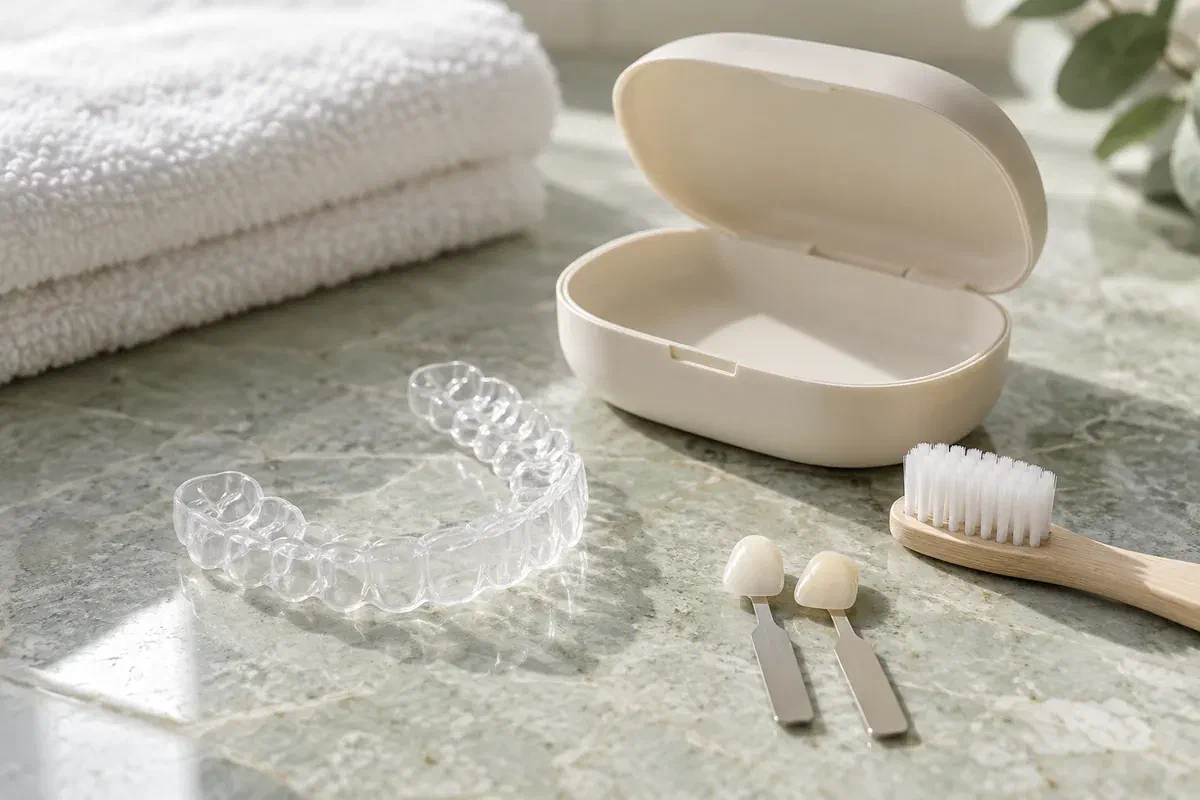
Everyday triggers can tell the dentist a lot. Your description helps decide what to examine before any discussion of lightening again.
Share the product and how you used it. Also mention your usual toothpaste, any whitening toothpaste and mouthwash. Packaging helps if you have it. You do not need to know how strong the gel was or test it again.
If brushing, cold tap water, sweet food or chewing already caused twinges, mention that. Decay, wear, a crack, older fillings or exposed roots may be involved, and hard brushing can contribute to some of these. A sensitive-teeth whitening product does not identify the cause.
Describe whether the gums sting when you brush or whether pain seems to come from inside a tooth. Note anything that lingers, recurs without whitening or stays in one spot. That may make checking a dental problem the priority.
If a whitening product causes a reaction, stop using it and get advice from a dental professional. Pushing on to finish it is not recommended.
Getting back to brushing without wincing is a worthwhile goal on its own. The dentist can explain what is causing the sensitivity, what needs care and how that affects any whitening advice. Leaving with a gentler routine and a decision to wait, or to keep your shade, is a good result.
If another attempt makes sense later, you will have instructions and a response plan before you begin: whom to call, what to mention and when your review is. That cannot remove all risk. It does mean you will not be left changing toothpastes, brushes and products at random whenever a tooth reacts.
Tell the dentist which parts of your daily care hurt and what you have tried. Expect suggestions that connect to your experience rather than a generic list, whether that is a change of brush, toothpaste or technique. A new whitening brand is not an answer to why brushing stings.
Some parts of a plan can be adjusted with guidance; others cannot be predicted. Any whitening method can cause sensitivity. You can decide that a lighter shade is not worth making your routine uncomfortable again.
Mention any visible fillings, crowns or veneers. They will not lighten with your natural teeth. Ask how a change might affect the match, and treat any replacement as its own optional decision.
The steps depend on your symptoms and findings. Please keep any remaining whitening product unused until you have advice.
Explain the whitening product, how you used it, when discomfort started and how it changed. Mention your toothpaste, brush and any changes you have made since, such as switching to a softer brush or avoiding cold drinks. Approximate answers are fine; the dentist is looking for patterns rather than perfect records.
The dentist examines the sensitive areas and may recommend further investigation. You can ask whether something needs treatment before cosmetic work, and whether your brushing technique might be playing a part.
Discuss how to make home care comfortable, along with the benefits, limits, fees and alternatives of whitening. If bleaching is suitable, you will receive a selected product and instructions written for you. Ask how to respond if sensitivity or gum soreness returns.
At review, describe how brushing feels and how any whitening went, including departures from the plan. Ask whether you have reached a sensible stopping point. More sessions or later top-ups are separate choices.
Follow the guidance given for your teeth. A family member’s routine, an online tip or an old leaflet may not suit you.
Write down any sensitivity with the date and trigger, such as cold water or brushing. Keep the whitening instructions with your notes. Avoid mixing products, adding sessions or diluting a gel.
If sensitivity makes you stop, ask for advice before applying again. Tell us whether it settled. Switching toothpastes or shortening wear time without guidance may not address what caused it.
Ask which toothpaste, brush and technique are best for sensitive teeth, and say if any spot is painful to clean. Keep brushing and flossing regularly. Whitening never replaces checkups, and a lighter shade should not cost you healthy gums.
Bring your product details and describe your daily routine. The dentist can explain what they see and whether further cosmetic treatment is sensible.
Book with our Bronte Street practice to talk about sensitivity after whitening and how it affects your daily routine. We will examine your teeth, suggest ways to make home care easier and help you decide on whitening later, if at all.
Advice on suitability, products, instructions and fees, and any colour change, depends on assessment. Sensitivity may still happen, and we cannot promise a particular shade or a comfortable result.
