

Illustrative private dental conversation about an oral health concern
General & Family Dentistry

Bad Breath Assessment and Treatment in Burlington

Everyone wakes with stale breath now and then. When it lasts past breakfast and brushing, though, it may be worth an oral assessment. From Burlington, you can book a private visit that looks for causes and plans care to match.

Burlington breath assessments

Past the first cup of coffee

Saliva slows overnight, so a stale taste on waking is normal for most people. The question is what happens after you have eaten, brushed and started the day. If the odour fades, that is usually just morning breath. If it hangs on, comes back within hours or has been going on for months, an assessment is a sensible step, painful tooth or not.

Several things can keep breath from freshening up. Plaque and inflamed gums, a coating at the back of the tongue, a mouth that stays dry, food lodged near older dental work, and appliances that are hard to clean are common examples. Garlic or coffee may explain an afternoon; they rarely explain a concern that has lasted all season. We base treatment on findings, not on a single universal product.

Expect the appointment to start with your timeline: when it began, what time of day it is strongest, and what you have used to deal with it. Then we examine the mouth for oral contributors and walk you through them. If your history suggests a medical cause might be involved, we can discuss that openly while still checking the mouth first.

Book a breath assessment
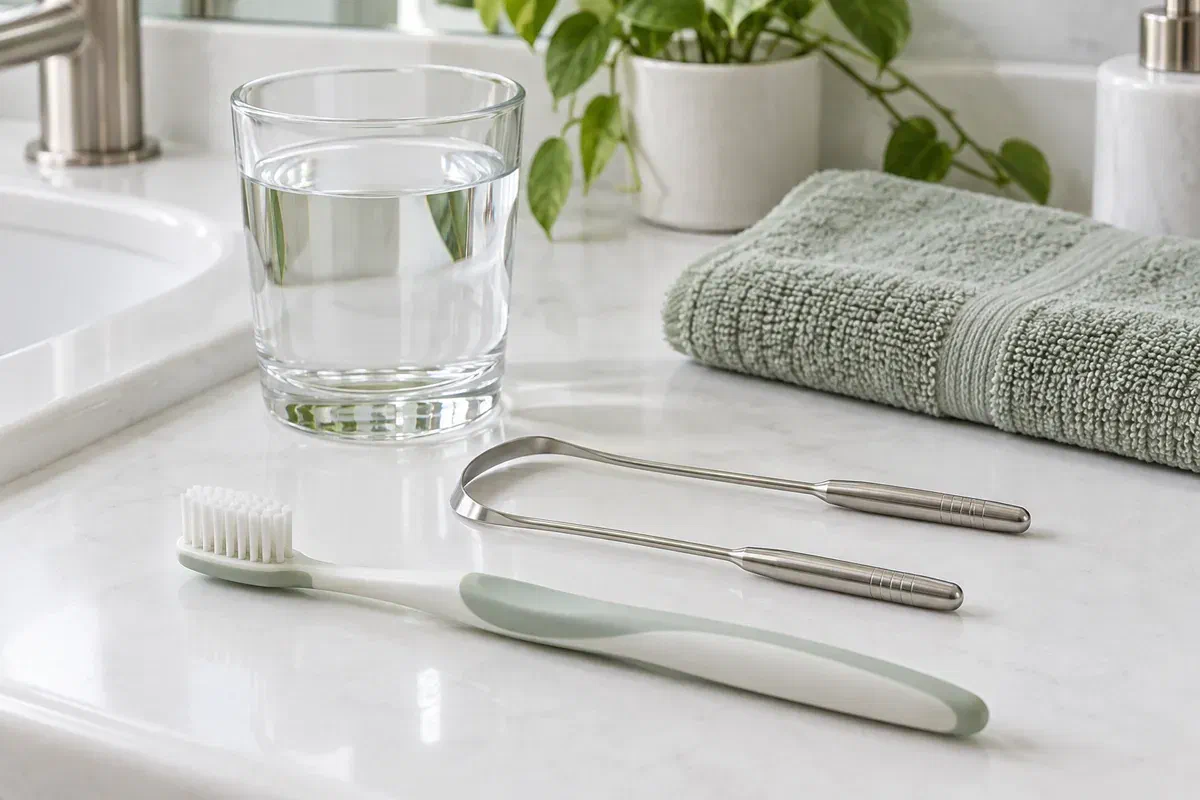
Toothbrush, tongue cleaner, and glass of water illustrating everyday oral care
When to pay attention

Timing tells us a lot

Try noting when the odour shows up: on waking only, after particular meals, or steadily through the day. Accompanying changes in the mouth are helpful clues, though none of them is conclusive by itself.

Puffy gums or a food trap

Swollen or bleeding gums, plaque that builds overnight and gaps where food wedges can all prolong an odour. Tell us where the floss snags or where you keep finding bits after meals. We check gums, teeth and existing restorations rather than suggesting a sharper mint flavour.

Dryness that does not ease

If your mouth feels dry well after waking, that may matter for breath and comfort. Mention thirst, stickiness, snoring or mouth breathing, and any new medicines. Dryness can have more than one cause, and advice should take your full history into account.

An appliance worn overnight

Night guards, retainers and dentures sit in the mouth for hours and need their own care. One that holds debris or no longer fits well should be looked at. Bring it and explain your cleaning routine, and we will check the tissues underneath as well.

A foul taste with facial swelling, significant tooth pain or pus can be a sign of infection. Phone us promptly rather than covering it with mouthwash while you wait.

Why it is worth booking

Know the cause, then choose the fix

It is easy to keep buying stronger rinses in the hope that one finally works. An assessment changes the approach: advice is tied to a reason we can see, whether that is a tricky cleaning area, gum inflammation, an appliance concern or persistent dryness. You understand the purpose of each step, and we can judge later whether it made a difference.

You can also say how much it is weighing on you. Breath worry can make people avoid close conversations or keep cupping a hand to check. That is worth telling us. We will treat it with respect, including on days when the mouth looks healthy or when a different type of assessment is the better next step.

An oral health check that is specific

A careful look at teeth, gums and soft tissues can reveal what a rinse cannot. Findings come first, explained plainly, so that a breath concern is never an automatic route to major dental work.

Hands-on cleaning advice

Ask to be shown how to reach the problem area with the brush or aid you already own or can easily use. One well-practised technique is often more valuable than a stack of new products.

A set time to review

We agree on when to look at progress and what would lead us to suggest another assessment. Ongoing breath concerns deserve a clear next move instead of endless experimenting.

The appointment

What to expect when you come in

Bring your medication list and the mouth care products you rely on. A short note about when the odour is worst can be helpful. Ask when booking if there is anything to avoid beforehand.

  1. Sharing your timeline

    We talk about when the concern started, whether it is constant and what seems to change it. Tobacco, dryness, appliance wear, snoring and relevant health symptoms may be discussed. Let us know what products you have tried and if any caused soreness.

  2. The oral examination

    We look at teeth, gums, tongue and soft tissues for plaque, inflammation, decay, retained food and appliance problems. Additional tests are suggested only when they would answer a clinical question; we do not assume every patient needs a particular device.

  3. Talking through priorities

    We explain what we found and any treatment that may help with gum disease, a damaged tooth or another issue. Home care and dry-mouth support are tailored to your mouth. Ask about fees, and whether each item targets the breath concern or a separate finding.

  4. The follow-up visit

    We review what has improved and what remains. If oral treatment does not explain the problem, or there are other health symptoms, we may recommend further medical assessment. We will be honest about what is uncertain and will not guarantee a result.

Morning and night

Small routines, done consistently

Follow the plan agreed at your visit. If any product stings, makes dryness worse or is fiddly to use, tell us and we can suggest an alternative.

Before bed matters most

Brush twice daily with fluoride toothpaste, and clean between your teeth once a day, ideally at night. We may discuss gentle tongue cleaning. Scraping or brushing so hard that tissues bleed is not more effective; careful technique is.

Rinse and store appliances properly

Clean a night guard, retainer or denture each morning using a method suited to its material, and wear it as directed. Ask us about storage cases and soaking products. Avoid bleach or household cleaners, which can damage it.

Note dryness and medicine changes

If dryness persists, tell us, and talk to your prescriber about medicine concerns. Never stop a prescribed medicine on your own. Water and saliva-supporting measures may ease comfort, but ongoing dryness needs its cause and its effect on teeth reviewed.

Patient information: NHS — caring for the mouth when breath is a concern · NIDCR — dry mouth

Options after the assessment

One cause, one kind of care

Where a contributor can be identified, treatment aims at it directly. Ask how each recommendation links to the examination and what the plan is should the odour persist.

For plaque or gum disease

Cleaning help and gum therapy

We may suggest a personalised home routine and suitable professional gum treatment. How much care is needed depends on the tissues. A routine hygiene visit and treatment for established periodontal disease can be quite different procedures.

For a local dental problem

Care for a specific tooth or appliance

Decay, a restoration that holds food or an appliance issue may need focused treatment. Discuss the diagnosis, alternatives and the benefit you can reasonably expect. Fixing one problem does not guarantee that every source of odour has been dealt with.

For a broader or uncertain cause

Comfort measures or referral

Dry-mouth care, a product selected for a clear reason, or a medical opinion may be the right step. Cosmetic rinses freshen breath briefly but do not treat disease. Ask what any product is for: comfort, prevention or a diagnosed condition.

Patient information: American Dental Association — mouthrinse and its limitations

Questions we hear often

What people want to know

Explain your concern in your own way. We can begin with your history and an examination even if you are not sure whether teeth, gums or something else is behind it.

(905) 876-4488
How can I tell morning breath from a real problem?
Morning breath usually improves once you eat, drink and brush. An odour that returns quickly, lasts all day or persists for weeks is more likely to have a cause worth investigating. Note the pattern and bring it to your visit.
Can snoring or breathing through my mouth make breath worse?
It can, because mouth breathing tends to dry the mouth, and dryness is linked to breath odour. Tell us if you snore or wake with a dry mouth. If sleep breathing is a concern, your physician may also want to know.
Do I have to be in pain to book a breath assessment?
Not at all. Plenty of oral problems cause odour without discomfort, and some breath concerns have no dental cause. Describe how long it has lasted and anything else you have noticed, and we will take it from there.
Would chewing sugar-free gum help in the meantime?
Sugar-free gum can encourage saliva and may freshen the mouth for a while, but it does not treat a cause. It is fine as a stopgap if it suits you. Avoid sugary gum and mints, which can raise the risk of decay.
What happens if the dentist finds nothing wrong?
We will explain what was checked and whether a medical opinion could help. If you remain worried, say so. A clear plan that addresses both the symptom and the worry is more useful than repeated harsh rinsing or constant self-checking.
Can I plan treatment visits from Burlington around work?
Yes. The first assessment is one appointment, and if treatment follows we can try to group visits sensibly. Our weekday hours run Monday to Thursday until 7pm, and Friday to Sunday are available by appointment.
Breath care for Burlington

Fresh start, honest answers

Arrange an appointment at our Bronte Street practice to talk about breath that will not stay fresh and to have your mouth examined. Bring your questions, medicines and the products you use. We will explain the findings and agree on a realistic next step.

For significant pain, swelling or a sudden worrying change, please phone. Online booking is for non-urgent visits.

Visit Milton Dental Clinic
Unit 1, 342 Bronte St. S, Milton, ON L9T 5B7
Get directions Clinic hours
Monday–Thursday
11am–7pm
Friday–Sunday
By appointment only

Areas we serve

  • Milton
  • Oakville
  • Mississauga
  • Georgetown
  • Halton Hills
  • Acton
  • Campbellville
  • Brampton
  • Burlington
  • Puslinch
  • Rockwood
  • Erin
  • Caledon
  • Etobicoke
  • Old Milton
  • Bronte Meadows
  • Timberlea
  • Dorset Park
  • Dempsey
  • Clarke
  • Beaty
  • Coates
  • Harrison
  • Scott
  • Willmott
  • Ford
  • Bowes
  • Cobden
  • Walker
  • Mountain View
  • Milton Heights
  • Hawthorne Village
  • Valley View
  • Fallingbrook
  • Nassagaweya
  • Trafalgar
  • Esquesing
  • Nelson
  • Brookville
  • Moffat
  • Glen Williams
  • Norval
  • Limehouse
  • Stewarttown
  • Ashgrove
  • Hornby
  • Silver Creek
  • Speyside
  • Scotch Block
  • North Oakville
  • River Oaks
  • Glen Abbey
  • West Oak Trails
  • Palermo
  • Bronte Creek
  • College Park
  • Joshua Creek
  • Uptown Core
  • Preserve
  • Iroquois Ridge
  • Lisgar
  • Meadowvale
  • Meadowvale Village
  • Churchill Meadows
  • Erin Mills
  • Central Erin Mills
  • Streetsville
  • East Credit
  • Creditview
  • Heartland
  • Sheridan
  • Mount Pleasant
  • Credit Valley
  • Huttonville
  • Churchville
  • Springbrook
  • Northwest Brampton
  • Bram West
  • Fletcher's Meadow
  • Fletcher's Creek South
  • Alton Village
  • Orchard
  • Millcroft
  • Headon Forest
  • Tansley
  • Brant Hills
  • Tyandaga
  • Kilbride
  • Lowville
  • Aberfoyle
  • Morriston
  • Arkell
  • Hillsburgh
  • Freelton
  • Carlisle
  • Waterdown
  • Flamborough
  • Mountsberg

How can we help?

Milton Dental Clinic

Have a question about your smile? Choose the option that works best for you.

For urgent dental concerns, please call.
Messages are reviewed during clinic hours.