

Illustrative private dental conversation about an oral health concern
General & Family Dentistry

Bad Breath Assessment and Treatment in Caledon

It can take months to decide that a breath concern is worth mentioning. When you are ready, people from Bolton and the villages of Caledon can book a quiet, private oral assessment that looks for the cause and agrees a sensible plan.

Caledon breath assessments

Is it worth booking for?

Yes. That is the short answer to a question many people turn over for a long time. Persistent bad breath is a legitimate health concern, not vanity, and you can book an assessment for it alone. No toothache is required, nobody will be surprised, and you can describe it in a sentence if that is all you want to say.

Behind the odour there may be one cause or several: plaque and gum inflammation, a coated tongue, low saliva, food caught around fillings or crowns, or an appliance that needs a different cleaning approach. Coffee or a garlicky dinner explains a passing change. A smell that keeps returning after good brushing is the kind that deserves a proper look before another product goes in the cart.

At the visit, you share as much as you like about what has been noticed and what you have tried. We examine the mouth and explain what we see in plain words. If something points toward a medical opinion, we will say so and suggest involving your doctor, without assuming that the stomach is to blame.

Book when you are ready
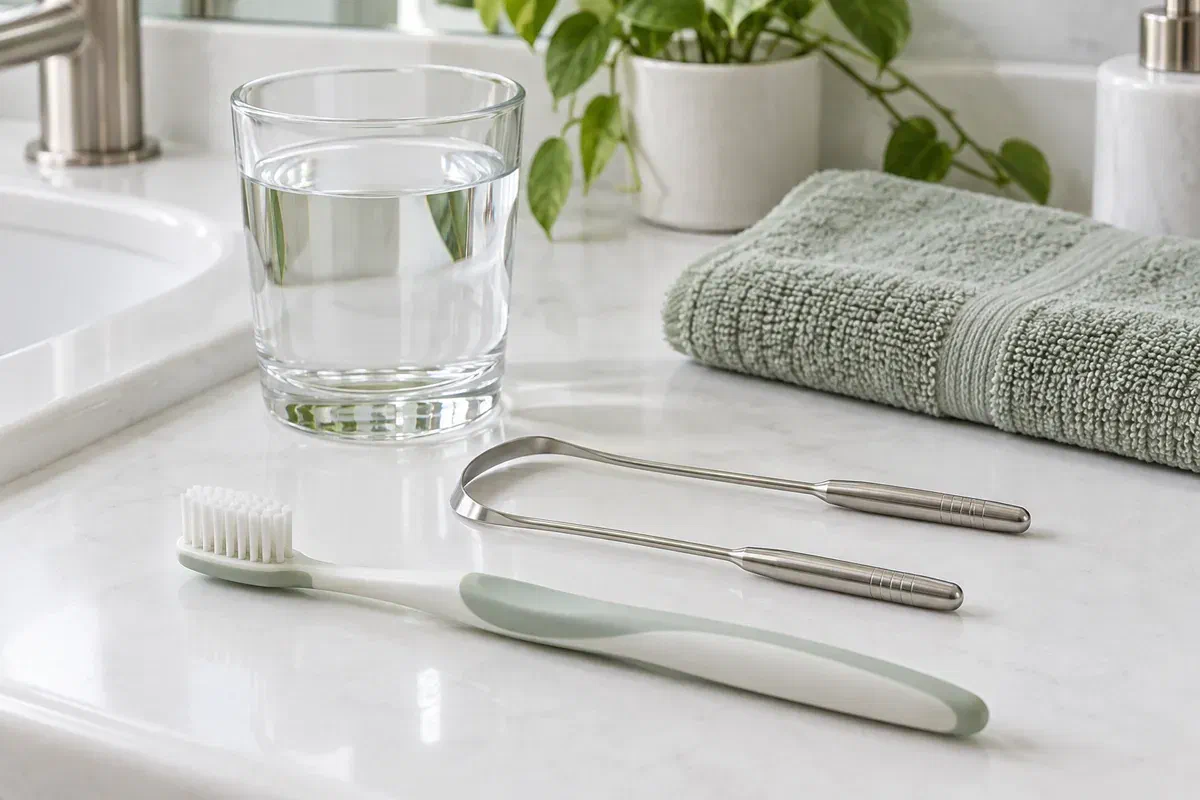
Toothbrush, tongue cleaner, and glass of water illustrating everyday oral care
Small details that help

Notice what comes with it

Is the odour stronger on waking, after meals, or all day? Other mouth changes help us know where to start, though none of them is conclusive without an examination.

Bleeding or food catching

Inflamed gums, plaque build-up and spaces where food lodges are frequent contributors. Mention the places where floss snags or food sticks. We look at gums, teeth and restorations closely rather than pointing you toward a stronger mint.

Dryness you have noticed

A mouth that feels dry or sticky can affect breath. Tell us about thirst, mouth breathing, snoring or a change in medicines. Since dryness has several possible causes, any advice should reflect your wider health history.

Anything removable

Dentures, partials, retainers and guards each need cleaning of their own, and one that collects debris or fits loosely deserves attention. Bring it with you. We check the appliance and the gums it sits on.

A bad taste together with swelling, a painful tooth or discharge may need prompt care. Phone us before driving in, and do not rely on fresheners while waiting for a routine visit.

Why it helps to ask

Less wondering, more knowing

Putting it off usually means trying product after product on your own. An assessment connects advice to something observed, whether that is a blind spot in cleaning, inflamed gums, an appliance issue or dryness. With a reason in hand, it is easier to stick with the plan and to see whether it is working.

It is also a chance to say what the concern has been costing you, perhaps avoiding gatherings, keeping your distance or checking your breath again and again. That matters. We will listen respectfully, including when the mouth looks healthy or another kind of assessment is the better route.

An examination without judgement

We check teeth, gums and soft tissues for problems that no spray will touch, and we explain findings before any treatment is mentioned. A breath concern will not be treated as an excuse for extensive dental work.

Simple, shown advice

If technique needs a change, ask us to demonstrate with tools that are easy to find and use. One clear habit you understand is worth more than a cupboard of products.

A plan for afterwards

We agree when to review progress and what would prompt a different assessment. For households in Caledon, we can also think about grouping visits so trips are well used.

What happens when you come in

Private from start to finish

Write down your medicines and the products you use, and bring any appliance. If you have noticed when the odour is worst, include that. Ask when booking whether to prepare in any way.

  1. A quiet conversation

    You tell us when it started, whether it ever goes away and what has seemed to help or make it worse. Smoking, dryness, appliances and relevant health symptoms may come up. Mention any product that irritated your mouth.

  2. Looking carefully

    The dentist checks teeth, gums, tongue and the lining of the mouth for plaque, gum swelling, cavities, food traps and appliance problems. Extra tests are only suggested when they would help settle a clinical question.

  3. Talking through the findings

    We explain what we saw and whether care is needed for gum disease, a damaged tooth or another problem. Home care and dryness suggestions are fitted to you. Ask about fees and whether each step is aimed at the breath concern.

  4. Following up

    A later visit shows whether the changes made a difference and what, if anything, still bothers you. Where dental care leaves the odour unexplained, or you mention symptoms beyond the mouth, a conversation with your family doctor may be the next move. Some answers take time, and we will say so plainly rather than promise an outcome.

After your visit

Keep it simple and steady

Follow the plan we agree. If something stings, makes your mouth drier or is hard to keep up, let us know so we can adjust it.

Thorough daily cleaning

Morning and evening, brush every surface with a fluoride paste, and once a day reach between the teeth with floss, picks or small brushes, whichever you will actually keep using. Light tongue cleaning may be recommended. Pressing hard until tissues bleed does not clean better; good technique does.

Separate care for appliances

Clean dentures or appliances using the method suited to their material, and follow the wear schedule advised. Ask about storage and suitable cleaning products. Household cleaners can damage them.

Dryness and medicines

Tell us if dry mouth persists and discuss medicine concerns with your prescriber. Never stop a prescribed medicine on your own. Sipping water may ease comfort, and continuing dryness should be looked into because it can affect the teeth too.

Patient information: NHS — caring for the mouth when breath is a concern · NIDCR — dry mouth

Care that follows the findings

No single fix, but a clear direction

Treatment aims at an identified contributor where possible. Ask how each recommendation relates to the examination, and what happens if the concern continues.

If plaque or the gums contribute

Cleaning help and gum treatment

A tailored home routine and suitable professional gum care may be advised. How much depends on the gums. Treatment for established periodontal disease often involves more than a routine cleaning visit.

If there is a local problem

Treating a tooth or appliance

Decay, a filling that traps food or an appliance issue may need specific care. Discuss the diagnosis, alternatives and expected benefit. Correcting one problem does not guarantee that all sources of odour have been dealt with.

If the cause is wider or uncertain

Support or a medical opinion

Dry-mouth care, a product with a clear purpose or a physician’s assessment may be appropriate. Cosmetic rinses mask breath briefly without treating disease. We will explain what any product is intended to do.

Patient information: American Dental Association — mouthrinse and its limitations

Caledon questions

What people wonder before booking

Say as much or as little as you like. You do not need to know whether the cause is your teeth, gums or something else before you arrive.

(905) 876-4488
Will the team think it is strange that I am booking for breath alone?
No. Breath concerns are a common reason for dental visits, and plenty of people book for nothing else. You can say as much or as little as you like at the front desk; the details can wait until you are in the treatment room, where the assessment is handled privately and respectfully.
Do I need to brush right before my appointment?
Brush as you normally would. Ask when booking whether there are any particular instructions, for example about avoiding strongly scented products beforehand, so the examination reflects your usual situation.
Can I mention breath during a regular check-up instead?
Yes. Raise it when booking or at the start of your visit. If more time is needed for a full assessment, we will arrange it, and combining visits can save a separate trip.
Are breath sprays and mints harmful?
Generally they only mask odour briefly. Sugary mints sucked through the day can increase the risk of decay, so sugar-free versions are a better choice if you use them. Some sprays contain alcohol, which a few people find drying. Neither mints nor sprays treat the cause of a persistent concern.
What if the cause turns out not to be dental?
Then that is useful to know. We will explain what we checked, what looked healthy and whether a visit to your family doctor would be helpful, for instance if you have sinus, throat or digestive symptoms. You will leave with a clear next step rather than a list of products to keep trying.
Should I call before making the trip from Caledon?
For routine visits, booking ahead is enough. If something new comes up, such as swelling or pain, call first so we can advise whether to come in or seek care closer to home.
Breath care for Caledon

Today could be the day you ask

Book a private appointment at our Bronte Street practice to talk about breath and have your mouth examined. Bring your questions, any appliance and the names of your medicines and products. We will explain the findings and agree a practical next step together.

A swollen face, a throbbing tooth or a sudden change you cannot explain calls for a phone call, not the online form, which is meant for routine bookings.

Visit Milton Dental Clinic
Unit 1, 342 Bronte St. S, Milton, ON L9T 5B7
Get directions Clinic hours
Monday–Thursday
11am–7pm
Friday–Sunday
By appointment only

Areas we serve

  • Milton
  • Oakville
  • Mississauga
  • Georgetown
  • Halton Hills
  • Acton
  • Campbellville
  • Brampton
  • Burlington
  • Puslinch
  • Rockwood
  • Erin
  • Caledon
  • Etobicoke
  • Old Milton
  • Bronte Meadows
  • Timberlea
  • Dorset Park
  • Dempsey
  • Clarke
  • Beaty
  • Coates
  • Harrison
  • Scott
  • Willmott
  • Ford
  • Bowes
  • Cobden
  • Walker
  • Mountain View
  • Milton Heights
  • Hawthorne Village
  • Valley View
  • Fallingbrook
  • Nassagaweya
  • Trafalgar
  • Esquesing
  • Nelson
  • Brookville
  • Moffat
  • Glen Williams
  • Norval
  • Limehouse
  • Stewarttown
  • Ashgrove
  • Hornby
  • Silver Creek
  • Speyside
  • Scotch Block
  • North Oakville
  • River Oaks
  • Glen Abbey
  • West Oak Trails
  • Palermo
  • Bronte Creek
  • College Park
  • Joshua Creek
  • Uptown Core
  • Preserve
  • Iroquois Ridge
  • Lisgar
  • Meadowvale
  • Meadowvale Village
  • Churchill Meadows
  • Erin Mills
  • Central Erin Mills
  • Streetsville
  • East Credit
  • Creditview
  • Heartland
  • Sheridan
  • Mount Pleasant
  • Credit Valley
  • Huttonville
  • Churchville
  • Springbrook
  • Northwest Brampton
  • Bram West
  • Fletcher's Meadow
  • Fletcher's Creek South
  • Alton Village
  • Orchard
  • Millcroft
  • Headon Forest
  • Tansley
  • Brant Hills
  • Tyandaga
  • Kilbride
  • Lowville
  • Aberfoyle
  • Morriston
  • Arkell
  • Hillsburgh
  • Freelton
  • Carlisle
  • Waterdown
  • Flamborough
  • Mountsberg

How can we help?

Milton Dental Clinic

Have a question about your smile? Choose the option that works best for you.

For urgent dental concerns, please call.
Messages are reviewed during clinic hours.