

Illustrative private dental conversation about an oral health concern
General & Family Dentistry

Bad Breath Assessment and Treatment in Erin

You brush, you rinse, and you still worry by mid-afternoon. For anyone in Erin or Hillsburgh, an oral assessment can show which part of the routine is missing the mark and replace the guesswork with a few steps that actually fit your day.

Breath care from Erin

Doing everything right, and still unsure

It is frustrating to brush twice a day, buy the good toothpaste and still feel self-conscious. Effort is rarely the issue. More often, a small gap in technique, an area the brush cannot reach, or something unrelated to brushing altogether is keeping the odour going. That is a fine reason to book an assessment, even when your teeth feel completely comfortable.

The usual suspects include plaque along the gum line and between teeth, a coating on the tongue, a dry mouth, food that collects near fillings, and dentures or retainers that need a different cleaning method. A strong meal or a morning coffee causes a short-lived change. A smell that keeps coming back despite a careful routine deserves to be looked into properly.

First, you tell us privately what you do each day, what you have noticed and which products you use. Then we examine the mouth and show you what we find, so the advice makes sense. If anything in your history suggests a doctor should be involved, we will discuss it without assuming the stomach must be the cause.

Book an assessment
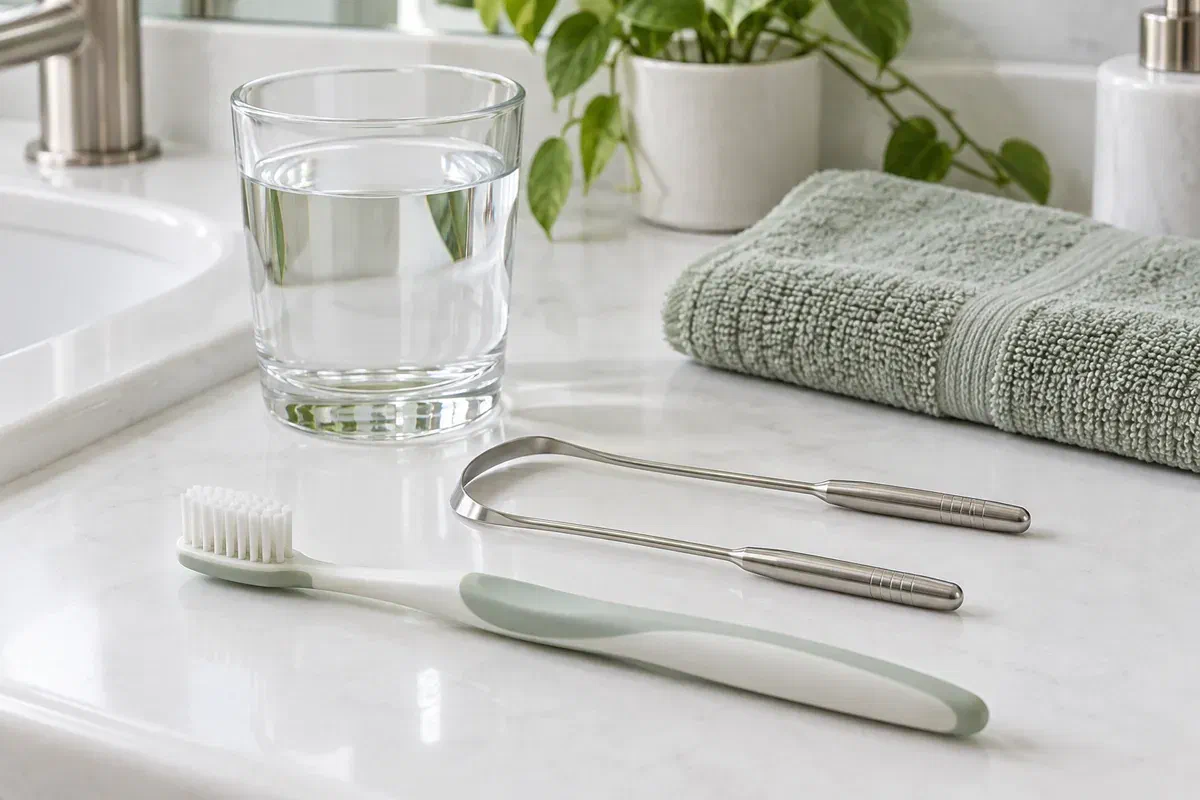
Toothbrush, tongue cleaner, and glass of water illustrating everyday oral care
Gaps in the routine

Where brushing alone falls short

Let us know if the odour peaks after sleep, after eating, or stays steady. Other signs in the mouth help show where the routine needs support, though one sign alone is never the full answer.

Between teeth and at the gum line

A toothbrush misses the spaces between teeth, where plaque and food gather and gums can become inflamed. Tell us if floss catches, frays or bleeds in particular places. We examine those areas and any fillings or crowns rather than suggesting a different flavour of paste.

A mouth that runs dry

Saliva does part of the cleaning work. If you often feel thirsty, wake with a dry mouth, breathe through your mouth or have started a new medicine, mention it. Dryness has several causes, so we consider your whole history.

Dentures and retainers

Brushing natural teeth does not clean an appliance. Bring yours and show us how you care for it. If it collects debris or no longer fits well, we will look at it and the gums beneath it.

Extra rinsing is the wrong response to a bad taste that comes with swelling, toothache or discharge. Those signs can mean infection, so phone us promptly instead of waiting for a routine slot.

What changes after an assessment

A routine built on what we find

Without a clear reason, it is natural to keep adding steps: another rinse, a new brush, a breath spray. An assessment identifies what actually needs attention, such as a cleaning blind spot, inflamed gums, an appliance problem or dryness, so the routine can be simplified around it. You can see why each step matters and whether it is working.

You can also tell us how the worry affects you. If it is making you avoid close conversations or check your breath often, that is worth knowing. We will listen with respect, including when your routine turns out to be excellent and the cause lies somewhere else.

Feedback on your current routine

Plaque left behind tells its own story, so the teeth, gums and soft tissues show us where your routine is falling short. Findings are explained first, and a breath concern does not automatically become a reason for extensive dental treatment.

A demonstration you can copy

Ask us to show you, step by step, how to clean between teeth or across the tongue with tools you already have or can easily find. One improved habit often matters more than three new products.

A check on whether it helped

We agree when to review and what would prompt a different assessment. That way you know whether the simpler routine worked, rather than wondering indefinitely.

During the appointment

We look at the routine as well as the mouth

Bring the products you use daily, a note of your medicines and any appliance. Tell us roughly when the odour is strongest. Ask at booking if any preparation is needed.

  1. Walking through your day

    Tell us how and when you brush, clean between teeth and care for any appliance, along with when the odour seems worst. Dryness, smoking and relevant health symptoms may come up. Mention anything that has stung or irritated.

  2. Seeing where plaque gathers

    The dentist examines teeth, gums, tongue and the lining of the mouth, noting plaque, swelling, cavities, trapped food and appliance condition. Any further tests are suggested only if they would clarify a clinical question.

  3. Adjusting the plan

    We explain what we found and whether treatment is needed for gum problems, a damaged tooth or something else. Then we tailor the home routine, and dry-mouth support if relevant. Ask about fees and whether a treatment addresses the breath concern itself.

  4. Reviewing what worked

    At follow-up we discuss which changes helped. If the routine and any dental care have not resolved the concern, or other symptoms appear, we may suggest seeing your physician. We will be honest that some causes take time to identify.

A simpler routine

Three habits worth keeping

Stick with what we agree. If any product stings, makes your mouth drier or feels like too much, tell us so the routine can be trimmed or changed.

Brush, then clean between

Use fluoride toothpaste twice a day and clean between your teeth once daily, ideally before bed. We may add gentle tongue cleaning. Scrubbing hard or until gums bleed is not more effective; a calm, thorough technique is.

Clean the appliance separately

Clean a denture or retainer with a method suited to its material and follow the wear schedule you were given. Ask about cases and soaking products. Skip household cleaners, which can damage it.

Drink water and mention dryness

Keep water nearby, tell us if dryness persists, and talk to your prescriber about medicine concerns. Do not stop a medicine on your own. Dryness that continues should be investigated, as it can affect teeth as well as breath.

Patient information: NHS — caring for the mouth when breath is a concern · NIDCR — dry mouth

If more than routine changes are needed

When home care is not the whole answer

Where we can identify a contributor, we aim treatment at it. Ask how each recommendation fits the findings and what we will do if the concern remains.

If plaque or gum disease is involved

Professional gum care

Alongside your home routine, appropriate professional gum treatment may be recommended. The amount depends on your gums. Treatment for established periodontal disease can involve more than a standard cleaning appointment.

If a tooth or appliance needs attention

Repairing a problem area

Decay, a filling that traps food or an appliance issue may need specific care. Discuss the diagnosis, alternatives and expected benefit. Fixing one area does not guarantee every source of odour has gone.

If the cause is broader or unclear

Dry-mouth support or a medical view

Saliva support, a product used for a defined purpose, or input from your physician may be appropriate. Cosmetic rinses change breath for a short time without treating disease. We will explain the purpose of anything we suggest.

Patient information: American Dental Association — mouthrinse and its limitations

Erin questions

About routines, products and breath

Explain things in whatever way feels natural. You do not need to know whether the cause is your teeth, gums or something else; we can start from your routine and the examination.

(905) 876-4488
Is an electric toothbrush better for bad breath?
Either a manual or electric brush can work well when used thoroughly. Some people find an electric brush easier, especially with limited dexterity. Cleaning between teeth matters regardless. We can look at your technique with whichever you prefer.
How long should I brush to help my breath?
About two minutes, twice a day, with fluoride toothpaste is the usual guidance. Covering all surfaces and the gum line matters more than speed or pressure. Daily cleaning between teeth is just as important.
Do I need a separate tongue cleaner?
Not always. A soft toothbrush used gently on the tongue can work. Some people find a tongue cleaner more comfortable. We will check whether tongue cleaning is relevant for you and show you how.
Can water flossers replace regular floss?
For some people, a water flosser or interdental brushes are easier to use than string floss. What matters is cleaning between teeth effectively each day. Ask us which option suits your gaps and gums.
If I brush well, why would I still have bad breath?
Brushing may miss between teeth or the back of the tongue, and other factors such as dryness, an appliance or a dental problem can contribute. Some breath concerns are not dental. The examination helps sort this out.
Can I group my family’s appointments on one trip from Erin?
Often, yes. Ask when booking whether appointments can be scheduled back to back. Weekday hours are Monday to Thursday, 11am to 7pm, and Friday to Sunday are by appointment.
Breath assessments for Erin

Bring your toothbrush questions

Book an appointment at our Bronte Street practice and bring along the products you use each day. We will examine your mouth, look at what your routine is reaching and missing, and agree a simpler, practical next step.

Please phone about significant pain, swelling or a sudden worrying change. Online requests are for non-urgent visits.

Visit Milton Dental Clinic
Unit 1, 342 Bronte St. S, Milton, ON L9T 5B7
Get directions Clinic hours
Monday–Thursday
11am–7pm
Friday–Sunday
By appointment only

Areas we serve

  • Milton
  • Oakville
  • Mississauga
  • Georgetown
  • Halton Hills
  • Acton
  • Campbellville
  • Brampton
  • Burlington
  • Puslinch
  • Rockwood
  • Erin
  • Caledon
  • Etobicoke
  • Old Milton
  • Bronte Meadows
  • Timberlea
  • Dorset Park
  • Dempsey
  • Clarke
  • Beaty
  • Coates
  • Harrison
  • Scott
  • Willmott
  • Ford
  • Bowes
  • Cobden
  • Walker
  • Mountain View
  • Milton Heights
  • Hawthorne Village
  • Valley View
  • Fallingbrook
  • Nassagaweya
  • Trafalgar
  • Esquesing
  • Nelson
  • Brookville
  • Moffat
  • Glen Williams
  • Norval
  • Limehouse
  • Stewarttown
  • Ashgrove
  • Hornby
  • Silver Creek
  • Speyside
  • Scotch Block
  • North Oakville
  • River Oaks
  • Glen Abbey
  • West Oak Trails
  • Palermo
  • Bronte Creek
  • College Park
  • Joshua Creek
  • Uptown Core
  • Preserve
  • Iroquois Ridge
  • Lisgar
  • Meadowvale
  • Meadowvale Village
  • Churchill Meadows
  • Erin Mills
  • Central Erin Mills
  • Streetsville
  • East Credit
  • Creditview
  • Heartland
  • Sheridan
  • Mount Pleasant
  • Credit Valley
  • Huttonville
  • Churchville
  • Springbrook
  • Northwest Brampton
  • Bram West
  • Fletcher's Meadow
  • Fletcher's Creek South
  • Alton Village
  • Orchard
  • Millcroft
  • Headon Forest
  • Tansley
  • Brant Hills
  • Tyandaga
  • Kilbride
  • Lowville
  • Aberfoyle
  • Morriston
  • Arkell
  • Hillsburgh
  • Freelton
  • Carlisle
  • Waterdown
  • Flamborough
  • Mountsberg

How can we help?

Milton Dental Clinic

Have a question about your smile? Choose the option that works best for you.

For urgent dental concerns, please call.
Messages are reviewed during clinic hours.