

Illustrative private dental conversation about an oral health concern
General & Family Dentistry

Bad Breath Assessment and Treatment in Halton Hills

A dry, sticky mouth and a breath worry often turn up together, especially after a change in medication. For anyone in Halton Hills, an oral assessment can look at saliva, gums and tongue and suggest care that suits your health history.

Halton Hills breath and dry-mouth care

Saliva matters more than you think

Saliva quietly rinses the mouth all day. When there is less of it, because of a medicine, mouth breathing, illness or simply not drinking much, food and bacteria linger and breath can suffer. A glass of water by the bed that never seems to help is one of the small signs people mention. It is a sound reason to book, even when no tooth aches.

Dryness is only one possibility, though. Plaque and gum inflammation, a coating on the tongue, a filling that catches food, or a denture that is difficult to keep clean can all contribute, and several may be present at once. A cup of strong coffee leaves a short-lived trace; a smell that keeps returning deserves a proper look. Treatment depends on what is found, not on a promise that one rinse fits all.

The appointment opens with a conversation. We ask about your mouth, your medicines and any recent health changes, and what you have already tried. After an oral examination we explain any findings. Where the picture suggests a doctor should be involved, we will say so, without assuming that the problem is digestive.

Book a dry-mouth and breath check
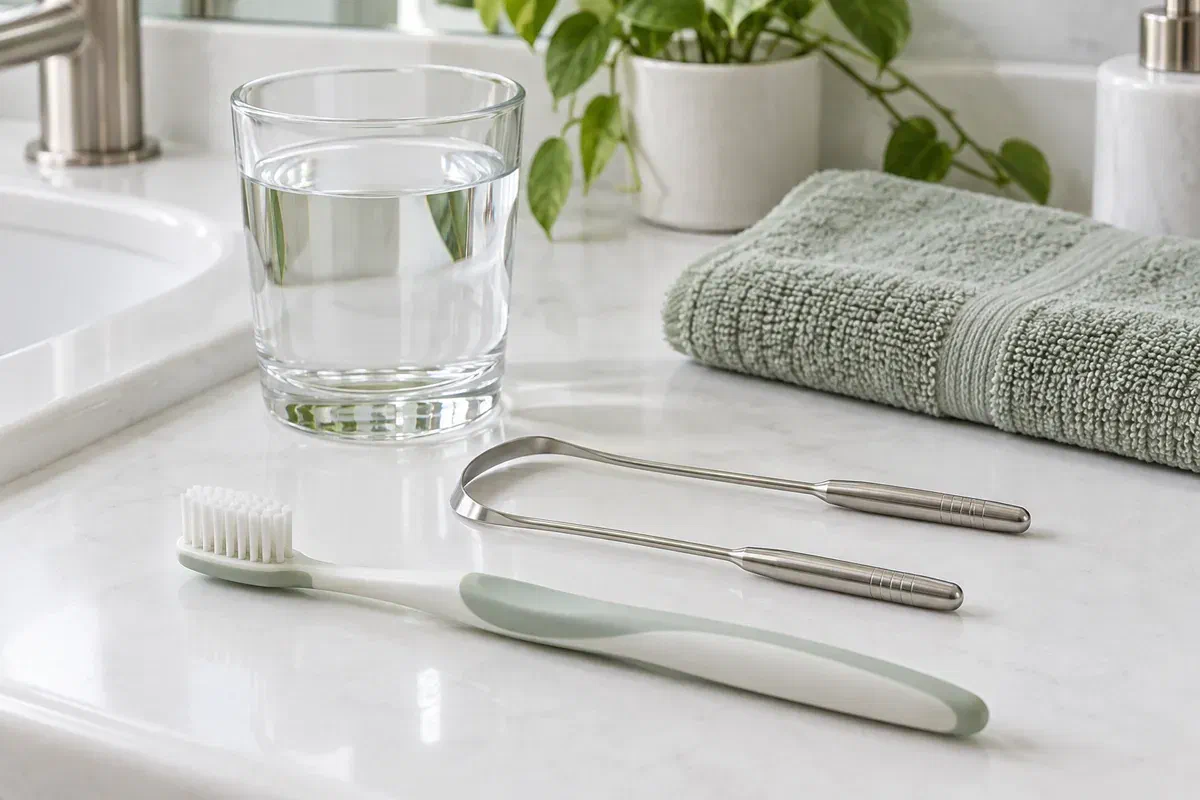
Toothbrush, tongue cleaner, and glass of water illustrating everyday oral care
Signals to share

Dry, sticky, sore or stale?

It helps to know whether the odour is worst on waking, after meals or across the whole day. Other mouth changes can steer the examination, but none of them settles the cause alone.

Plaque, bleeding or packed food

A dry mouth can make plaque harder to clear, and inflamed gums or food traps may keep odour going. Point out where cleaning is hardest. We check the gums, teeth and existing restorations rather than handing over a stronger paste.

A mouth that never feels moist

Describe thirst, a tacky tongue, difficulty swallowing dry food, waking with a parched mouth, or any medicine started recently. Dryness has many possible causes, and support should be chosen to fit your history, not as a quick replacement for finding out why.

A denture over dry tissues

Dentures can feel less comfortable and collect more debris when saliva is low. Bring yours and tell us how you clean it. We look at the fit, the appliance and the gums underneath, which can become tender in a dry mouth.

Swelling, a painful tooth, discharge or a sudden foul taste may need attention soon. Please phone us instead of relying on fresheners until a routine visit.

What you can learn

Understand what is behind the dryness and odour

Many people switch products repeatedly before asking for help. An assessment links advice to a specific observation, whether that is low saliva, a difficult cleaning area, irritated gums or an appliance concern. Knowing the reason makes it easier to choose suitable support and to see later whether it has helped.

Dryness and breath worry can both wear on daily life, from conversations to meals. If you are avoiding people or constantly checking your breath, mention it. Your concern will be heard respectfully, including when the mouth looks healthy or another kind of assessment would be more appropriate.

A look at teeth and soft tissues

We examine teeth, gums and the lining of the mouth, which can be affected by dryness. Findings are explained before treatment is proposed, so a breath complaint does not automatically lead to extensive dental work.

Practical moisture and cleaning tips

Ask us to show a cleaning method that works with a dry mouth and the tools you can manage. Understanding one routine well tends to help more than trying a shelf of new products.

Coordinated next steps

We agree when to review your progress and when to involve your doctor or pharmacist about medicines. A lasting concern should have a clear plan rather than an endless trial of products.

How we approach it

From your medicines to the mouth itself

Please bring a current list of medicines and supplements, as well as the oral care products you use. If dryness or odour follows a daily pattern, describe it. Ask at booking about any preparation.

  1. Health and medicine history

    Did the dryness arrive before the odour, or the other way round? Timing like that, and anything that eases or worsens either, helps us understand the picture. Medicines, health conditions, smoking and denture wear may be discussed. Let us know what you have tried, including saliva products, and whether anything irritated.

  2. Checking moisture and tissues

    We look at saliva, teeth, gums, tongue and soft tissues for plaque, inflammation, decay, food retention and appliance issues. Further tests are recommended only if they would help answer a clinical question rather than routinely.

  3. Priorities for care

    We explain what we found and any treatment for gum problems, a decayed tooth or another issue. Dryness can raise the risk of decay, so protective advice may be included. Ask about fees and whether a recommendation addresses breath or a separate finding.

  4. Following up with you

    We review what has changed. If oral care does not explain the problem, or dryness needs medical review, we may suggest speaking with your physician. We are open about uncertainty and avoid promising a particular result.

Comfort at home

Keep moisture up, keep cleaning gentle

Use the routine we agree on. If a product stings, leaves your mouth drier than before or is hard to manage, let us know so another option can be found.

Clean carefully, not forcefully

Brush twice a day with fluoride toothpaste and clean between teeth daily. Gentle tongue cleaning may be suggested. In a dry mouth, tissues can be more delicate, so avoid scrubbing; technique matters more than pressure.

Look after dentures in a dry mouth

Clean your denture using a method suited to its material and follow the advised wearing schedule. Ask about storage and suitable soaking products. Household cleaners can damage the appliance and irritate dry tissues.

Sip water and review medicines

Keep water nearby through the day and tell us if dryness continues. Discuss medicine concerns with your prescriber or pharmacist, and do not stop anything on your own. Ongoing dryness deserves assessment of its cause and its effect on your teeth.

Patient information: NHS — caring for the mouth when breath is a concern · NIDCR — dry mouth

Approaches we may suggest

Support, repair or referral

We aim to deal with whatever contributor the examination identifies. Ask how each suggestion fits your findings and what we will do if dryness or odour continues.

If plaque or the gums contribute

Gum health and cleaning help

A home routine tailored to your mouth and professional gum care may be recommended. The extent depends on what the tissues show. Deeper gum treatment for periodontal disease is a different undertaking from a routine cleaning and may involve more than one appointment.

If a tooth or appliance is involved

Treating a specific site

Decay, a food-catching filling or a denture problem may need focused treatment. Discuss the diagnosis, alternatives and what benefit to expect. Resolving one finding cannot promise that all sources of odour have been removed.

If dryness or a wider cause is suspected

Dry-mouth care and medical input

Saliva-supporting products, a rinse chosen for a clear purpose, or input from your doctor may be appropriate. Alcohol-containing rinses can feel drying for some people. Cosmetic rinses offer a brief change in breath but do not treat disease, so ask what any product is meant to do.

Patient information: American Dental Association — mouthrinse and its limitations

Halton Hills questions

Your dry-mouth and breath questions

Say it however feels natural. We can begin with your story and an oral examination even if you do not know whether dryness, gums, teeth or something else is the main issue.

(905) 876-4488
Can my medication be causing bad breath?
Some medicines can reduce saliva, and a dry mouth is linked with breath odour. That does not mean the medicine is the only factor. Bring a list and keep taking it as prescribed; we will check the mouth and suggest talking to your prescriber if appropriate.
Are alcohol-free mouthwashes better for a dry mouth?
Some people with dryness find alcohol-free products more comfortable. Comfort is only part of the question, though, as rinses do not replace an assessment of the cause. Ask whether a particular product suits your situation.
Does a dry mouth affect my teeth as well as my breath?
It can. Saliva helps protect teeth, so ongoing dryness may increase the risk of decay. That is one reason we look at the teeth closely and may suggest preventive measures alongside comfort advice.
What helps with dryness at night?
Keeping water by the bed, addressing mouth breathing where possible and using saliva-supporting products may help some people. The right approach depends on the cause. Tell us how you sleep, and your physician may need to know about snoring or a blocked nose.
Is it possible that nothing in my mouth explains the odour?
Yes. If the examination does not identify a clear oral source, we will explain what was checked and whether a medical opinion makes sense. Continuing to worry is understandable, and a defined plan is better than repeated harsh rinsing.
Can I combine a breath assessment with a routine check-up?
Often, yes. Ask when booking whether the assessment can be included with an examination or cleaning you are due for. For households in Halton Hills, that can reduce the number of separate trips.
Breath care for Halton Hills

Bring the dryness, bring the questions

Arrange a time at our Bronte Street practice to discuss breath and dryness and have your mouth examined. Bring your medicine list and the products you use, plus any denture. We will explain the findings and agree a sensible next step.

For significant pain, swelling or a sudden change you are concerned about, call us. Online requests are for routine appointments.

Visit Milton Dental Clinic
Unit 1, 342 Bronte St. S, Milton, ON L9T 5B7
Get directions Clinic hours
Monday–Thursday
11am–7pm
Friday–Sunday
By appointment only

Areas we serve

  • Milton
  • Oakville
  • Mississauga
  • Georgetown
  • Halton Hills
  • Acton
  • Campbellville
  • Brampton
  • Burlington
  • Puslinch
  • Rockwood
  • Erin
  • Caledon
  • Etobicoke
  • Old Milton
  • Bronte Meadows
  • Timberlea
  • Dorset Park
  • Dempsey
  • Clarke
  • Beaty
  • Coates
  • Harrison
  • Scott
  • Willmott
  • Ford
  • Bowes
  • Cobden
  • Walker
  • Mountain View
  • Milton Heights
  • Hawthorne Village
  • Valley View
  • Fallingbrook
  • Nassagaweya
  • Trafalgar
  • Esquesing
  • Nelson
  • Brookville
  • Moffat
  • Glen Williams
  • Norval
  • Limehouse
  • Stewarttown
  • Ashgrove
  • Hornby
  • Silver Creek
  • Speyside
  • Scotch Block
  • North Oakville
  • River Oaks
  • Glen Abbey
  • West Oak Trails
  • Palermo
  • Bronte Creek
  • College Park
  • Joshua Creek
  • Uptown Core
  • Preserve
  • Iroquois Ridge
  • Lisgar
  • Meadowvale
  • Meadowvale Village
  • Churchill Meadows
  • Erin Mills
  • Central Erin Mills
  • Streetsville
  • East Credit
  • Creditview
  • Heartland
  • Sheridan
  • Mount Pleasant
  • Credit Valley
  • Huttonville
  • Churchville
  • Springbrook
  • Northwest Brampton
  • Bram West
  • Fletcher's Meadow
  • Fletcher's Creek South
  • Alton Village
  • Orchard
  • Millcroft
  • Headon Forest
  • Tansley
  • Brant Hills
  • Tyandaga
  • Kilbride
  • Lowville
  • Aberfoyle
  • Morriston
  • Arkell
  • Hillsburgh
  • Freelton
  • Carlisle
  • Waterdown
  • Flamborough
  • Mountsberg

How can we help?

Milton Dental Clinic

Have a question about your smile? Choose the option that works best for you.

For urgent dental concerns, please call.
Messages are reviewed during clinic hours.