

Illustrative private dental conversation about an oral health concern
General & Family Dentistry

Bad Breath Assessment and Treatment in Mississauga

Client meetings, shared desks and long days of talking make breath worries hard to ignore. From Mississauga, you can arrange a discreet oral assessment that searches for the cause and sets out care that lasts longer than a mint.

Discreet care from Mississauga

Close conversations, constant worry

You stand a step further back at the coffee machine. You keep a pack of gum in every bag. Presentations come with a nagging question about whether people can tell. If that sounds familiar, a dental assessment is a fair and ordinary next step. Discomfort is not a requirement, and you can raise the topic as briefly or as fully as you like.

Lasting odour is rarely about one thing. It may involve plaque and gum inflammation, a coated tongue, a mouth that dries out during long stretches of talking, food that lodges around fillings, or an appliance that needs a better routine. Lunch-time onions fade; a smell that keeps coming back despite brushing usually has a source worth finding. Treatment should be chosen once that source is clearer.

Our first job is to hear your account in private: what you have noticed, how long, what you have tried. Then we examine your mouth for oral contributors and explain them clearly. Where there are hints of a non-dental cause, we can talk about seeing your physician, without assuming that every breath problem begins in the stomach.

Book a discreet assessment
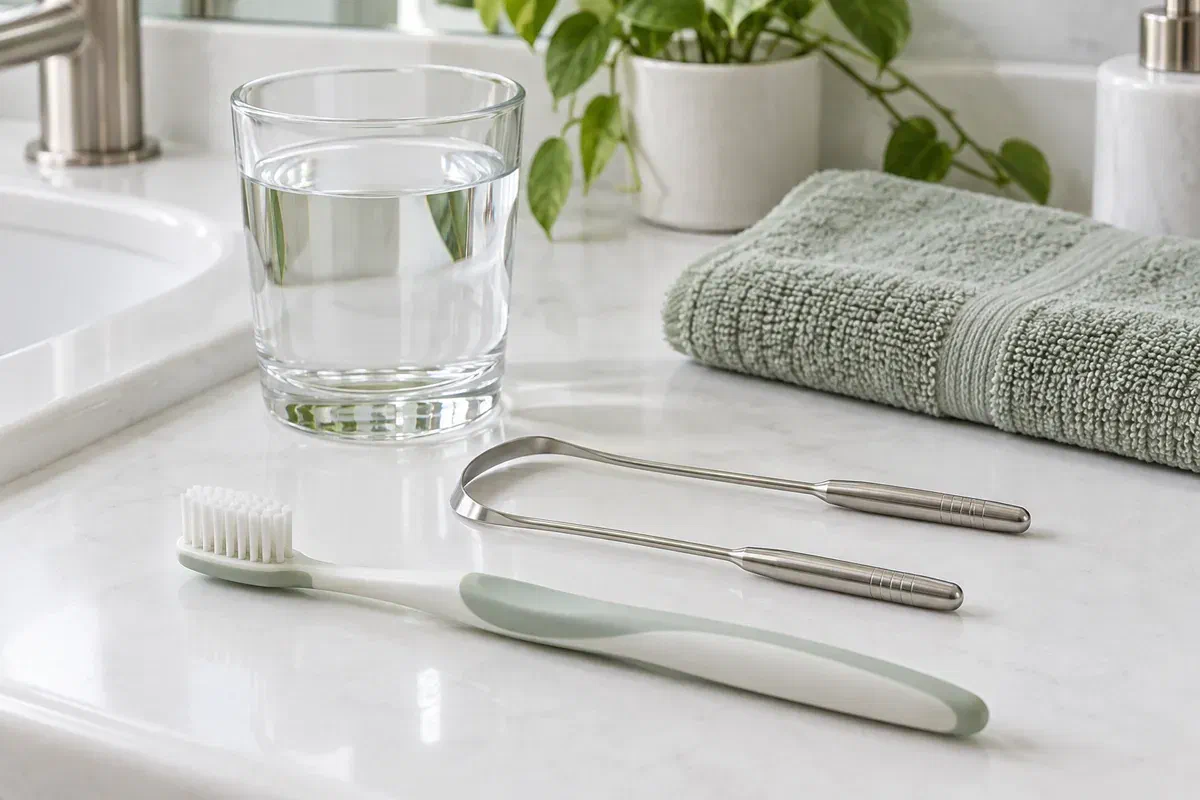
Toothbrush, tongue cleaner, and glass of water illustrating everyday oral care
Worth telling us

Look beyond the odour itself

Is it worse first thing, after meals or late in a long working day? Changes elsewhere in the mouth help point toward what needs attention, though a single sign never proves the cause.

Gums that bleed or catch food

Plaque, irritated gums and spaces where food packs in can sustain an odour. Let us know which areas feel hard to clean or where food keeps getting stuck. We examine gums, teeth and older restorations rather than pointing you toward a stronger toothpaste.

Dryness after a day of talking

Less saliva can affect breath and comfort, and long hours of speaking, coffee or skipped water may make dryness more noticeable. Mention thirst, stickiness, mouth breathing and any new medicines. Because dryness has various causes, advice should fit your wider history.

An aligner, retainer or denture

Removable appliances need their own cleaning, and one that collects debris or fits loosely should be checked. Bring it and tell us your routine. We assess the gums and tissues that support it as well as the appliance.

A bad taste with swelling, strong tooth pain or discharge may need prompt treatment. Please call us instead of relying on breath products until a routine appointment.

What you get from an assessment

A reason behind every recommendation

By the time people ask, they have often tried sprays, strips, rinses and whitening pastes. The value of an assessment is that advice connects to an observed need, such as a hard-to-clean spot, gum inflammation, an appliance problem or dryness. That makes the plan easier to follow and gives us something concrete to review.

We also want to hear how it affects your day. If breath anxiety is shaping how you work, socialise or speak up in meetings, tell us. You will be listened to respectfully, including when the examination finds no clear oral cause or when another kind of assessment would be more appropriate.

A focused look at your mouth

Examining teeth, gums and soft tissues can reveal concerns a breath strip will never reach. We explain what we see before proposing treatment, so a breath concern does not turn into an extensive plan by default.

A technique you can repeat

If brushing or between-teeth cleaning needs adjusting, ask us to demonstrate with tools you can manage on a busy schedule. Getting one awkward area right is usually worth more than a long product list.

A definite next step

We agree when to review the response and what would prompt a different assessment. Persistent symptoms deserve a clear plan, not an indefinite round of new purchases.

During your visit

Four stages, explained as we go

Bring a list of your medicines and the products you use. If you have noticed the odour following a pattern, such as late afternoons, share it. Ask at booking whether any preparation is needed.

  1. A confidential history

    Expect questions about timing: when you first became aware of it, whether it ever fully clears, and which situations seem to bring it on. Tobacco, a dry feeling, an appliance and any related health issue are fair topics. Mention the products you have bought and anything that left your mouth sore.

  2. An oral examination

    Next, the dentist checks your teeth, gum margins, tongue surface and the lining of the mouth for plaque, swelling, cavities, packed food and appliance wear. Extra investigations come up only when they would settle a real clinical question, never as a standard add-on.

  3. A treatment discussion

    You hear what was seen and which problems, if any, need care first, perhaps inflamed gums or a cracked filling. Advice for home and for dryness is shaped around your working week. Feel free to ask about cost, and whether a proposed step is meant for the odour or for something unrelated.

  4. A review of progress

    A later visit compares then and now. When dental care does not fully explain the odour, or you have symptoms elsewhere in the body, we may point you toward your family doctor. We would rather be clear about what remains unknown than offer a promise.

On workdays and weekends

Habits that fit a busy week

Keep to the routine we agree at your visit. If a product stings, leaves your mouth drier or does not fit your schedule, tell us so we can find alternatives.

Thorough, not harsh

Brush with fluoride toothpaste twice a day and clean between your teeth daily with aids you will actually use. Gentle tongue cleaning may be recommended. Brushing or scraping until tissues bleed does not help; good technique is what counts.

Keep appliances clean too

Clean aligners, retainers or dentures by the method suited to their material, and follow the wear schedule you were given. Ask about cases and cleaning products if unsure. Household cleaners are not suitable for removing odour.

Hydration and medicines

Keep water within reach during long meetings, and tell us if dryness continues. Raise medicine questions with your prescriber, and do not stop a prescription yourself. Persistent dryness needs its cause and effect on the teeth assessed.

Patient information: NHS — caring for the mouth when breath is a concern · NIDCR — dry mouth

How treatment is chosen

Care built from your findings

We aim at an identified contributor wherever we can. Ask how a recommendation connects to the examination and what will happen if the concern remains afterwards.

When plaque or gums are involved

Home cleaning and gum treatment

A routine suited to your mouth and professional gum treatment may be recommended. The extent depends on the condition of your gums. A routine cleaning and care for established periodontal disease are not always the same appointment or procedure.

When a tooth or appliance needs work

Targeted dental repair

A cavity, a food-trapping filling or a problem appliance may need specific treatment. Ask about the diagnosis, alternatives and the expected benefit. Correcting one finding is never a guarantee that all sources of odour have been removed.

When the cause is broader or unclear

Support and further opinions

Dry-mouth care, a product with a defined purpose, or a medical assessment may be suitable. A cosmetic rinse can briefly change breath without treating disease. Ask what a product is intended to do and how long to use it.

Patient information: American Dental Association — mouthrinse and its limitations

Mississauga questions, answered

Ask us anything about breath

There is no wrong way to describe the worry. You don’t have to know whether teeth, gums or something else is responsible before you come in; working that out is our part.

(905) 876-4488
Can coffee and skipped lunches affect my breath at work?
They can play a part. Coffee can leave a lingering odour, and long gaps without eating or drinking may leave the mouth drier. These effects tend to be temporary. If odour persists despite good habits, an examination can look for other causes.
Will the dentist tell me honestly if my breath is a problem?
Yes. We will tell you what we notice and what we find in a respectful, matter-of-fact way. You can also ask directly. Honest information is more useful than guessing, and it helps us decide on a sensible plan.
Is rinsing enough if the smell keeps coming back?
Usually not. Cosmetic rinses mask odour for a short time; therapeutic rinses have specific uses. Neither replaces an assessment or effective daily cleaning. Ask whether any rinse is appropriate for your findings and how long to use it.
Could clear aligners contribute to breath odour?
They can if they are worn over unbrushed teeth or not cleaned regularly, since debris and saliva are held against the teeth. Bring your aligners and we can review a cleaning routine that suits their material and your wear schedule.
Should I worry that it is a stomach problem?
Not necessarily. Oral sources such as gums, tongue, dryness and appliances are often worth checking first. Some medical conditions can be relevant, and if your history suggests that, we will recommend speaking with your physician.
How can I keep visits from Mississauga to a minimum?
The first assessment is a single appointment. If treatment is needed, ask whether visits can be combined. Weekday appointments run until 7pm, and Friday to Sunday are by appointment, which can help around office hours.
Breath assessments for Mississauga

Bring the question you’ve been avoiding

Pick a time at our Bronte Street practice, after work if that is easier, and we will look into the odour that keeps returning. Jot down your questions and the rinses or medicines you use. You will leave knowing what we found and what happens next.

Swelling, real pain or a sudden change you are unsure about? Phone instead. The online form is meant for routine visits.

Visit Milton Dental Clinic
Unit 1, 342 Bronte St. S, Milton, ON L9T 5B7
Get directions Clinic hours
Monday–Thursday
11am–7pm
Friday–Sunday
By appointment only

Areas we serve

  • Milton
  • Oakville
  • Mississauga
  • Georgetown
  • Halton Hills
  • Acton
  • Campbellville
  • Brampton
  • Burlington
  • Puslinch
  • Rockwood
  • Erin
  • Caledon
  • Etobicoke
  • Old Milton
  • Bronte Meadows
  • Timberlea
  • Dorset Park
  • Dempsey
  • Clarke
  • Beaty
  • Coates
  • Harrison
  • Scott
  • Willmott
  • Ford
  • Bowes
  • Cobden
  • Walker
  • Mountain View
  • Milton Heights
  • Hawthorne Village
  • Valley View
  • Fallingbrook
  • Nassagaweya
  • Trafalgar
  • Esquesing
  • Nelson
  • Brookville
  • Moffat
  • Glen Williams
  • Norval
  • Limehouse
  • Stewarttown
  • Ashgrove
  • Hornby
  • Silver Creek
  • Speyside
  • Scotch Block
  • North Oakville
  • River Oaks
  • Glen Abbey
  • West Oak Trails
  • Palermo
  • Bronte Creek
  • College Park
  • Joshua Creek
  • Uptown Core
  • Preserve
  • Iroquois Ridge
  • Lisgar
  • Meadowvale
  • Meadowvale Village
  • Churchill Meadows
  • Erin Mills
  • Central Erin Mills
  • Streetsville
  • East Credit
  • Creditview
  • Heartland
  • Sheridan
  • Mount Pleasant
  • Credit Valley
  • Huttonville
  • Churchville
  • Springbrook
  • Northwest Brampton
  • Bram West
  • Fletcher's Meadow
  • Fletcher's Creek South
  • Alton Village
  • Orchard
  • Millcroft
  • Headon Forest
  • Tansley
  • Brant Hills
  • Tyandaga
  • Kilbride
  • Lowville
  • Aberfoyle
  • Morriston
  • Arkell
  • Hillsburgh
  • Freelton
  • Carlisle
  • Waterdown
  • Flamborough
  • Mountsberg

How can we help?

Milton Dental Clinic

Have a question about your smile? Choose the option that works best for you.

For urgent dental concerns, please call.
Messages are reviewed during clinic hours.