

Illustrative private dental conversation about an oral health concern
General & Family Dentistry

Bad Breath Assessment and Treatment in Oakville

Three mouthwashes, two toothpastes and a pocket full of mints later, the odour is still there. From Oakville, book a private examination that looks for the reason behind it and builds a plan around what we actually find.

For Oakville households

Tried everything on the shelf?

Product hopping is how most breath worries start. A new rinse works for the morning meeting, fades by lunch, and the search continues. That cycle is a good sign it is time for an examination. You do not need a sore tooth to book, and you do not need to have the right words ready either.

Odour that lasts can come from several places at once: plaque at the gum line, bacteria on the back of the tongue, a mouth that runs dry, food wedged beside a worn filling, or a retainer or denture that needs a better routine. Short-lived breath after coffee or a spicy dinner is one thing. A smell that keeps returning despite good habits is another, and it deserves a look before another purchase.

So we start with your experience. What have you noticed, when is it worst, and which products have you used? Next comes an oral examination, followed by a clear explanation. If anything points toward a medical source, we will talk about involving your physician, and we will not jump to conclusions about the stomach.

Request an assessment
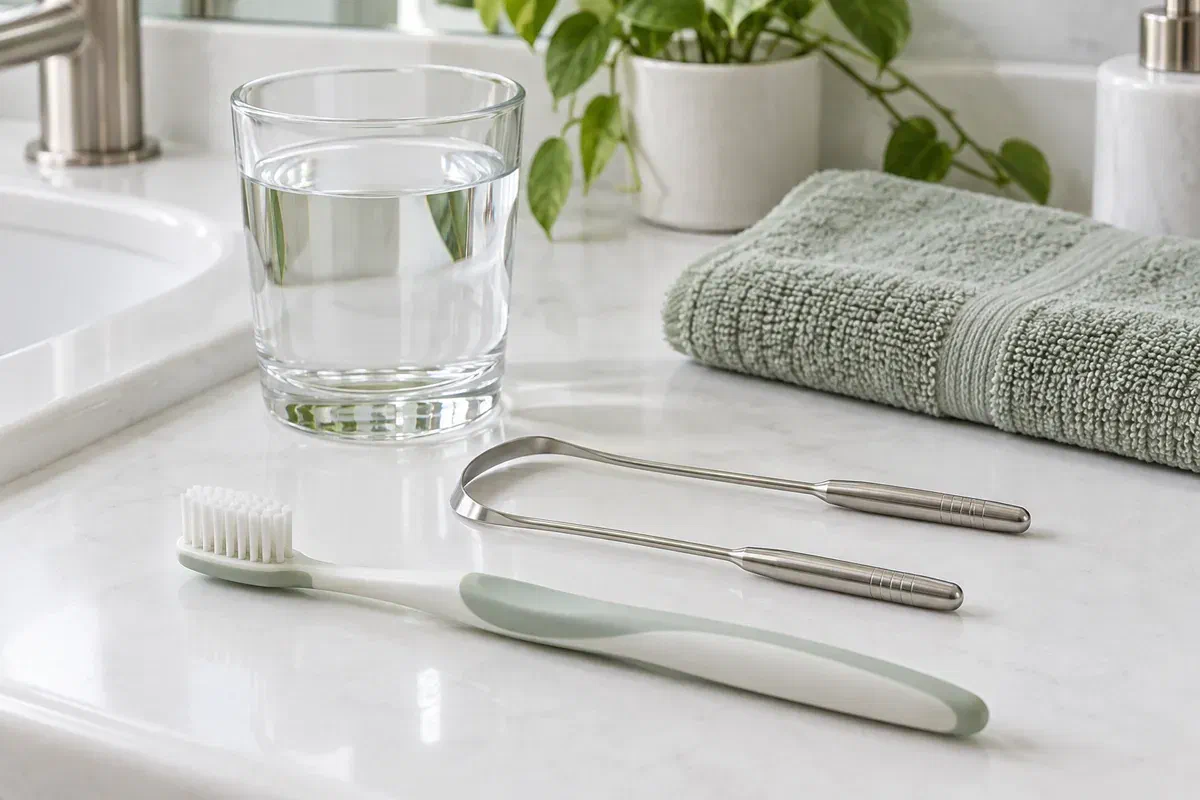
Toothbrush, tongue cleaner, and glass of water illustrating everyday oral care
What to watch alongside the smell

Small signs, useful clues

Notice whether the concern peaks after sleep, after eating, or stays the same all day. Changes elsewhere in the mouth can narrow down what needs attention, but no single sign gives a final answer.

Bleeding when you floss

Gums that bleed, plaque that builds quickly and spaces where food collects may keep an odour going. Tell us which areas are hard to reach. We check gums, teeth and any fillings or crowns instead of recommending a stronger-tasting toothpaste.

A parched or sticky mouth

When saliva drops, breath and comfort can both change. Let us know about thirst, a sticky tongue, mouth breathing at night or a medication change. Since dryness has many possible causes, any product suggestion should fit the whole picture.

Retainers, guards and dentures

Anything you take in and out needs its own cleaning, and an appliance that traps debris or fits poorly should be assessed. Bring it with you and describe your routine. We examine the tissues it rests on, not only the appliance itself.

A bad taste paired with swelling, real tooth pain or discharge may mean a problem that should not wait. Give us a call rather than masking it until a routine appointment.

The difference an exam makes

Stop guessing which product to buy next

An assessment swaps the shopping list for a reason. When advice is linked to something visible, like a hard-to-clean corner, inflamed gums, an ill-fitting appliance or ongoing dryness, you can see why it is being suggested. It also gives us a way to measure whether the change is working.

There is time to talk about how this affects you, too. Some people avoid close conversations, hold back in meetings or keep checking their breath. Mention it. We will listen with respect, including when the examination shows no obvious oral cause or when a different kind of assessment would be wiser.

An examination with a purpose

Looking carefully at teeth, gums and soft tissues can uncover problems that no rinse will solve. We explain findings first and treatment second, so a breath question does not slide into a long list of procedures.

A routine you have practised

If technique needs adjusting, ask us to show you with the brush, floss or interdental aid you will actually use. Mastering one stubborn spot often helps more than buying several new products.

A plan for what comes next

We agree when to review your progress and what would prompt a different assessment. A persistent concern should have a clear next step instead of a cycle of new products and no checks.

How the visit runs

History first, findings next, then a plan

Bring a list of your medicines and any products you have tried, even the ones you stopped using. Describe any timing pattern you have spotted, and ask at booking if there is any preparation.

  1. Talking it over

    Start wherever you like: the week you first noticed it, whether it comes and goes, the situations that seem to set it off. Smoking, vaping, dryness, appliance use and related health symptoms may come up. Tell us what you have tried and whether anything stung or irritated.

  2. Looking closely

    Your teeth, gums, tongue and soft tissues are examined for plaque, inflammation, decay, trapped food and appliance issues. Further investigations are recommended only when they would help answer a clinical question, not as a routine add-on for everyone.

  3. Deciding what matters most

    We share what we found and outline any care for gum disease, a damaged tooth or another problem. Home care advice and possible dry-mouth support are fitted to you. Ask about fees, and whether each recommendation is aimed at the breath concern or at a separate finding.

  4. Reviewing the results

    Follow-up looks at what has changed and what still bothers you. If dental treatment does not account for the odour, or wider symptoms are present, we may recommend seeing a physician. We will be upfront about uncertainty and avoid promising a particular outcome.

Everyday care

Fewer products, better technique

Keep to the plan we settle on after your examination. If something burns, dries your mouth further or is awkward to use, let us know and we will look at alternatives.

Cover the areas that count

Brush with fluoride toothpaste and clean between your teeth each day with tools that work for you. Gentle tongue cleaning may be part of the advice. Avoid scrubbing until the gums or tongue bleed; effective technique matters more than pressure.

Clean appliances on their own schedule

Wash a retainer, night guard or denture using the method suited to its material, and wear it as directed. Ask about storage and cleaning products if you are unsure. Household cleaners are too harsh to use for removing odour.

Keep track of dryness

Tell us if dry mouth continues, and talk about medicines with whoever prescribed them. Please do not stop a prescription on your own. Water and suitable saliva support may help with comfort, but lasting dryness needs its cause and its effect on the teeth assessed.

Patient information: NHS — caring for the mouth when breath is a concern · NIDCR — dry mouth

Treatment options

Care that depends on the cause

The goal is to address a contributor we have identified wherever possible. Ask how a recommendation relates to your findings and what we will try if the concern continues.

If plaque or gum disease contributes

Gum care and cleaning support

You may receive a tailored home routine and appropriate professional gum treatment. The amount of care depends on your gum health. A routine cleaning and treatment for established periodontal disease are not necessarily the same appointment.

If a tooth or appliance needs work

Fixing a local problem

A cavity, a filling that catches food or an appliance problem may need targeted treatment. Talk through the diagnosis, alternatives and likely benefit. Solving one finding should not be presented as proof that every source of odour has gone.

If the picture is wider or uncertain

Symptom support or further assessment

Dry-mouth care, a product with a specific purpose or a medical assessment may be appropriate. A cosmetic rinse can change breath for a short time without treating disease. Ask whether a product is meant for comfort, prevention or an identified condition.

Patient information: American Dental Association — mouthrinse and its limitations

Oakville breath questions

Straight answers, no embarrassment

You can tell us about your worry in whatever way feels comfortable. The history and examination are a starting point, even if you cannot tell whether teeth, gums or something else are involved.

(905) 876-4488
Why does my mouthwash only work for a short time?
Many rinses are cosmetic, so they cover odour briefly without changing what produces it. Others have a therapeutic role for specific conditions. Neither replaces finding the source. Bring the products you use and we can discuss which, if any, suit your findings.
Can vaping or smoking affect my breath?
Yes. Tobacco is a well-known contributor to breath odour and gum problems, and smoking or vaping can also leave the mouth feeling dry. Tell us honestly what you use. We will not lecture you, and the information helps us interpret what we see.
Could a night guard or retainer be adding to the smell?
It can if debris builds up on it or it is hard to keep clean. Bring the appliance so we can look at its condition, and ask for a cleaning and storage routine suited to its material rather than using harsher products.
Is breath odour always linked to digestion?
No. Oral sources such as the gums, tongue, dryness and appliances are worth checking first in many cases. Some medical conditions can be relevant, and if the history suggests that, we will recommend talking with your physician.
How soon might I notice a change after treatment?
It depends on what is found. Improvements in home care may be noticed fairly soon, while gum treatment or repairs may need time and a review. We will set a follow-up so the result is checked rather than assumed.
Is it practical to come from Oakville for an assessment and follow-up?
An initial assessment is a single visit, and if treatment is needed we can plan appointments to keep trips sensible. Ask for times that work around your commute; our weekday hours run until 7pm, with weekend visits by appointment.
Breath assessments for Oakville

Let the guesswork end here

Book a visit to our Bronte Street practice to talk about a persistent breath concern and have your mouth properly examined. Bring the products you have tried and a list of your medicines. We will explain the findings and agree a practical next step.

Call us about significant pain, swelling or a sudden change that concerns you. Online requests are for non-urgent appointments.

Visit Milton Dental Clinic
Unit 1, 342 Bronte St. S, Milton, ON L9T 5B7
Get directions Clinic hours
Monday–Thursday
11am–7pm
Friday–Sunday
By appointment only

Areas we serve

  • Milton
  • Oakville
  • Mississauga
  • Georgetown
  • Halton Hills
  • Acton
  • Campbellville
  • Brampton
  • Burlington
  • Puslinch
  • Rockwood
  • Erin
  • Caledon
  • Etobicoke
  • Old Milton
  • Bronte Meadows
  • Timberlea
  • Dorset Park
  • Dempsey
  • Clarke
  • Beaty
  • Coates
  • Harrison
  • Scott
  • Willmott
  • Ford
  • Bowes
  • Cobden
  • Walker
  • Mountain View
  • Milton Heights
  • Hawthorne Village
  • Valley View
  • Fallingbrook
  • Nassagaweya
  • Trafalgar
  • Esquesing
  • Nelson
  • Brookville
  • Moffat
  • Glen Williams
  • Norval
  • Limehouse
  • Stewarttown
  • Ashgrove
  • Hornby
  • Silver Creek
  • Speyside
  • Scotch Block
  • North Oakville
  • River Oaks
  • Glen Abbey
  • West Oak Trails
  • Palermo
  • Bronte Creek
  • College Park
  • Joshua Creek
  • Uptown Core
  • Preserve
  • Iroquois Ridge
  • Lisgar
  • Meadowvale
  • Meadowvale Village
  • Churchill Meadows
  • Erin Mills
  • Central Erin Mills
  • Streetsville
  • East Credit
  • Creditview
  • Heartland
  • Sheridan
  • Mount Pleasant
  • Credit Valley
  • Huttonville
  • Churchville
  • Springbrook
  • Northwest Brampton
  • Bram West
  • Fletcher's Meadow
  • Fletcher's Creek South
  • Alton Village
  • Orchard
  • Millcroft
  • Headon Forest
  • Tansley
  • Brant Hills
  • Tyandaga
  • Kilbride
  • Lowville
  • Aberfoyle
  • Morriston
  • Arkell
  • Hillsburgh
  • Freelton
  • Carlisle
  • Waterdown
  • Flamborough
  • Mountsberg

How can we help?

Milton Dental Clinic

Have a question about your smile? Choose the option that works best for you.

For urgent dental concerns, please call.
Messages are reviewed during clinic hours.