

Illustrative private dental conversation about an oral health concern
General & Family Dentistry

Bad Breath Assessment and Treatment in Rockwood

Food keeps catching beside the same back tooth, and the floss comes out smelling sour. Coming from Rockwood, you can book an oral assessment to find out whether one spot, or several, is behind the odour, and what care fits.

Rockwood breath care

One stubborn spot

Plenty of people can point to the exact place. A gap that grabs every strand of meat, a filling with a rough edge, a crown where the floss snags and comes out with a smell. Sometimes that one area is a large part of a breath problem; sometimes it is only part of it. Either way, it is a good reason to have the mouth looked at, even without pain.

Other contributors often sit alongside a food trap: plaque and inflamed gums, a coated tongue, a dry mouth, and dentures or guards that need more thorough cleaning. Garlic or a late coffee causes a passing change. When odour keeps returning even with careful brushing, finding each contributor matters more than adding another product to the routine.

We start by listening to what you have noticed, for how long, and what you have already tried. During the examination we check that problem spot closely and look at the rest of the mouth too. If the history suggests a medical opinion would be useful, we will discuss it, without assuming that every breath concern is digestive.

Have that spot checked
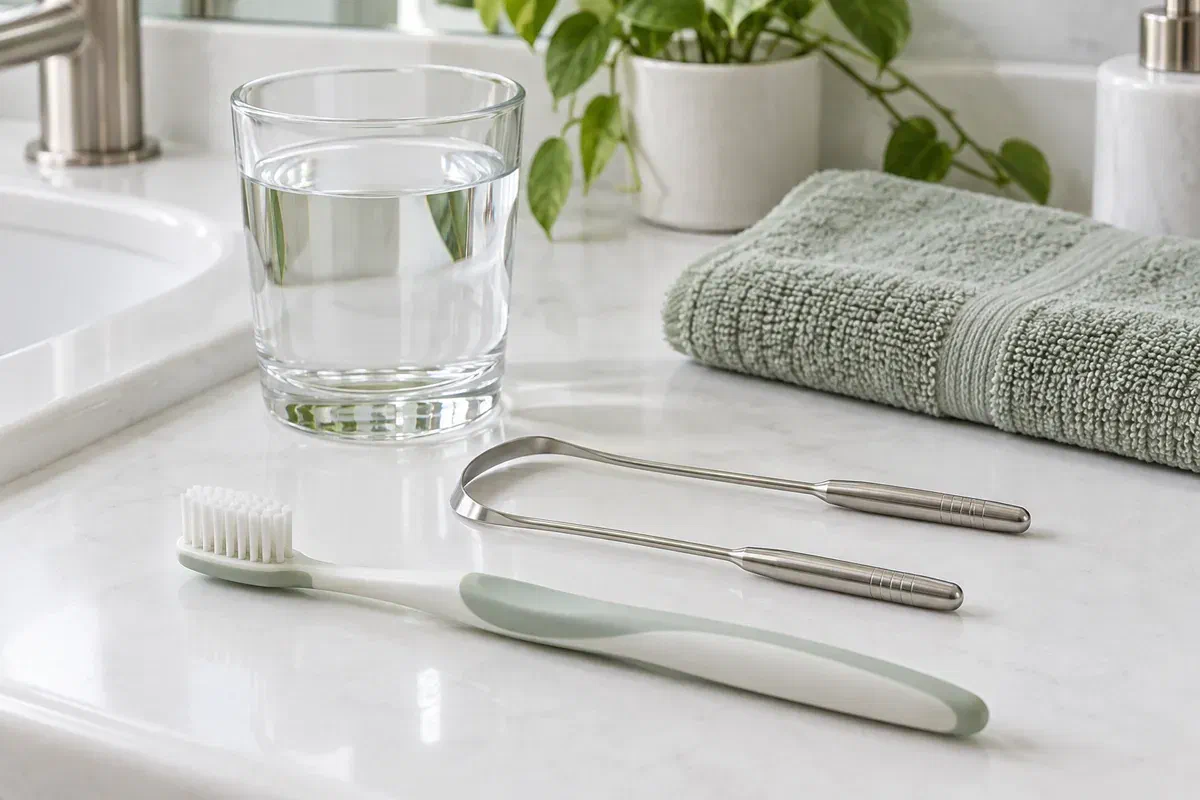
Toothbrush, tongue cleaner, and glass of water illustrating everyday oral care
Clues we look for

Where food hides, odour can follow

Mention whether things are worse first thing, after meals, or constant. Signs elsewhere in the mouth can help locate the source, although a single sign is not a diagnosis.

A tooth that traps food

Gaps between teeth, worn or chipped fillings and crown edges can hold food and plaque, and nearby gums may become inflamed. Show us exactly where it happens. We check the contacts, restorations and gums in that area rather than suggesting a stronger mint.

Dryness during the day

With less saliva, food and bacteria are cleared more slowly. Tell us about thirst, stickiness, mouth breathing and any new prescription. Because dryness has several causes, we fit any suggestion to your history.

An appliance that holds debris

A partial denture, retainer or guard can collect food around its clasps or edges. Bring it and describe your cleaning routine. If it no longer fits well, we will look at the appliance and the gums it rests on.

If a food-trapping tooth becomes painful, the gum swells or you notice discharge, call us promptly. Breath products are not a substitute for treating a possible infection.

What a careful look gives you

Pinpoint the problem, then fix it properly

Picking at a food trap every evening and rinsing afterwards can become a long-term habit. An assessment tells you why that spot is collecting food, whether it is an open contact, a worn filling, gum recession or something else, and whether other contributors such as dryness or the tongue are involved. Advice linked to that finding is easier to follow and review.

You can also tell us how the concern affects you day to day. If you avoid eating certain foods in company, or keep checking your breath, mention it. We will take it seriously, including when the problem spot turns out to be minor and the main cause lies elsewhere.

A close look at restorations

We examine teeth, gums, soft tissues and the edges of existing dental work. Findings are explained before any treatment is suggested, and a breath concern is not treated as a reason for unnecessary work.

The right tool for the gap

Ask us to show you which floss, interdental brush or pick reaches your particular spot. Using one well-chosen tool properly often helps more than a long list of products.

A check after any repair

If a filling or crown is adjusted, we agree when to check whether food still collects and whether the odour has changed. If not, we decide together what to look at next.

The visit

Four parts to a breath assessment

Note your medicines and the products you use. If food catches in one place, try to remember which side and tooth. Ask at booking whether any preparation is needed.

  1. Hearing your history

    How long has food been catching there, and did the odour start around the same time? We also talk about whether the smell is constant, what seems to affect it, and any smoking, dryness, appliances or relevant health symptoms. Tell us what you have tried, including any picks or rinses.

  2. Examining the mouth

    We look at the teeth, the contacts between them, existing restorations, gums, tongue and soft tissues. X-rays or other tests are recommended only when they would help answer a clinical question, such as hidden decay.

  3. Explaining what needs care

    We share the findings and any treatment that may help, such as repairing a worn filling, treating gum inflammation or addressing decay. Home care is tailored to the areas that need it. Ask about fees and whether a repair is expected to help the odour.

  4. Reviewing the outcome

    Follow-up checks whether food still lodges and whether the odour has eased. Should the mouth no longer explain what you notice, or other health symptoms have appeared, talking with your family doctor may be the sensible next step. We will be honest that repairing one area may not resolve everything.

Looking after the area

Clean the gap, protect the gums

Use the routine we agree on. If a tool hurts, a product stings or something is awkward to use, let us know and we will suggest an alternative.

Clear the trap each day

Brush with fluoride toothpaste twice daily and clean between teeth once a day, paying attention to the problem spot. Gentle tongue cleaning may be suggested. Forcing a pick or brushing until the gum bleeds can injure the tissue.

Keep appliances clean around clasps

Clean partials, retainers or guards using a method suited to their material, paying attention to clasps and edges. Ask about storage and cleaning products. Avoid household cleaners.

Report dryness

Let us know if dryness persists and discuss medicine questions with your prescriber. Do not stop a medicine yourself. Water may help comfort, while ongoing dryness should be assessed because it can affect both breath and decay risk.

Patient information: NHS — caring for the mouth when breath is a concern · NIDCR — dry mouth

Ways we might help

Repair, gum care or further support

Treatment aims at any contributor we can identify. Ask how the recommendation relates to what we found and what we will try if the odour continues.

If plaque or gum inflammation contributes

Gum treatment and cleaning advice

A routine aimed at the problem area and appropriate professional gum care may be recommended. How much is needed depends on the gums. Treatment for established periodontal disease often goes beyond a routine cleaning.

If a tooth or restoration is the problem

Repairing the food trap

A worn filling, an open contact or decay may need specific treatment. Discuss the diagnosis, alternatives and what benefit to expect. Repairing one area may help, but it is not a guarantee that every source of odour is gone.

If the cause is wider or unclear

Dry-mouth care or medical input

Saliva support, a product with a clear purpose or a medical opinion may be appropriate. Cosmetic rinses mask breath temporarily but do not treat disease. We will explain what any suggested product is for.

Patient information: American Dental Association — mouthrinse and its limitations

Questions from Rockwood

About food traps, fillings and breath

Say it however feels comfortable. Even if you are not sure whether the cause is one tooth, your gums or something else, we can begin with your history and the examination.

(905) 876-4488
Can an old filling make my breath smell?
It can contribute if the filling has worn, chipped or developed a rough edge that holds food and plaque, or if decay has formed beneath it. We check restorations closely and explain whether a repair is likely to help.
Why does food always get stuck in the same place?
Often because there is a gap or open contact between two teeth, a worn restoration, or gum recession. Finding the reason helps us decide whether better cleaning, a repair or another approach makes most sense.
Is it safe to use a toothpick on that spot every day?
Used gently, a suitable interdental tool can help, but forcing a toothpick can injure the gum. Ask us which tool fits the gap, and have the area checked if food keeps getting stuck.
Will fixing one tooth cure my bad breath?
It may help if that tooth is a major contributor, but there may be other factors too, such as the gums, tongue or dryness. We will explain what we expect and review afterwards.
Do I need X-rays for a breath assessment?
Not always. X-rays may be suggested if decay or another problem could be hidden between teeth or under a filling. We will explain why before taking any.
Can a repair be booked soon after the assessment from Rockwood?
Often, yes. Ask at the end of your assessment about the next available appointment, and whether steps can be grouped to keep trips down. Friday to Sunday visits are by appointment.
Breath assessments for Rockwood

Stop working around it

Book a visit at our Bronte Street practice to have that problem area, and the rest of your mouth, examined. Bring your questions, any appliance and the names of your medicines and products. We will explain what we find and agree a practical next step.

If that tooth starts to throb, the gum around it swells, or something changes suddenly, phone the clinic. Online requests suit non-urgent visits only.

Visit Milton Dental Clinic
Unit 1, 342 Bronte St. S, Milton, ON L9T 5B7
Get directions Clinic hours
Monday–Thursday
11am–7pm
Friday–Sunday
By appointment only

Areas we serve

  • Milton
  • Oakville
  • Mississauga
  • Georgetown
  • Halton Hills
  • Acton
  • Campbellville
  • Brampton
  • Burlington
  • Puslinch
  • Rockwood
  • Erin
  • Caledon
  • Etobicoke
  • Old Milton
  • Bronte Meadows
  • Timberlea
  • Dorset Park
  • Dempsey
  • Clarke
  • Beaty
  • Coates
  • Harrison
  • Scott
  • Willmott
  • Ford
  • Bowes
  • Cobden
  • Walker
  • Mountain View
  • Milton Heights
  • Hawthorne Village
  • Valley View
  • Fallingbrook
  • Nassagaweya
  • Trafalgar
  • Esquesing
  • Nelson
  • Brookville
  • Moffat
  • Glen Williams
  • Norval
  • Limehouse
  • Stewarttown
  • Ashgrove
  • Hornby
  • Silver Creek
  • Speyside
  • Scotch Block
  • North Oakville
  • River Oaks
  • Glen Abbey
  • West Oak Trails
  • Palermo
  • Bronte Creek
  • College Park
  • Joshua Creek
  • Uptown Core
  • Preserve
  • Iroquois Ridge
  • Lisgar
  • Meadowvale
  • Meadowvale Village
  • Churchill Meadows
  • Erin Mills
  • Central Erin Mills
  • Streetsville
  • East Credit
  • Creditview
  • Heartland
  • Sheridan
  • Mount Pleasant
  • Credit Valley
  • Huttonville
  • Churchville
  • Springbrook
  • Northwest Brampton
  • Bram West
  • Fletcher's Meadow
  • Fletcher's Creek South
  • Alton Village
  • Orchard
  • Millcroft
  • Headon Forest
  • Tansley
  • Brant Hills
  • Tyandaga
  • Kilbride
  • Lowville
  • Aberfoyle
  • Morriston
  • Arkell
  • Hillsburgh
  • Freelton
  • Carlisle
  • Waterdown
  • Flamborough
  • Mountsberg

How can we help?

Milton Dental Clinic

Have a question about your smile? Choose the option that works best for you.

For urgent dental concerns, please call.
Messages are reviewed during clinic hours.