

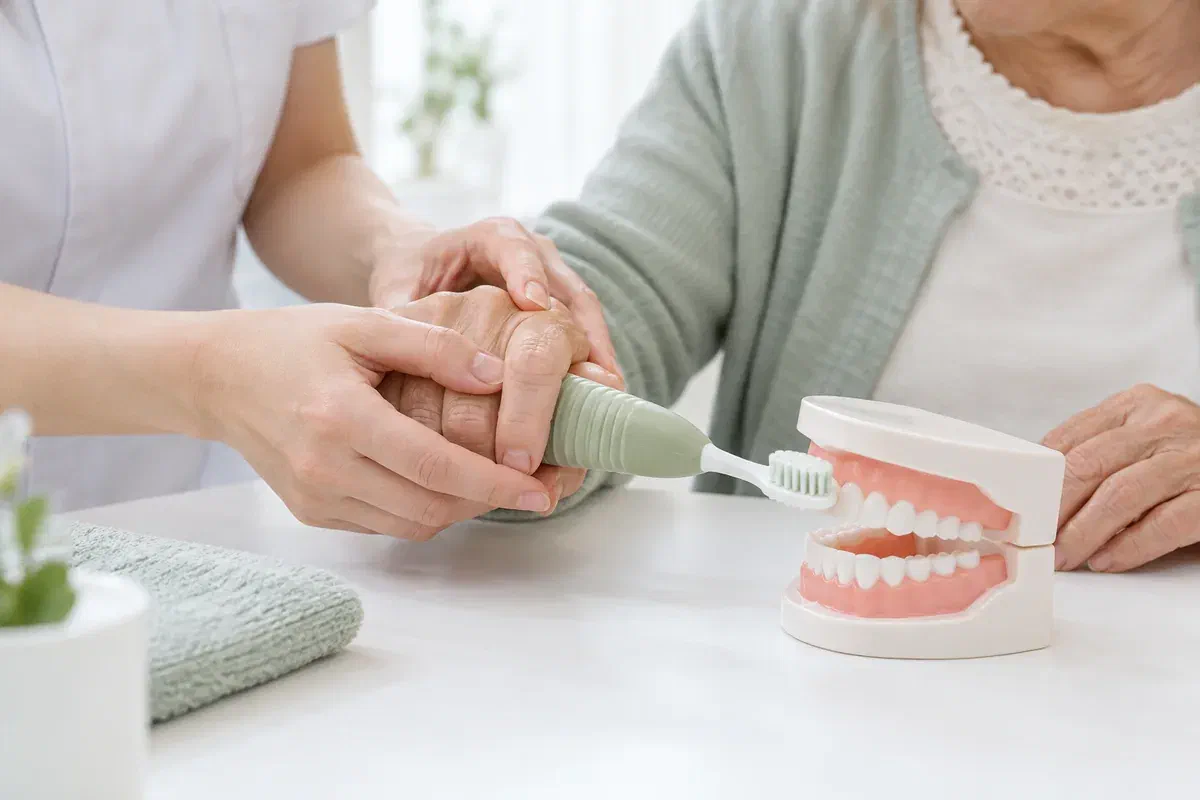
Illustrative dental consultation with an older patient and her chosen support person
General & Family Dentistry

Caregiver-Assisted Dental Visits

The right support can make a dental visit easier to navigate. Plan a caregiver-assisted appointment in Milton around communication, comfort, daily care, and the patient's own preferences.

A closer look at caregiver-assisted dental visits

Support around the patient. Attention on the person.

A caregiver-assisted dental visit allows practical support to be considered alongside the patient's oral health needs. A family member, friend, or support worker may help with communication, remembering instructions, transport, or daily mouth care. The amount of help varies. Needing assistance with one task does not mean a person needs someone else to speak for them throughout the appointment.

Planning begins before the visit. Tell Milton Dental Clinic what helps the patient feel comfortable, how they communicate, and any mobility, positioning, swallowing, or medical concerns that may affect care. This gives the team an opportunity to discuss what can be arranged and whether another setting or provider would better meet particular needs.

The patient remains central to the conversation. Their preferences, questions, and choices should be included as fully as possible. A caregiver's observations can add valuable context, especially when day-to-day changes are difficult to describe, but support should be tailored to the person rather than based solely on age, disability, or a diagnosis.

Plan a visit with caregiver support
Illustrative practice with a larger toothbrush handle and a dental model
Information that helps us prepare

Describe the practical needs, not only the diagnosis.

Two people with the same health condition may need very different support. Explain what has worked during previous appointments and what tends to make a visit difficult.

Communication and understanding

Tell us about hearing, vision, language, or communication preferences. A patient may use an aid, need additional time to respond, or prefer one instruction at a time. Discuss how a support person can assist while leaving room for the patient's own answers.

Movement, positioning, and fatigue

Explain mobility equipment, transfer needs, difficulty reclining, or a limited comfortable sitting time before booking. Ask the clinic to confirm arrangements rather than assuming particular equipment or lifting assistance is available. Safe planning may affect appointment length or the appropriate care setting.

Changes noticed during daily care

A caregiver may notice food avoidance, bleeding during brushing, a loose denture, or a change in usual mouth-care tolerance. Describe specific observations and their timing. Such changes deserve assessment and should not automatically be attributed to behaviour or an existing diagnosis.

Please call about significant pain, swelling, reduced ability to eat or drink, or a sudden concerning change. An appointment designed for familiarization should not delay assessment of an urgent problem.

What thoughtful support can add

Make the visit and the home routine connect.

A support person may help explain what daily care actually involves: which hand movements are difficult, whether a denture is being worn, or when discomfort appears. That information can make advice more practical. It also helps distinguish a routine that sounds suitable in the clinic from one that can realistically be carried out at home.

The appointment is an opportunity to agree how support will be shared. Some patients want a companion beside them throughout; others prefer help only with particular parts of the visit. Explain those preferences early. The plan can be revisited if circumstances change or the patient wants a different level of involvement.

Patient information: NIDCR — oral health support and individualized care

More useful background information

A current medication list, relevant care instructions, and clear observations can help the dental team understand the context. Bring information that is accurate and relevant, and identify anything that needs confirmation with another healthcare professional.

Demonstrations that fit the person's abilities

Ask how brushing or cleaning between teeth can be adapted to the patient's reach and dexterity. A suitable handle or aid may support independence, while another person may need direct assistance. The recommendation should reflect the actual task.

A clearer handover after the visit

Agree who needs instructions and how they should be shared with permission. Clarify the next appointment, warning signs, and the care expected at home so the patient and support person are not left to reconstruct the plan later.

Planning a supported appointment

Agree the arrangements before the chair is reclined.

Contact the clinic before scheduling if the visit requires particular support. We can discuss the purpose of the appointment, what information to bring, and any needs that require further planning.

  1. Share the patient's priorities

    Explain the dental concern, preferred communication approach, and support requested. Let us know who will attend and their role. Describe relevant access or medical needs so the team can consider the appointment setting and avoid relying on assumptions on arrival.

  2. Clarify participation and consent

    The dentist discusses proposed care with the patient and confirms the appropriate consent process. A caregiver's presence does not automatically authorize treatment decisions. Where a substitute decision-maker is needed, the team must establish the appropriate person and any relevant documentation.

  3. Assess at a manageable pace

    The examination and any proposed treatment are explained in an appropriate way. Discuss a signal to pause, positioning concerns, and the patient's response as the visit proceeds. Some appointments may focus on assessment and planning, with treatment arranged separately when appropriate.

  4. Confirm the plan together

    Review findings, options, fees, and follow-up with the patient and authorized support person as appropriate. Ask for clarification of daily care instructions. Identify who will arrange the next visit and how new symptoms or difficulties with the home routine should be reported.

Care at home

Build a routine that respects comfort and independence.

Support can range from reminders to hands-on assistance. Ask for advice that matches the person's abilities and any swallowing or positioning restrictions rather than copying a technique intended for someone else.

Keep the patient involved

Explain what you are about to do and allow participation wherever possible. A patient may manage one part of brushing while needing help with another. If care becomes painful or distressing, pause and seek advice about what is making the task difficult.

Use suitable tools and technique

Ask whether a modified handle, powered brush, or cleaning aid would help. Product selection should account for grip, coordination, and safe use. Do not place fingers between teeth or force the mouth open to complete a routine.

Share specific changes

Note bleeding, swelling, food avoidance, a denture problem, or a change in comfort during care. Record when it began and what you observed. These details help the team assess the concern without relying on broad descriptions such as being less cooperative.

Choosing the level of support

A useful appointment may take more than one form.

The next step depends on the oral concern and the support required. Discuss what can be provided safely and comfortably, with referral considered when needs extend beyond the available setting.

For communication and practical support

An assessment with a companion

A chosen companion may help explain the history or remember instructions while the patient participates in decisions. Agree when that person should contribute and whether the patient would like any part of the conversation to take place privately.

When familiarity may help

A staged or introductory approach

A shorter introductory visit or a plan divided into manageable stages may be discussed when clinically appropriate. The purpose and limits should be clear. Urgent disease still needs timely assessment, even if routine visits usually require gradual preparation.

When additional resources are required

Care in another suitable setting

Some medical, mobility, or treatment needs may call for a provider or setting with different facilities. Discuss referral and continuity of care where necessary. Caregiver attendance alone does not make every procedure possible in every dental office.

Questions about attending together

Clarify the roles so support feels helpful.

You can ask about preparation whether you are the patient, a family member, or a paid support worker. The arrangements should reflect the patient's preferences and the clinical purpose of the visit.

(905) 876-4488
Can I bring someone just to help remember dental instructions?
You can ask for that support when arranging the visit. Explain the role you want the person to have and what information you are comfortable sharing. Needing help remembering details does not mean that your companion should replace you in the discussion or make decisions on your behalf.
Does a caregiver automatically have authority to consent to my dental treatment?
No. Being a relative, companion, or support worker does not automatically confer decision-making authority. The dentist must follow the appropriate consent process, including identifying a substitute decision-maker where required. Tell the clinic about any relevant arrangements and ask which documentation should be brought.
What should a support worker prepare before a first dental visit?
Bring accurate medication and health information, the reason for the visit, relevant contact details, and observations about daily oral care. Explain communication and access needs in advance. Clarify the worker’s role, the patient’s preferences, and who is authorized to receive information or participate in decisions.
Can the clinic confirm wheelchair or transfer arrangements before we travel?
Contact the team with the specific equipment and assistance needs before booking. Ask what access and positioning arrangements can be supported. Do not assume that lifting equipment or staff-assisted transfers are available; confirming the details helps determine whether this is the appropriate setting for the visit.
What if the person I support cannot tolerate a full examination that day?
Tell the team what is happening and discuss the safest next step. Depending on urgency, the plan may involve a shorter assessment, another appointment, adapted preparation, or referral. Do not force the examination. Pain or other urgent symptoms still need a timely route to assessment.
Can a caregiver learn how to help with brushing during the appointment?
Ask for guidance suited to the patient’s abilities, comfort, and any swallowing or positioning concerns. A demonstration can help clarify tools and technique. The aim is to support effective care while preserving participation and independence where possible, with a plan for reporting pain or difficulty.
Caregiver-assisted dental visits in Milton

Let’s plan the support before the appointment.

Contact our Bronte Street practice to explain the patient's dental concern and the help they would like during a visit. Share practical communication or access needs early. We can discuss the appointment arrangements and the information needed to prepare.

Call to discuss specific access or support arrangements. Online requests do not confirm equipment, transfer assistance, or appointment availability.

Visit Milton Dental Clinic
Unit 1, 342 Bronte St. S, Milton, ON L9T 5B7
Get directions Clinic hours
Monday–Thursday
11am–7pm
Friday–Sunday
By appointment only

How can we help?

Milton Dental Clinic

Have a question about your smile? Choose the option that works best for you.

For urgent dental concerns, please call.
Messages are reviewed during clinic hours.