

Illustrative dental consultation with an older patient and her chosen support person
General & Family Dentistry

Caregiver-Assisted Dental Visits in Acton

For an adult with an intellectual disability, a predictable visit with a trusted parent or worker can change how dental care feels. Plan one from Acton, step by step, with their preferences first.

Predictable and familiar

Same steps, same faces, fewer surprises

Picture an adult who has been to the dentist many times but still tenses up at the waiting-room door. What usually helps is predictability: knowing who will be there, what happens first, and how long it lasts. A parent or support worker who has watched those reactions for years is often the best guide, and for families in Acton, that knowledge is where planning starts.

Tell us what the person needs to feel ready. That might be a picture sequence of the visit, a favourite item to hold, or going straight to the chair without waiting. Mention any medical, medication, swallowing or mobility issues as well. Our team can then talk about what we can realistically arrange, and be open if another provider or setting would be a better fit.

The adult in the chair is our patient, and we talk with them, not past them. Many people understand more than they can express, and they deserve the chance to answer and choose. A carer’s insight shapes the plan, but the plan belongs to the individual, not to a diagnosis or a stereotype.

Start planning a predictable visit
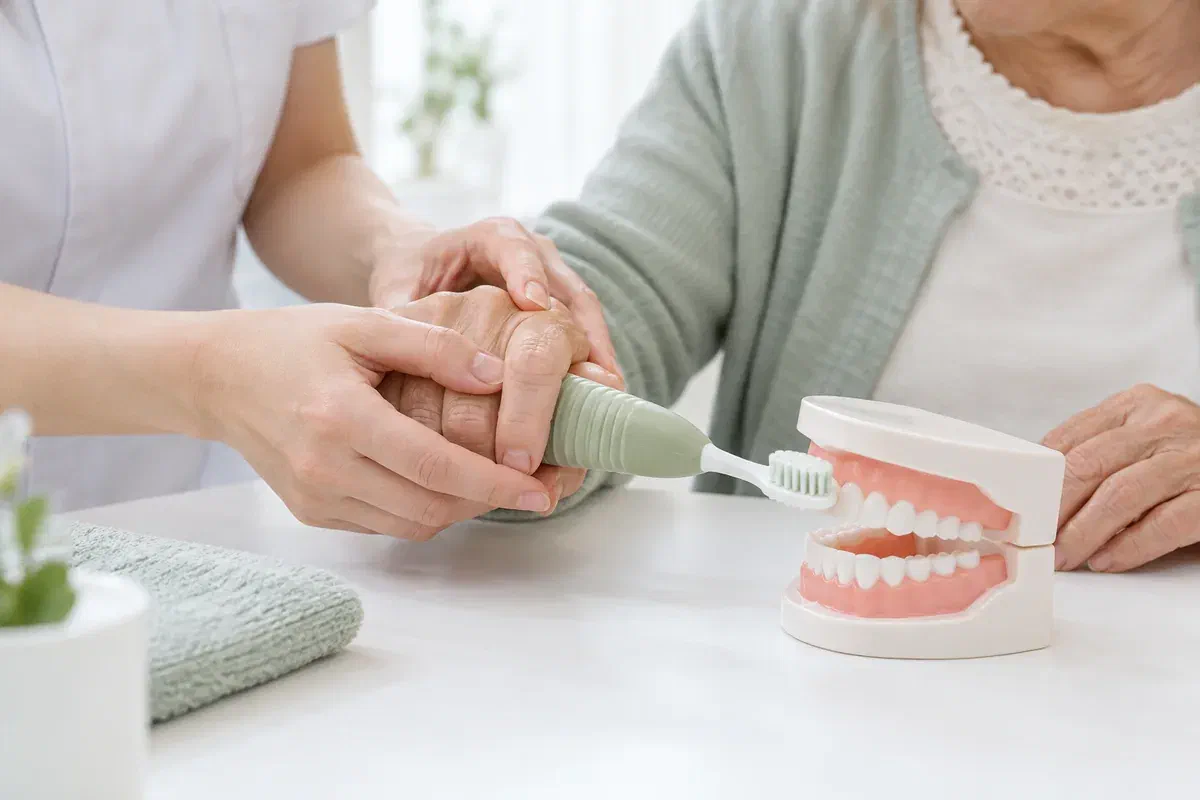
Illustrative practice with a larger toothbrush handle and a dental model
What makes a visit work

The person’s routine matters more than their file.

Two adults with Down syndrome or autism may want completely different things from an appointment. Tell us what calmed them last time, and what made things harder.

How they understand and respond

Explain whether the person speaks, signs, points to pictures or uses a device, and how long they need to process a question. Some prefer a single short instruction at a time. Tell us how you support them, so their own responses stay at the centre.

Comfort in the chair

Mention trouble reclining, a need to keep moving, mobility aids or a short window of tolerance. Ask us what can be arranged instead of assuming particular equipment or physical help. These details might shorten the visit or point to a more suitable setting.

Home observations

You might notice hand-to-face rubbing, bleeding during brushing, refusing crunchy foods or pulling away from the toothbrush. Note the timing and what you saw. Changes like these can signal a dental problem and should not simply be put down to behaviour.

Call without waiting if there is strong pain, swelling, refusal to eat or drink, or another sudden worrying change. A familiarization plan is never meant to delay an urgent examination.

Why the carer’s knowledge counts

Routines that fit the household

Families and long-term workers know the small details that make brushing possible: which toothpaste is tolerated, whether the bathroom or the kitchen works better, how many seconds of brushing the person will accept. Sharing that helps the dental team suggest changes that can be kept up, rather than an ideal that collapses after a week.

Talk beforehand about the carer’s role during the visit. Some adults like a parent holding their hand; others do better with the parent quietly nearby. Put the preference on the booking. It can change as the person grows more familiar with the clinic or as their needs shift.

Patient information: NIDCR — oral health support and individualized care

Context in hand

A current medication list, relevant notes from the person’s care plan and dated observations help us understand the whole picture. Point out anything that should be confirmed with their family doctor, pharmacist or another clinician.

Brushing that suits their skills

Ask for brushing and flossing methods adapted to the person’s coordination and sensory preferences. A visual chart or a chunkier handle may build independence; others need a carer to brush. Advice should fit the real situation.

A plan the whole circle can follow

With the person’s consent, agree who receives information, including siblings or day-program staff who help. Confirm the next visit, warning signs and the home routine before leaving.

Step by step

Planned before the day, paced on the day

Please contact us before booking if the person needs particular support. We can talk about the reason for the visit, what to bring, and which needs call for extra planning.

  1. Describe the person

    Tell us about the dental concern, communication style, calming strategies and the support you will give. Let us know who is coming. Share access or medical needs early so the appointment setting is considered beforehand rather than on arrival.

  2. Clarify consent for an adult

    The dentist offers information to the patient in a way they can take in, and follows the appropriate consent process. Parents of adult children do not automatically hold authority over treatment. If a substitute decision-maker is required, that person and any documents need to be confirmed.

  3. Follow a predictable sequence

    Steps can be shown or described before they happen. Agree a stop signal, discuss positioning and watch the person’s reactions. A first appointment may simply be meeting the team and a brief look, with treatment planned for later.

  4. Wrap up clearly

    Findings, options, fees and follow-up are reviewed with the patient and the authorized support person where appropriate. Ask for home-care steps in a form that works for your household. Agree who books next and how to report new concerns.

Brushing at home

Small steps that add up

Some adults need a picture reminder; others need full brushing by a carer. Ask for guidance suited to the person’s skills, sensory needs and any swallowing or positioning limits, not a method designed for someone else.

Same order, every time

Brush in a predictable sequence and say what comes next. Let the person do what they can, perhaps the front teeth, before you help with the rest. If brushing becomes painful or upsetting, stop and ask us what might be going on.

Try tools one at a time

Ask about softer brushes, wider handles or a powered brush, introduced gradually. Selection should reflect grip, coordination and sensory comfort. Never put your fingers where they could be bitten or hold the mouth open.

Keep a simple record

Note bleeding, swelling, refused foods, new resistance to brushing or other changes, with dates. Clear notes help the team assess the concern far better than describing the person as uncooperative.

Ways to begin

Matching the visit to the person

The most suitable next step depends on the oral concern and the level of support involved. Ask what we can provide comfortably and safely, and when another provider might be more appropriate.

Reassurance and communication

A check-up with a carer present

A parent or worker can share background and reinforce instructions while the person makes the choices they are able to make. Agree when the carer should speak, and whether the patient wants any part of the conversation without them.

When familiarity builds confidence

Meet-the-team visits

If clinically suitable, a short visit to get to know the space, or care split over stages, may be discussed. Each step’s purpose and limits should be understood. An urgent problem still needs prompt assessment.

When more resources are needed

Care in a specialised setting

Some people need sedation, a hospital setting or other facilities beyond a general office. We can discuss referral and keeping care continuous. A carer’s presence, however skilled, cannot make every procedure possible here.

Questions from parents and workers

Planning around routine and trust

Families, workers and patients themselves all ask how to prepare. The plan should rest on the person’s preferences and the clinical reason for coming in.

(905) 876-4488
Can we bring photos or a story about the visit to prepare at home?
Many families find a simple picture sequence helps. Ask the team what the visit is likely to involve so you can prepare accurately. Avoid promising steps that may change, and keep the description short and calm.
Is it possible to see the same team member at each appointment?
Ask when you book. We will try to work with familiar people where scheduling allows, but this cannot always be guaranteed. Telling us how much familiarity matters helps us plan with that in mind.
We are ageing parents. How do we involve a sibling in future visits?
With the patient’s consent, let us know who else may accompany them or receive information. Bring notes that a new companion can use. Any change to decision-making authority should be documented properly and shared with the clinic.
Can a day-program worker attend instead of a parent?
Yes, if the patient is comfortable with that person. Let us know the worker’s role and what they are authorized to discuss. Attending does not give them authority to consent, so confirm who makes decisions if the patient needs support with that.
What if my son will not sit in the chair at all on the day?
Tell the team and do not force it. We can talk about a brief look in a position he accepts, another appointment, different preparation or a referral. Pain, swelling or other urgent signs still need a timely route to care.
Does it help to call ahead before every trip from Acton?
It often does. A quick call lets you share changes since the last visit, confirm who will attend, and check that the plan still suits. It also reduces the chance of a long morning that ends in rescheduling.
Acton families and carers

Tell us their routine. We will build the visit around it.

Phone our Bronte Street practice and describe the dental concern, what helps the person stay calm and who will come along. Mention communication or access needs early, and we can talk through arrangements and what to bring.

Particular access or support needs are best discussed by phone. An online booking request does not confirm equipment, staff or a time slot.

Visit Milton Dental Clinic
Unit 1, 342 Bronte St. S, Milton, ON L9T 5B7
Get directions Clinic hours
Monday–Thursday
11am–7pm
Friday–Sunday
By appointment only

Areas we serve

  • Milton
  • Oakville
  • Mississauga
  • Georgetown
  • Halton Hills
  • Acton
  • Campbellville
  • Brampton
  • Burlington
  • Puslinch
  • Rockwood
  • Erin
  • Caledon
  • Etobicoke
  • Old Milton
  • Bronte Meadows
  • Timberlea
  • Dorset Park
  • Dempsey
  • Clarke
  • Beaty
  • Coates
  • Harrison
  • Scott
  • Willmott
  • Ford
  • Bowes
  • Cobden
  • Walker
  • Mountain View
  • Milton Heights
  • Hawthorne Village
  • Valley View
  • Fallingbrook
  • Nassagaweya
  • Trafalgar
  • Esquesing
  • Nelson
  • Brookville
  • Moffat
  • Glen Williams
  • Norval
  • Limehouse
  • Stewarttown
  • Ashgrove
  • Hornby
  • Silver Creek
  • Speyside
  • Scotch Block
  • North Oakville
  • River Oaks
  • Glen Abbey
  • West Oak Trails
  • Palermo
  • Bronte Creek
  • College Park
  • Joshua Creek
  • Uptown Core
  • Preserve
  • Iroquois Ridge
  • Lisgar
  • Meadowvale
  • Meadowvale Village
  • Churchill Meadows
  • Erin Mills
  • Central Erin Mills
  • Streetsville
  • East Credit
  • Creditview
  • Heartland
  • Sheridan
  • Mount Pleasant
  • Credit Valley
  • Huttonville
  • Churchville
  • Springbrook
  • Northwest Brampton
  • Bram West
  • Fletcher's Meadow
  • Fletcher's Creek South
  • Alton Village
  • Orchard
  • Millcroft
  • Headon Forest
  • Tansley
  • Brant Hills
  • Tyandaga
  • Kilbride
  • Lowville
  • Aberfoyle
  • Morriston
  • Arkell
  • Hillsburgh
  • Freelton
  • Carlisle
  • Waterdown
  • Flamborough
  • Mountsberg

How can we help?

Milton Dental Clinic

Have a question about your smile? Choose the option that works best for you.

For urgent dental concerns, please call.
Messages are reviewed during clinic hours.