

Illustrative dental consultation with an older patient and her chosen support person
General & Family Dentistry

Caregiver-Assisted Dental Visits in Old Milton

Sometimes the first sign is at the dinner table: a denture slipping, a meal left half-eaten. Plan a dental visit from Old Milton where a spouse or friend can help without taking over.

Noticed across the table

A small change, seen by someone close

Partners who have shared meals for decades often spot a dental problem before the person living with it does. Soft foods start replacing crusty bread. A denture gets taken out halfway through supper. On the established streets of Old Milton, plenty of couples look after each other this way, and a caregiver-assisted appointment simply brings that everyday attention into the dental chair.

Help can be modest or substantial. A companion might recall when the soreness began, manage the walk from the car, keep track of a new medication, or take over brushing on difficult days. Describing which of these tasks you actually share lets our team plan for the right kind of support, and spot early whether a different provider or setting would serve better.

None of this moves the patient to the side. Their questions and choices come first, and the companion’s role is to add detail, not replace their voice. Support should be shaped around the individual, never decided purely by age, a disability, or the name of a condition.

Arrange a visit with your companion
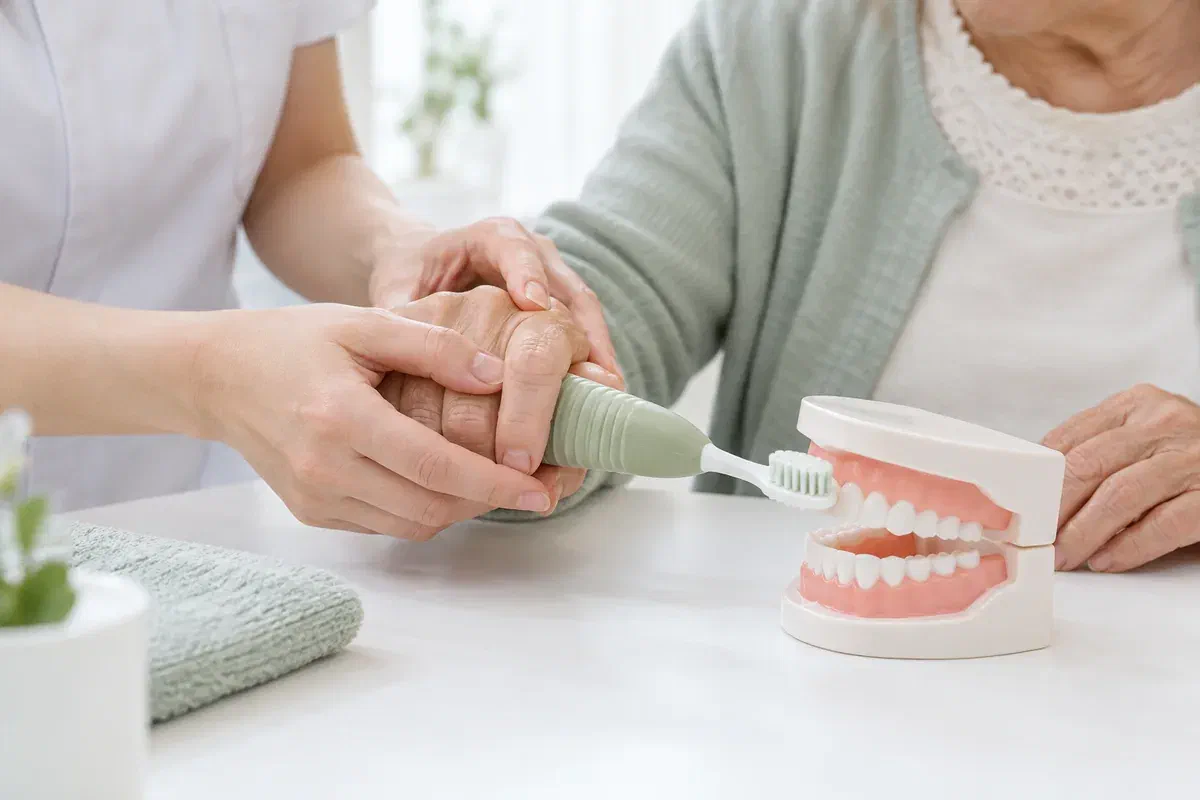
Illustrative practice with a larger toothbrush handle and a dental model
Worth mentioning when you call

What gets in the way during a dental visit?

Labels rarely tell us much on their own. It helps more to hear what made earlier appointments easier, and what made them harder for the person receiving care.

Hearing, seeing and following along

Explain whether the patient relies on a hearing aid, reads lips, needs larger print, or prefers a slower pace. Some take in one instruction at a time best. Say how you normally help, and we will still direct questions to the patient first.

Sitting back and staying comfortable

Mention a cane or wheelchair, a stiff neck or back, trouble lying flat, or tiring after a short while. Ask us to confirm what is possible before you book; lifting help and particular equipment should never be assumed. Comfort and safety may shape how long the appointment runs.

Changes in eating or mouth care

A partner may see skipped foods, blood on the toothbrush, a loosening denture, or new reluctance to have teeth cleaned. Jot down what you saw and roughly when. Changes like these deserve an examination, rather than being put down to mood or an existing illness.

Phone us right away about severe pain, swelling, difficulty eating or drinking, or a sudden change that concerns you. An easy introductory visit should never hold up attention to something urgent.

The value of a familiar face

Clinic advice, shaped for the bathroom sink

A person who helps every day can explain the details that never come up in a quick question: that the floss sits unused because fingers ache, that the partial denture stays in overnight, that one side of the mouth gets avoided. With that information, the advice can be something the household manages, rather than a routine that looks good on paper.

Talk early about how much involvement feels right. One patient wants their spouse in the room the entire time. Another prefers to speak privately and bring their companion in only for the instructions. Both approaches work, and either can be changed later as health or wishes shift.

Patient information: NIDCR — oral health support and individualized care

Background the team can use

Bring a current list of medications, any care instructions that touch on dental treatment, and specific observations. Keep it accurate, and point out anything you would like confirmed with a physician or another health professional.

Brushing help sized to the hands

Ask how brushing and cleaning between teeth can be adapted to the patient’s reach and grip. A broader handle may keep someone independent, while another person needs the brushing done for them. Advice should follow the real task.

A tidy handover

Decide who should receive instructions and how they will be shared, with the patient’s permission. Confirm the next visit, the warning signs, and the daily routine before leaving so neither of you has to piece the plan together afterwards.

From first call to follow-up

Plan it, then take it slowly

If the visit relies on a certain kind of support, call before picking a time. We can talk about why you are coming, what to bring, and any needs that call for extra preparation.

  1. Explain what the patient needs

    Tell us about the dental problem, the communication style that works, and the help being requested. Let us know who will come along and why. Raise access or medical needs too, so the appointment setting can be thought through beforehand.

  2. Confirm who decides

    The dentist discusses any proposed care with the patient and follows the right consent process. Being a spouse or companion does not, on its own, grant authority over treatment. Where another person must decide on the patient’s behalf, the team has to establish who that is and what paperwork supports it.

  3. Move through the exam gently

    We describe each step in words the patient can follow. Choose a hand sign that means stop, mention positioning concerns, and watch how they respond as things go. A visit may centre on assessment and planning, with any treatment booked separately.

  4. Agree on next steps together

    Findings, choices, costs and the follow-up schedule are reviewed with the patient, and with an authorized companion when that is appropriate. Ask about home care until it is clear. Decide who will book next time and how to tell us about fresh symptoms or problems with the routine.

The daily routine

Steady help, without taking the toothbrush away

Support might be a gentle reminder or full hands-on brushing. Request advice that suits the patient’s abilities and any swallowing or positioning limits, rather than copying a method designed for someone else.

Invite them to take part

Explain each step before you begin and let them do whatever they comfortably can. Someone may brush the upper teeth well and need help with the lower ones. If care becomes sore or upsetting, stop and ask us what might be causing the difficulty.

Find the right tools

Ask whether a thicker grip, a powered brush or a particular cleaning aid could help. Choices should reflect hand strength, coordination and safe handling. Never put fingers between the teeth or force the jaw open to finish.

Write down what changes

Record bleeding, swelling, foods being avoided, a denture that no longer sits right, or cleaning that has started to feel uncomfortable. Note the date and what you saw. Specific details help the team far more than a general remark that they seem less cooperative.

Ways to arrange the visit

Support can be shaped in more than one way.

Which route suits best comes down to the problem in the mouth and the amount of help involved. Ask us what our office can offer safely, and when sending you elsewhere would be wiser.

For reminders and conversation

Assessment with a companion

A trusted companion can fill in history or remember instructions while the patient stays part of every decision. Agree when the companion should speak, and whether any part of the discussion should happen privately.

When familiarity makes things easier

An introductory or staged plan

If clinically suitable, a shorter first visit or care in smaller stages may be discussed. Everyone should understand the aim and the limits. Urgent dental disease still needs prompt assessment, even when routine visits are normally approached gradually.

When more is needed

Referral to another setting

Some health conditions, mobility requirements or procedures call for a team with other equipment or facilities. We can talk through a referral and how records follow the patient. A companion’s presence does not make every procedure possible in every office.

Questions from couples and companions

Sorting out who does what

Patients, spouses and support workers all ask us about preparation. Whatever you settle on, it should rest on what the patient wants and why they need to be seen.

(905) 876-4488
My husband and I would like to book back-to-back cleanings. Can one of us support the other?
You can ask about scheduling appointments near each other. If one of you needs support during the visit, mention it when booking so the arrangement is clear. Each person still has their own examination and their own decisions about care.
My wife sometimes forgets what the dentist said. Can I take notes during her appointment?
Ask her first, and mention it when booking. With her agreement, a companion taking notes can help instructions stick. We can also go over the key points at the end so you both leave with the same understanding.
Can a family member sign consent forms if they are only driving me to the appointment?
No. Driving or accompanying someone does not give a person authority to make treatment decisions. The dentist follows the proper consent process, which can include identifying a substitute decision-maker where that is required. Tell us about any arrangements and ask what documents to bring.
Who should we call if a new denture rubs once we are home?
Contact our team and describe where it rubs, when it started, and whether eating has become difficult. Avoid adjusting the denture yourselves. Sudden swelling, significant pain or trouble eating or drinking should be reported promptly rather than left until the next routine visit.
What if my mother gets too tired or anxious to continue once the exam starts?
Let the team know right away. We can stop, then discuss the safest way forward, which may be a shorter assessment, another booking, different preparation, or a referral. Nothing should be forced, though pain or other pressing symptoms will still need attention soon.
We are coming from Old Milton on foot. Is there anything we should sort out before leaving home?
Call ahead about any mobility needs, seating, or how long the patient can comfortably sit, and bring a medication list. Plan extra time so nobody feels rushed on arrival. If walking is tiring, it may be worth arranging a lift for the trip home after the visit.
From Old Milton to our door

Bring your companion. We will plan the rest with you.

Our Bronte Street practice sits close to Milton’s historic downtown. Give us a call, tell us what is bothering the patient’s mouth and what help would make the day easier, and we will go over arrangements and what to have ready.

Please call to talk through specific access or support needs. Submitting a request online does not confirm equipment, transfer assistance or an appointment.

Visit Milton Dental Clinic
Unit 1, 342 Bronte St. S, Milton, ON L9T 5B7
Get directions Clinic hours
Monday–Thursday
11am–7pm
Friday–Sunday
By appointment only

Areas we serve

  • Milton
  • Oakville
  • Mississauga
  • Georgetown
  • Halton Hills
  • Acton
  • Campbellville
  • Brampton
  • Burlington
  • Puslinch
  • Rockwood
  • Erin
  • Caledon
  • Etobicoke
  • Old Milton
  • Bronte Meadows
  • Timberlea
  • Dorset Park
  • Dempsey
  • Clarke
  • Beaty
  • Coates
  • Harrison
  • Scott
  • Willmott
  • Ford
  • Bowes
  • Cobden
  • Walker
  • Mountain View
  • Milton Heights
  • Hawthorne Village
  • Valley View
  • Fallingbrook
  • Nassagaweya
  • Trafalgar
  • Esquesing
  • Nelson
  • Brookville
  • Moffat
  • Glen Williams
  • Norval
  • Limehouse
  • Stewarttown
  • Ashgrove
  • Hornby
  • Silver Creek
  • Speyside
  • Scotch Block
  • North Oakville
  • River Oaks
  • Glen Abbey
  • West Oak Trails
  • Palermo
  • Bronte Creek
  • College Park
  • Joshua Creek
  • Uptown Core
  • Preserve
  • Iroquois Ridge
  • Lisgar
  • Meadowvale
  • Meadowvale Village
  • Churchill Meadows
  • Erin Mills
  • Central Erin Mills
  • Streetsville
  • East Credit
  • Creditview
  • Heartland
  • Sheridan
  • Mount Pleasant
  • Credit Valley
  • Huttonville
  • Churchville
  • Springbrook
  • Northwest Brampton
  • Bram West
  • Fletcher's Meadow
  • Fletcher's Creek South
  • Alton Village
  • Orchard
  • Millcroft
  • Headon Forest
  • Tansley
  • Brant Hills
  • Tyandaga
  • Kilbride
  • Lowville
  • Aberfoyle
  • Morriston
  • Arkell
  • Hillsburgh
  • Freelton
  • Carlisle
  • Waterdown
  • Flamborough
  • Mountsberg

How can we help?

Milton Dental Clinic

Have a question about your smile? Choose the option that works best for you.

For urgent dental concerns, please call.
Messages are reviewed during clinic hours.