

Illustrative dental consultation with an older patient and her chosen support person
General & Family Dentistry

Caregiver-Assisted Dental Visits in Rockwood

Masks muffle voices and printed instructions can be hard to read. If hearing or eyesight makes the dentist difficult, bring a companion from Rockwood and plan how we communicate.

Hearing, sight and clear instructions

Behind the mask, words get lost.

A dentist’s mask hides the lips you may rely on, the suction drowns out half a sentence, and the take-home sheet is printed in type too small to read. For someone with hearing loss or low vision, those small obstacles add up. Bringing a companion from Rockwood who knows how you communicate can make a real difference, especially when we agree on the approach in advance.

Help is not only about communication. The same person might drive, help with steps, remember medication changes, or assist with brushing at home. Tell us which roles apply, and mention anything that affects treatment, such as positioning, swallowing or a health condition. Our team can then discuss what we can arrange, and whether another setting might suit certain needs better.

You remain the person we are speaking with. A companion can repeat, clarify or describe what you cannot see, but the questions and choices stay yours. Support should match your abilities and preferences, not assumptions based on age or a single sensory difference.

Plan how we will communicate
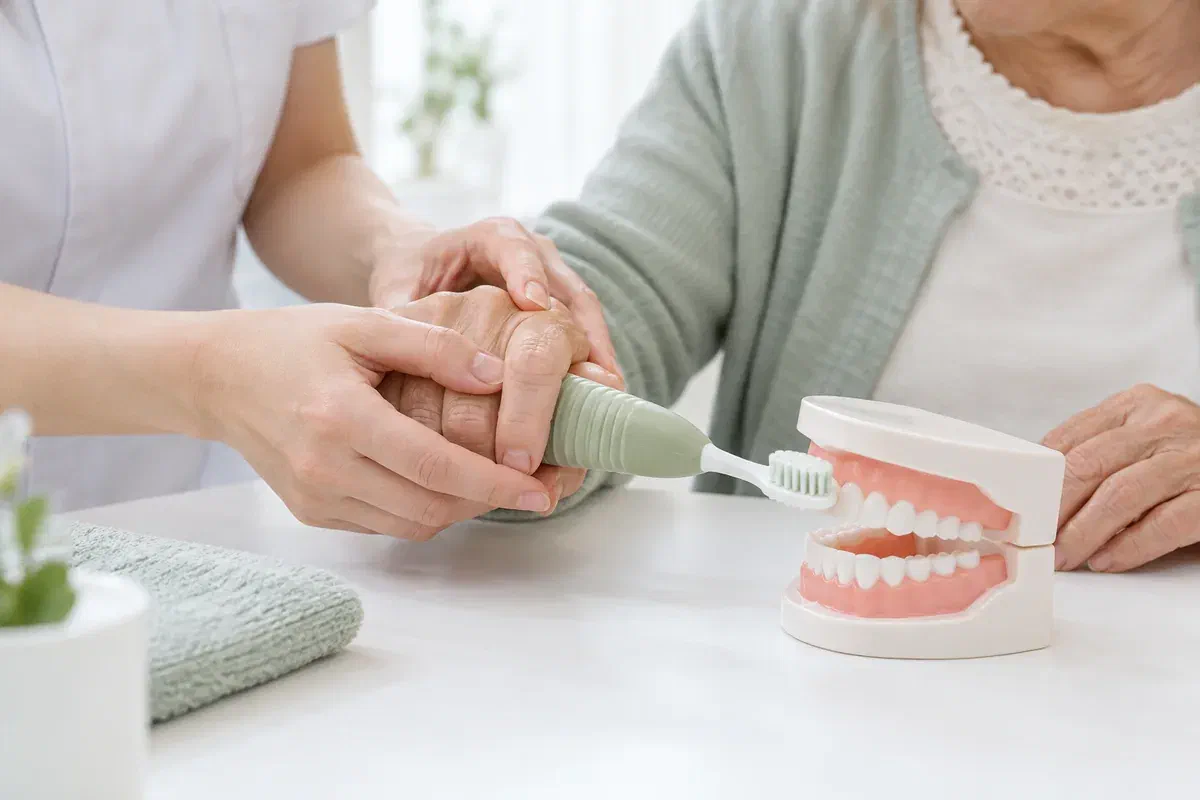
Illustrative practice with a larger toothbrush handle and a dental model
Tell us how you take in information

Spoken, shown or written down?

Two people with hearing loss can need very different things. Let us know what has helped at past appointments of any kind, and where communication broke down.

Hearing and lip-reading

Mention hearing aids or implants, whether you lip-read, which side hears better, and whether background noise is a problem. You might prefer we pause the equipment before speaking. Explain how your companion helps, and we will still address you first.

Sight, steps and seating

Describe low vision, a white cane or guide, mobility aids, trouble reclining or limited sitting time. Ask us to confirm arrangements instead of counting on particular equipment or transfer help. These details can change visit length or suggest a more suitable setting.

Changes in eating or cleaning

A companion may spot bleeding gums, food left on teeth, a denture that rubs, or a shift in what you eat. Note what was seen and when. Changes like these deserve a look, not an assumption that reduced sight simply means brushing is less thorough.

A bad toothache, a swollen face, struggling to eat or drink, or anything that changes suddenly is a reason to phone right away. A get-acquainted visit should never come before an urgent assessment.

What a companion can add

Instructions you can actually use later

Advice only helps if it reaches you in a form you can use. A companion can ask for large-print notes, describe a technique aloud, or help you feel where the brush should go. Someone who assists you daily can also explain the real routine, so recommendations suit the bathroom, the lighting and your hands.

Decide early how much the companion should do during the visit. Some people like them seated alongside, relaying and describing throughout. Others manage the conversation and want help only with the written summary. Mention your choice when booking, knowing it can change later.

Patient information: NIDCR — oral health support and individualized care

Accurate health information

An up-to-date medication list matters, along with any advice from other professionals that touches on dental care. Mention anything you are unsure of, so it can be confirmed with your doctor, pharmacist or eye or hearing specialist.

Brushing by touch and feel

Ask how to brush and clean between teeth when sight is limited. A brush with a distinctive handle or a set order you can follow by touch may keep you independent. Anyone who assists you is welcome to learn the method as well.

A summary in your format

Agree, with your permission, who gets instructions and how: large print, a phone call, or spoken notes. Before leaving, make sure the follow-up date and the symptoms worth calling about are clear.

Planning the visit

Agree on how we will talk before we begin.

When a visit relies on particular support, a phone call ahead of booking is the place to start. We can go over the reason you are coming in, what to bring and any communication needs that require planning.

  1. Describe your communication needs

    Share the dental concern, how you hear and see best, and what your companion will do. Say who is coming. Any mobility or health issues are worth raising now too, giving us time to check our setting suits you.

  2. Consent stays with you

    The dentist explains proposed care in a way that works for your hearing or sight and follows the right consent process. A companion helping you understand does not gain authority to decide for you. A substitute decision-maker is involved only if required.

  3. Speak, then work

    The team can explain each step before starting, rather than while instruments are running. Agree on a signal to stop, mention positioning concerns, and let us know how you are feeling. Some first visits focus on assessment, with treatment later.

  4. Close with a clear summary

    What we found, your options, the costs and the follow-up schedule are reviewed with you, plus any authorized support person you choose. Ask for anything to be repeated or written larger. Settle who arranges the next appointment and how you will reach us if something new comes up.

At home

A routine you can follow by feel

Support could be a reminder, a guiding hand or full brushing by a helper. Ask for guidance suited to your abilities and any swallowing or positioning limits, rather than a method meant for someone with different needs.

Stay in control

Anyone helping should talk you through each move first and leave the parts you can manage to you. A consistent brushing order can make it easier to cover every area by feel. If cleaning becomes painful or unsettling, stop and ask us why.

Tools you can find and feel

Ask about brushes with textured or brightly coloured handles, a powered brush with a timer, or floss holders. Choose with grip and safety in mind. Nobody helping you should reach a finger into your bite or pull your jaw open.

Track what changes

Keep notes, or ask a companion to, about bleeding, swelling, foods avoided, denture issues or new discomfort, with dates. Concrete observations let us judge the problem much better than vague impressions do.

Visit formats

Choose the kind of support that fits.

How to proceed comes down to what is going on in your mouth and how much assistance suits you. Ask what our office handles well, and when another provider would serve you better.

Communication and memory

A visit with your companion

Your companion can relay, describe or note information, and every decision remains yours. Settle when they should speak up, and say if you want any part of the conversation held privately.

When getting familiar helps

Staged or introductory care

If clinically appropriate, a short first visit or a plan divided into stages may be discussed. Each step’s aim and limits should be clear. Urgent problems still need timely assessment.

When more resources are needed

Another care setting

Some medical, mobility or treatment needs are better met by a provider with other facilities. We can arrange a referral and pass along your records. Coming with support does not change what a given office is able to provide.

Communication questions

Hearing, seeing and following along

People with hearing or vision differences, and those who come with them, raise these points often. Your own preferences decide how each one is handled.

(905) 876-4488
Can the dentist lower their mask to speak so I can lip-read?
Ask about it when booking. Depending on what is happening, the team may be able to pause and position themselves so you can see them, or use other ways to communicate. Telling us in advance gives us time to plan.
Should I keep my hearing aids in during the appointment?
Mention them when you arrive. Many people keep them in for discussion, though some procedures may make removal or adjustment sensible. The team can talk through the main points before and after any step where hearing may be harder.
Can I get my home-care instructions in large print?
Ask the team. Large print, a phone summary or a companion taking notes are all possibilities to discuss. Make sure you understand the warning signs and daily care before you leave.
My companion describes things for me. Does that let them agree to treatment?
No. Helping you understand does not give a companion authority to make your decisions. The dentist will seek consent from you, and from a substitute decision-maker only where one is required.
What if it becomes too hard to follow what is happening during the exam?
Raise your hand or use the signal you agreed. The team can stop, explain again, or adjust the plan. If carrying on is not workable, we can look at a brief check, a second booking or a referral, while making sure anything urgent is still dealt with.
Is it worth confirming arrangements before driving in from Rockwood?
Yes. A quick call lets you confirm communication and access needs, check what to bring, and avoid a long trip that ends in rescheduling. Mention any changes in hearing, sight or health since your last visit.
From Rockwood

Share the way you hear and see best.

Ring our Bronte Street practice with the dental concern, the way you prefer to communicate and the name of whoever is coming with you. The sooner we know about access needs, the better we can get ready.

For specific access or communication needs, please call. Website requests are a starting point only and do not secure equipment, transfer help or a time.

Visit Milton Dental Clinic
Unit 1, 342 Bronte St. S, Milton, ON L9T 5B7
Get directions Clinic hours
Monday–Thursday
11am–7pm
Friday–Sunday
By appointment only

Areas we serve

  • Milton
  • Oakville
  • Mississauga
  • Georgetown
  • Halton Hills
  • Acton
  • Campbellville
  • Brampton
  • Burlington
  • Puslinch
  • Rockwood
  • Erin
  • Caledon
  • Etobicoke
  • Old Milton
  • Bronte Meadows
  • Timberlea
  • Dorset Park
  • Dempsey
  • Clarke
  • Beaty
  • Coates
  • Harrison
  • Scott
  • Willmott
  • Ford
  • Bowes
  • Cobden
  • Walker
  • Mountain View
  • Milton Heights
  • Hawthorne Village
  • Valley View
  • Fallingbrook
  • Nassagaweya
  • Trafalgar
  • Esquesing
  • Nelson
  • Brookville
  • Moffat
  • Glen Williams
  • Norval
  • Limehouse
  • Stewarttown
  • Ashgrove
  • Hornby
  • Silver Creek
  • Speyside
  • Scotch Block
  • North Oakville
  • River Oaks
  • Glen Abbey
  • West Oak Trails
  • Palermo
  • Bronte Creek
  • College Park
  • Joshua Creek
  • Uptown Core
  • Preserve
  • Iroquois Ridge
  • Lisgar
  • Meadowvale
  • Meadowvale Village
  • Churchill Meadows
  • Erin Mills
  • Central Erin Mills
  • Streetsville
  • East Credit
  • Creditview
  • Heartland
  • Sheridan
  • Mount Pleasant
  • Credit Valley
  • Huttonville
  • Churchville
  • Springbrook
  • Northwest Brampton
  • Bram West
  • Fletcher's Meadow
  • Fletcher's Creek South
  • Alton Village
  • Orchard
  • Millcroft
  • Headon Forest
  • Tansley
  • Brant Hills
  • Tyandaga
  • Kilbride
  • Lowville
  • Aberfoyle
  • Morriston
  • Arkell
  • Hillsburgh
  • Freelton
  • Carlisle
  • Waterdown
  • Flamborough
  • Mountsberg

How can we help?

Milton Dental Clinic

Have a question about your smile? Choose the option that works best for you.

For urgent dental concerns, please call.
Messages are reviewed during clinic hours.