

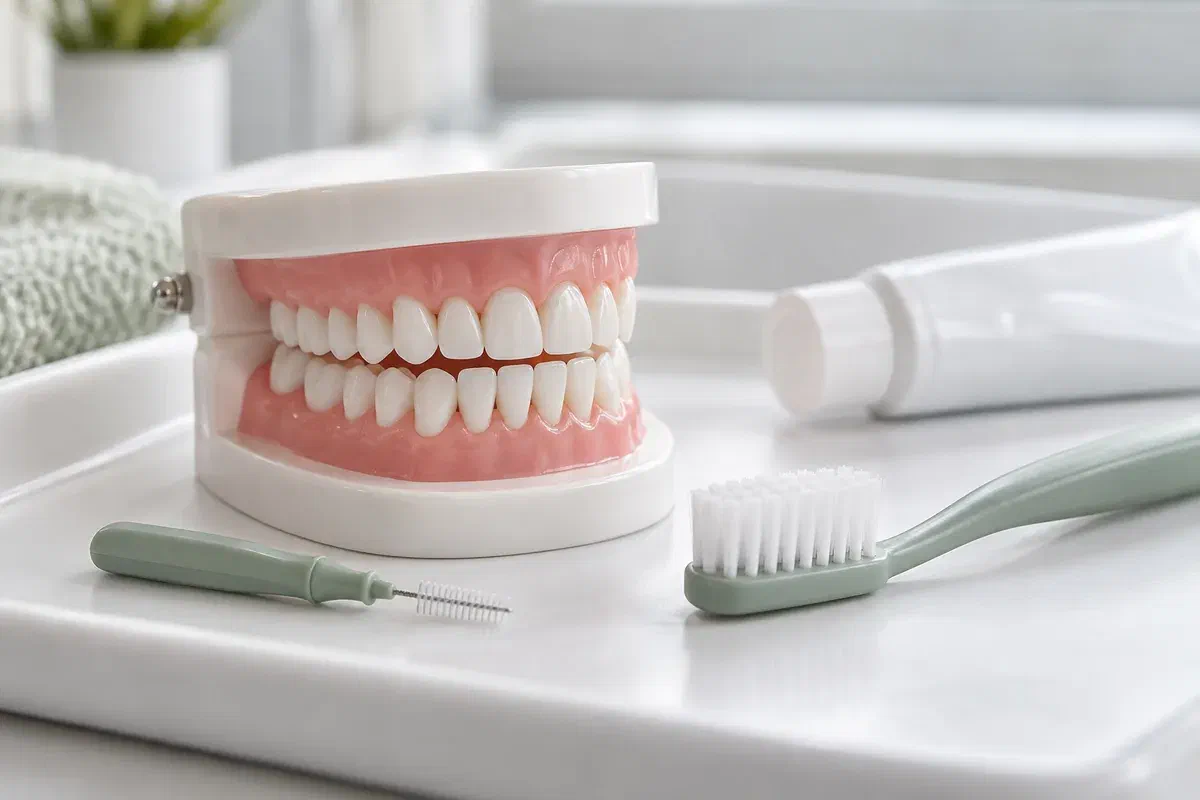
Illustrative dental discussion using a toothbrush and teaching model
General & Family Dentistry

Cavity Prevention in Burlington

Saliva is one of your teeth’s quiet defenders, and a dry mouth can change your decay risk quickly. For anyone travelling from Burlington, our prevention care weighs dryness, cleaning, diet and fluoride together.

Burlington · understanding your risk

Notice the dryness. Ask about it.

Saliva does more than keep your mouth comfortable. It washes away food, buffers acid and carries minerals back to enamel. When it dwindles, perhaps after a new prescription, during medical treatment, or simply with age, teeth can lose that support. Prevention is a broader set of tools: careful cleaning, the right fluoride, attention to how often you eat sugar, and regular examination. Dryness is one reason those tools may need adjusting.

Cavities form when plaque bacteria break down sugars into acid and the acid repeatedly dissolves minerals from tooth surfaces. In the early stage, the surface may only be weakened, which is quite different from a tooth with a hole in it. Examination determines which you have and whether the next step is preventive care, watchful monitoring or a filling. A prevention plan is never a substitute for treating a tooth that needs it.

People who make the trip from Burlington often fit a dental visit between other appointments, so it helps to arrive with a short list. Write down what you take, when your mouth feels driest, and any area that is difficult to clean. With that in hand we can suggest realistic changes and explain the purpose of any professional care, rather than handing everyone the same products.

Talk to us about dry mouth and decay
Dental model, soft toothbrush, and interdental brush illustrating preventive care
Reasons to check in

Changes that call for a fresh look

Prevention can be discussed at any visit, not only when something hurts. A shift in your health, medicines, eating patterns or dental work may mean your routine needs to change too.

New decay despite your efforts

When cavities keep appearing, it makes sense to review the wider pattern together. That includes recent findings, tricky cleaning areas and the timing of sweet foods and drinks. The point is to identify contributors, not to suggest you simply have not tried hard enough.

Dryness that lingers

A mouth that feels dry most days may need extra protection, because saliva normally helps defend the teeth. Let us know about medicines, cancer treatment or other health changes that began around the same time. Do not adjust a prescription yourself; coordinated advice with your doctor may be needed.

Hard-to-clean areas

Crowded teeth, root surfaces exposed by gum recession, orthodontic appliances or reduced dexterity can make standard brushing less effective. Point out the area and bring the tools you use. Adapting the approach often works better than adding a new product on top.

Decay does not always cause pain early on. Keep your recommended examinations, and book sooner for a new hole, a broken filling or any symptoms. Preventive products cannot rebuild a tooth that has lost structure.

The purpose of a plan

Protection that adapts as your health does

The goal is to make new decay less likely and, where appropriate, to help teeth with early changes recover without restorative treatment. No plan can guarantee you will never need a filling. What it can do is set out specific priorities, explain the reasoning, and give us a way to see at later visits whether they are helping.

Prevention carries on after a tooth is restored. A filling or crown deals with one damaged area, but the rest of that tooth and the teeth around it still sit in the same environment, dry or not. Ask how your current dental work affects your routine, and what would be worth calling about before your next planned visit.

Patient information: NIDCR — the tooth decay process

Priorities you can remember

We focus first on whatever is most relevant to your findings, such as one area of weak cleaning, a habit of frequent sipping, or ongoing dryness. Knowing the reason for each recommendation makes it simpler to judge where it fits.

Guidance on products and technique

Ask us to show you, and bring tools you find awkward. Toothpaste, brushes and between-teeth cleaners should suit your needs and abilities. Some people with dryness prefer milder flavours; an expensive or strong-tasting product is not necessarily more protective.

Early review, smaller problems

Each examination is a chance to recheck the teeth and follow anything previously noted. Ask what is being monitored and when. The time between checkups should reflect your own assessment, not a standard interval for everyone.

Step by step

How we build a prevention plan with you

Let us know what you do now and where it becomes difficult. Work hours, health appointments, dexterity, where you buy products, and the cost of recommended care are all reasonable to bring up.

  1. Review findings and health history

    We examine your teeth and ask about earlier cavities, medical changes, medicines, dryness and daily habits. X-rays may be suggested when clinically indicated. If you have a current symptom, describe it so it can be looked at as a separate concern.

  2. Identify what is raising risk

    We may talk about sugar frequency, how effectively plaque is cleared, fluoride use, saliva flow and areas where plaque builds up. The aim is to understand the whole situation rather than blame one food or one skipped brushing.

  3. Agree on realistic steps

    We discuss home care, suitable products and whether professional preventive measures are indicated. Ask which step matters most and how to use anything prescribed. Children in the household have their own age-based guidance, so adult instructions should not be applied to them.

  4. Reassess over time

    At later visits we look at new findings and how the routine is working. Changes in medication, health or dental treatment can alter the plan. Tell us if something is uncomfortable, unaffordable or hard to maintain, and we will look at alternatives.

At home, every day

Make the basics count

Daily care protects teeth when it reaches the vulnerable surfaces and is repeated reliably. Ask for instructions that reflect your age, whether you can spit out toothpaste, and any medical or swallowing issues.

Brushing and between-teeth care

Adults are generally advised to brush twice a day using a fluoride toothpaste and to clean the spaces between teeth once a day. Use a technique and tools that suit you. Rinses do not replace brushing, and brushing on its own tends to miss the contact points.

Watch how often you snack

Frequent sweet snacks or drinks keep teeth under acid attack through the day, and a dry mouth recovers more slowly. Consider limiting these to mealtimes and sipping plain water between meals where appropriate. The aim is a sustainable pattern that still supports your nutrition.

Prescribed products, used correctly

If we recommend a higher-strength toothpaste, rinse or other preventive product, follow its specific directions and store it safely away from children. Check before combining several products. Additional fluoride is not the answer for everyone.

Patient information: Canadian Dental Association — oral health basics · NIDCR — oral hygiene

Possible preventive measures

Three tools, each with a role

What we recommend depends on your examination and risk discussion. Ask what benefit to expect, what the limitations are, and how professional care works alongside your home routine.

Your daily foundation

Home care designed around you

Good technique, an appropriate fluoride toothpaste and practical food and drink choices are where prevention begins. Some people need adapted tools or a helper. Tell us about any barriers so the plan fits the person doing it.

When extra protection is indicated

Fluoride applied by the team

A professional fluoride treatment may be recommended according to age, risk and tooth condition, and dryness can be part of that assessment. Ask why it is suggested and how often it will be reconsidered. It adds to home care rather than replacing it.

For particular susceptible surfaces

Sealants for selected grooves

A sealant can protect suitable grooves that are hard to clean. The tooth is assessed first, and the sealant is checked at later appointments. It does not cover all surfaces, and cleaning every day is still necessary.

Patient information: Canadian Dental Association — appropriate fluoride use · NIDCR — sealants

Dry mouth and decay questions

Answers that fit your situation

Questions about fluoride, diet and recurring cavities are always welcome. The best answer connects general prevention principles to your dental findings and a routine you can keep up.

(905) 876-4488
What can I do day to day if my mouth is always dry?
Sipping plain water often, limiting sugary drinks and snacks, and keeping up thorough cleaning with fluoride toothpaste are reasonable starting points. Some people find sugar-free gum or saliva substitutes helpful. Tell us about the dryness so we can discuss additional protection, and raise it with your doctor if it began with a medicine.
Can cancer treatment affect my risk of cavities?
Some cancer treatments can reduce saliva or make cleaning harder, which may raise decay risk. Let both your medical team and your dentist know about the treatment. We can discuss preventive steps and coordinate with your care team where needed.
Are cavities something adults should still worry about?
Yes. Decay can develop at any age, including around fillings and on roots exposed by gum recession. A change in health, medicines or the ability to clean can raise risk later in life, so a routine that once worked may need updating.
Is an alcohol-free mouthwash better if I have dryness?
Some people with a dry mouth find alcohol-free rinses more comfortable. Whichever rinse you use, it does not replace brushing and cleaning between teeth. If a fluoride rinse is recommended for you, we will explain how and when to use it.
Will fixing my cavities stop new ones from forming?
A filling repairs damage that has already happened, but it does not change the conditions that caused it. The rest of the tooth and neighbouring teeth remain exposed. Prevention alongside treatment is what helps lower the chance of new decay.
How will I know my prevention routine is actually working?
At reviews we look for new or changing areas of decay and check how your routine is going. Ask which spots are being monitored and what would prompt a change. The plan may need adjusting even if you followed it closely, especially when dryness or health changes.
Planning a visit from Burlington

Start with a conversation about your teeth

Our Bronte Street practice can review your dental health and the habits that support it. Bring your medication list, questions about recurring cavities or products, and any spot you find hard to clean. We will help set priorities and discuss preventive care suited to you.

If you have pain, swelling or a damaged tooth, please call rather than book online. Online requests are for non-urgent visits.

Visit Milton Dental Clinic
Unit 1, 342 Bronte St. S, Milton, ON L9T 5B7
Get directions Clinic hours
Monday–Thursday
11am–7pm
Friday–Sunday
By appointment only

Areas we serve

  • Milton
  • Oakville
  • Mississauga
  • Georgetown
  • Halton Hills
  • Acton
  • Campbellville
  • Brampton
  • Burlington
  • Puslinch
  • Rockwood
  • Erin
  • Caledon
  • Etobicoke
  • Old Milton
  • Bronte Meadows
  • Timberlea
  • Dorset Park
  • Dempsey
  • Clarke
  • Beaty
  • Coates
  • Harrison
  • Scott
  • Willmott
  • Ford
  • Bowes
  • Cobden
  • Walker
  • Mountain View
  • Milton Heights
  • Hawthorne Village
  • Valley View
  • Fallingbrook
  • Nassagaweya
  • Trafalgar
  • Esquesing
  • Nelson
  • Brookville
  • Moffat
  • Glen Williams
  • Norval
  • Limehouse
  • Stewarttown
  • Ashgrove
  • Hornby
  • Silver Creek
  • Speyside
  • Scotch Block
  • North Oakville
  • River Oaks
  • Glen Abbey
  • West Oak Trails
  • Palermo
  • Bronte Creek
  • College Park
  • Joshua Creek
  • Uptown Core
  • Preserve
  • Iroquois Ridge
  • Lisgar
  • Meadowvale
  • Meadowvale Village
  • Churchill Meadows
  • Erin Mills
  • Central Erin Mills
  • Streetsville
  • East Credit
  • Creditview
  • Heartland
  • Sheridan
  • Mount Pleasant
  • Credit Valley
  • Huttonville
  • Churchville
  • Springbrook
  • Northwest Brampton
  • Bram West
  • Fletcher's Meadow
  • Fletcher's Creek South
  • Alton Village
  • Orchard
  • Millcroft
  • Headon Forest
  • Tansley
  • Brant Hills
  • Tyandaga
  • Kilbride
  • Lowville
  • Aberfoyle
  • Morriston
  • Arkell
  • Hillsburgh
  • Freelton
  • Carlisle
  • Waterdown
  • Flamborough
  • Mountsberg

How can we help?

Milton Dental Clinic

Have a question about your smile? Choose the option that works best for you.

For urgent dental concerns, please call.
Messages are reviewed during clinic hours.