

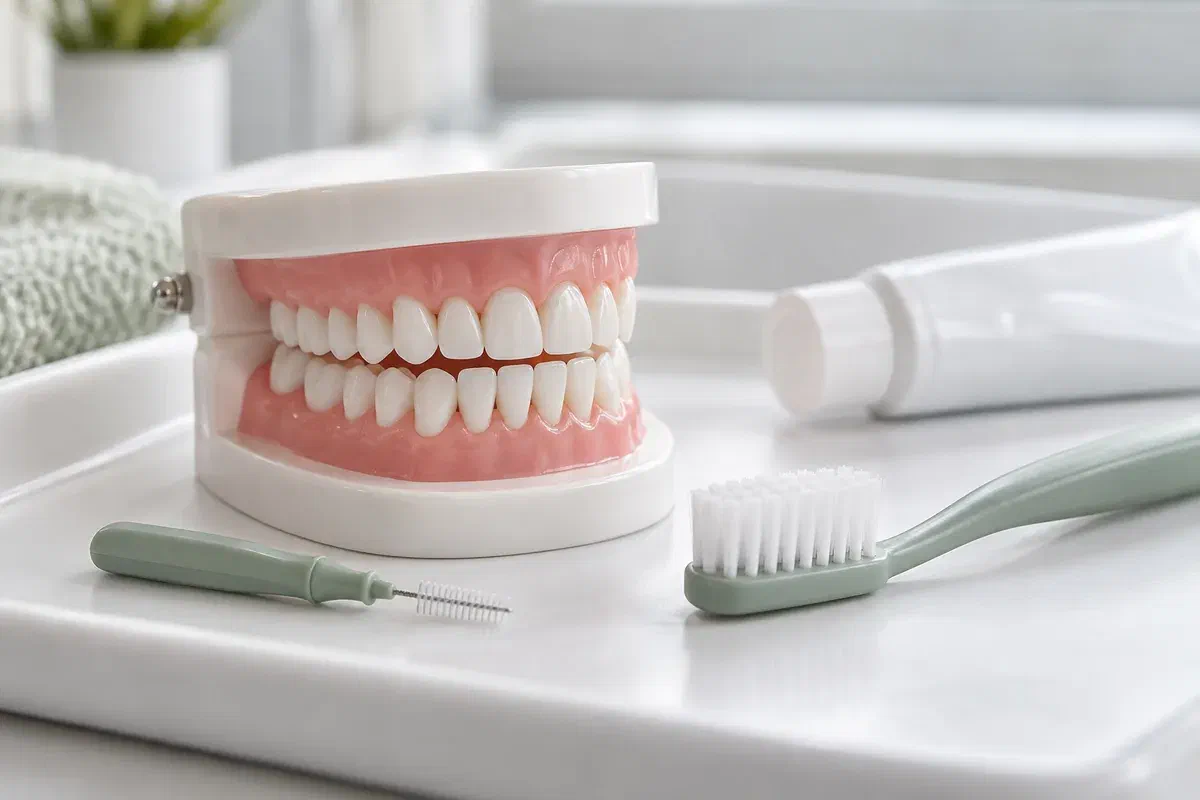
Illustrative dental discussion using a toothbrush and teaching model
General & Family Dentistry

Cavity Prevention in Erin

A new filling fixes one tooth; it does not change what caused the cavity. If you are coming from Erin or Hillsburgh, we can help you turn that repair into a starting point, with a home routine and preventive care that fit.

After the filling, in Erin

The repair is done. Now what?

It is natural to feel relieved once the numbness wears off and the tooth is whole again. Yet the conditions that led to that cavity are probably still in place. The same plaque, the same snack habits, the same hard-to-reach gap. Cavity prevention is how you change those conditions, through effective cleaning, suitable fluoride, fewer sugar exposures and regular examination, so the next visit is more likely to be a checkup than another filling.

A brief look at cause helps. Plaque bacteria live on sugar and produce acid as a by-product. Repeated acid contact draws minerals from teeth, and when loss outpaces the repair that saliva and fluoride provide, the surface weakens and may eventually collapse into a cavity. Early weakening is not the same as a hole, and examination tells us which other teeth may be at an early stage and whether they need prevention, monitoring or treatment.

Travelling in from a rural town such as Erin, it is worth using your next appointment well. Ask why the last cavity formed where it did, what we noticed on nearby teeth, and which habit would make the most difference. Mention dryness, medicines or a spot that is awkward to clean, and we will suggest changes that fit your week.

Plan what comes after your filling
Dental model, soft toothbrush, and interdental brush illustrating preventive care
Questions worth raising

One filling, or the start of a pattern?

You can talk about prevention at any appointment, not just after a toothache. A recent filling, a health change, new medicines or a shift in your diet can all be good reasons to review the routine.

A second or third new filling

If cavities keep appearing, we look at the overall pattern with you. That means recent decay, surfaces you struggle to clean, and the times of day sweet foods or drinks come up. Nobody is keeping score; the aim is to find the cause.

Noticeable dryness

Because saliva protects teeth, a dry mouth can raise risk around new and old fillings alike. Mention medicines or treatment that started around the same time. Please continue prescriptions as directed and let us coordinate with your physician if needed.

Edges and contacts that trap food

Food catching beside a new filling, crowded teeth, exposed roots or limited dexterity can all defeat a standard routine. Show us the area and bring your tools. A small change in technique or a better-fitting aid usually helps.

A cavity can form without pain, including around existing fillings. Keep your recommended examinations, and book earlier if a filling feels rough, high or broken, you see a hole, or a tooth becomes sensitive. Products cannot replace lost structure.

What prevention adds to a repair

Protecting the tooth and its neighbours

Prevention aims to make new decay less likely and, where appropriate, to help early changes on other teeth without further fillings. It cannot guarantee you will not need more treatment. What it offers is a short list of priorities, linked to why the last cavity happened, and a way to check their effect next time.

Restorations repair damage; they do not change your mouth’s environment. The edge of a filling, the remaining natural tooth and the teeth beside it all continue to face the same conditions. Ask how your new and older dental work should affect cleaning, and what signs would justify calling before your next scheduled examination.

Patient information: NIDCR — the tooth decay process

Learn from the last cavity

Where the decay formed often hints at the cause: between teeth, along the gumline or in a deep groove. We focus first on that area and the habit most likely behind it, so the change you make has a clear purpose.

Tools for the new contours

Fillings and crowns can change how floss slides or where food catches. Bring your tools and ask for a demonstration. Choose aids that suit your hands and mouth; price and strong flavours do not by themselves mean better protection.

Keep an eye on other teeth

Examinations let us recheck restored teeth and any early changes elsewhere. Ask which teeth we are monitoring and what we will compare next time. Your recall interval should follow from your findings, not a default.

Building the plan

Start where the last cavity began

Walk us through your current habits and the moments they slide. Work, travel time, family routines, dexterity, product availability and the expected cost of care are all worth sharing.

  1. Review the teeth and the story

    The dentist examines restored and unrestored teeth and asks about past decay, health changes, dryness and your routine. X-rays may be advised when clinically indicated. A current symptom, such as sensitivity after a new filling, is assessed separately.

  2. Trace the contributors

    We may talk about sugar frequency, plaque removal, fluoride use and areas around restorations that collect plaque. The goal is to understand what led to the cavity, not to fix blame on a single food or a missed evening.

  3. Agree on next steps

    Together we decide on cleaning methods, the products worth using and whether in-office fluoride is indicated. You can ask which change should come first and how to use anything prescribed. Children in the household have separate, age-based guidance.

  4. Compare at your next visit

    At the following appointment we look for new changes and hear how the routine has worked. New medicines, health changes or further dental work can shift the plan. If a step is uncomfortable, unaffordable or unrealistic, say so and we will adapt it.

Home care after treatment

Look after the new filling like a natural tooth

Daily care helps when it reaches the at-risk surfaces and becomes a habit. If age, spitting, swallowing or a medical condition affects your brushing, mention it so the instructions fit.

Clean around every edge

Adults still need a fluoride paste morning and night and one daily session of floss or an interdental brush. Pay attention to where a filling meets the tooth. Mouthwash does not do the job of a brush, and a brush alone misses the contacts.

Rethink the grazing

Repeated sweet snacks or drinks keep acid around both natural teeth and restoration edges. Try grouping these with meals and choosing plain water between, where that suits you. The aim is a pattern you can live with, not giving up every treat.

Extra products, carefully

If we suggest a higher-strength toothpaste or rinse, use it as instructed and keep it out of children’s reach. Check with us before combining several fluoride products, because more is not appropriate for every person.

Patient information: Canadian Dental Association — oral health basics · NIDCR — oral hygiene

Measures that can follow treatment

Prevention options, explained plainly

The examination and risk discussion shape what we recommend. Ask what a measure should achieve, where its limits are, and how it supports the routine you keep at home.

The daily groundwork

Home care tuned to your mouth

Cleaning technique, a fluoride toothpaste that suits you and practical choices about snacks and drinks form the base. Some people need adapted tools or a helper. Be open about obstacles so the routine fits the person doing it.

When risk remains higher

Professional fluoride

For some mouths, especially after several recent fillings, a fluoride application at the clinic is worth considering; age and the state of the teeth also count. We will explain its purpose and when it might be repeated. It supports home care rather than replacing it.

For selected healthy surfaces

Sealants on unfilled grooves

A sealant can protect a suitable groove that has not yet decayed. We judge each tooth individually, and a sealant that is placed gets looked over at your checkups. It covers only that groove, so the rest of the tooth still depends on daily cleaning.

Patient information: Canadian Dental Association — appropriate fluoride use · NIDCR — sealants

Questions after a filling

What people from Erin ask next

Nothing is too small to ask, from toothpaste strength to the snack you reach for mid-morning. Good answers tie what is known about decay to what we saw in your mouth and to habits you will really stick with.

(905) 876-4488
Can decay come back underneath a filling?
Yes. Decay can develop at the edges of a filling where plaque collects, sometimes called recurrent decay. Careful cleaning along the margins, fluoride and regular examinations help catch it early.
Why did I need a filling when the tooth never hurt?
Decay often causes no pain until it is larger. It may be found on examination or X-ray before you notice anything. Treating it at that stage can mean a smaller repair.
Does a crown protect a tooth from future cavities?
A crown covers the visible part of the tooth, but decay can still form where the crown meets the natural tooth, often near the gumline. Cleaning that margin carefully remains important.
Should I change toothpaste after getting several fillings?
Possibly. Depending on your risk, the dentist may suggest a higher-fluoride toothpaste or other measures. Ask whether a change is indicated and how to use any new product.
Is it normal for a new filling to feel different?
Freshly placed fillings can feel unfamiliar for a short time, and mild sensitivity can occur. If your bite feels high, the filling feels rough or sharp, or discomfort does not settle, call us so it can be checked.
From Erin, how can I make the next visit cover more?
Bring questions, a list of medicines and the cleaning tools you use. Mention at booking that you are travelling from a distance, and we can talk about combining your examination with any preventive care where appropriate.
Booking from Erin

Work toward fewer fillings from here

Our Bronte Street practice can help you understand why decay happened and how to protect your teeth from here. Bring questions about repeated cavities, products or a hard-to-clean area, and we can decide together what to tackle first and which preventive steps are worth adding.

A damaged filling, a painful tooth or swelling calls for a phone call. Use the online form only for visits that can wait.

Visit Milton Dental Clinic
Unit 1, 342 Bronte St. S, Milton, ON L9T 5B7
Get directions Clinic hours
Monday–Thursday
11am–7pm
Friday–Sunday
By appointment only

Areas we serve

  • Milton
  • Oakville
  • Mississauga
  • Georgetown
  • Halton Hills
  • Acton
  • Campbellville
  • Brampton
  • Burlington
  • Puslinch
  • Rockwood
  • Erin
  • Caledon
  • Etobicoke
  • Old Milton
  • Bronte Meadows
  • Timberlea
  • Dorset Park
  • Dempsey
  • Clarke
  • Beaty
  • Coates
  • Harrison
  • Scott
  • Willmott
  • Ford
  • Bowes
  • Cobden
  • Walker
  • Mountain View
  • Milton Heights
  • Hawthorne Village
  • Valley View
  • Fallingbrook
  • Nassagaweya
  • Trafalgar
  • Esquesing
  • Nelson
  • Brookville
  • Moffat
  • Glen Williams
  • Norval
  • Limehouse
  • Stewarttown
  • Ashgrove
  • Hornby
  • Silver Creek
  • Speyside
  • Scotch Block
  • North Oakville
  • River Oaks
  • Glen Abbey
  • West Oak Trails
  • Palermo
  • Bronte Creek
  • College Park
  • Joshua Creek
  • Uptown Core
  • Preserve
  • Iroquois Ridge
  • Lisgar
  • Meadowvale
  • Meadowvale Village
  • Churchill Meadows
  • Erin Mills
  • Central Erin Mills
  • Streetsville
  • East Credit
  • Creditview
  • Heartland
  • Sheridan
  • Mount Pleasant
  • Credit Valley
  • Huttonville
  • Churchville
  • Springbrook
  • Northwest Brampton
  • Bram West
  • Fletcher's Meadow
  • Fletcher's Creek South
  • Alton Village
  • Orchard
  • Millcroft
  • Headon Forest
  • Tansley
  • Brant Hills
  • Tyandaga
  • Kilbride
  • Lowville
  • Aberfoyle
  • Morriston
  • Arkell
  • Hillsburgh
  • Freelton
  • Carlisle
  • Waterdown
  • Flamborough
  • Mountsberg

How can we help?

Milton Dental Clinic

Have a question about your smile? Choose the option that works best for you.

For urgent dental concerns, please call.
Messages are reviewed during clinic hours.