

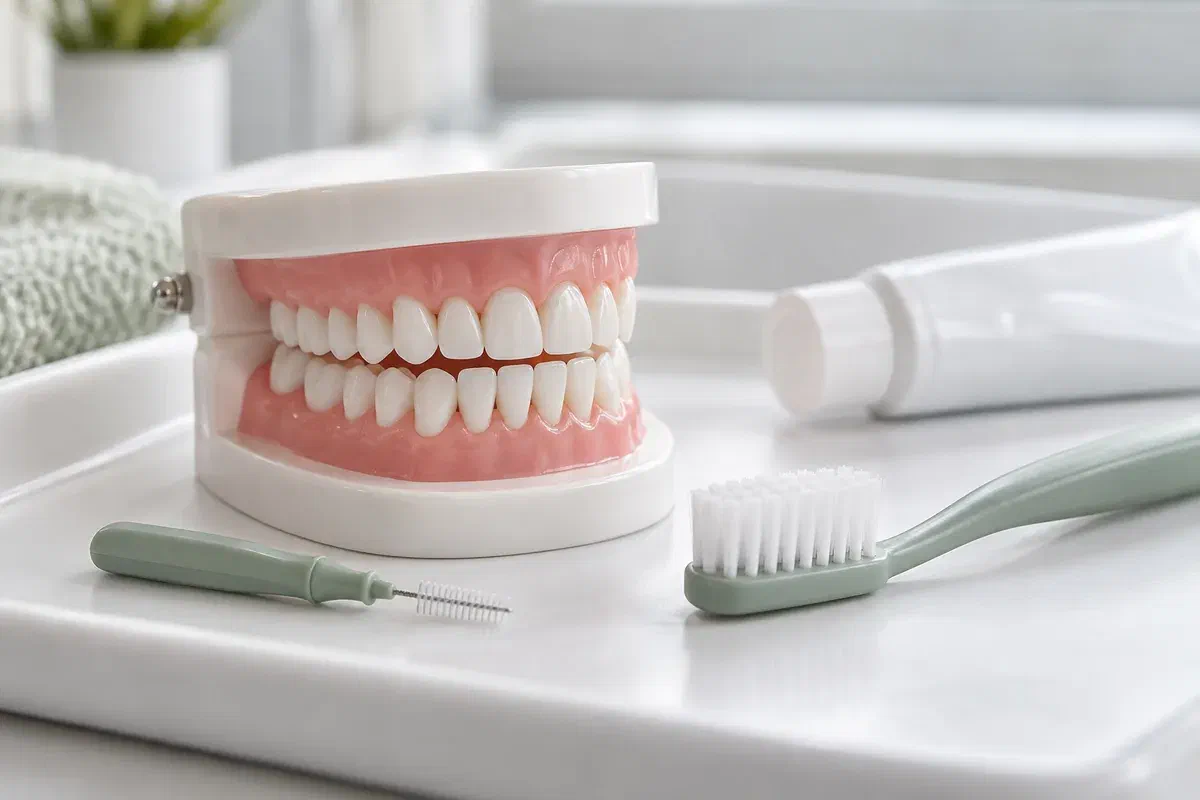
Illustrative dental discussion using a toothbrush and teaching model
General & Family Dentistry

Cavity Prevention in Milton

Busy weeks are when good habits slip first. Cavity prevention at our Milton practice looks at how your household actually eats, brushes and cleans between teeth, then adds fluoride care or sealants only where they serve a purpose.

Preventing decay in Milton

A routine built for real weeknights

Think about the hour between dinner and bedtime. Homework, lunches for tomorrow, a toddler who refuses the toothbrush. That is often where prevention succeeds or quietly falls apart. Stopping decay is less about one perfect product and more about cleaning well, getting suitable fluoride, keeping sugar to fewer moments in the day, and having your teeth examined so problems are found while they are small.

Tooth decay begins when bacteria in plaque use sugars to make acid, and that acid draws minerals out of enamel again and again. An early soft or chalky patch is not the same as a cavity that has become a hole. Only an examination can tell which you have, and whether the right response is home care, watching the area, or a filling. A good prevention plan never replaces repair for a tooth that already needs it.

Families in Milton often tell us their mornings and evenings look nothing like they did a year ago: a new baby, a new job, a child starting school. Let us know what changed. Mention a spot you struggle to reach, a mouth that feels dry, or a sweet drink that has crept into the afternoon. From there we can suggest small, workable changes and explain why any professional care is offered.

Talk about your family’s prevention routine
Dental model, soft toothbrush, and interdental brush illustrating preventive care
Signs it is time to revisit

When the old plan stops fitting

There is no need to wait for an ache before raising prevention. Shifts in health, diet, schedule or dental work can all make your current routine worth a second look.

Another filling, again

If new cavities keep turning up, it is worth looking at the whole picture together rather than feeling judged. We can talk through recent decay, the places that are tricky to clean, and when sweet foods or drinks tend to happen. The goal is to find what is driving it, not simply to ask for more effort.

Your mouth often feels dry

Saliva rinses and protects teeth, so ongoing dryness deserves attention. Tell us about any medicines or medical care that started around the same time. Please keep taking prescribed medication as directed; the dental side and the medical side may need to be worked out with your physician.

One area always gets missed

Crowding, braces or other appliances, gum recession that exposes roots, or stiff hands can make an ordinary routine hard to carry out. Bring the brush and floss you use and show us the trouble spot. A better tool or technique often helps more than adding yet another product.

Cavities do not always hurt. Keep up with recommended checkups, and book sooner if you notice a new hole, a filling that has cracked or fallen out, or any symptoms. Toothpaste and rinses cannot rebuild a tooth that has lost its structure.

The aim of prevention

Fewer new cavities, with habits that last

Prevention is meant to lower the chance of fresh decay and, where appropriate, help teeth with early changes without drilling. Nobody can promise a mouth that never needs a filling. What a sound plan offers is a short list of priorities, the reasons behind each one, and a way of checking at later visits whether they are working.

Getting a filling or crown does not end the need for prevention. That repair fixes one damaged spot, while the rest of that tooth and its neighbours still live in the same conditions. Ask how your existing dental work changes your home routine, and which signs would be worth a call before your next scheduled checkup.

Patient information: NIDCR — the tooth decay process

Two or three priorities, not twenty

We begin with whatever matters most for your findings. That might be one corner you keep missing, an all-afternoon sipping habit, or a dry mouth. Knowing why each step is suggested makes it easier to work it into the day.

Hands-on help with tools

Ask us to demonstrate, and bring along anything that feels awkward to use. Brushes, floss, interdental cleaners and toothpaste should match your abilities and needs. A pricier tube or a stronger flavour does not on its own make prevention any more effective.

Catching changes early

Regular examinations let us recheck the teeth and follow up on anything we noted before. Ask which areas are being monitored and when they will be looked at again. Your recall interval should come from your own assessment rather than a one-size schedule.

How a prevention visit unfolds

From the exam chair to your kitchen counter

Start by telling us what you already do and where it tends to break down. Shift patterns, school runs, dexterity, product access and the cost of any recommendation are all fair topics.

  1. Look at the teeth and the story

    We examine your teeth and ask about past cavities, health changes, dryness and your everyday routine. X-rays may be suggested when there is a clinical reason. If something hurts right now, say so, so that it can be assessed on its own rather than folded into the prevention conversation.

  2. Find what raises your risk

    Topics can include how often sugar reaches your teeth, how thoroughly plaque is being removed, fluoride use and spots where plaque collects. We want to understand your circumstances, not pin everything on a single snack or a skipped night of brushing.

  3. Settle on steps you can manage

    Together we discuss home care, suitable products and whether in-office preventive care makes sense. Ask which recommendation comes first and how to use anything prescribed. Advice for children depends on their age and risk, so a parent’s instructions should not simply be passed down.

  4. Check in and fine-tune

    At later appointments we look for new findings and ask how the routine is going. New medicines, a health change or dental treatment can shift the plan. If something is uncomfortable, too costly or hard to stick with, tell us so other options can be considered.

Day to day at home

Small habits, done every day

Home care pays off when it reaches the surfaces at risk and happens reliably. Ask for guidance that suits your age, whether you can spit out toothpaste, and any medical or swallowing concerns.

Brushing plus between-teeth cleaning

For adults, two brushings a day with fluoride toothpaste and daily cleaning between the teeth are the core of home care. Choose a method and tools you can actually handle. Mouthwash is not a stand-in for brushing, and a brush on its own can leave the gaps between teeth poorly cleaned.

Count the sugar moments

Grazing on sweet snacks or sipping sweet drinks can bathe teeth in acid for much of the day. Consider grouping these with meals and reaching for plain water in between where that suits you. The idea is a pattern you can live with that supports overall nutrition, not guilt over the occasional dessert.

Follow directions for extra products

When a higher-strength toothpaste, a rinse or another product is suggested, use it exactly as instructed and store it where small children cannot get at it. Check with us before layering several products. Extra fluoride is not automatically better for everyone.

Patient information: Canadian Dental Association — oral health basics · NIDCR — oral hygiene

Preventive tools we may discuss

Each measure has a specific job

Your examination and risk discussion decide which measures make sense. Ask what each one is expected to do, what it cannot do, and how it fits alongside your home routine.

Where prevention starts

Home care shaped to you

Technique, a suitable fluoride toothpaste and realistic food and drink choices come first. Some people benefit from adapted tools or a helper at the sink. Talk openly about obstacles so the plan suits whoever is doing the brushing.

Extra protection when it is warranted

In-office fluoride

A professionally applied fluoride may be suggested based on age, risk and how the teeth look. Ask why it is recommended and how often it will be reconsidered. It adds to your home care; it does not take its place.

For particular chewing surfaces

Sealants on deep grooves

A sealant can shield suitable pits and grooves that a brush struggles to clean. Each tooth has to be checked for suitability, and the sealant is reviewed at later visits. It cannot cover every surface, and daily cleaning is still needed.

Patient information: Canadian Dental Association — appropriate fluoride use · NIDCR — sealants

Prevention questions from Milton families

Straight answers for everyday decisions

Ask anything about fluoride, food, or cavities that keep coming back. The best answers link general prevention advice to what we actually see in your mouth and the routine you can keep.

(905) 876-4488
Is it better to let my kids have a treat at once or spread it over the afternoon?
From a cavity point of view, fewer sugar exposures are generally easier on teeth than many small ones, so having a treat with a meal or in one sitting tends to be preferable to grazing. This is about timing rather than banning foods. We can talk through what is realistic for your household.
My toddler fights brushing. Does skipping some nights really matter?
Consistent brushing helps protect young teeth, and baby teeth can develop decay. Ask us for age-appropriate tips on toothpaste amount and positioning, which can make the routine less of a struggle. An occasional missed night is not a reason for panic, but a regular pattern is worth addressing.
Does a new cavity mean my brushing is a waste of time?
No. Brushing matters, but decay risk also depends on hard-to-reach spots, fluoride, how often sugar is eaten, saliva and existing dental work. A new cavity is a signal to revisit the plan with the dentist, including your technique, not proof that daily care is pointless.
Can a mouthwash take the place of flossing when evenings are rushed?
A rinse cannot physically remove plaque from between the teeth the way floss or an interdental brush can. If flossing feels impossible to fit in, tell us. A different tool or a different time of day may make between-teeth cleaning more manageable.
Once a sealant is on, can my child relax about brushing?
No. A sealant protects selected grooves on a suitable tooth, but not the smooth sides or the spaces between teeth. Your child still needs to brush with a fluoride toothpaste and clean the gaps between teeth, and the sealant itself should be checked at later visits.
We moved recently. Should the whole family book a prevention review?
A move often changes routines, snacks and schedules, so it can be a sensible moment to check in. Each person’s needs will differ with age and dental history. Calling our Bronte Street practice lets you discuss whether to book family members together or separately.
Book in Milton

Bring your routine, and your questions

Come to our Bronte Street practice to look at your teeth and the habits around them. Questions about cavities that keep returning, which products to buy, or a stubborn cleaning spot are all welcome. We will help you sort out priorities and any preventive care that suits you.

For pain, swelling or a broken tooth, please phone us. Online requests are for non-urgent appointments only.

Visit Milton Dental Clinic
Unit 1, 342 Bronte St. S, Milton, ON L9T 5B7
Get directions Clinic hours
Monday–Thursday
11am–7pm
Friday–Sunday
By appointment only

Areas we serve

  • Milton
  • Oakville
  • Mississauga
  • Georgetown
  • Halton Hills
  • Acton
  • Campbellville
  • Brampton
  • Burlington
  • Puslinch
  • Rockwood
  • Erin
  • Caledon
  • Etobicoke
  • Old Milton
  • Bronte Meadows
  • Timberlea
  • Dorset Park
  • Dempsey
  • Clarke
  • Beaty
  • Coates
  • Harrison
  • Scott
  • Willmott
  • Ford
  • Bowes
  • Cobden
  • Walker
  • Mountain View
  • Milton Heights
  • Hawthorne Village
  • Valley View
  • Fallingbrook
  • Nassagaweya
  • Trafalgar
  • Esquesing
  • Nelson
  • Brookville
  • Moffat
  • Glen Williams
  • Norval
  • Limehouse
  • Stewarttown
  • Ashgrove
  • Hornby
  • Silver Creek
  • Speyside
  • Scotch Block
  • North Oakville
  • River Oaks
  • Glen Abbey
  • West Oak Trails
  • Palermo
  • Bronte Creek
  • College Park
  • Joshua Creek
  • Uptown Core
  • Preserve
  • Iroquois Ridge
  • Lisgar
  • Meadowvale
  • Meadowvale Village
  • Churchill Meadows
  • Erin Mills
  • Central Erin Mills
  • Streetsville
  • East Credit
  • Creditview
  • Heartland
  • Sheridan
  • Mount Pleasant
  • Credit Valley
  • Huttonville
  • Churchville
  • Springbrook
  • Northwest Brampton
  • Bram West
  • Fletcher's Meadow
  • Fletcher's Creek South
  • Alton Village
  • Orchard
  • Millcroft
  • Headon Forest
  • Tansley
  • Brant Hills
  • Tyandaga
  • Kilbride
  • Lowville
  • Aberfoyle
  • Morriston
  • Arkell
  • Hillsburgh
  • Freelton
  • Carlisle
  • Waterdown
  • Flamborough
  • Mountsberg

How can we help?

Milton Dental Clinic

Have a question about your smile? Choose the option that works best for you.

For urgent dental concerns, please call.
Messages are reviewed during clinic hours.