

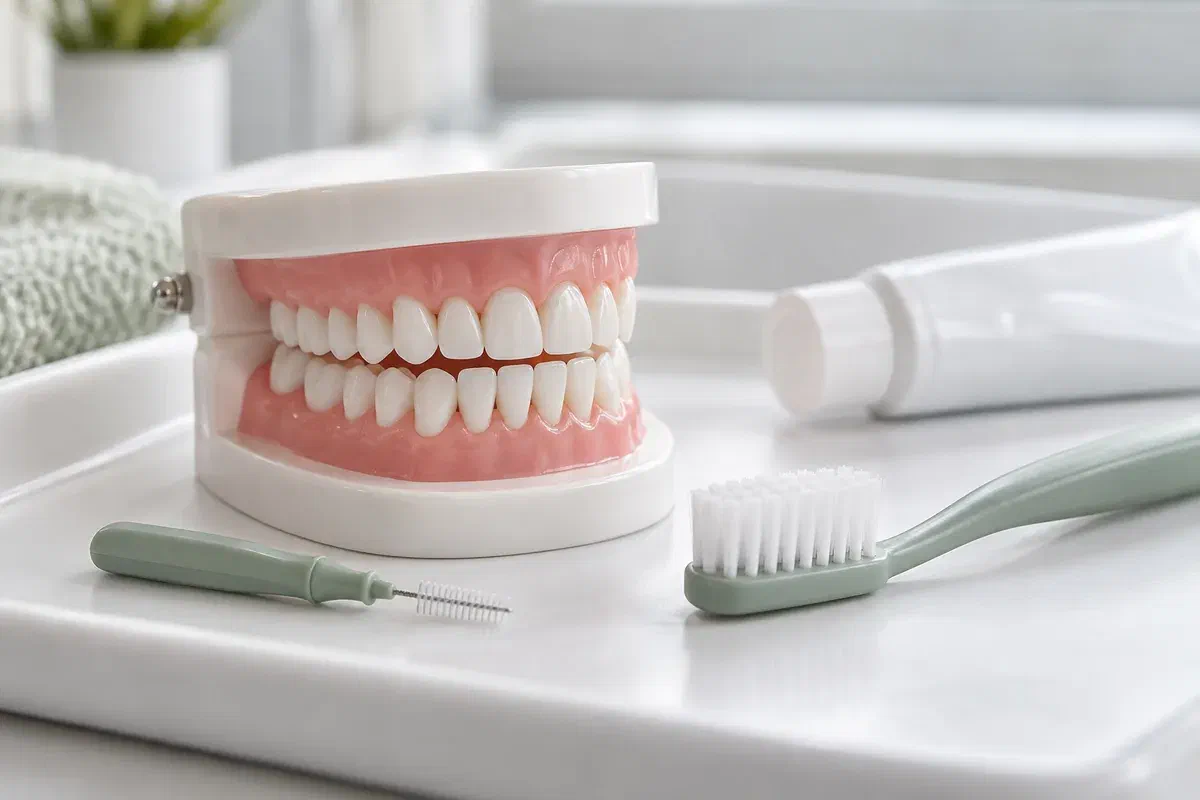
Illustrative dental discussion using a toothbrush and teaching model
General & Family Dentistry

Cavity Prevention in Oakville

A sweetened latte at nine, a juice at eleven, a mint at three: decay risk often hides in the rhythm of the day. If you are coming from Oakville, we can review those patterns alongside cleaning, fluoride and sealants.

For Oakville teeth

The cup on your desk

Plenty of careful brushers are surprised by a new cavity. Often the missing piece is timing. A drink with sugar in it, sipped slowly over a morning, gives plaque bacteria fuel again and again, and each visit to the cup restarts an acid attack. Prevention looks at that pattern together with how well you clean, the fluoride you use, your saliva, and what an examination shows.

Here is what is happening at the surface. Acid made by plaque pulls minerals out of enamel; saliva and fluoride help return them during the quiet periods. When the quiet periods are short, the balance tips toward loss. A chalky early patch is a different situation from a cavity that has broken through, and only an exam can tell them apart and decide whether prevention, monitoring or a filling is right. Prevention is not a reason to put off repair.

Commuters from Oakville sometimes describe days spent mostly in the car or at a desk, with a travel mug never far away. Others have teenagers with sports drinks in every bag. Describe what a typical day looks like for you. We can suggest one or two changes worth trying and explain what any in-clinic preventive care would add.

Review your daily habits with us
Dental model, soft toothbrush, and interdental brush illustrating preventive care
Worth a conversation

Three signals your routine needs a look

You can talk about prevention long before anything hurts. Changes in your work pattern, diet, health or dental work are all good reasons to check that home care still matches your mouth.

Fillings that keep piling up

A run of new fillings calls for stepping back and looking at the bigger pattern. Nobody is assigning blame. We can review recent decay, the surfaces that are hard to clean, and when sweet drinks and snacks happen, so the real drivers become clearer.

That parched feeling

Because saliva shields teeth, a mouth that often feels dry can raise risk. Tell us about medicines, treatments or other changes that started around the same time. Keep taking prescribed medication unless your doctor says otherwise; the dental and medical sides may need joint advice.

A corner the brush never reaches

Overlapping teeth, aligners or retainers, exposed roots, or reduced hand strength can make normal brushing fall short. Bring your tools and point out the difficult area. Changing how you reach it may help more than buying another product.

A cavity can grow without any pain. Stay with your recommended checkups, and book earlier for a new hole, a chipped or lost filling, or symptoms of any kind. Prevention products are not able to repair a tooth that has lost structure.

What you can expect to gain

Lower risk, clearer priorities

Good prevention lowers the likelihood of new decay and, in suitable cases, supports teeth with early changes without a filling. It does not come with a guarantee. The value lies in knowing which few things matter for your mouth, why they matter, and how we will tell at your next visit whether they made a difference.

A filling or crown solves one problem area, yet the remaining tooth and everything around it are still exposed to the same habits and saliva. Ask how your existing restorations should change the way you clean, and what changes would be worth phoning about before your next scheduled examination.

Patient information: NIDCR — the tooth decay process

One habit at a time

We pick the change that fits your findings best. It could be moving that sweet coffee to mealtimes, cleaning one tight contact properly, or looking into dryness. Understanding why it matters helps you decide how to fit it into your day.

Product advice without the hype

Bring the toothpaste, brush and floss you use, and ask for a quick demonstration. The right tools depend on your needs and abilities. Premium packaging, a higher price or an intense flavour are not signs of better protection.

Regular checks that mean something

At each examination we reassess the teeth and follow up on anything noted last time. Ask which spots are on watch and when they will be reviewed again. How often you come in should depend on your assessment, not on an assumption that everyone carries the same risk.

What happens at the appointment

Examination first, then a plan for your days

Walk us through your current routine and the points where it slips. Commuting, meetings, children’s activities, dexterity and the cost of products or treatment are all useful to mention.

  1. Assess teeth and background

    We look at your teeth and ask about earlier decay, health changes, dryness and how you care for your teeth each day. X-rays may be advised when clinically indicated. Mention any current symptoms so they are examined separately from the prevention discussion.

  2. Map your risk factors

    Together we look at how often sugar is in contact with your teeth, how well plaque is being removed, fluoride habits and areas that tend to trap plaque. We are building a picture of your situation, not hunting for a single culprit.

  3. Decide on workable steps

    We cover home care, suitable products and whether in-clinic preventive measures are worthwhile. Ask which step to tackle first and how any prescribed product should be used. Children’s guidance depends on age and risk, so it should be discussed separately from yours.

  4. Follow up and adjust

    Later visits look for new findings and check how the routine is going. Changes in health, medicines or dental treatment can reshape the plan. Let us know if a suggestion is uncomfortable, too expensive or unrealistic so we can explore alternatives.

Your part between appointments

Habits that protect, done consistently

Home care is effective when it reaches the surfaces at risk and happens day after day. Ask for advice that takes into account your age, your ability to spit, and any medical or swallowing concerns.

Twice-daily brushing, daily flossing

For adults, brushing morning and night with fluoride toothpaste and cleaning between teeth every day are the essentials. Use tools and a method you find manageable. Rinsing is not a replacement for brushing, and a brush alone usually leaves the contacts between teeth under-cleaned.

Fewer sips, fewer snacks

Every sweet sip or snack restarts the acid cycle, so frequency matters as much as amount. Try keeping sweetened drinks and treats to mealtimes and choosing plain water in between when that is suitable for you. The aim is a pattern that works with healthy eating, not a ban on enjoyment.

Special products, by the instructions

Should we recommend a stronger toothpaste, a rinse or another preventive product, use it as directed and store it out of young children’s reach. Ask before you combine products. Using more fluoride is not automatically correct for everyone.

Patient information: Canadian Dental Association — oral health basics · NIDCR — oral hygiene

Options we may recommend

Matched to purpose, not habit

Your examination and risk review guide which measures are worth using. Ask about the expected benefit, the limits, and how professional care links to your daily routine.

The everyday groundwork

Personalized home care

Technique, an appropriate fluoride toothpaste and sensible choices about drinks and snacks come first. Some people need adapted tools or support from someone else. Speak up about barriers so the plan works for whoever is carrying it out.

If added protection is needed

Professional fluoride treatment

An in-office fluoride application may be advised based on age, risk and tooth condition. Ask why it is being offered and how often it will be revisited. It supports, rather than replaces, what you do at home.

For chosen chewing surfaces

Sealants for deep fissures

Sealants can protect suitable pits and fissures that are hard to clean thoroughly. Each tooth is assessed first, and the sealant is checked over time. It leaves other surfaces uncovered and does not remove the need for daily cleaning.

Patient information: Canadian Dental Association — appropriate fluoride use · NIDCR — sealants

Oakville questions, answered

What people ask about drinks and decay

Bring your questions about fluoride, diet and recurring cavities. The useful answers tie general prevention advice to your examination and to a routine you can realistically keep.

(905) 876-4488
Is black coffee a problem for cavities, or only the sweetened kind?
Sugar is the main fuel for decay-causing bacteria, so the sugar or syrup added to a drink is the bigger concern for cavities. Coffee can still stain teeth. If you add sugar, sipping it over hours keeps teeth exposed for longer than finishing it with a meal.
Are sports drinks a decay risk for my teenager?
Many sports drinks contain sugar and acid, and sipping them repeatedly can expose teeth throughout practice or the school day. Plain water is usually enough for everyday activity. We can talk with your teen about when a sports drink is reasonable and how to limit contact with the teeth.
Why do I still get cavities when I brush twice a day?
Brushing is one part of the picture. Hard-to-reach spaces, fluoride exposure, sugar frequency, saliva and existing restorations all play a role. Review your technique and history with the dentist; a new cavity is a reason to adjust the plan, not to give up on brushing.
Does sugar-free gum help prevent cavities?
Chewing sugar-free gum after eating can encourage saliva flow, which helps protect teeth. It is not a substitute for brushing with fluoride toothpaste or cleaning between teeth. If you have jaw discomfort, ask us before chewing gum regularly.
My early cavity was described as ‘watch.’ What does that mean?
It usually means an early change was seen that may be managed without a filling for now, with prevention and recheck at a later visit. If the area progresses to a hole, it will need treatment. Ask which tooth is being watched and what you can do to help it.
Should our whole family be on prescription toothpaste?
No. A stronger toothpaste is recommended for specific people based on age and risk. Ask whether one is indicated for you, how to use it, and keep it away from children. Sharing it with others in the household is not advised.
Coming from Oakville

Bring a typical day, and we’ll find the gaps

Book at our Bronte Street practice to review your teeth and the habits around them. Questions about repeat cavities, products or a hard-to-clean spot are welcome. We can agree on priorities and any preventive care that makes sense for your teeth.

Please call if pain, swelling or a broken tooth needs attention. Online requests are for appointments that are not urgent.

Visit Milton Dental Clinic
Unit 1, 342 Bronte St. S, Milton, ON L9T 5B7
Get directions Clinic hours
Monday–Thursday
11am–7pm
Friday–Sunday
By appointment only

Areas we serve

  • Milton
  • Oakville
  • Mississauga
  • Georgetown
  • Halton Hills
  • Acton
  • Campbellville
  • Brampton
  • Burlington
  • Puslinch
  • Rockwood
  • Erin
  • Caledon
  • Etobicoke
  • Old Milton
  • Bronte Meadows
  • Timberlea
  • Dorset Park
  • Dempsey
  • Clarke
  • Beaty
  • Coates
  • Harrison
  • Scott
  • Willmott
  • Ford
  • Bowes
  • Cobden
  • Walker
  • Mountain View
  • Milton Heights
  • Hawthorne Village
  • Valley View
  • Fallingbrook
  • Nassagaweya
  • Trafalgar
  • Esquesing
  • Nelson
  • Brookville
  • Moffat
  • Glen Williams
  • Norval
  • Limehouse
  • Stewarttown
  • Ashgrove
  • Hornby
  • Silver Creek
  • Speyside
  • Scotch Block
  • North Oakville
  • River Oaks
  • Glen Abbey
  • West Oak Trails
  • Palermo
  • Bronte Creek
  • College Park
  • Joshua Creek
  • Uptown Core
  • Preserve
  • Iroquois Ridge
  • Lisgar
  • Meadowvale
  • Meadowvale Village
  • Churchill Meadows
  • Erin Mills
  • Central Erin Mills
  • Streetsville
  • East Credit
  • Creditview
  • Heartland
  • Sheridan
  • Mount Pleasant
  • Credit Valley
  • Huttonville
  • Churchville
  • Springbrook
  • Northwest Brampton
  • Bram West
  • Fletcher's Meadow
  • Fletcher's Creek South
  • Alton Village
  • Orchard
  • Millcroft
  • Headon Forest
  • Tansley
  • Brant Hills
  • Tyandaga
  • Kilbride
  • Lowville
  • Aberfoyle
  • Morriston
  • Arkell
  • Hillsburgh
  • Freelton
  • Carlisle
  • Waterdown
  • Flamborough
  • Mountsberg

How can we help?

Milton Dental Clinic

Have a question about your smile? Choose the option that works best for you.

For urgent dental concerns, please call.
Messages are reviewed during clinic hours.