

Illustrative consultation about everyday habits and individual cavity risk
General & Family Dentistry

Cavity Risk Assessment in Brampton

Night shifts, rotating schedules and meals eaten whenever there is a gap can throw a dental routine off balance. A cavity risk assessment for people coming from Brampton looks at how your hours affect your teeth and what protection fits around them.

Teeth on an unusual clock

Your shifts change. Your teeth still need a rhythm.

When your day starts at 6 p.m. one week and 6 a.m. the next, ordinary advice like brush before bed can be hard to apply. Which bed? Meals turn into snacks, a sweet drink keeps you alert on a long stretch, and by the end of a shift cleaning can feel like one task too many. These are the kinds of details a cavity risk assessment is designed to take into account.

The dentist looks at your history of decay, what the examination finds now, saliva, fluoride and the practical side of keeping teeth clean. From there, the factors that may be raising your risk are set against the habits already protecting you. The aim is to understand that balance, not to predict exactly which tooth will cause trouble.

There is no lecture here. Shift work is a reality for a lot of people and their families. Tell us how your week actually runs, where cleaning gets squeezed and what you snack on to stay awake, and we can agree a short list of priorities that works around your rota.

Plan prevention around your schedule
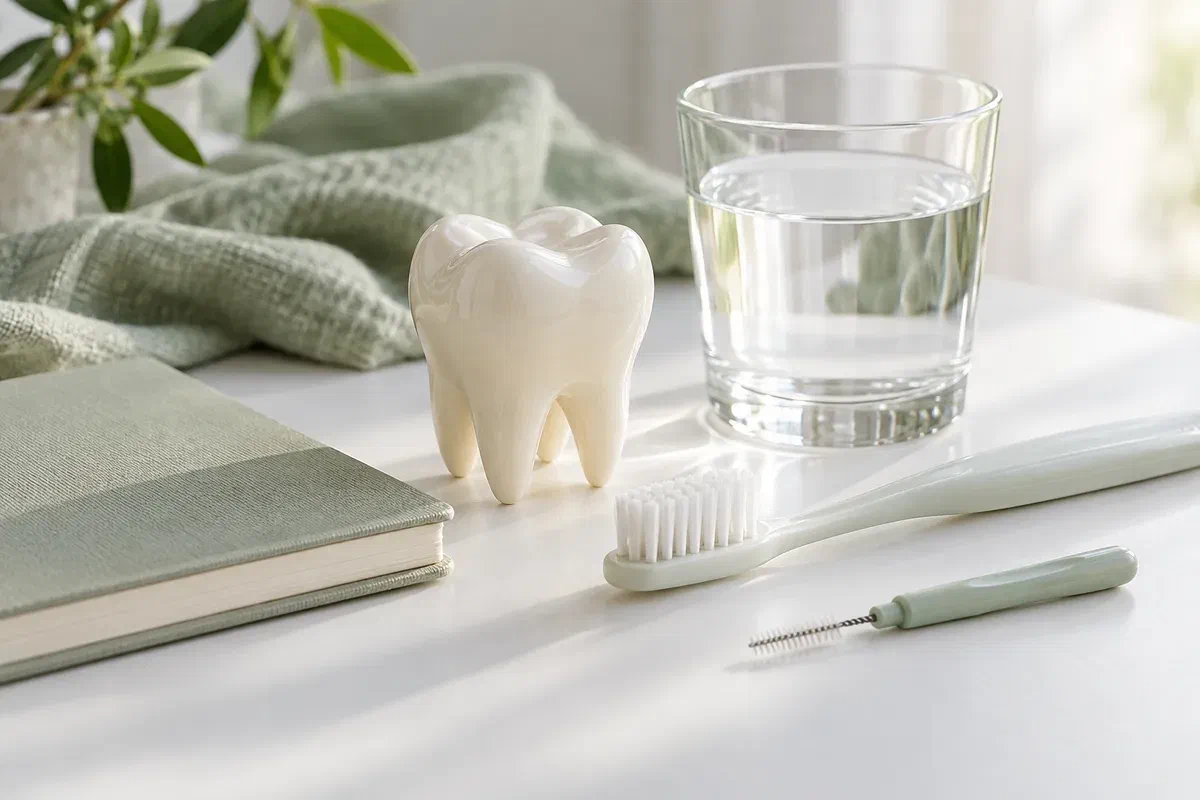
Dental model, cleaning aids, water, and a notebook illustrating prevention planning
When it is worth checking in

Signs your routine is under strain

Irregular hours often show up in the mouth before anywhere else. Many people commuting from Brampton for care mention one of these situations.

Cavities that started with a new job

New decay that follows a change in hours deserves a broader look. Share when earlier fillings were placed and whether they were for decay, a crack or wear, if you know. When problems began tells us more than how many there are.

Dryness after sleeping in the day

Daytime sleep, mouth breathing, caffeine and some medicines can leave the mouth dry. Note when you feel it and bring a current medication list. If something should be raised with your doctor or pharmacist, we can point it out.

Cleaning that keeps getting skipped

Exhaustion after a long shift, a uniform-and-go morning or caring for children between sleeps can all crowd out good habits. Be honest about which step gets dropped. A plan built for real life works better than one built for an easy week.

Planning ahead is different from treating a tooth that is already a problem. If you have new sensitivity, a hole you can feel or a filling that has broken, mention it so it is examined on its own.

Why it helps

Fewer, better-chosen steps

With the factors laid out, prevention stops being a vague list. The assessment can inform decisions about extra fluoride, sealants, monitoring and when to return, while accepting that some things remain uncertain. Ask which finding counts most for you, and what would shift the advice if it improved.

Think of the result as the start of a working plan. You should hear what already helps, where more protection could be worthwhile and how the team will judge progress. When your shift pattern or health changes, the plan can be revisited.

Patient information: American Dental Association — caries risk assessment and management

Recent findings, weighed fairly

Fillings from years back are background. What drives today's decisions is what the dentist sees now and what has changed since your hours did. If a spot is mentioned, find out which of three paths it is on: watch it, protect it, or fix it.

A plan you can keep on night shifts

Maybe it is a fluoride toothpaste kept in your locker, or water instead of a sweet drink in the second half of a shift. Ask which change matters most and how to make it routine. Cost and convenience are fair to discuss.

Follow-ups that check progress

Agree what will be rechecked next time and why the interval suits you. A review can look for new spots, monitor earlier ones and see how the routine is holding up during different rotations.

The appointment

Talk, examine, explain, plan

You don't have to log every meal. A rough idea of your shift pattern and what you eat and drink at work is enough, along with any dental records you can find.

  1. Go over your history and hours

    We ask about past treatment, symptoms, medicines, dryness, when you eat and when you get to clean. If you know why a tooth was filled, say so. Records from another dentist can help when you are unsure.

  2. Examine teeth and fillings

    Next comes a close inspection of enamel, existing restorations, deep grooves and the places plaque likes to settle. Between-teeth surfaces are sometimes impossible to judge by eye, so an X-ray may be suggested where there is a clinical question to answer. Nobody gets images simply for being labelled higher risk.

  3. Explain what raises and lowers risk

    We talk about the findings that may increase risk and the habits that protect you. Ask what the assessment can and cannot show. A higher level is a signal to plan, not proof that decay will happen.

  4. Settle on steps and a review

    Together we choose what to do at home, whether any in-office prevention makes sense, and what happens with teeth that already have decay. It's a good moment to ask what things cost and exactly how a suggested product is used. Your next visit is timed to the findings, and it can move when your rota does.

Between shifts

Protection that travels with you

Advice is only useful if it survives a hard week. Let us know if a step is unclear, clashes with other health guidance or simply won't fit your rotation.

Anchor brushing to your main sleep

Brush with fluoride toothpaste before your longest sleep, whenever that falls, and clean between teeth as shown. If one area is always missed, ask about a different brush or aid rather than adding minutes.

Rethink the shift snacks

Where it applies, look at how often sweet drinks or snacks keep you going. Choosing one break for a treat rather than grazing all shift is a realistic option. Any change should still support good nutrition and medical advice.

Report changes

A move to permanent nights, a new prescription, dryness that won't settle or a medical procedure can all alter the picture, so let us know. Keep taking prescribed medicine unless your prescriber says otherwise. We revisit your risk whenever life shifts in a meaningful way.

Patient information: NIDCR — oral hygiene and additional preventive care · Canadian Dental Association — appropriate fluoride use

What may come next

Options tied to findings

Prevention and treatment can be planned together. Ask which steps are about future risk and which concern a tooth that needs care now.

When your defences are holding

Keep going, keep watching

Sometimes the honest answer is that your current habits are coping well, even with odd hours. Then the job is to carry on and recheck at sensible intervals. A low result is never a guarantee, so find out which warning signs justify an earlier call.

When certain factors need support

Add protection that fits

Where something specific stands out, the dentist may suggest in-office fluoride, sealing a deep groove, a higher-strength toothpaste or help for a dry mouth. You should hear why each is offered and how to use it. Nothing here should arrive as a take-it-all bundle.

When decay is present

Treat existing lesions

A cavity that has already formed is judged separately: how deep it goes and whether it seems to be progressing. Very early softening can sometimes be reversed or held with prevention, while larger lesions need repair. Overall risk feeds into these choices without dictating them.

Questions from Brampton

Shift work, energy drinks and other concerns

Ask us to explain the result simply. You should know the main factors, the planned steps and what will be checked next.

(905) 876-4488
Does working nights raise my risk of cavities?
Shift work itself doesn’t cause decay, but it often changes when you eat, drink, sleep and clean. Those changes can add up. The assessment looks at your actual pattern rather than assuming a problem.
Are energy drinks a concern for my teeth?
Many contain sugar and are acidic, and they are often sipped over long periods. Both can matter. Ask how your usual drinks fit into your plan and what alternatives might work for staying alert.
When should I brush if my sleep times keep changing?
A practical approach is to brush with fluoride toothpaste before your main sleep, whenever that is, plus once more at another point in your day. The dentist can help you pick anchor points for your rotation.
Is a risk assessment the same as a regular check-up?
They overlap. A check-up looks for current problems, while the risk assessment considers your chances of future decay. Both often happen at the same visit, and you may get prevention advice even without a new cavity.
Will my risk stay high if I keep working shifts?
Not necessarily. Risk can change as findings and habits change. Even with the same hours, adjustments to snacking, cleaning or fluoride may shift the plan over time.
Can my partner and I share one prevention plan?
Probably not exactly. Different teeth, history and health mean different needs, even under the same roof. Don’t share prescription products, and check before copying someone else’s review schedule.
Book from Brampton

Work your teeth into your rota

Pick a day that suits your rotation and come to our Bronte Street practice to talk about recent cavities, dryness or the toll irregular hours are taking. A list of your medicines and a photo of the toothpaste you use are helpful. You'll leave with a short plan you can actually follow.

Please phone about severe pain, swelling or a broken tooth. Online booking is for non-urgent requests.

Visit Milton Dental Clinic
Unit 1, 342 Bronte St. S, Milton, ON L9T 5B7
Get directions Clinic hours
Monday–Thursday
11am–7pm
Friday–Sunday
By appointment only

Areas we serve

  • Milton
  • Oakville
  • Mississauga
  • Georgetown
  • Halton Hills
  • Acton
  • Campbellville
  • Brampton
  • Burlington
  • Puslinch
  • Rockwood
  • Erin
  • Caledon
  • Etobicoke
  • Old Milton
  • Bronte Meadows
  • Timberlea
  • Dorset Park
  • Dempsey
  • Clarke
  • Beaty
  • Coates
  • Harrison
  • Scott
  • Willmott
  • Ford
  • Bowes
  • Cobden
  • Walker
  • Mountain View
  • Milton Heights
  • Hawthorne Village
  • Valley View
  • Fallingbrook
  • Nassagaweya
  • Trafalgar
  • Esquesing
  • Nelson
  • Brookville
  • Moffat
  • Glen Williams
  • Norval
  • Limehouse
  • Stewarttown
  • Ashgrove
  • Hornby
  • Silver Creek
  • Speyside
  • Scotch Block
  • North Oakville
  • River Oaks
  • Glen Abbey
  • West Oak Trails
  • Palermo
  • Bronte Creek
  • College Park
  • Joshua Creek
  • Uptown Core
  • Preserve
  • Iroquois Ridge
  • Lisgar
  • Meadowvale
  • Meadowvale Village
  • Churchill Meadows
  • Erin Mills
  • Central Erin Mills
  • Streetsville
  • East Credit
  • Creditview
  • Heartland
  • Sheridan
  • Mount Pleasant
  • Credit Valley
  • Huttonville
  • Churchville
  • Springbrook
  • Northwest Brampton
  • Bram West
  • Fletcher's Meadow
  • Fletcher's Creek South
  • Alton Village
  • Orchard
  • Millcroft
  • Headon Forest
  • Tansley
  • Brant Hills
  • Tyandaga
  • Kilbride
  • Lowville
  • Aberfoyle
  • Morriston
  • Arkell
  • Hillsburgh
  • Freelton
  • Carlisle
  • Waterdown
  • Flamborough
  • Mountsberg

How can we help?

Milton Dental Clinic

Have a question about your smile? Choose the option that works best for you.

For urgent dental concerns, please call.
Messages are reviewed during clinic hours.