

Illustrative consultation about everyday habits and individual cavity risk
General & Family Dentistry

Cavity Risk Assessment in Erin

Most of what protects your teeth happens at your own bathroom sink, not in the dental chair. For households in Erin and Hillsburgh, a cavity risk assessment turns that home routine into a short, reasoned plan you can keep up between visits.

The routine at home

Two minutes at night, every night

Think about the last thing you do before sleep. For many people the night-time brush is the most important of the day, because saliva slows during sleep and teeth have less natural protection for hours. Yet it is also the brush most likely to be rushed, skipped after a long day or done half-asleep with the wrong amount of toothpaste.

A cavity risk assessment looks at that home routine as part of a larger picture. Your history of decay, what the examination shows now, saliva, sugar frequency, fluoride and how easy your teeth are to reach all help explain why some mouths stay healthy and others keep developing new problems. The things you already do well count as much as the gaps.

This isn't a test you pass or fail, and it can't name the next tooth that will need a filling. Think of it as a practical review. Show us how you actually brush and clean between your teeth, tell us where it slips, and we'll suggest the changes most likely to make a difference.

Review your home routine with us
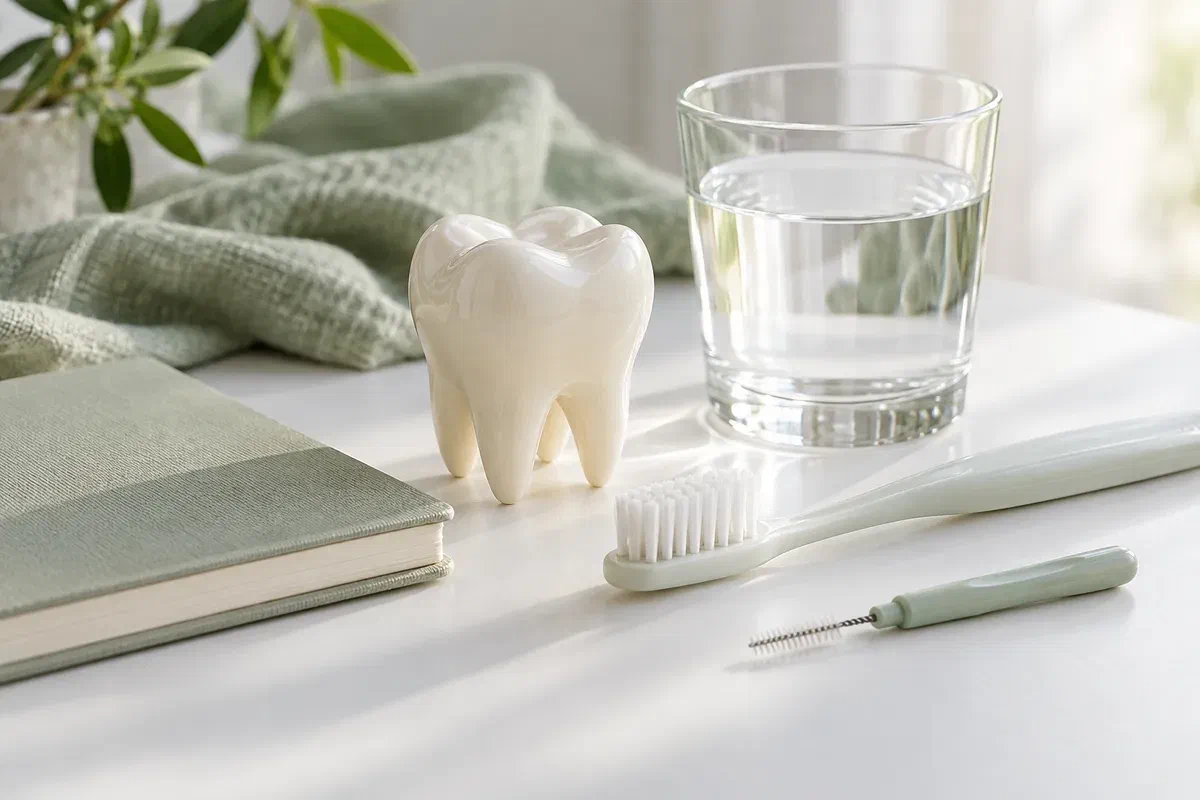
Dental model, cleaning aids, water, and a notebook illustrating prevention planning
Clues worth following

Where routines quietly break down

Erin households often find that small gaps, repeated daily, are behind a run of new decay. These are some of the common ones.

Cavities in the same spots

Decay that keeps appearing between back teeth or along the gumline can point to an area that cleaning isn't reaching. If you know why previous fillings were done and roughly when, mention it. The location and timing of new problems are both useful clues.

A mouth that feels drier

Less saliva, whether from medicines, treatment, a health condition or breathing through the mouth at night, can make teeth more vulnerable. List what you take and note when the dryness began. If it needs your doctor's attention, we can say so.

Steps that slip on busy days

Farm chores, long drives, young children, arthritis or braces can all crowd out between-teeth cleaning. Be specific about which step gets dropped and why. Advice that solves the real obstacle is worth more than a perfect routine on paper.

Planning future prevention is separate from treating a tooth that already aches. If you notice a new sore spot, food catching where it never did or a chipped filling, tell us so the tooth itself is checked.

Why it helps at home

Effort aimed where it pays off

A routine works best when you know what each part is for. The assessment shows which factors matter most for your teeth, so that time spent brushing, cleaning between teeth or adjusting snacks is aimed in the right place. It also guides professional prevention and review timing, though it can't remove all uncertainty.

After the review, you should be able to say what is already protecting your teeth, which one or two changes are worth making and how the next visit will check whether they are working. If your health or household changes, the routine can be adjusted.

Patient information: American Dental Association — caries risk assessment and management

Now versus then

Many fillings from decades ago don't necessarily mean decay is active now. The dentist focuses on current findings. For any spot discussed, ask whether it is being observed, protected or repaired, and what the deciding evidence is.

The one change that matters most

For one person it's cleaning between back teeth; for another, it's the bedtime glass of juice. Ask which single step would help you most and how to fit it in. Cost and preference are fair to raise.

Checking whether it worked

Agree on what will be looked at next time, such as gum bleeding between teeth or an early spot being monitored, and why the interval suits you. That gives your effort at home a clear measure.

At the appointment

Show us how you clean

Feel free to bring your toothbrush, floss or interdental brushes. Seeing what you use, and how, often tells us more than a description.

  1. Start with your day

    We'll ask what you eat and drink, when you clean, which products you use, whether your mouth feels dry and which medicines you take. Any memory of why past fillings were done helps. Old records can fill in the rest.

  2. Look at the evidence

    The dentist checks enamel, fillings, gums and the places plaque tends to stay, looking for early or active decay. X-rays may be recommended when surfaces between teeth can't be judged visually and the answer matters for your care.

  3. Connect habits to findings

    We link what we see to what you've described, explaining which factors may be raising risk and which are protecting you. Ask how certain the assessment is. A higher result is a reason to plan, not proof decay will follow.

  4. Agree on a routine and review

    Together we decide on home care steps, any in-office prevention and how existing problems will be handled, including costs and how to use products. The review date fits your findings and can change if needed.

Your routine, refined

Simple steps done every day

Consistency matters more than complexity. If any advice is vague, contradicts other health guidance or proves hard to keep up, call and we'll rethink it with you.

Make the night brush count

Brush with a fluoride toothpaste before bed and spit rather than rinsing heavily, so some fluoride stays on the teeth. Clean between teeth with the method you were shown. If a spot is always missed, ask about a different aid.

Keep evening snacks early

Where relevant, avoid sweet snacks or drinks after the night-time brush, and keep sweet occasions through the day to a minimum. Water is the best bedtime drink. Any change should fit your nutrition and medical needs.

Call when things change

New medicines, dryness that won't go away, medical treatment or a routine that has fallen apart are worth a call. Continue prescribed medicine unless your prescriber advises otherwise. The plan is revisited as needed.

Patient information: NIDCR — oral hygiene and additional preventive care · Canadian Dental Association — appropriate fluoride use

Where the plan goes

Home care, extra protection or treatment

Your plan might be mostly about what happens at the sink, or it might also include a tooth needing repair. We'll be clear about which advice is preventive and which is treatment.

When your routine is protecting you

Stick with what works

If your teeth are stable, keep your routine going and come back at an agreed interval. Lower risk is still some risk, so learn which signs, like bleeding between teeth or new sensitivity, should prompt a call sooner.

When one factor needs extra support

Add a targeted step

Professional fluoride, sealants for suitable grooves, a higher-fluoride toothpaste or help with dryness may be suggested depending on what was found. Each has a reason and clear instructions, explained individually.

When a lesion has formed

Address existing decay

Any decay already present is assessed for depth and activity. Early lesions may respond to better cleaning and fluoride, while deeper ones need a filling. Your risk level shapes the overall plan but doesn't decide each tooth.

Home care questions from Erin

Brushing, flossing and the small details

Ask us to explain any part of your plan in plain words, and to show you techniques if that would help.

(905) 876-4488
Should I rinse after brushing at night?
Many people are advised to spit out the excess toothpaste but not rinse heavily, so fluoride stays on the teeth longer. Ask whether this suits you, particularly if you use a prescription toothpaste.
Is flossing really necessary if I brush well?
A toothbrush doesn’t fully reach the surfaces where teeth touch, which is a common place for decay to start. Floss, interdental brushes or picks can help. The dentist can suggest which method works best for your teeth.
How much toothpaste should children use?
Guidance depends on age. Young children usually need only a very small smear or pea-sized amount, with an adult helping. Ask the dentist what is right for each child in your home.
Does a bedtime drink of milk or juice matter?
Drinks containing sugar after the last brush can stay on the teeth overnight, when saliva is low. Water is generally the safest choice after brushing. The dentist can discuss what is realistic for your household.
Does an exam today tell me my future risk?
An exam looks for current problems, while risk assessment considers how likely new decay is based on your history and circumstances. Both are useful, and they usually happen together.
If I improve my routine, will my risk change?
It may. As habits improve and findings settle, the plan can be updated at a later review. An earlier result is not permanent.
From Erin and Hillsburgh

Bring your toothbrush along

Make an appointment at our Bronte Street practice to look at your home routine, a recent cavity or changes in your health. Bring the brush, floss and paste you use, plus a list of medicines. We'll go over what matters and agree a routine you can keep.

For a severe toothache, swelling or a broken tooth, phone the clinic first. Online booking suits routine appointments.

Visit Milton Dental Clinic
Unit 1, 342 Bronte St. S, Milton, ON L9T 5B7
Get directions Clinic hours
Monday–Thursday
11am–7pm
Friday–Sunday
By appointment only

Areas we serve

  • Milton
  • Oakville
  • Mississauga
  • Georgetown
  • Halton Hills
  • Acton
  • Campbellville
  • Brampton
  • Burlington
  • Puslinch
  • Rockwood
  • Erin
  • Caledon
  • Etobicoke
  • Old Milton
  • Bronte Meadows
  • Timberlea
  • Dorset Park
  • Dempsey
  • Clarke
  • Beaty
  • Coates
  • Harrison
  • Scott
  • Willmott
  • Ford
  • Bowes
  • Cobden
  • Walker
  • Mountain View
  • Milton Heights
  • Hawthorne Village
  • Valley View
  • Fallingbrook
  • Nassagaweya
  • Trafalgar
  • Esquesing
  • Nelson
  • Brookville
  • Moffat
  • Glen Williams
  • Norval
  • Limehouse
  • Stewarttown
  • Ashgrove
  • Hornby
  • Silver Creek
  • Speyside
  • Scotch Block
  • North Oakville
  • River Oaks
  • Glen Abbey
  • West Oak Trails
  • Palermo
  • Bronte Creek
  • College Park
  • Joshua Creek
  • Uptown Core
  • Preserve
  • Iroquois Ridge
  • Lisgar
  • Meadowvale
  • Meadowvale Village
  • Churchill Meadows
  • Erin Mills
  • Central Erin Mills
  • Streetsville
  • East Credit
  • Creditview
  • Heartland
  • Sheridan
  • Mount Pleasant
  • Credit Valley
  • Huttonville
  • Churchville
  • Springbrook
  • Northwest Brampton
  • Bram West
  • Fletcher's Meadow
  • Fletcher's Creek South
  • Alton Village
  • Orchard
  • Millcroft
  • Headon Forest
  • Tansley
  • Brant Hills
  • Tyandaga
  • Kilbride
  • Lowville
  • Aberfoyle
  • Morriston
  • Arkell
  • Hillsburgh
  • Freelton
  • Carlisle
  • Waterdown
  • Flamborough
  • Mountsberg

How can we help?

Milton Dental Clinic

Have a question about your smile? Choose the option that works best for you.

For urgent dental concerns, please call.
Messages are reviewed during clinic hours.