

Illustrative consultation about everyday habits and individual cavity risk
General & Family Dentistry

Cavity Risk Assessment in Georgetown

Brackets, wires and clear aligners make teeth harder to keep clean, and white marks around them can be an early warning. For families in Georgetown, a cavity risk assessment helps protect enamel while orthodontic treatment does its work.

Braces, aligners and enamel

Straighter teeth shouldn’t come with new cavities

Every bracket creates new edges where plaque can sit, and aligners hold whatever is on the teeth against them for hours at a time. Teenagers in particular are juggling school, sports and social lives, so brushing around wires can become hurried. Chalky white patches near brackets are often the first sign that enamel is losing minerals.

A cavity risk assessment looks at this alongside everything else: previous decay, current findings, saliva, how often snacks and sweet drinks arrive, fluoride use and how well the appliance can be cleaned. It identifies what is pushing risk up and what is already helping, such as a good fluoride toothpaste or a teen who is careful at night.

The point isn't to scold anyone about their technique or to predict exactly where trouble will start. It is to give a teen, or an adult in treatment, a realistic routine with clear reasons behind it. Tell us how cleaning actually goes on a school night, and we'll focus on the changes that protect enamel most.

Protect enamel during orthodontics
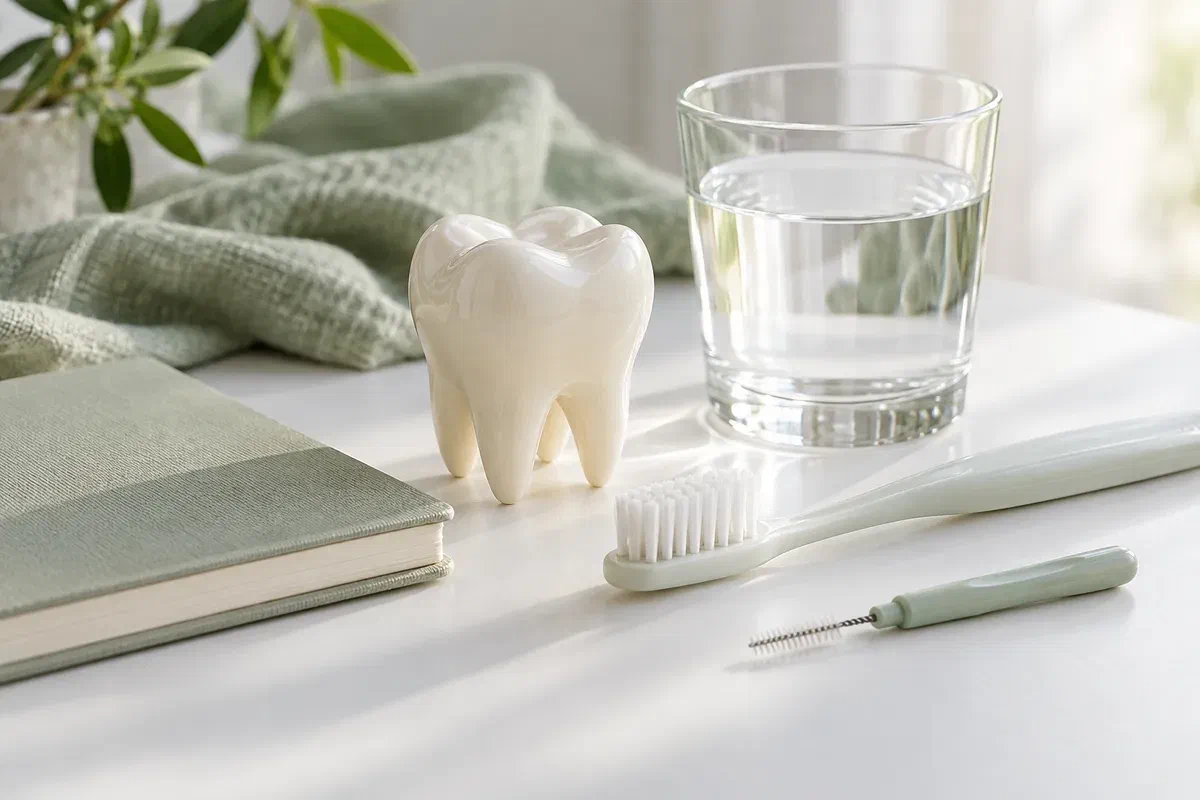
Dental model, cleaning aids, water, and a notebook illustrating prevention planning
Warning signs during treatment

What to watch for around brackets

Orthodontic treatment can last a year or more, and small problems can build quietly. Georgetown parents often notice these signs first.

White marks or new cavities

Chalky patches near brackets, or a new cavity during treatment, suggest that the cleaning or snacking pattern needs a closer look. If earlier fillings were for decay, a sports injury or wear, mention it. Recent changes tell us the most.

Dryness or mouth breathing

Some teens breathe through their mouths, especially at night or during sports, and some medicines reduce saliva. Mention any dryness and bring a medication list. If something needs a doctor's input, we can let you know.

Cleaning that is rushed or skipped

Early buses, practice schedules, aligners left in after snacks or simple fatigue can all get in the way. Be specific about what goes wrong. Advice is far more useful when it matches what really happens at home.

This review is about preventing future decay, not treating a tooth that already hurts. A broken bracket, a sore tooth or a visible hole should be mentioned so it can be checked properly.

How it helps

Finish treatment with healthy enamel

When the main risks are clear, prevention can be targeted rather than generic. The assessment may guide choices about fluoride, monitoring of white spots and how often to check in while braces are on. Some uncertainty always remains, so ask which factor is driving the advice and what would change if it improved.

A good outcome is a short plan a teenager can understand and follow. It should name what is already working, where extra protection makes sense and how progress will be judged at the next visit. When the appliance comes off, the plan can be reconsidered.

Patient information: American Dental Association — caries risk assessment and management

Spotting early changes

White spots may be early mineral loss rather than a cavity. The dentist distinguishes early changes from established decay. Ask whether each area is being monitored, protected with extra fluoride or needs repair.

Routines teenagers can manage

A single change, like brushing straight after the last snack of the night, may matter more than several new gadgets. Ask what will help most and how to make it a habit. Preferences and cost are fair to raise.

Coordinating with orthodontic care

We can agree what will be rechecked and when, keeping the orthodontist's schedule in mind. Reviews track new spots, earlier white marks and whether cleaning around the appliance is improving.

Inside the appointment

From brackets to a clear routine

Nobody needs a perfect record of meals. A rough idea of school-day habits, any orthodontic instructions and past dental records are plenty.

  1. Discuss history and habits

    We ask about past fillings, current symptoms, medicines, dryness, snacking and how cleaning around the appliance goes. If you know why a previous filling was done, let us know. The orthodontist's notes can help too.

  2. Examine around the appliance

    Teeth, gums, bracket edges and areas that trap plaque are checked for white spots and decay. Where surfaces can't be seen clearly, imaging may be advised if it would answer a clinical question. That decision is made individually.

  3. Explain the factors simply

    We describe what may be increasing risk and what is protective, in language a teen can follow. Questions about what the assessment can and cannot show are welcome. A higher risk level means planning, not certainty of decay.

  4. Agree a plan and check-in

    We discuss home care, any in-office prevention and handling of existing lesions, along with costs and product instructions. The next review is timed to the findings and can be adjusted during treatment.

At home with braces

Daily habits around wires and trays

Instructions need to make sense in a busy family bathroom. If something is unclear, conflicts with orthodontic advice or isn't working, let us know.

Clean above and below brackets

Brush with fluoride toothpaste, angling the brush above and below the brackets, and use the interdental brush or threader you were shown. For aligners, brush before putting them back in. Ask for a demonstration if an area keeps being missed.

Cut down on sticky grazing

Where relevant, keep sweet snacks and drinks to fewer occasions, and avoid sipping sweet drinks with aligners in. Water between meals helps. Changes should support a healthy diet and any medical guidance.

Report problems early

Let us know about new white spots, dryness, new medicines or difficulty keeping up with cleaning. Never stop prescribed medicine without advice. Risk is reviewed as circumstances change.

Patient information: NIDCR — oral hygiene and additional preventive care · Canadian Dental Association — appropriate fluoride use

Possible next steps

Protection matched to the findings

Some steps protect enamel during treatment; others deal with a tooth that already has decay. We'll explain the purpose of each.

When enamel is holding up

Carry on with the routine

If cleaning is going well and no new changes are seen, the routine can continue with regular reviews. Lower risk still deserves attention, especially as treatment continues and new wires or trays change where plaque collects. Ask which signs, such as fresh white marks or bleeding gums, should bring you in sooner.

When white spots or habits need attention

Boost protection

Fluoride varnish, a higher-fluoride toothpaste where appropriate, or other preventive measures may be suggested. Each has a reason and instructions. Additional steps are explained individually rather than added by default.

When a cavity has formed

Treat established decay

A cavity that has already formed gets its own assessment of how deep and how active it is. Very early mineral loss can often be helped to harden again with fluoride and better cleaning, while a true hole in the enamel usually needs a filling, sometimes timed with the orthodontist. Overall risk shapes the plan without deciding each tooth.

Orthodontic questions

What parents and teens ask about decay during treatment

Ask us to explain the result in everyday terms. Teens and parents should both know the main factors and what will be checked next.

(905) 876-4488
Do braces increase the chance of cavities?
They can, because brackets and wires create more places for plaque to collect. With good cleaning and fluoride, many people get through treatment without new decay. The assessment shows where extra care may be needed.
What are the white spots around my teen's brackets?
They are often areas where enamel has lost minerals, sometimes called white spot lesions. They can be an early sign of decay. Improved cleaning and fluoride may help prevent them progressing, and the dentist can advise.
Are clear aligners safer for teeth than braces?
Aligners are removable, which makes cleaning easier, but they can trap sugar against teeth if worn after eating or drinking without brushing. Either option can be managed well with the right habits.
Should my teen still see the dentist while seeing the orthodontist?
Yes. Orthodontists focus on moving teeth into position, while dental check-ups look for decay, gum inflammation and other problems. Both matter during treatment, and sharing information between the two offices helps everyone keep track of enamel health.
Can my teen use a fluoride mouthwash with braces?
Some people benefit from a fluoride rinse in addition to toothpaste, depending on age and risk. Ask the dentist whether it suits your teen and how to use it.
Will we need extra visits during orthodontic treatment?
Not automatically. Review timing depends on findings and risk. If white spots or new decay appear, closer monitoring may be suggested, and visits can be coordinated where practical for families coming from Georgetown.
Booking from Georgetown

Keep enamel healthy until the braces come off

Arrange a time at our Bronte Street practice when white spots appear, a cavity turns up mid-treatment or cleaning around the appliance has become a nightly battle. Bring the orthodontic care sheet, any medicines and the brushes and paste in use at home. We'll explain what matters and agree a routine that suits your teen.

Call the clinic for tooth pain, facial swelling or a fractured tooth. Use online booking for routine, non-urgent requests.

Visit Milton Dental Clinic
Unit 1, 342 Bronte St. S, Milton, ON L9T 5B7
Get directions Clinic hours
Monday–Thursday
11am–7pm
Friday–Sunday
By appointment only

Areas we serve

  • Milton
  • Oakville
  • Mississauga
  • Georgetown
  • Halton Hills
  • Acton
  • Campbellville
  • Brampton
  • Burlington
  • Puslinch
  • Rockwood
  • Erin
  • Caledon
  • Etobicoke
  • Old Milton
  • Bronte Meadows
  • Timberlea
  • Dorset Park
  • Dempsey
  • Clarke
  • Beaty
  • Coates
  • Harrison
  • Scott
  • Willmott
  • Ford
  • Bowes
  • Cobden
  • Walker
  • Mountain View
  • Milton Heights
  • Hawthorne Village
  • Valley View
  • Fallingbrook
  • Nassagaweya
  • Trafalgar
  • Esquesing
  • Nelson
  • Brookville
  • Moffat
  • Glen Williams
  • Norval
  • Limehouse
  • Stewarttown
  • Ashgrove
  • Hornby
  • Silver Creek
  • Speyside
  • Scotch Block
  • North Oakville
  • River Oaks
  • Glen Abbey
  • West Oak Trails
  • Palermo
  • Bronte Creek
  • College Park
  • Joshua Creek
  • Uptown Core
  • Preserve
  • Iroquois Ridge
  • Lisgar
  • Meadowvale
  • Meadowvale Village
  • Churchill Meadows
  • Erin Mills
  • Central Erin Mills
  • Streetsville
  • East Credit
  • Creditview
  • Heartland
  • Sheridan
  • Mount Pleasant
  • Credit Valley
  • Huttonville
  • Churchville
  • Springbrook
  • Northwest Brampton
  • Bram West
  • Fletcher's Meadow
  • Fletcher's Creek South
  • Alton Village
  • Orchard
  • Millcroft
  • Headon Forest
  • Tansley
  • Brant Hills
  • Tyandaga
  • Kilbride
  • Lowville
  • Aberfoyle
  • Morriston
  • Arkell
  • Hillsburgh
  • Freelton
  • Carlisle
  • Waterdown
  • Flamborough
  • Mountsberg

How can we help?

Milton Dental Clinic

Have a question about your smile? Choose the option that works best for you.

For urgent dental concerns, please call.
Messages are reviewed during clinic hours.