

Illustrative consultation about everyday habits and individual cavity risk
General & Family Dentistry

Cavity Risk Assessment in Oakville

Same kitchen, same toothpaste, yet one child keeps needing fillings and the other never does. For households coming from Oakville, a cavity risk assessment explains why teeth under one roof can behave so differently.

One household, different teeth

Why does one of us get cavities and the other doesn’t?

It is one of the most common puzzles parents and partners bring to the chair. Everyone eats roughly the same meals and uses the same brand of paste, yet the results at check-ups keep diverging. A cavity risk assessment looks at each person individually, combining their dental history, what the examination shows today and the conditions around their teeth.

Small differences add up. One person grazes on crackers through homework, another eats and is done. One has deep grooves in the back teeth, another has smoother surfaces. Saliva, orthodontic brackets, how thoroughly each person can brush unaided, and recent decay all shape the result. Protective habits count on the other side of the scale.

The point is not to rank family members or blame anyone's technique. It is to give each person advice tied to their own findings. Tell us what the household routine looks like and where it tends to slip, and we can suggest priorities for each mouth rather than one plan for everyone.

Plan individual cavity reviews
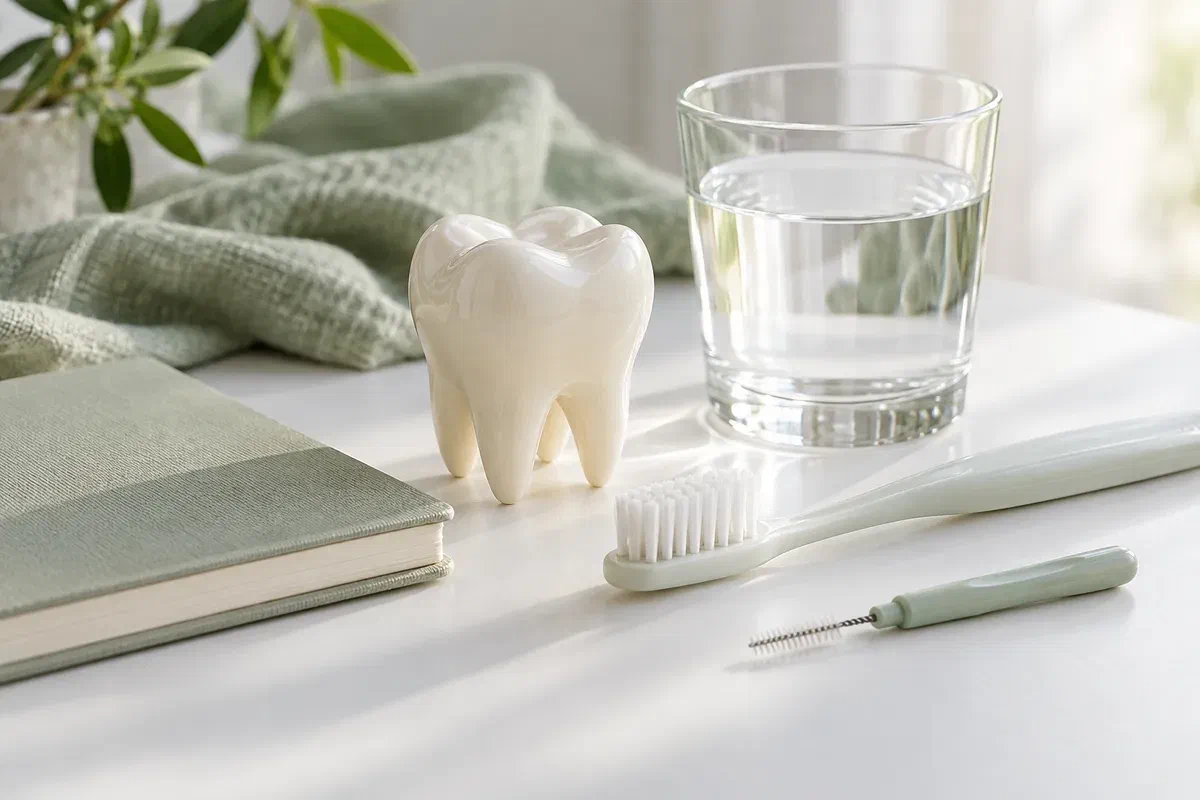
Dental model, cleaning aids, water, and a notebook illustrating prevention planning
Reasons to look more closely

When one set of teeth stands out

Different results at check-ups are a useful signal. Oakville households often notice these patterns first, and they are a good starting point for a more personal review.

Repeated fillings for one person

When one person keeps needing new work, it helps to look beyond the latest tooth. Earlier restorations may have been for decay, a fall or wear, and the reason matters. Timing and pattern tell more than the total number.

Health changes in one family member

Asthma inhalers, some medicines and certain conditions can affect saliva or the mouth's environment. Bring an up-to-date list of what each person takes. Anything that needs input from a physician or pharmacist can be noted.

Uneven ability to clean well

Younger children, teens with braces, a grandparent with limited grip or a partner on rotating shifts may each face a different barrier. Name the specific difficulty. Advice that fits the person is more likely to be followed.

Assessing future risk is separate from checking a tooth that already hurts. If anyone has new sensitivity, a visible hole or a broken filling, mention it so the current problem is looked at too.

Why individual plans help

Each person gets reasons, not a family rule

Sorting the factors person by person gives prevention a clearer target. It can guide choices about extra protection, monitoring and how soon to return, though no assessment removes every uncertainty. Ask which finding weighs most for each family member and how the advice would change if it improved.

By the end, everyone should leave with something specific: what is already helping, where added protection might be worthwhile and how progress will be judged at the next visit. Plans are not set in stone. They can be revisited as children grow, braces go on or come off, a teenager takes over their own brushing, or someone's health changes.

Patient information: American Dental Association — caries risk assessment and management

Past work versus present activity

History counts, but current findings and recent changes count more for planning. For any area of concern, ask whether it is being watched, needs a preventive measure or needs a repair, and what evidence separates those.

Priorities that suit the person

A seven-year-old and a parent will rarely need the same first step. Choose the most important change for each and work out how to make it stick. Preferences, budget and daily schedules belong in that discussion.

Follow-ups with a purpose

Agree what will be rechecked and why the interval fits. Reviews can look at new spots, earlier areas and whether the routine is manageable, rather than repeating identical advice to the whole household.

How we go about it

Listen, look, explain, agree

You do not need detailed food diaries for the family. Bring what you know, and mention if earlier dental or medical records could help.

  1. Hear about each person's history

    For each family member, we go over earlier fillings, anything that hurts, medicines, any dry feeling, snacking patterns and who brushes whose teeth. If you know why a particular filling was done, share it. Records from a former dentist can fill in gaps.

  2. Examine the teeth

    We look at enamel, grooves, restorations, plaque traps and any signs of disease. Imaging may be recommended for a clinical reason when some surfaces cannot be seen well enough. That decision is made individually, not because of a risk level.

  3. Talk through risk and protection

    We explain which findings may increase risk and which habits are working well. Parents often ask how firm the result is, and that's a good question to raise. A higher result signals the need for a plan, not certainty of future decay.

  4. Set a plan and return date

    We cover home care, professional prevention and how any existing lesions will be managed. Ask about costs and how to use suggested products. Timing for the next review should reflect the findings and can be adjusted later.

At home afterwards

Make the advice work around the household

Busy homes need instructions that are clear and realistic. Tell us if a recommendation is too vague, contradicts other care advice or simply won't fit the family timetable.

Supervise where it helps

Use fluoride toothpaste in the amount advised for each age and add between-teeth cleaning as shown. Younger children usually need hands-on help, and many older ones still benefit from a quick parent check at night. If one area keeps getting missed, point it out instead of just brushing longer.

Watch the grazing

For many families the frequency of snacks and sweet drinks matters as much as the amount. Keeping juice to mealtimes, for example, may be a practical change. Any adjustment should still support healthy eating and medical diet advice.

Tell us when things shift

Mention new medicines, ongoing dryness, braces, medical treatment or a routine that has fallen apart. Never stop a prescribed medicine without advice. Each person's risk is reconsidered as circumstances change.

Patient information: NIDCR — oral hygiene and additional preventive care · Canadian Dental Association — appropriate fluoride use

What the plan might include

Different findings, different next steps

One child may need only a check-up reminder while a sibling needs a filling. We'll say plainly which suggestions protect against tomorrow's decay and which fix today's.

When protection is already working

Continue and monitor

A routine that is succeeding can carry on with suitable check-ins. Low risk is still some risk, and new findings matter. Ask what should prompt an earlier visit and how uncertain areas will be watched.

When specific factors need help

Add focused protection

Fluoride varnish, sealants on suitable grooves, prescription products or dry-mouth support may be considered. Each has a reason and directions. Extra steps should be explained for that person, not applied to everyone at once.

When a lesion is found

Care for existing decay

Decay already present needs its own assessment of activity and depth. Some early areas can be managed without a filling; others need repair. Risk informs the overall plan but does not settle every tooth on its own.

Family questions

What parents and partners often want to know

Ask us to explain each person's result in everyday language. Knowing the main factors and next review point makes the plan easier to share at home.

(905) 876-4488
Can siblings really have very different cavity risk?
Yes. Tooth shape, grooves, saliva, snacking patterns, orthodontic appliances and how much help each child needs with brushing can differ a lot, even with identical routines. Each child’s plan reflects their own findings.
Are cavities passed between family members?
The bacteria involved in decay can be shared through close contact, such as sharing spoons. Diet, cleaning and fluoride still play the main roles. Keeping your own mouth healthy is one helpful step for the household.
At what age should a child have a cavity risk review?
Dental organisations generally recommend a first visit by around age one, and risk can be considered from then on. Ask the dentist how often your child’s situation should be reviewed as they grow.
Do sealants help children with deep grooves?
Sealants may be suggested for suitable back teeth with deep pits and grooves, depending on risk and findings. They are one protective option among several. Ask whether they are recommended for your child and why.
Should we all use the same prescription toothpaste?
No. Prescription products are chosen for a specific person and age. Some are not suitable for young children. Use only what has been recommended for each individual and follow the directions given.
Can we book the family together from Oakville?
Ask when you call. Where possible, we can try to arrange appointments close together, which some families find easier to plan. Mention who needs to be seen and any timing limits.
Cavity risk reviews for Oakville families

Bring the whole household’s questions

Reserve time at our Bronte Street practice to talk about repeated cavities, differences between family members or changes in someone's health. Bring medication lists and the products each person uses. We'll explain the important factors and a plan for each mouth.

If a child or adult in the family has a bad toothache, a swollen face or a broken tooth, ring the clinic. The booking form is meant for appointments that aren’t urgent.

Visit Milton Dental Clinic
Unit 1, 342 Bronte St. S, Milton, ON L9T 5B7
Get directions Clinic hours
Monday–Thursday
11am–7pm
Friday–Sunday
By appointment only

Areas we serve

  • Milton
  • Oakville
  • Mississauga
  • Georgetown
  • Halton Hills
  • Acton
  • Campbellville
  • Brampton
  • Burlington
  • Puslinch
  • Rockwood
  • Erin
  • Caledon
  • Etobicoke
  • Old Milton
  • Bronte Meadows
  • Timberlea
  • Dorset Park
  • Dempsey
  • Clarke
  • Beaty
  • Coates
  • Harrison
  • Scott
  • Willmott
  • Ford
  • Bowes
  • Cobden
  • Walker
  • Mountain View
  • Milton Heights
  • Hawthorne Village
  • Valley View
  • Fallingbrook
  • Nassagaweya
  • Trafalgar
  • Esquesing
  • Nelson
  • Brookville
  • Moffat
  • Glen Williams
  • Norval
  • Limehouse
  • Stewarttown
  • Ashgrove
  • Hornby
  • Silver Creek
  • Speyside
  • Scotch Block
  • North Oakville
  • River Oaks
  • Glen Abbey
  • West Oak Trails
  • Palermo
  • Bronte Creek
  • College Park
  • Joshua Creek
  • Uptown Core
  • Preserve
  • Iroquois Ridge
  • Lisgar
  • Meadowvale
  • Meadowvale Village
  • Churchill Meadows
  • Erin Mills
  • Central Erin Mills
  • Streetsville
  • East Credit
  • Creditview
  • Heartland
  • Sheridan
  • Mount Pleasant
  • Credit Valley
  • Huttonville
  • Churchville
  • Springbrook
  • Northwest Brampton
  • Bram West
  • Fletcher's Meadow
  • Fletcher's Creek South
  • Alton Village
  • Orchard
  • Millcroft
  • Headon Forest
  • Tansley
  • Brant Hills
  • Tyandaga
  • Kilbride
  • Lowville
  • Aberfoyle
  • Morriston
  • Arkell
  • Hillsburgh
  • Freelton
  • Carlisle
  • Waterdown
  • Flamborough
  • Mountsberg

How can we help?

Milton Dental Clinic

Have a question about your smile? Choose the option that works best for you.

For urgent dental concerns, please call.
Messages are reviewed during clinic hours.