Anatomy near a planned procedure
Implant or surgical planning may require knowing how much bone is present and where key structures are. Ask what is uncertain, how the result would change the plan and whether another approach would remain available.


It is tempting to think a full 3D scan would be the most thorough choice. For people in Rockwood, here is a balanced look at CBCT 3D dental scans: why more detail is not always better, when depth genuinely helps, and how findings are used.
Some people ask for a 3D scan because it sounds like the most complete way to check everything. It is an understandable instinct. Cone-beam computed tomography, CBCT, uses X-rays to create three-dimensional information about the teeth, jaw and nearby structures, and the images can look impressive. Yet a careful exam and the right flat X-ray often answer the question with less exposure.
Thoroughness, in imaging, means choosing the exam that fits a specific question. That might be how close a planned implant would sit to a nerve, or why a tooth problem remains unexplained. CBCT is also distinct from the optical scanner some offices use to record tooth surfaces for crowns. Whatever is proposed should come with its reason, the alternatives, its limitations and its radiation.
Contact Milton Dental Clinic if you are curious whether a scan would help in your situation, or if one has been recommended. Bring any referral and details of earlier images. Ask where scanning would take place, who interprets it and how a report reaches your dentist. Writing to us online opens the conversation; it is not a confirmed scan, nor a judgment that one fits.
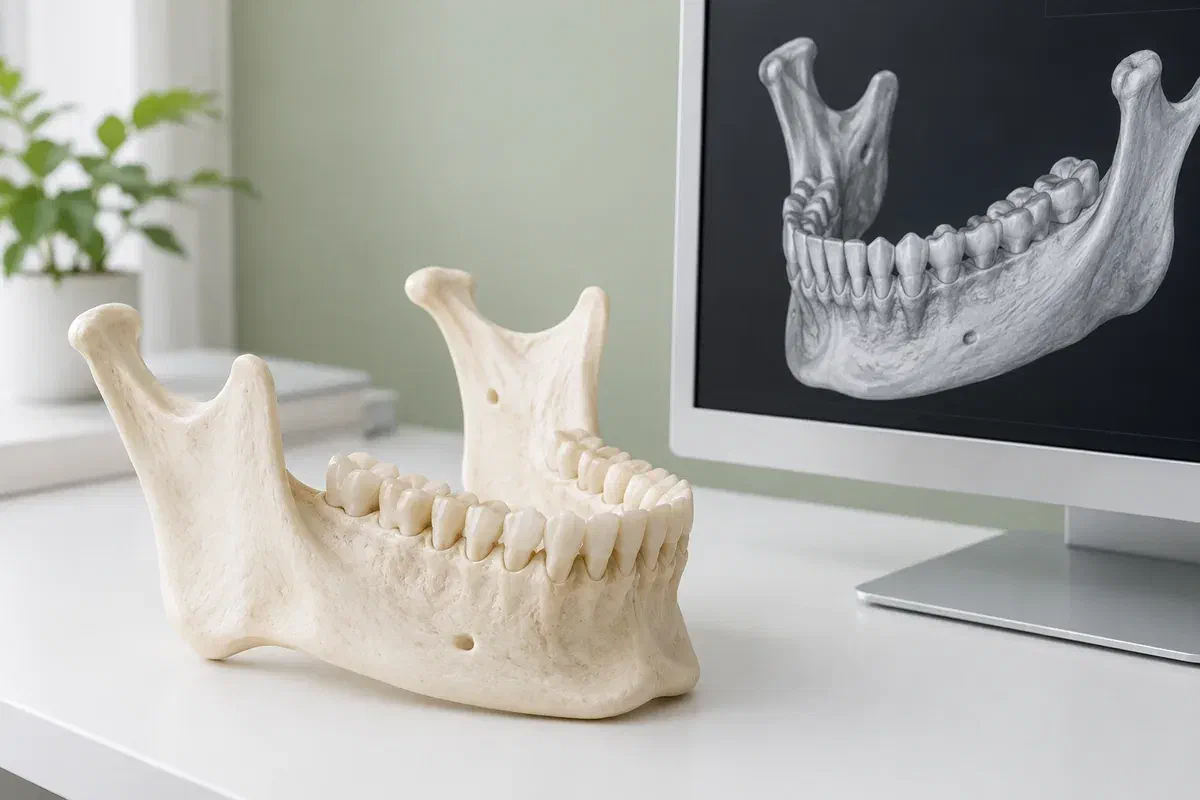
CBCT earns its place when a focused question needs it. The examples below are prompts for discussion and do not mean everyone with these concerns should have a scan.
Implant or surgical planning may require knowing how much bone is present and where key structures are. Ask what is uncertain, how the result would change the plan and whether another approach would remain available.
Certain root canal or dental concerns stay unclear after routine imaging. A scan may contribute, but diagnosis relies on the exam and your symptoms too, and the images do not always provide a definitive answer.
An adult tooth still buried in bone, or an odd shadow on an older film, may need mapping. Here a small field aimed at that area is often more appropriate than imaging the whole jaw.
A request for a scan “just to be safe” is worth discussing. Images already on file, or a lower-dose X-ray, may answer the real question.
A qualified clinician can view CBCT data in slices and from different directions. When the scan is chosen for the right reason, that may support diagnosis, treatment planning or follow-up evaluation. Without a clear reason, the same images add exposure without necessarily adding useful information.
CBCT uses ionizing radiation and generally involves more exposure than routine dental X-rays. A larger field of view captures more anatomy, which may increase the dose and create more to interpret. Settings and equipment also matter. The aim is the smallest exam that still gives adequate detail. It is never accurate to call the scan risk-free or quote one dose for every patient.
Patient information: FDA — dental cone-beam computed tomography
Ask what will be decided because of the scan. If the explanation centres on how advanced the equipment is, ask again what clinical choice depends on the result.
A bigger scan includes more structures that need to be examined. The reader considers your history, exam and other records. Ask who will review the full area and how other findings will be reported.
If the scan is done by a separate provider, check how it will be forwarded with your consent. A completed scan that reaches every treating clinician can prevent a second one.
Scanning may be its own appointment, apart from your dental visit and perhaps at another address. Before leaving Rockwood, pin down who is doing it, where, what it costs and who writes up the results.
The responsible clinician sets out why imaging is needed and how much of the jaw it should cover. Mention any past scans, because an existing one may make a new exam unnecessary or let it be smaller.
Read the provider’s instructions ahead of time. Flag a possible pregnancy, a tremor or stiffness, or any need for help getting into position. Earrings, glasses and partial dentures often come off before imaging.
A technologist settles you in, usually standing or seated, and the arm makes its pass around you while you keep steady. Each device is a little different. Mention discomfort beforehand so adjustments can be considered.
Someone qualified reads every part of the captured volume. Find out roughly when that reading will be finished and which clinician will sit down with you over it. Further tests or a revised plan could follow.
A scan gathers information, and nothing more. It becomes valuable when interpreted and acted on, especially when imaging takes place away from the office managing your care.
Check whether the next move is yours, booking a results talk, or the office’s, calling you. When treatment hangs on the findings, make sure they have actually been received before you treat the plan as settled.
Note the date, provider and how large an area was covered. Should another clinician propose imaging down the road, mention this exam so it can be looked at first and duplication avoided where possible.
Having been scanned, or being booked for one, does not cover you if a tooth gets sorer, the face swells or something new starts. Phone the treating team about any change so they can rethink how urgent things are.
Bring any referral, recommendation or questions you have. Talking them over helps clarify what imaging, if any, would answer your concern and who would arrange it.
Patient information: RCDSO — dental CT scanner requirements
Tell our Bronte Street team what you are hoping a scan would show. We can explain whether 3D imaging would add anything to your dental assessment, or whether a simpler route answers it. If a scan does go ahead, check the provider and time beforehand.
The online form is an enquiry, not an imaging booking. For a tooth or jaw that is sore and swelling, phone us.
