

Illustrative dental planning conversation with a patient preparing for joint surgery
General & Family Dentistry

Dental Care Before Joint-Replacement Surgery in Caledon

It may have been years since your last dental visit, and now a hip or knee replacement is booked. That’s fine. From Bolton or elsewhere in Caledon, start with a judgement-free assessment of what actually needs care before surgery.

Back to the dentist after a long gap

It’s been a while. That’s all right.

Plenty of adults let dental visits slide for a few years, especially when nothing hurts and life is busy. A joint replacement often brings it back into focus, because the surgical team asks about your teeth. You do not need to apologise or brace for a lecture. The aim of a first visit is simple: find out what is healthy, what is not, and what genuinely needs attention before the operation.

With no recent records, there may be more to review, and x-rays are often useful to get a full baseline. We will also need the type and date of surgery, your medicines and allergies, and the orthopaedic team’s request. Not every finding has to be treated before surgery. Active infection or painful decay usually should be, at the source rather than with antibiotics alone, while other work may be planned afterwards.

From Caledon, book as soon as the date is set, because a first examination after some time can lead to a few appointments, and healing needs room. Bring the hospital paperwork. Dr. Anjum will explain the findings clearly, separate what is pressing from what can wait, and share relevant information with your surgeons. A dental visit cannot promise an infection-free operation.

Arrange a returning-patient exam before surgery
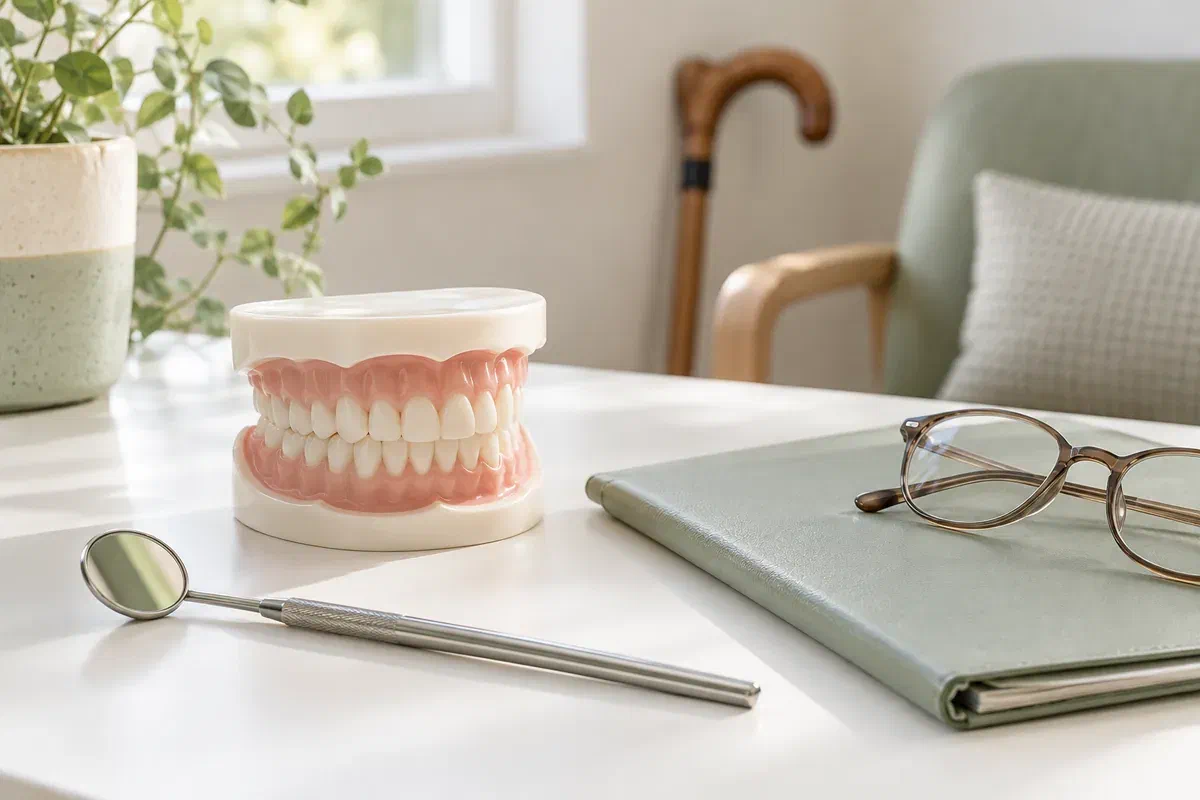
Dental teaching model and appointment folder illustrating coordinated pre-surgical care
Useful to know before your first visit

Tell us what you can

Share your surgery date and anything you have noticed, even small things. If the hospital moves the date, call us so treatment can be paced to match.

Teeth that hurt, swell or have broken

After a long gap, a broken filling or a tooth that aches now and then may have been put up with for months. Mention it. The dentist can find the cause and talk through care, and the surgical team can judge whether it changes their plans.

The hospital’s request

Bring the form and the office’s contact details. It may ask for an examination, records or x-rays. Since there may be no recent records, a full assessment is likely, so leave time for it.

Appointments you already have

If you have booked a cleaning or extraction elsewhere close to the surgery, tell us both dates. Healing may need to be planned around the operation. Let the clinicians decide on any change of timing.

If a dental problem starts just before surgery, call us and let the surgical team know. It is better to discuss it openly than to hope it settles.

What a fresh start offers

A baseline, a plan and fewer worries

A thorough first visit can uncover a problem needing care, set out how it could be treated, and give the surgical team what they need. It also re-establishes routine care, which pays off long after recovery. Keep the limits in mind: an exam informs planning but cannot settle how the joint surgery goes.

Coming back after years does not mean a long list of work. Your findings and health shape the plan. If many things are noted, ask which are active problems to treat before surgery and which are longer-term improvements to schedule once you are back on your feet.

Patient information: College of Dental Hygienists of Ontario — joint replacement advisory

A prioritised list

Ask the dentist to rank findings by urgency and explain the diagnosis behind each. That way you can focus before surgery on what matters and plan the rest calmly.

Timing that respects healing

If several treatments are needed, some may heal faster than others. With both teams aware of the plan and surgical date, the sequence can be arranged to suit you.

Routine care, restarted

Agree on when your next cleaning should be after recovery and how to manage home care while mobility is limited. Know whom to call about new problems.

What a first visit looks like

Getting to know your mouth again

We start with your concerns and the surgery ahead. A first exam can take a little longer, and messages to the hospital take time, so book early.

  1. Health history and surgical details

    We record the joint procedure, date, medicines, allergies and medical conditions. Mention any joint problems your surgeon has highlighted, and bring the hospital’s instructions.

  2. A complete examination

    The dentist checks every tooth, the gums, existing fillings or crowns, and soft tissues. A set of x-rays is often recommended after a long gap to see what can’t be seen directly. The goal is a clear baseline, not alarm.

  3. Priorities, options and fees

    We explain what we found, what needs care before surgery, treatment options, estimated fees and follow-up. If timing is tight, we may coordinate with the orthopaedic office. Our report states the findings and nothing we cannot support.

  4. Schedule and confirm

    We book any treatment in a sensible order, arrange reviews where needed, and confirm what has gone to the hospital. Keep both offices updated about symptoms or date changes.

Until the operation

Build the habit back up

Follow each clinician’s specific advice. If their instructions seem to clash, ask them to clarify before you change medicines or appointments.

Complete the priority treatment

Attend reviews that check healing after any procedure. Call if pain, swelling or bleeding increases or a site is not settling. A finished appointment does not always end every question about healing.

Restart a daily routine

Brush twice a day with a fluoride toothpaste and clean between teeth. Gums that bleed at first often improve with regular care. If mobility will be limited after surgery, arrange aids or help now.

Don’t self-medicate

Avoid taking leftover antibiotics or pausing a blood thinner because dental care has started. The need for any medicine change, including preventive antibiotics, is for your prescribing clinicians to decide.

Shaping your plan

Now, later, or together with your surgeon

What happens next depends on current disease, the planned operation and your medical background. It is worth asking how the plan weighs urgent care against healing and the surgery date.

When nothing active is found

Baseline recorded, care scheduled later

Sometimes the result is a clean bill for now, a report to the hospital, and routine care booked for after recovery. That does not rule out future problems, but extra treatment should never be added just to fill out a form.

When something active needs care

Priority treatment before surgery

Infection, painful decay or significant gum disease may need treatment and follow-up first. Dealing with the source matters, since antibiotics alone usually won’t resolve it. The surgical team should be told if preparation may be affected.

When medical history needs attention

Dentist and surgeon decide together

Earlier joint complications or complex health conditions may need a conversation between clinicians. Having a prosthetic joint does not, by itself, generally call for routine antibiotic premedication. Exceptions need a personal decision and clear prescribing directions.

Patient information: American Dental Association — antibiotics and prosthetic joint infection · ADA — shared decisions about dental care for joint-replacement patients

Caledon questions

Returning to the dentist before surgery

Ask about your first visit, priorities or timing. What another person needed before their operation may not match your mouth or your health.

(905) 876-4488
I haven’t seen a dentist in years. Will I need a lot of work before my hip surgery?
Not necessarily. Many people who return after a gap need less than they fear. The examination shows what is active and what is stable. Only problems that need attention before surgery have to be dealt with first.
Why are x-rays recommended at my first visit?
Without recent records, x-rays help reveal decay between teeth, infection at the roots and bone levels that can’t be seen by eye. The dentist will explain which images are suggested and why.
Can treatment be spread out so it isn’t overwhelming?
Yes. We can prioritise what is needed before surgery and plan the rest for later. Let us know if you prefer shorter appointments or fewer visits, and we will work out a schedule with you.
What if the dentist finds more than can be treated before my operation?
We will focus on the most important problems and explain the situation honestly. Your surgical team should be informed so they can decide whether timing needs to change. Please don’t hide findings to keep the date.
I’m nervous about the dentist. Can I still have a pre-surgical check?
Of course. Tell us about your worries when booking, and we will explain each step before we do it. You can ask to pause at any time. Many people find a first visit easier than they expected.
Do I need a referral from my surgeon to book?
No referral is needed to book a dental examination. Bring any request or form the surgical team gave you, so we can address what they asked for.
Pre-surgical dental visits for Caledon

A fresh start before your new joint.

Call our Bronte Street practice and mention that it has been a while since your last check-up. Share the surgery date, any concerns and the hospital’s request, and we will plan a first assessment and explain what follows.

If your operation is soon or something hurts, phoning is best. A web booking request doesn’t confirm an urgent visit or completed hospital forms.

Visit Milton Dental Clinic
Unit 1, 342 Bronte St. S, Milton, ON L9T 5B7
Get directions Clinic hours
Monday–Thursday
11am–7pm
Friday–Sunday
By appointment only

Areas we serve

  • Milton
  • Oakville
  • Mississauga
  • Georgetown
  • Halton Hills
  • Acton
  • Campbellville
  • Brampton
  • Burlington
  • Puslinch
  • Rockwood
  • Erin
  • Caledon
  • Etobicoke
  • Old Milton
  • Bronte Meadows
  • Timberlea
  • Dorset Park
  • Dempsey
  • Clarke
  • Beaty
  • Coates
  • Harrison
  • Scott
  • Willmott
  • Ford
  • Bowes
  • Cobden
  • Walker
  • Mountain View
  • Milton Heights
  • Hawthorne Village
  • Valley View
  • Fallingbrook
  • Nassagaweya
  • Trafalgar
  • Esquesing
  • Nelson
  • Brookville
  • Moffat
  • Glen Williams
  • Norval
  • Limehouse
  • Stewarttown
  • Ashgrove
  • Hornby
  • Silver Creek
  • Speyside
  • Scotch Block
  • North Oakville
  • River Oaks
  • Glen Abbey
  • West Oak Trails
  • Palermo
  • Bronte Creek
  • College Park
  • Joshua Creek
  • Uptown Core
  • Preserve
  • Iroquois Ridge
  • Lisgar
  • Meadowvale
  • Meadowvale Village
  • Churchill Meadows
  • Erin Mills
  • Central Erin Mills
  • Streetsville
  • East Credit
  • Creditview
  • Heartland
  • Sheridan
  • Mount Pleasant
  • Credit Valley
  • Huttonville
  • Churchville
  • Springbrook
  • Northwest Brampton
  • Bram West
  • Fletcher's Meadow
  • Fletcher's Creek South
  • Alton Village
  • Orchard
  • Millcroft
  • Headon Forest
  • Tansley
  • Brant Hills
  • Tyandaga
  • Kilbride
  • Lowville
  • Aberfoyle
  • Morriston
  • Arkell
  • Hillsburgh
  • Freelton
  • Carlisle
  • Waterdown
  • Flamborough
  • Mountsberg

How can we help?

Milton Dental Clinic

Have a question about your smile? Choose the option that works best for you.

For urgent dental concerns, please call.
Messages are reviewed during clinic hours.