

Illustrative dental planning conversation with a patient preparing for joint surgery
General & Family Dentistry

Dental Care Before Joint-Replacement Surgery in Erin

Before the operation, it helps to know when you will next see a dentist and what to do if a tooth acts up in between. From Erin or Hillsburgh, plan a pre-surgical review that maps out care before and after.

Before, during and after

A dental plan with both ends in view

Most advice about teeth and joint replacement focuses on the weeks before surgery. Fewer people ask what happens next: when your regular cleaning should be booked, whether anything changes at future appointments, and whom to call if a tooth starts hurting while you are still on crutches. A pre-surgical visit is a good moment to settle all of that, alongside checking for active problems now.

The present still comes first. We look for infection, decay or gum disease that should be treated before the operation and answer whatever the orthopaedic team has asked. To do that well we need the surgery type and date, your medicines and allergies, and any symptoms. An infected tooth calls for treatment of its cause, not just a prescription, and an extraction near the surgery date needs careful timing.

For households in Erin, where trips are often grouped, a single visit that covers today’s findings and tomorrow’s plan saves effort. Bring the hospital’s request. We will examine, explain what we find, share relevant details with your surgical team, and agree on a sensible point to return. No dental visit can guarantee an infection-free outcome, and sound older work seldom needs replacing first.

Plan dental care around your joint surgery
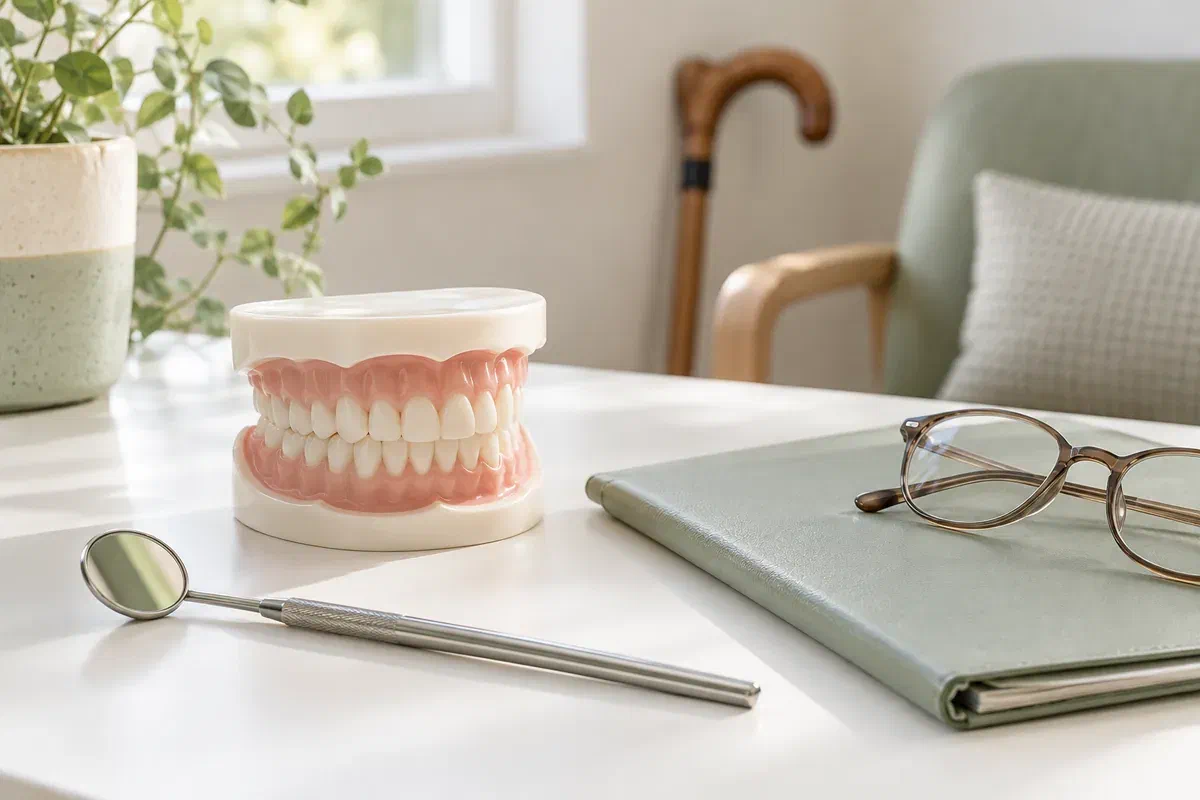
Dental teaching model and appointment folder illustrating coordinated pre-surgical care
Mention when you book

What we need to hear from you

Your surgery date and any symptoms help us plan the visit. If the hospital changes the date, call so planned care and your follow-up can be adjusted.

Anything painful, swollen or broken

Problems are easier to handle before surgery than during recovery. Tell us how long it has been there and how severe it is. Once the dentist identifies the cause, the surgical team can consider whether it affects their timeline.

The surgeon’s dental request

Bring the form and the office’s contact information. Requests range from an exam to records or x-rays. An answer must be based on an assessment, so allow some lead time.

Dental work you have planned

If an extraction or gum treatment is already booked near the operation, share both dates so healing is considered. Decide together with the clinicians whether anything should move.

Should a tooth flare up shortly before surgery, ring us and let the orthopaedic team know. Keeping it to yourself to save the date rarely works out.

Why plan past the operation

Fewer surprises in recovery

The visit can identify any oral problem that needs treatment, explain the options and provide what your surgical team asked for. Equally, it sets out a plan for routine dental care after your new joint. Keep expectations grounded: no examination can control how joint surgery turns out.

Plans vary from person to person. Your findings and health history guide what is recommended now and what can wait. With each suggestion, it is fair to ask whether it addresses current disease or belongs in routine care once you are recovered.

Patient information: College of Dental Hygienists of Ontario — joint replacement advisory

Now versus later, clearly labelled

Ask which tooth or gum area any recommendation involves and why. Knowing the diagnosis helps you separate care needed before surgery from work that suits your first post-op visit.

A realistic return date

Rather than a fixed rule, agree with both teams when routine dental care should resume, based on your procedure, recovery and the type of dental care involved.

A plan for in-between problems

Know what to do if a tooth hurts during rehabilitation: whom to call, what counts as urgent, and how to keep up home care while moving is limited.

The visit

Today’s exam, tomorrow’s plan

We begin with any concerns and the operation ahead. Messages between offices take time, so please contact us before the final days if you can.

  1. Gather the medical details

    We note the joint procedure and date, your medicines, allergies and medical history. Tell us about any joint infection or complication in the past and bring written instructions from the hospital.

  2. Check teeth and gums

    The dentist examines teeth, gums, restorations and any sore spots. X-rays may be recommended when they help answer a question. We aim for clear findings rather than treating every small imperfection as urgent.

  3. Explain findings, treatment and coordination

    If something needs care, you will hear the diagnosis, choices, estimated fees and follow-up. We may coordinate timing with the orthopaedic office. Our report sticks to what we assessed.

  4. Map out after surgery

    We agree on a tentative time for your next routine visit, explain home care during recovery, and confirm which details the hospital now has. Update both offices if symptoms or dates change.

Between now and recovery

Steady habits on both sides of surgery

Follow the advice each clinician gives. If instructions seem to differ, ask them to clarify before changing medicines or appointments.

Finish any dental follow-up before the operation

Some treatment needs a review before healing can be confirmed. Call if pain, swelling or bleeding gets worse or a site will not settle. One appointment does not always close every healing question.

Prepare home care for recovery

Brush twice a day with fluoride toothpaste and floss or use interdental brushes. Before surgery, put a stool by the sink and easy-grip tools within reach, or ask someone at home to help.

Ask before changing medicines

Do not start leftover antibiotics or stop blood thinners because of dental care, before or after surgery. If a change ever seems necessary, it is a call for the clinicians who prescribe and treat you, made with your full history in front of them.

What your plan might include

Before-surgery care, after-surgery care, or both

Options depend on current disease, the planned operation and your health. Ask how the plan balances necessary care with healing, coordination and your recovery.

When nothing active is found now

Routine care after recovery

Findings are recorded, the hospital answered and your next routine visit planned for after recovery. A clean result does not remove all future risk, but it never justifies treatment added only for a form.

When a problem needs care before surgery

Treatment first, routine care later

Infection, decay causing pain or gum disease may need treatment and a review before the operation. Treating the source matters more than antibiotics alone. The surgical team should hear if preparation may be affected.

When your history raises questions

Shared medical decisions

Earlier joint complications or a complex medical history may call for direct discussion between the dentist and surgeon. A prosthetic joint alone is generally not grounds for routine antibiotics before dental care. Any exception should be decided individually and written down clearly.

Patient information: American Dental Association — antibiotics and prosthetic joint infection · ADA — shared decisions about dental care for joint-replacement patients

Erin questions

What about after the new joint?

Ask about timing, recovery or future visits. What applied to someone else’s surgery may not fit your health or your dental needs.

(905) 876-4488
When can I book my first cleaning after a knee replacement?
Ask your surgical and dental teams before the operation, since it depends on your procedure, recovery and the type of care. There is no single timeline. We can pencil in a tentative date and adjust as recovery goes.
What counts as a dental emergency while I’m recovering?
Facial swelling, fever with dental pain, severe pain or trauma to a tooth should be assessed promptly. Swelling that affects breathing or swallowing needs emergency services. For anything else, call us and we can advise.
Will I need to tell every future dentist about my artificial joint?
Yes, include it in your medical history wherever you receive care, along with any complications. It helps the dentist make informed decisions, even though most routine care does not change because of a joint replacement.
Can I have dental x-rays after joint replacement surgery?
Yes. Dental x-rays are aimed at the teeth and jaws, and a replaced hip or knee does not change how they are taken. If you have any concerns about imaging, mention them and we can explain what each image is for and why it has been suggested. We only recommend x-rays when they help answer a clinical question.
If I can’t travel for a while after surgery, how long can routine care wait?
That depends on your oral health and history. Treating active problems beforehand gives more flexibility. Ask us at your visit how long a delay is reasonable for you, and keep up careful home care in the meantime.
Should my dental cleaning schedule change after I get a new joint?
Not necessarily. Your recall interval should reflect your gum and tooth health rather than the joint itself. Some people are seen every few months because of gum disease, others less often. We will review it with you based on what we find, and adjust it if your health or mobility changes.
Joint-surgery dental planning for Erin

Know what comes before and after.

Call our Bronte Street practice with the operation date, any concerns about your teeth or gums, and the surgeon’s request. We will arrange an assessment, treat what needs attention and help you plan care through recovery.

Please phone if surgery is near or a symptom needs quick care. Booking through the website works well for planning ahead, but it can’t promise an urgent slot or finished paperwork.

Visit Milton Dental Clinic
Unit 1, 342 Bronte St. S, Milton, ON L9T 5B7
Get directions Clinic hours
Monday–Thursday
11am–7pm
Friday–Sunday
By appointment only

Areas we serve

  • Milton
  • Oakville
  • Mississauga
  • Georgetown
  • Halton Hills
  • Acton
  • Campbellville
  • Brampton
  • Burlington
  • Puslinch
  • Rockwood
  • Erin
  • Caledon
  • Etobicoke
  • Old Milton
  • Bronte Meadows
  • Timberlea
  • Dorset Park
  • Dempsey
  • Clarke
  • Beaty
  • Coates
  • Harrison
  • Scott
  • Willmott
  • Ford
  • Bowes
  • Cobden
  • Walker
  • Mountain View
  • Milton Heights
  • Hawthorne Village
  • Valley View
  • Fallingbrook
  • Nassagaweya
  • Trafalgar
  • Esquesing
  • Nelson
  • Brookville
  • Moffat
  • Glen Williams
  • Norval
  • Limehouse
  • Stewarttown
  • Ashgrove
  • Hornby
  • Silver Creek
  • Speyside
  • Scotch Block
  • North Oakville
  • River Oaks
  • Glen Abbey
  • West Oak Trails
  • Palermo
  • Bronte Creek
  • College Park
  • Joshua Creek
  • Uptown Core
  • Preserve
  • Iroquois Ridge
  • Lisgar
  • Meadowvale
  • Meadowvale Village
  • Churchill Meadows
  • Erin Mills
  • Central Erin Mills
  • Streetsville
  • East Credit
  • Creditview
  • Heartland
  • Sheridan
  • Mount Pleasant
  • Credit Valley
  • Huttonville
  • Churchville
  • Springbrook
  • Northwest Brampton
  • Bram West
  • Fletcher's Meadow
  • Fletcher's Creek South
  • Alton Village
  • Orchard
  • Millcroft
  • Headon Forest
  • Tansley
  • Brant Hills
  • Tyandaga
  • Kilbride
  • Lowville
  • Aberfoyle
  • Morriston
  • Arkell
  • Hillsburgh
  • Freelton
  • Carlisle
  • Waterdown
  • Flamborough
  • Mountsberg

How can we help?

Milton Dental Clinic

Have a question about your smile? Choose the option that works best for you.

For urgent dental concerns, please call.
Messages are reviewed during clinic hours.