

Illustrative dental planning conversation with a patient preparing for joint surgery
General & Family Dentistry

Dental Care Before Joint-Replacement Surgery in Oakville

That tooth you meant to get looked at has a deadline now. If you’re in Oakville with a joint replacement on the calendar, an early dental assessment can find the cause and fit any treatment around the operation.

The tooth you’ve been putting off

A toothache with a deadline

It twinges with cold coffee, or the gum beside it gets puffy now and then, and you have been meaning to deal with it. Then the hospital calls with a date for your new hip or knee. Suddenly the question is whether that tooth matters. An assessment tells you what is going on and whether it needs treatment before surgery, after it, or not at all.

Getting the order right depends on details. We want to know the procedure and date, your health history and medications, and exactly what is happening in your mouth. A tooth that needs treatment is not solved by taking antibiotics on the side, and an extraction a few days before an operation needs more thought than a routine filling. None of this replaces your surgeon’s advice; it adds the dental piece.

From Oakville, especially the northern neighbourhoods, it is worth booking as soon as you have a date rather than in the last week. Bring any form the orthopaedic office gave you, since a request for an assessment is more useful than a vague mention of clearance. We will explain what we find, recommend only care that is needed, and share relevant information with your surgical team. No dental visit can guarantee an infection-free outcome.

Get a tooth checked before joint surgery
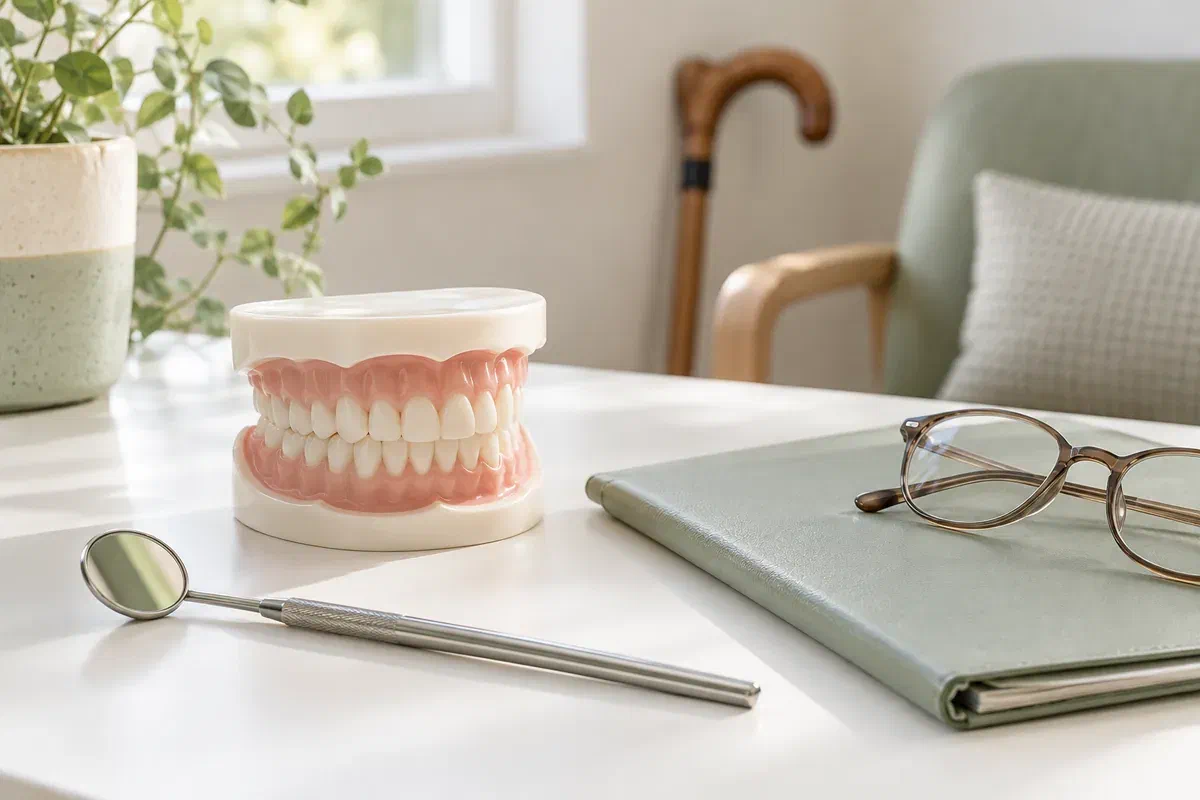
Dental teaching model and appointment folder illustrating coordinated pre-surgical care
Don’t sit on these

When should a symptom jump the queue?

Give us your surgery date when you call and describe what you are noticing. If the date moves, tell us, because the best time for dental care may move with it.

Ache, swelling or a broken tooth

Pushing an active problem past the operation can leave you dealing with it during rehabilitation. Tell us how long it has been going on and how bad it is. The dentist can find the cause and discuss options, and the surgical team can judge whether it affects their plans.

A form from the hospital

Bring the paperwork and the contact details of the office that issued it. Each one asks slightly different things, from a full exam to recent records. We will need to assess your mouth before answering, so a same-day signature is not realistic.

A procedure already booked

If you have an extraction, gum treatment or other dental work scheduled near the surgery, let us know both dates. Healing and timing may need discussion. Avoid moving either appointment on your own because of a general rule you found.

Something new flares up days before your operation? Call us and tell the surgical team. Hiding a symptom to avoid rescheduling can create bigger problems later.

The point of going early

Diagnosis first, then the calendar

Seeing the dentist before surgery can reveal a problem that needs care, lay out the ways to treat it, and supply information your medical team requested. It is also a chance to plan how routine dental visits will work while you heal. Those are sensible, modest goals. An exam cannot determine how your joint surgery will go.

Your plan will not look like anyone else’s, even a friend having the same operation. What the dentist finds, and your medical context, should shape it. When something is suggested, ask whether it treats a current problem or deals with timing, paperwork or upkeep that could come later.

Patient information: College of Dental Hygienists of Ontario — joint replacement advisory

The reason behind the tooth pain

Ask which tooth or part of the gum is involved and what the diagnosis is. Understanding the cause makes it easier to see what should happen before surgery and what can safely be scheduled afterwards.

Treatment that fits the surgery date

A filling, a root canal and an extraction each heal differently. When both teams know the planned dental work and the operation date, the timing can be matched to you instead of a blanket interval.

A clear contact during recovery

Ask how to keep up brushing and cleaning if moving is harder for a while, and when to book your next routine visit. Know who to call if a new dental problem appears during rehabilitation.

Step by step

What we cover at your visit

We start with the symptom that brought you in and the surgery you are preparing for. Messages between dental and surgical offices can take some time, so allow a cushion before the final days.

  1. Your operation and health history

    We ask about the joint being replaced, the date, your medicines, allergies and relevant conditions. Let us know about any previous joint infection or complication your surgeon has noted. Bring written instructions and a name we can contact with questions.

  2. A focused look at the problem area

    The dentist examines the sore tooth along with your other teeth, gums and existing restorations. X-rays may be suggested when they help pin down the cause. The goal is an accurate diagnosis, not treating every minor imperfection as urgent.

  3. Options, fees and coordination

    If treatment is needed, we explain the diagnosis, choices, estimated fees and follow-up. Timing may need to be agreed with the orthopaedic team. Any report reflects the actual findings and does not offer guarantees that cannot be supported.

  4. Wrap-up and follow-through

    After treatment, follow the instructions and return for any check that confirms healing. Make sure the surgical team has what they need and that open questions are answered. Update both offices if the date or your symptoms change.

Leading up to surgery

Keep both teams informed and your routine simple

Each clinician may give you specific advice. If instructions seem to pull in different directions, ask them to clarify before you change medicines or appointment dates.

Finish the dental follow-up

A treated tooth may need a check before its outcome can be documented. Let us know if pain, swelling or bleeding gets worse, or if the area is not settling. A completed procedure does not always mean healing is finished.

Keep brushing and cleaning daily

Use fluoride toothpaste twice a day and clean between your teeth as advised. If you expect to be less mobile after the operation, ask now about aids or help. Your home routine still counts while regular visits are planned around recovery.

Let clinicians manage medicines

Do not start antibiotics you have at home or stop a blood thinner because of a dental appointment. Any change, including preventive antibiotics, depends on your circumstances and should be decided by the professionals in charge of your care.

Where the exam can lead

Treat it, watch it, or talk it over

The right choice depends on current disease, the operation and your health. Ask how the plan balances necessary treatment with healing, communication and the surgery date.

When the tooth turns out to be healthy

Note it and keep up routine care

Sometimes the symptom has a minor cause and nothing active is found. The next step is recording findings, answering the hospital’s request and planning regular care. That does not erase all future risk, but it is no reason to add treatment for a form.

When a tooth or gum problem is confirmed

Treat the source

An infection, a painful tooth or another significant finding may need treatment and follow-up. Discuss the procedure that addresses the cause instead of counting on antibiotics alone. Tell the surgical team if it may affect preparation.

When medical details need sorting out

Dentist and surgeon confer

A previous joint complication or complex health history may need a direct conversation between clinicians. Routine antibiotics before dental care are generally not recommended only because someone has a prosthetic joint. Any exception calls for an individual decision with clear instructions.

Patient information: American Dental Association — antibiotics and prosthetic joint infection · ADA — shared decisions about dental care for joint-replacement patients

Oakville questions

Before you book, you might be wondering…

Ask us about symptoms, forms or medicines. Advice that fit someone else’s operation may not fit your history or the dental care you need.

(905) 876-4488
My tooth only hurts now and then. Is it worth checking before a knee replacement?
Yes. Intermittent pain can come from something minor or from a problem that is slowly getting worse. An examination, with x-rays if helpful, shows which it is. Then you can decide with the dentist whether to treat it before surgery or monitor it.
Would a root canal or an extraction be better before surgery?
It depends on the tooth, how much healthy structure remains, and your overall situation. Each option has different healing and follow-up. The dentist can explain both, and the surgical team can weigh in on timing. Neither should be chosen just because it seems faster.
Can I just take antibiotics for the sore tooth and deal with it after my operation?
Antibiotics alone do not usually remove the source of a dental infection. Treating the cause is generally needed. Talk to us about the problem and let your surgical team know, so the plan for both the tooth and the operation is made together.
How far ahead of my surgery should I book the dental visit?
As soon as you have a date, or sooner if something hurts. Early booking leaves room for diagnosis, any treatment and healing, and for information to reach the hospital. Leaving it to the last days can force rushed decisions.
What should I do if the hospital moves my surgery date?
Let us know. A new date can change when planned dental treatment makes sense, or whether a review needs repeating. Keep both offices up to date so nobody is working from an old schedule.
Once I have the new joint, do I need antibiotics for fillings?
Usually not. Guidance generally does not support routine antibiotics before dental procedures simply because a joint has been replaced. Some medical histories are handled individually. Confirm with your dentist and surgeon, and avoid using leftover prescriptions.
Pre-surgical dental care for Oakville

Have the tooth looked at while there’s time.

Call our Bronte Street practice with your surgery date, the symptom you’ve noticed and any hospital paperwork. We can book an assessment and explain the treatment, information and follow-up that suit your plan.

If surgery is soon or the pain is getting worse, please phone rather than booking online. An online request does not confirm urgent care or completed forms.

Visit Milton Dental Clinic
Unit 1, 342 Bronte St. S, Milton, ON L9T 5B7
Get directions Clinic hours
Monday–Thursday
11am–7pm
Friday–Sunday
By appointment only

Areas we serve

  • Milton
  • Oakville
  • Mississauga
  • Georgetown
  • Halton Hills
  • Acton
  • Campbellville
  • Brampton
  • Burlington
  • Puslinch
  • Rockwood
  • Erin
  • Caledon
  • Etobicoke
  • Old Milton
  • Bronte Meadows
  • Timberlea
  • Dorset Park
  • Dempsey
  • Clarke
  • Beaty
  • Coates
  • Harrison
  • Scott
  • Willmott
  • Ford
  • Bowes
  • Cobden
  • Walker
  • Mountain View
  • Milton Heights
  • Hawthorne Village
  • Valley View
  • Fallingbrook
  • Nassagaweya
  • Trafalgar
  • Esquesing
  • Nelson
  • Brookville
  • Moffat
  • Glen Williams
  • Norval
  • Limehouse
  • Stewarttown
  • Ashgrove
  • Hornby
  • Silver Creek
  • Speyside
  • Scotch Block
  • North Oakville
  • River Oaks
  • Glen Abbey
  • West Oak Trails
  • Palermo
  • Bronte Creek
  • College Park
  • Joshua Creek
  • Uptown Core
  • Preserve
  • Iroquois Ridge
  • Lisgar
  • Meadowvale
  • Meadowvale Village
  • Churchill Meadows
  • Erin Mills
  • Central Erin Mills
  • Streetsville
  • East Credit
  • Creditview
  • Heartland
  • Sheridan
  • Mount Pleasant
  • Credit Valley
  • Huttonville
  • Churchville
  • Springbrook
  • Northwest Brampton
  • Bram West
  • Fletcher's Meadow
  • Fletcher's Creek South
  • Alton Village
  • Orchard
  • Millcroft
  • Headon Forest
  • Tansley
  • Brant Hills
  • Tyandaga
  • Kilbride
  • Lowville
  • Aberfoyle
  • Morriston
  • Arkell
  • Hillsburgh
  • Freelton
  • Carlisle
  • Waterdown
  • Flamborough
  • Mountsberg

How can we help?

Milton Dental Clinic

Have a question about your smile? Choose the option that works best for you.

For urgent dental concerns, please call.
Messages are reviewed during clinic hours.