

Illustrative dental planning conversation with a patient preparing for joint surgery
General & Family Dentistry

Dental Care Before Joint-Replacement Surgery in Puslinch

You have been through this once already, and now the other knee or hip is due. From Puslinch, book a fresh dental assessment so this operation is planned on today’s findings, not on what happened last time.

Your second joint replacement

Second time around, a fresh look

Experience helps, but it can also mislead. Last time you may have been told to take antibiotics before cleanings, or the dental form was handled quickly because nothing was wrong. Years later, your teeth, your medicines and the guidance itself may all have changed. A new operation deserves a current assessment of your mouth, focused on active problems and on what this surgical team asks.

Now you also have a prosthetic joint to mention. Tell us about the first surgery, how recovery went, and any infection or complication along the way, as well as the new procedure and date. Current guidance generally does not call for routine antibiotics before dental care just because a joint has been replaced, though a complicated history may be handled individually. Treating an infected tooth at its source remains a separate decision.

For Puslinch households, a single well-prepared appointment usually does the job. Bring the new request, your up-to-date medication list and notes about the first operation. Dr. Anjum will examine, explain the findings, and share relevant information with your surgeons. As before, a dental review cannot guarantee freedom from infection, and it is not a reason to replace sound work.

Book a dental review before your next joint surgery
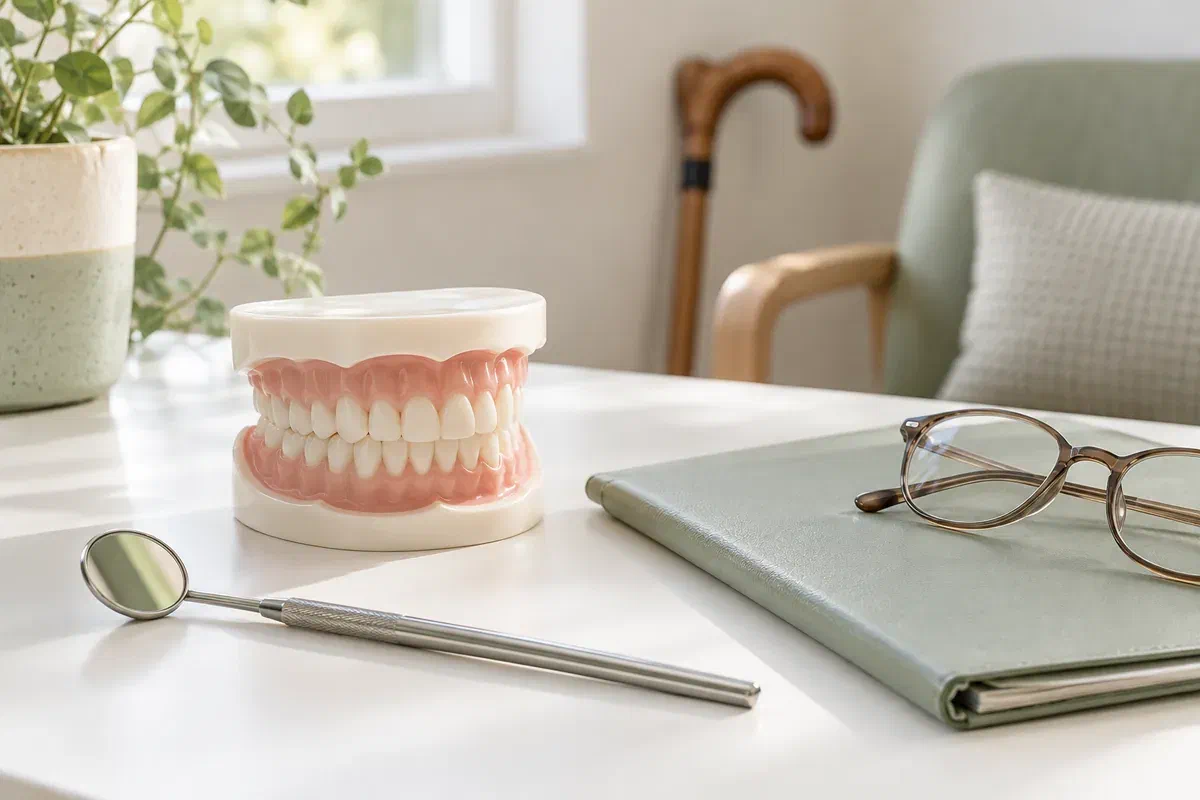
Dental teaching model and appointment folder illustrating coordinated pre-surgical care
What’s changed since last time?

Tell us about any of these

Give us the new surgery date and anything troubling you now. Should the hospital change the date, let us know so the timing of dental care can be adjusted.

A tooth that has started to hurt or swell

A new symptom since your last operation should be checked before this one. Describe when it began and how it feels. After diagnosis, treatment can be discussed, and your surgical team can consider whether it affects their plans.

A new or different form

This surgeon may ask for something different from the last one. Bring the actual request and the office’s contact details. Any response has to rest on a current examination, not on the previous report.

Treatment scheduled close to surgery

If an extraction, crown or gum procedure is booked near the operation, share both dates so healing can be considered. Please don’t rely on the interval you were given last time, since circumstances may differ.

In the run-up to surgery, a new dental problem is news both offices need to hear. Holding it back to keep the date tends to cause more trouble later.

Why not reuse the old report?

Current findings, current guidance

A fresh review can detect anything that has developed since your first operation, set out treatment options and give the new surgical team what they need. It is also a chance to revisit what you were told about antibiotics and routine care. Realistically, an examination informs the plan; it does not decide how the surgery turns out.

Your dental plan this time may differ from the last. What is found now, together with your updated medical history, should shape the recommendations. If something is proposed, ask whether it treats an active problem or relates to timing, paperwork or general upkeep.

Patient information: College of Dental Hygienists of Ontario — joint replacement advisory

An up-to-date picture

Ask which tooth or area of gum is involved in any recommendation and why. Comparing with previous records, where available, helps show what has genuinely changed.

Advice that reflects today’s guidance

Recommendations on antibiotics have evolved. Your dentist and surgeons can confirm what applies now, given both joints and your medical history, rather than repeating old instructions.

A recovery plan informed by experience

Think back to what was hard after the first surgery. Ask how to manage oral care if that happens again, when routine visits should resume, and whom to call about a new problem.

What we’ll go through

Building on your history, not repeating it

We start with any symptoms and the upcoming operation. Coordination with the surgical office takes time, so please book well before the final week.

  1. Review both operations

    We note the new procedure and date, the details of your first joint replacement, medicines, allergies and relevant conditions. Tell us about any joint infection or complication, and bring the new written instructions.

  2. Examine your current oral health

    The dentist checks teeth, gums, restorations and symptoms, comparing with earlier records if they are available. X-rays may be advised to answer a specific question. The aim is current, accurate findings.

  3. Discuss treatment and coordination

    If care is indicated, we explain the diagnosis, options, estimated fees and follow-up. Your surgeons may need to weigh in on timing or medication. Our report describes the assessment and nothing more.

  4. Confirm next steps

    Follow any aftercare instructions and attend reviews that check healing. We confirm what has been sent and whether questions remain. Keep both offices informed of new symptoms or date changes.

Before the next operation

Familiar steps, with a few reminders

Follow the advice your clinicians give for this surgery. If it differs from last time or seems to conflict, ask for clarity before changing medicines or appointments.

Attend dental follow-up

Some treatment needs a review before the result can be noted. Report pain, swelling or bleeding that is increasing, or a site slow to settle. A finished appointment does not always end the healing question.

Keep up the routine that worked

If you found helpful aids after your first surgery, such as a longer brush or a stool at the sink, have them ready again. Continue brushing with fluoride toothpaste and cleaning between teeth as advised.

Don’t reuse old prescriptions

Antibiotics left over from your last recovery are not a substitute for current advice, and blood thinners should not be paused for a dental visit without guidance. Decisions on any change belong to the clinicians responsible.

Depending on today’s exam

The plan may look different this time

Options depend on current disease, the new procedure and your medical history, including the first joint. Ask how the plan balances needed care with healing and the surgery date.

If no active problem is found

Report and continue routine care

The visit may simply produce a current report and a plan for regular care. A healthy mouth now does not exclude all future issues, but it does not warrant extra work to satisfy a form.

If something new needs care

Treat what has developed

Decay, infection or gum disease that has appeared since the first surgery may need treatment and a follow-up. Deal with the source rather than relying on antibiotics, and keep the surgical team informed.

If the first joint had complications

Consult on your history

A previous joint infection or difficult recovery may call for direct discussion between dentist and surgeons. A prosthetic joint alone generally isn’t a reason for routine antibiotic premedication, but individual circumstances can change that. Any exception needs clear instructions.

Patient information: American Dental Association — antibiotics and prosthetic joint infection · ADA — shared decisions about dental care for joint-replacement patients

Puslinch questions

What’s different with a second joint?

Ask about what has changed since your first operation. Advice that applied then, or to someone else, may not apply to you now.

(905) 876-4488
I was told to take antibiotics before dental work after my first hip. Should I keep doing that?
Ask your dentist and surgeon to review it. Guidance has changed over the years, and for many people routine antibiotics are no longer recommended. If your history includes complications, an individual decision may still be appropriate.
Can my previous dental report be reused for this surgery?
Usually not. Surgeons generally want information that reflects your mouth now, and a lot can change in a few years: a filling may have worn, a gum pocket may have deepened, or a tooth may have cracked without much pain. Bring the new request and we will see what it asks; a current examination is normally needed.
Does having one artificial joint change how my dental visits work?
For most routine care, not much. Let us know about the joint and any complications, and mention it again whenever your medical history is updated. If you have questions about medication or timing, the dentist and surgeon can clarify them together.
My first recovery was hard. How can I make oral care easier this time?
Think about what was difficult, such as standing or reaching, and plan around it: a stool by the sink, an easy-grip brush, floss picks, or help from someone at home. We can suggest options at your visit.
Should I tell the dentist about problems I had with the first joint?
Yes. Infection, loosening or other complications are important for both teams to know. They can affect how timing and medication are discussed before and after dental treatment.
Is the timing between dental work and surgery the same as last time?
Not necessarily. It depends on the dental procedure, your health now and the surgeon’s view. Share both dates and let the clinicians agree on timing rather than repeating a previous interval.
Repeat joint surgery, dental care for Puslinch

A new operation calls for a current check.

Phone our Bronte Street practice with the new surgery date, notes on your first joint, any dental concerns and the hospital’s request. We will arrange an assessment and explain the follow-up and information involved.

Call if surgery is close or symptoms need attention soon. Online booking requests do not confirm urgent assessment or completion of surgical paperwork.

Visit Milton Dental Clinic
Unit 1, 342 Bronte St. S, Milton, ON L9T 5B7
Get directions Clinic hours
Monday–Thursday
11am–7pm
Friday–Sunday
By appointment only

Areas we serve

  • Milton
  • Oakville
  • Mississauga
  • Georgetown
  • Halton Hills
  • Acton
  • Campbellville
  • Brampton
  • Burlington
  • Puslinch
  • Rockwood
  • Erin
  • Caledon
  • Etobicoke
  • Old Milton
  • Bronte Meadows
  • Timberlea
  • Dorset Park
  • Dempsey
  • Clarke
  • Beaty
  • Coates
  • Harrison
  • Scott
  • Willmott
  • Ford
  • Bowes
  • Cobden
  • Walker
  • Mountain View
  • Milton Heights
  • Hawthorne Village
  • Valley View
  • Fallingbrook
  • Nassagaweya
  • Trafalgar
  • Esquesing
  • Nelson
  • Brookville
  • Moffat
  • Glen Williams
  • Norval
  • Limehouse
  • Stewarttown
  • Ashgrove
  • Hornby
  • Silver Creek
  • Speyside
  • Scotch Block
  • North Oakville
  • River Oaks
  • Glen Abbey
  • West Oak Trails
  • Palermo
  • Bronte Creek
  • College Park
  • Joshua Creek
  • Uptown Core
  • Preserve
  • Iroquois Ridge
  • Lisgar
  • Meadowvale
  • Meadowvale Village
  • Churchill Meadows
  • Erin Mills
  • Central Erin Mills
  • Streetsville
  • East Credit
  • Creditview
  • Heartland
  • Sheridan
  • Mount Pleasant
  • Credit Valley
  • Huttonville
  • Churchville
  • Springbrook
  • Northwest Brampton
  • Bram West
  • Fletcher's Meadow
  • Fletcher's Creek South
  • Alton Village
  • Orchard
  • Millcroft
  • Headon Forest
  • Tansley
  • Brant Hills
  • Tyandaga
  • Kilbride
  • Lowville
  • Aberfoyle
  • Morriston
  • Arkell
  • Hillsburgh
  • Freelton
  • Carlisle
  • Waterdown
  • Flamborough
  • Mountsberg

How can we help?

Milton Dental Clinic

Have a question about your smile? Choose the option that works best for you.

For urgent dental concerns, please call.
Messages are reviewed during clinic hours.