

Illustrative dental consultation about health history and appointment planning
General & Family Dentistry

Dental Care for Diabetic Patients in Acton

Numb fingertips, blurry close-up vision or plain fatigue can make flossing feel like a chore. For adults in Acton living with diabetes, we look at gum health and work out a cleaning routine that your hands and eyes can manage.

Acton · making home care workable

Good advice only helps if you can actually do it.

Some people with diabetes notice that brushing and flossing have quietly become harder. Fingers may feel less sensitive, small print and fine floss can be tricky to see, and some evenings there is simply no energy left. None of that is a personal failing. It is a practical problem, and practical problems usually have practical answers.

We start by asking how your diabetes is managed and what has changed recently, then look at your gums and teeth. From there, advice can be shaped to the person in the chair. A cleaning, a course of gum treatment and a procedure that affects eating each involve their own preparation, and we explain which applies.

For anyone travelling from Acton, it can help to get the most from each appointment. Tell us at the start what makes daily cleaning hard, as well as any bleeding, dryness or difficult past visits. Before agreeing to treatment, you can ask anything. We aim to leave you with a clear plan, any medical coordination it needs, and a routine that suits your hands.

Get help with a routine you can manage
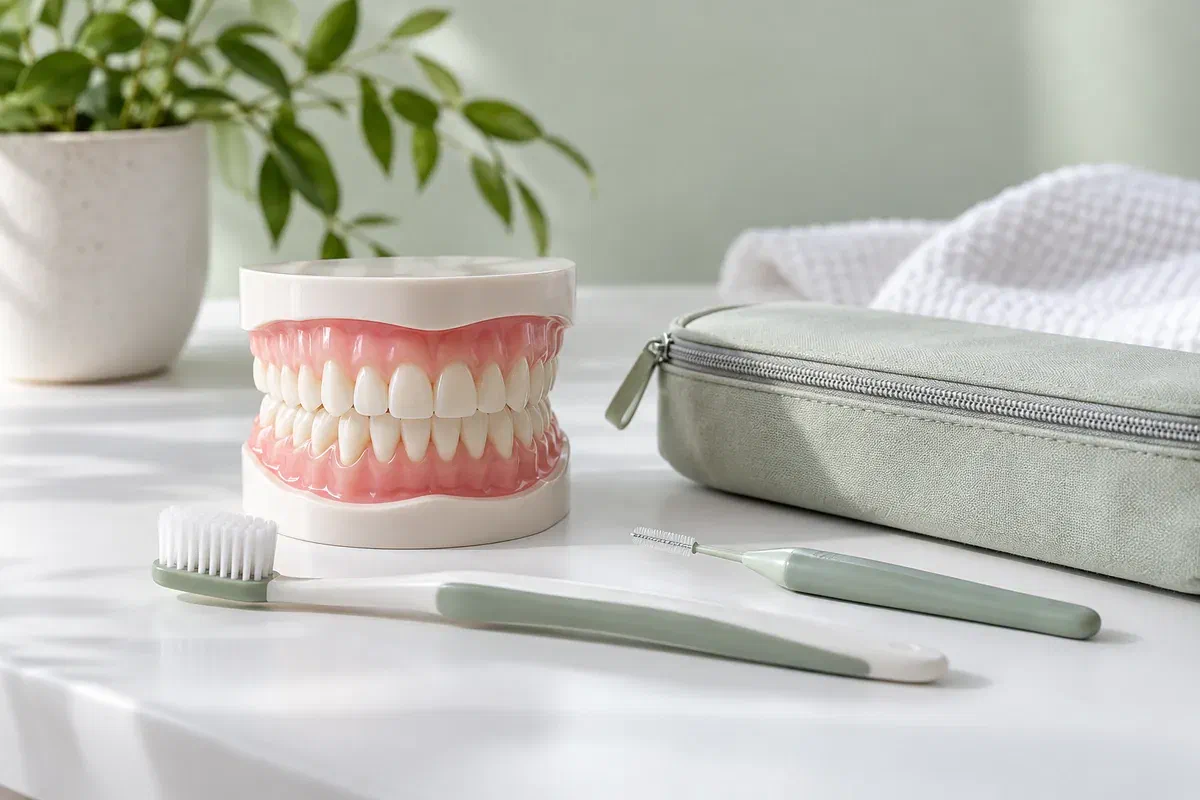
Dental model, toothbrush, interdental brush, and plain travel pouch
Signs to point out

When cleaning is harder, these may follow.

Missing spots for a few weeks can show up as changes in the gums. Describe anything new in how your mouth feels, how it bleeds or how it heals, and whether a health change came first.

Bleeding in the same few places

Diabetes raises the chance of gum disease, and it can progress further when glucose is hard to manage. Bleeding that keeps returning in one area, swelling or a tooth that shifts should be assessed. The dentist will explain whether prevention, gum therapy or a specialist referral fits.

Dryness or soreness

A persistently dry mouth, a sore patch or irritation under a denture deserves a look. Diabetes is one possible factor, but not the only one. Tell us when it happens and what eases it.

New medicines or health changes

Share any new prescriptions, recent lows, or changes in nerve sensation or eyesight your doctor has mentioned. Bring the current medicine list, because older dental notes may not include it.

There is no need to alter meals or diabetes medicines for a routine check. If a procedure involves fasting or will change how you eat afterward, make sure your dental and diabetes clinicians have agreed on a plan first.

Why it is worth the effort

Steady cleaning protects gums that need extra care.

Diabetes can make the gums more vulnerable and slower to heal, and inflamed gums can in turn complicate glucose control. Daily cleaning is one of the most useful ways to break that cycle. Dental care still does not replace diabetes treatment, and it cannot promise a specific result on your readings.

Knowing your situation also makes appointments easier. If a procedure might affect eating, comfort or energy for the rest of the day, we can talk about it ahead of time. Ask what to expect, and whether your doctor should be consulted on any temporary changes.

Patient information: NIDCR — diabetes and oral health

A gum chart you can follow

We record the condition of your gums and supporting tissues so you can see, at later visits, whether problem areas are improving. Ask us to show you which spots matter most.

Tools chosen for comfort

Wide-handled or electric brushes, floss holders, water flossers and interdental brushes with grips can all help when fingers or eyesight are not cooperating. We can suggest one or two to try and show you how to use them.

Coordination when treatment requires it

The dentist can tell you when your doctor or diabetes team should provide information for a procedure, who will ask for it, and what you need to bring along.

What a visit involves

Exam, plan, practice, review

Bring your medicine list, any recent diabetes information and the toothbrush and cleaning aids you currently use. If you have had a low during an appointment, let us know beforehand.

  1. Health conversation

    We ask about your reason for coming, how your diabetes is managed and recent changes, including any issues with hands or eyesight. Glucose information is one piece of the assessment and is never the only thing that shapes a decision.

  2. Mouth examination

    Your gums, teeth, cheeks and tongue are checked, along with any denture, and we note the areas your brush seems to miss. X-rays may be recommended if they would clarify something the exam cannot show.

  3. Plan and hands-on practice

    We explain what is recommended and whether medical advice is needed first. Then we can practise a cleaning method with you. Treatment involving sedation or limits on eating needs the dental and diabetes plans to line up, and only your prescriber should adjust medicines.

  4. Follow-up and adjustments

    We confirm aftercare and schedule a review to see how the routine is working. If eating becomes difficult or symptoms worsen, you will have a way to reach us. Your diabetes plan continues, and your doctor can advise if recovery gets in the way.

Making it easier

Simple tools, short routines

A routine you will stick with beats a perfect one you abandon. Let us know if something we recommend does not suit your abilities, symptoms or medical instructions.

One reliable between-teeth method

Pick a fluoride toothpaste and a single between-teeth tool that you can handle, then use it daily. Good lighting and a mirror can help. If bleeding carries on or cleaning hurts, ask for advice instead of skipping the area or pressing harder.

Comfort for a dry mouth

Dryness can add discomfort and raise dental risk. Ask which products may help, and mention every medicine you take. Do not stop a prescription without advice, and check that fluid suggestions fit your medical guidance.

A review to fine-tune

At follow-up, we can see whether the routine is reaching the right places and adjust it. Book sooner if pain grows after treatment, swelling appears or an appliance causes a sore.

Next steps

Which kind of care fits right now?

Treatment and visit frequency vary from one person with diabetes to the next. Ask what the dentist found, how it shapes the recommendation and what progress would look like.

When the priority is keeping things stable

Prevention with practical support

Care may centre on an easier cleaning routine, cavity prevention and a review interval that suits you. Speak up about difficulties even when the exam looks fine. Prevention should evolve as your mouth or health changes.

When missed areas have led to gum problems

Gum treatment

Targeted gum care and a recheck may be needed, and a gum specialist may be asked to help. Ask what it aims to improve and how your home routine supports it. It helps oral health and does not replace diabetes management.

When a specific problem needs fixing

Repairing a tooth or appliance

A broken tooth or a denture that hurts needs its own diagnosis and options. Your health may affect treatment and healing. Before saying yes, find out which foods you may need to avoid for a while and how many return visits to expect.

Home-care questions

Everyday cleaning, answered

Questions about cleaning, meals, medicines or healing are always welcome. These answers are general, and the people treating you will confirm anything particular to your care.

(905) 876-4488
Is an electric toothbrush better if my hands are stiff?
Many people find one easier, because the brush head does more of the work and the handle is thicker. A manual brush can still clean well. We can help you decide which suits you.
I cannot manage regular floss. What else can I use?
Floss holders, interdental brushes and water flossers are common alternatives. The best one is the one you will use every day. Ask for a demonstration so you can try it with guidance.
Can diabetes affect the feeling in my mouth or hands when cleaning?
Changes in sensation can occur with diabetes. If you notice numbness or tingling, mention it to your doctor and to us, so cleaning advice can take it into account.
Should I brush harder where my gums bleed?
No. Brushing harder can irritate the gums further. Clean gently but thoroughly, and book an assessment if bleeding continues so the dentist can find the cause.
Does gum treatment take the place of my diabetes care?
No. Treating gum disease helps your mouth and may relate to the wider link between inflammation and glucose, but it is not a diabetes treatment. Keep following your prescribed plan.
What should I tell staff if I start to feel low during a visit?
Speak up right away. It helps to tell us beforehand how lows usually show up for you and what your plan is, and to bring the supplies your diabetes team recommends.
Visits from Acton

Bring your brush. We will help with the rest.

Reach our Bronte Street practice to book an assessment, and let us know if daily cleaning has become hard. We will explain what to bring, including your current cleaning aids. Telling us about your routine helps us tailor the advice.

When you book, note your diabetes and any recent changes in its care. Toothache or swelling is best discussed by phone.

Visit Milton Dental Clinic
Unit 1, 342 Bronte St. S, Milton, ON L9T 5B7
Get directions Clinic hours
Monday–Thursday
11am–7pm
Friday–Sunday
By appointment only

Areas we serve

  • Milton
  • Oakville
  • Mississauga
  • Georgetown
  • Halton Hills
  • Acton
  • Campbellville
  • Brampton
  • Burlington
  • Puslinch
  • Rockwood
  • Erin
  • Caledon
  • Etobicoke
  • Old Milton
  • Bronte Meadows
  • Timberlea
  • Dorset Park
  • Dempsey
  • Clarke
  • Beaty
  • Coates
  • Harrison
  • Scott
  • Willmott
  • Ford
  • Bowes
  • Cobden
  • Walker
  • Mountain View
  • Milton Heights
  • Hawthorne Village
  • Valley View
  • Fallingbrook
  • Nassagaweya
  • Trafalgar
  • Esquesing
  • Nelson
  • Brookville
  • Moffat
  • Glen Williams
  • Norval
  • Limehouse
  • Stewarttown
  • Ashgrove
  • Hornby
  • Silver Creek
  • Speyside
  • Scotch Block
  • North Oakville
  • River Oaks
  • Glen Abbey
  • West Oak Trails
  • Palermo
  • Bronte Creek
  • College Park
  • Joshua Creek
  • Uptown Core
  • Preserve
  • Iroquois Ridge
  • Lisgar
  • Meadowvale
  • Meadowvale Village
  • Churchill Meadows
  • Erin Mills
  • Central Erin Mills
  • Streetsville
  • East Credit
  • Creditview
  • Heartland
  • Sheridan
  • Mount Pleasant
  • Credit Valley
  • Huttonville
  • Churchville
  • Springbrook
  • Northwest Brampton
  • Bram West
  • Fletcher's Meadow
  • Fletcher's Creek South
  • Alton Village
  • Orchard
  • Millcroft
  • Headon Forest
  • Tansley
  • Brant Hills
  • Tyandaga
  • Kilbride
  • Lowville
  • Aberfoyle
  • Morriston
  • Arkell
  • Hillsburgh
  • Freelton
  • Carlisle
  • Waterdown
  • Flamborough
  • Mountsberg

How can we help?

Milton Dental Clinic

Have a question about your smile? Choose the option that works best for you.

For urgent dental concerns, please call.
Messages are reviewed during clinic hours.