

Illustrative dental consultation about health history and appointment planning
General & Family Dentistry

Dental Care for Diabetic Patients in Halton Hills

Your doctor or diabetes educator asked when you last saw a dentist, and the honest answer was a while ago. For people across Halton Hills, we offer a gum and tooth check that starts from your health history.

Halton Hills · following up on advice

When your diabetes team says, “See your dentist”

Many diabetes check-ups include a question about the mouth. It is there for good reason: gum health and glucose management are linked, and dental problems can be easier to deal with when they are found early. If it has been a year or more since your last cleaning, that prompt is a good moment to rebook.

Coming back after a gap is nothing to feel awkward about. We start by asking how your diabetes is managed now, what has changed since you were last seen, and what you have noticed in your mouth. A simple exam and cleaning may be all that is needed, though gum treatment or a procedure that affects eating would come with its own planning.

Households in Georgetown, Acton, Glen Williams and the smaller hamlets of Halton Hills often juggle several appointments at once. Tell us what would make yours easier. Ask anything before agreeing to treatment, and mention bleeding, dryness or a past visit you found difficult. You should leave knowing the dental plan, whether your medical team needs to be involved, and what to do at home.

Book the check your doctor suggested
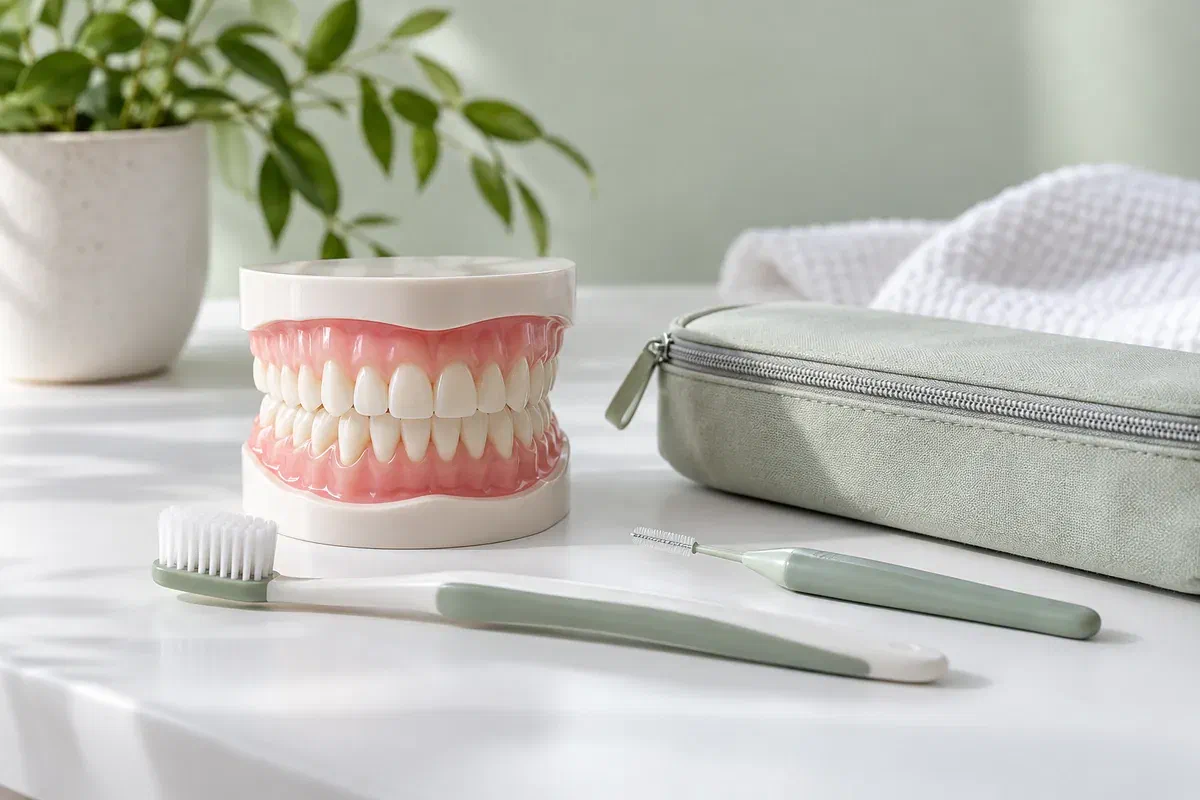
Dental model, toothbrush, interdental brush, and plain travel pouch
What may have crept up

Changes that build slowly between visits

A long gap can hide gradual changes. Describe anything different in comfort, cleaning, chewing or healing, and when it seemed to start relative to your health.

Gums that bleed or have pulled back

Gum disease is more likely with diabetes, and it can become more advanced when glucose has been difficult to manage. Bleeding, recession or a loose tooth should be assessed. The dentist will explain whether the next step is prevention, gum treatment or a specialist's view.

A mouth that is often dry or sore

Ongoing dryness, a sore area that keeps returning or discomfort under a denture is worth checking. These symptoms have several possible causes. Describe the pattern instead of assuming diabetes explains all of it.

Treatment changes since your last visit

If your medicines, insulin routine or advice from your diabetes team have changed since you last saw a dentist, the old record will be out of date. Bring a current list, and mention any recent low glucose episodes.

Coming in for a routine visit does not mean changing meals or diabetes medicines. If a procedure will need fasting, or will affect how you eat for a while, ask for the dental and medical advice to be coordinated beforehand.

Why your doctor asked

Your mouth is part of diabetes care, not separate from it.

Diabetes can affect the gums and slow healing, and gum disease may make glucose more difficult to keep in range. Treating gum problems is worthwhile for your mouth. It does not replace your diabetes treatment, though, and it cannot guarantee a change in your next lab result.

Sharing your history also helps us plan realistic appointments. If treatment could affect eating, comfort or the rest of your day, we discuss it ahead of time. You can find out in advance how the hours after treatment are likely to go, and whether your doctor should help with any temporary adjustments.

Patient information: NIDCR — diabetes and oral health

A fresh starting point

After a gap, an assessment records the current state of your gums and supporting tissues. Future visits can be compared with it. Ask which areas are the priority and what you would like to see improve.

Advice that suits your hands and time

Stiff fingers, changes in vision, tiredness or a crowded week can all make cleaning harder. We can demonstrate a simpler method or suggest one tool that fits your routine instead of many new products.

Information shared both ways

For some treatments, the dentist may need input from your doctor or diabetes team. We will say when, who will request it and what to bring. It is also fine to share dental findings with your diabetes team if you wish.

Getting back on track

Your return visit, in four parts

Bring your list of medicines, any recent diabetes results and an outline of your usual day. Let us know about any past low glucose episode at an appointment so the visit can be planned accordingly.

  1. Catch up on your health

    We review why you are here, how your diabetes is managed, other conditions and what has changed since your last dental visit. Glucose history may be discussed, as one part of a wider assessment rather than a number that decides everything.

  2. A full look after the gap

    We check gums, teeth, soft tissues and any denture or appliance. Updated X-rays may be suggested if they would help answer a question, especially after a long interval. Mention any areas that feel different or hard to clean.

  3. Prioritize the plan

    If more than one thing needs attention, we explain what comes first and why, and whether medical advice is needed. Sedation or treatment that affects eating means the two plans have to fit together. Medication changes should only come from your prescriber.

  4. Set the next review

    We confirm aftercare and book a review that suits your findings. You will know how to reach us if eating becomes hard or symptoms worsen. Your usual diabetes routine carries on throughout; if healing makes it hard to follow, your doctor or educator is the person to ask.

Keeping it going

Habits that make the next check-up easier

Home care should support any treatment and fit your life. If a recommendation clashes with your abilities, symptoms or medical instructions, tell us.

Brush and clean between teeth each day

Fluoride toothpaste and daily cleaning between teeth are the core. We can show you a technique for any hard-to-reach area. Bleeding that does not settle, or cleaning that hurts, is a reason to call rather than to stop.

Ask before you treat dryness yourself

Dryness raises dental risk and can be uncomfortable. Ask which products suit you, and share your full medicine list. Do not stop a prescription on your own, and check that fluid advice fits your medical guidance.

Don't let the gap grow again

Your review checks gum response, healing or prevention. The interval reflects what was found. Contact us before it is due if pain increases, swelling starts or a denture begins to cause a sore.

Where things may go

Clean, treat or repair: the exam decides.

There is no standard dental plan for diabetes. You are entitled to know what the dentist saw, why it leads to a given option, and how improvement will be measured.

When your mouth is in reasonable shape

Cleaning and prevention

Care may focus on a thorough cleaning, cavity prevention and a review interval you can keep. Mention difficulties even if the exam is reassuring. Prevention should change when your mouth or general health does.

When the gap has let gum problems develop

Gum treatment

Gum findings may call for targeted treatment and reassessment, with a periodontist if appropriate. Ask what it aims to improve and how your own cleaning fits in. It supports oral health without taking the place of diabetes care.

When a specific tooth or denture needs work

Restoring teeth or appliances

A broken tooth or ill-fitting denture needs its own diagnosis and options. Health factors may affect treatment and healing. Ask how eating might be limited and what follow-up will involve before deciding.

Returning after a break

Questions people ask when they come back

Bring up meals, medicines, comfort and healing as early as you like. These answers are general, and your own dentist and medical team will confirm the details for any planned treatment.

(905) 876-4488
Why did my doctor ask about my teeth at a diabetes appointment?
Because gum health and diabetes are connected, many diabetes care plans include a reminder about regular dental visits. Your doctor may simply want to make sure your mouth is being checked as part of your overall care.
It has been years since my last cleaning. Will it be uncomfortable?
Comfort varies from person to person. Tell us if you are worried or have sensitive areas, and we can explain each step and pause when you need to. Sometimes a cleaning is spread over more than one visit.
Can the dental office share my results with my diabetes team?
With your permission, relevant information can be shared. Let us know who is involved in your care and what you would like passed on.
Do I need to stop my diabetes medicine before a cleaning?
No. Routine cleanings do not require medicine changes. If a different procedure involves fasting or sedation, the plan for medicines and meals should be agreed with your clinicians ahead of time.
What if the dentist finds gum disease?
The dentist will explain how advanced it is and what treatment options exist, which may include deeper cleaning and a recheck. Gum treatment supports your mouth but does not replace your diabetes care.
I have had lows before. Should I mention that?
Yes. Describe when they usually occur, how you recognize them and what your response plan is. Bring your usual supplies and tell staff right away if you feel unwell during the visit.
Halton Hills, welcome back

It is never too late to rebook.

Reach our Bronte Street practice to arrange an assessment, and mention that your doctor or diabetes educator suggested it. We will tell you what is worth bringing. Describing your routine helps us plan a visit that feels manageable.

Share any recent change in how your diabetes is managed when you request a time. Pain or swelling? Call instead so we can advise you sooner.

Visit Milton Dental Clinic
Unit 1, 342 Bronte St. S, Milton, ON L9T 5B7
Get directions Clinic hours
Monday–Thursday
11am–7pm
Friday–Sunday
By appointment only

Areas we serve

  • Milton
  • Oakville
  • Mississauga
  • Georgetown
  • Halton Hills
  • Acton
  • Campbellville
  • Brampton
  • Burlington
  • Puslinch
  • Rockwood
  • Erin
  • Caledon
  • Etobicoke
  • Old Milton
  • Bronte Meadows
  • Timberlea
  • Dorset Park
  • Dempsey
  • Clarke
  • Beaty
  • Coates
  • Harrison
  • Scott
  • Willmott
  • Ford
  • Bowes
  • Cobden
  • Walker
  • Mountain View
  • Milton Heights
  • Hawthorne Village
  • Valley View
  • Fallingbrook
  • Nassagaweya
  • Trafalgar
  • Esquesing
  • Nelson
  • Brookville
  • Moffat
  • Glen Williams
  • Norval
  • Limehouse
  • Stewarttown
  • Ashgrove
  • Hornby
  • Silver Creek
  • Speyside
  • Scotch Block
  • North Oakville
  • River Oaks
  • Glen Abbey
  • West Oak Trails
  • Palermo
  • Bronte Creek
  • College Park
  • Joshua Creek
  • Uptown Core
  • Preserve
  • Iroquois Ridge
  • Lisgar
  • Meadowvale
  • Meadowvale Village
  • Churchill Meadows
  • Erin Mills
  • Central Erin Mills
  • Streetsville
  • East Credit
  • Creditview
  • Heartland
  • Sheridan
  • Mount Pleasant
  • Credit Valley
  • Huttonville
  • Churchville
  • Springbrook
  • Northwest Brampton
  • Bram West
  • Fletcher's Meadow
  • Fletcher's Creek South
  • Alton Village
  • Orchard
  • Millcroft
  • Headon Forest
  • Tansley
  • Brant Hills
  • Tyandaga
  • Kilbride
  • Lowville
  • Aberfoyle
  • Morriston
  • Arkell
  • Hillsburgh
  • Freelton
  • Carlisle
  • Waterdown
  • Flamborough
  • Mountsberg

How can we help?

Milton Dental Clinic

Have a question about your smile? Choose the option that works best for you.

For urgent dental concerns, please call.
Messages are reviewed during clinic hours.