

Illustrative conversation between an older adult and a dental clinician
General & Family Dentistry

Dental Care for Older Adults in Acton

Wearing dentures does not mean dental visits are behind you. Older adults travelling from Acton can have appliances, gums and any remaining teeth checked, with practical advice on comfort, fit and daily care.

Acton · life with dentures

No natural teeth? Your mouth still needs looking after.

A common belief is that once the last natural tooth is gone, there is no reason to see a dentist. In reality, the gums, the ridges of bone beneath them, the tongue and the cheeks all keep changing, and a denture that fitted beautifully ten years ago may no longer match the mouth it sits in. Regular attention keeps eating, speaking and smiling comfortable.

The same is true for people with a partial denture or just a few natural teeth left. Those teeth often anchor the appliance and carry extra load, so protecting them matters. We base advice on your own mouth, health and medicines, never on age, and on what you hope to manage more easily day to day.

Many people make the trip from Acton with a spouse or friend, and you are welcome to bring yours into the room. Tell us what part you would like them to play. If you have hearing, vision, mobility or communication needs, mention them when you book so we can be ready.

Arrange a denture and mouth check
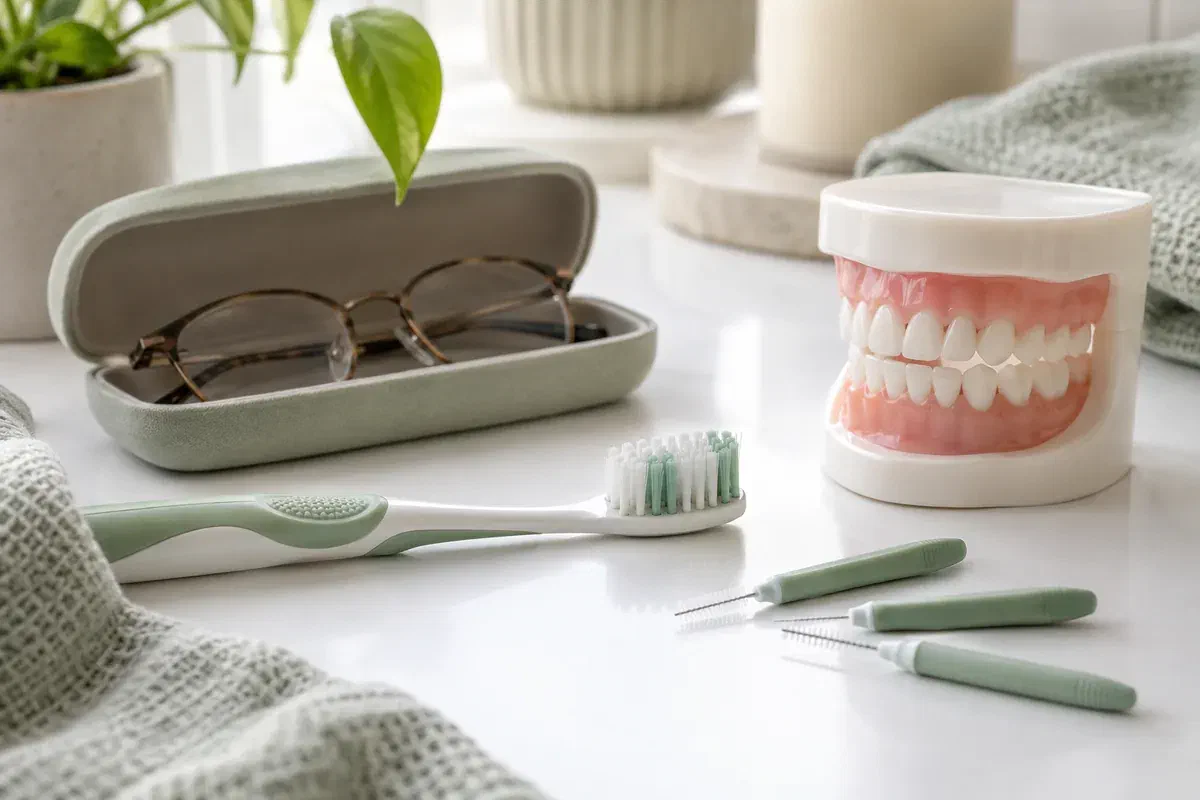
Easy-grip toothbrush, interdental brushes, dental model, and reading glasses
Signs your appliance or gums need attention

Rubbing, rocking or reaching for more adhesive

Problems with dentures tend to creep up. It is worth booking when comfort, fit or cleaning changes, rather than waiting until a sore spot stops you eating.

Remaining teeth and older dental work

Teeth that hold a partial denture in place, or that sit next to it, can develop decay or gum problems, and older fillings and crowns may wear. A rough edge or food packing near a clasp is worth describing so the dentist can assess what is happening.

Dryness or sore tissue under the denture

A dry mouth makes dentures feel less secure and more abrasive. It often relates to medicines or health conditions and is not just part of ageing. A sore that keeps returning, burning, or tissue that looks different under the appliance should be examined.

Fit and cleaning getting harder

Needing more adhesive, a denture that drops when you talk, or cleaning that has become difficult with stiff hands all deserve a mention. Explain when the trouble occurs so the appliance and the gums supporting it can be assessed together.

Removing a denture does not remove the need to watch the tissues. A sore that will not heal, a new lump, unexplained bleeding, or any change in how you chew or swallow is worth mentioning straight away, so it can be looked into properly.

What regular reviews offer

Comfort today and a clear idea of what comes next

Planning for a denture wearer starts with how you want to live: eating a broader range of foods, speaking without worrying about movement, or simply getting through the day without soreness. The examination shows how well the current appliance and the tissues beneath it support that. You can ask how each suggestion moves you toward your goal and what upkeep it requires.

Practical questions deserve straight answers. How many visits would an adjustment or a new denture take? What will the first weeks feel like, what does it cost, and will you need help? Changes can sometimes be staged. The plan should help you compare options, not assume that every denture wearer wants the same thing.

An honest view of your current denture

The dentist can explain whether the appliance still fits well, shows wear, or has damage. That makes it easier to see what can be adjusted and what may need a fresh approach. Age alone is not a reason to replace a denture that is working.

Cleaning methods you can manage

The team can suggest brushes for the appliance, ways to clean gums and any remaining teeth, and safe handling tips if your grip is weak. A helper at home can learn the routine too, in the way you prefer.

A plan that adapts as your mouth does

Gums and bone continue to change, and so might your health and support. Let us know when an agreed plan stops working. Reviewing choices is part of ongoing care, and you can ask for anything to be explained again.

At your review

Appliance, tissues and you, all checked together

Wear or bring every denture you use, including spares and older ones, along with your medication list and any health updates. Note the moments when the appliance feels least secure.

  1. Hear about daily life with the denture

    We ask what prompted the visit, review medical history and medicines, and find out how eating, speaking and cleaning are going. Mention new health issues, even unrelated ones. Let us know whether hearing, sight, seating or communication support would help.

  2. Examine the mouth with the denture out

    The dentist looks at the gums, ridges, tongue, cheeks and any natural teeth, then checks how the appliance sits and how your bite meets. Imaging may be suggested for remaining teeth when it would answer a particular question.

  3. Discuss adjusting, repairing or remaking

    For each reasonable choice, you can ask what it involves, how many appointments it needs, the likely benefits and limits, and the costs. If a specialist or your doctor should be involved, the reason will be explained first.

  4. Agree on next steps and wear advice

    Confirm the plan, how to clean and rest the appliance, and when to return. Written instructions are available. A companion is welcome to take care of the practical side if you like; the decisions stay yours to share in.

Daily denture care

Look after the appliance and the mouth beneath it

Home care should suit your denture type and any natural teeth you still have. Watching the routine demonstrated, then trying it yourself, is often clearer than following the instructions on a box.

Clean any natural teeth thoroughly

Teeth that support a partial denture need fluoride toothpaste and careful cleaning, especially around clasps. If your grip is limited, a larger handle or a different aid may help. Show us how you clean so we can see what is difficult.

Give the denture its own routine

Clean it according to its material, ideally over a basin of water or a folded towel in case it slips. Brush your gums and tongue gently too. Check with us about daily wearing time and overnight rest, and report rubbing rather than relying on adhesive.

Tell us about dryness

A drier mouth can make a denture harder to wear. Note when it started and whether a new medicine or health change came first. Ways to ease it can be discussed. Do not stop a prescribed medicine yourself, and mention any fluid limits.

Patient information: NIDCR — understanding persistent dry mouth · NIDCR — oral health resources for older adults

Options for denture wearers

Adjust, protect, or plan something new

Some plans protect remaining teeth, some fix a specific problem and some improve or replace an appliance. Ask how the benefit of each compares with the appointments and upkeep it involves.

When the denture and teeth are comfortable

Protect what remains

The focus is keeping natural teeth and tissues healthy with cleaning, prevention and regular review, while the appliance is checked for wear. You will know what changes would prompt action. Comfort is a good sign but does not replace an examination.

When one tooth or spot causes trouble

Fix a particular problem

A decayed supporting tooth, a sore area or a cracked appliance may need specific attention. Ask about conservative options, how long they tend to last and what follow-up is needed. Advice follows the findings and your health, not your age.

If the appliance no longer suits daily life

Rethink the appliance

Options might include adjusting or relining the current denture, making a new one, or discussing other ways to replace teeth. Which is suitable comes down to the examination, your general health, what you prefer and the care each one requires. Explain what you want to eat or say more easily.

Denture questions

What denture wearers often want to know

Ask about alternatives, the reason for any recommendation and how visits are arranged. Bringing notes or a companion can help you remember the details.

(905) 876-4488
Should I take my dentures out at night?
Many people are advised to leave their dentures out for a period each day, often overnight, so the gums can rest. The right routine depends on your appliance and your mouth, so ask the dentist what suits you.
Is it normal to need more adhesive over time?
It is common, but it usually signals that the fit has changed as the gums and bone beneath have shifted, or that the appliance has worn. It is worth having the fit checked rather than continuing to add more.
What causes sore spots under a denture?
Pressure from an uneven fit, a rough area on the appliance, food trapped underneath or dryness can all contribute. A sore that does not settle should be examined. Bring the denture so the cause can be found.
How do I know when a denture should be relined or replaced?
Signs include looseness, rubbing, difficulty chewing or visible wear and damage. The dentist can assess the fit and condition and explain whether an adjustment, reline or new appliance would be sensible for you.
Can I eat my usual foods with a full denture?
Many people adapt well, though some foods may take practice or remain challenging. Tell the team which foods are difficult. Fit, bite and technique can all play a part, and adjustments may help in some cases.
Can my denture review and check-up be done in one trip from Acton?
Often the appliance and your mouth are checked at the same visit. Tell us when you book what you would like covered, and ask whether any repairs or adjustments could be arranged to reduce return trips.
Older adult dental care for Acton

A comfortable denture starts with a proper check

Call our Bronte Street practice to describe how your denture and mouth have been feeling. Whether you have a full denture, a partial with a few natural teeth, or a new sore to explain, we will examine the appliance and tissues and talk through sensible choices.

Let us know about mobility, hearing, vision or seating needs when you call, and bring all the dentures you use.

Visit Milton Dental Clinic
Unit 1, 342 Bronte St. S, Milton, ON L9T 5B7
Get directions Clinic hours
Monday–Thursday
11am–7pm
Friday–Sunday
By appointment only

Areas we serve

  • Milton
  • Oakville
  • Mississauga
  • Georgetown
  • Halton Hills
  • Acton
  • Campbellville
  • Brampton
  • Burlington
  • Puslinch
  • Rockwood
  • Erin
  • Caledon
  • Etobicoke
  • Old Milton
  • Bronte Meadows
  • Timberlea
  • Dorset Park
  • Dempsey
  • Clarke
  • Beaty
  • Coates
  • Harrison
  • Scott
  • Willmott
  • Ford
  • Bowes
  • Cobden
  • Walker
  • Mountain View
  • Milton Heights
  • Hawthorne Village
  • Valley View
  • Fallingbrook
  • Nassagaweya
  • Trafalgar
  • Esquesing
  • Nelson
  • Brookville
  • Moffat
  • Glen Williams
  • Norval
  • Limehouse
  • Stewarttown
  • Ashgrove
  • Hornby
  • Silver Creek
  • Speyside
  • Scotch Block
  • North Oakville
  • River Oaks
  • Glen Abbey
  • West Oak Trails
  • Palermo
  • Bronte Creek
  • College Park
  • Joshua Creek
  • Uptown Core
  • Preserve
  • Iroquois Ridge
  • Lisgar
  • Meadowvale
  • Meadowvale Village
  • Churchill Meadows
  • Erin Mills
  • Central Erin Mills
  • Streetsville
  • East Credit
  • Creditview
  • Heartland
  • Sheridan
  • Mount Pleasant
  • Credit Valley
  • Huttonville
  • Churchville
  • Springbrook
  • Northwest Brampton
  • Bram West
  • Fletcher's Meadow
  • Fletcher's Creek South
  • Alton Village
  • Orchard
  • Millcroft
  • Headon Forest
  • Tansley
  • Brant Hills
  • Tyandaga
  • Kilbride
  • Lowville
  • Aberfoyle
  • Morriston
  • Arkell
  • Hillsburgh
  • Freelton
  • Carlisle
  • Waterdown
  • Flamborough
  • Mountsberg

How can we help?

Milton Dental Clinic

Have a question about your smile? Choose the option that works best for you.

For urgent dental concerns, please call.
Messages are reviewed during clinic hours.