

Illustrative conversation between an older adult and a dental clinician
General & Family Dentistry

Dental Care for Older Adults in Brampton

Stiff fingers, a slippery floss pick, a denture that is hard to grip at the sink. For older adults travelling from Brampton, we adapt home care to your hands and check teeth, gums and appliances with care.

Brampton · care that fits your hands

When the floss keeps slipping

For years, brushing and flossing took two minutes and no thought. Then knuckles stiffen, eyesight blurs at close range, and the same routine becomes a struggle you quietly shorten. Missed areas build up plaque, gums get tender, and a small problem can grow. None of that is a personal failing. It is a signal that the tools and methods need to change.

A dental visit in later life is about more than technique, though. We examine your teeth, gums and any denture, review your health and medicines, and listen to what you want from your mouth. Age does not dictate the plan. Your findings and your priorities do, and you will hear the reasoning clearly.

Coming down from Brampton with a partner or friend is welcome. Decide how you would like them to help, perhaps by learning a technique with you. If you need a particular chair position, more time, or help with hearing or vision, let us know when you book.

Ask about easier ways to clean
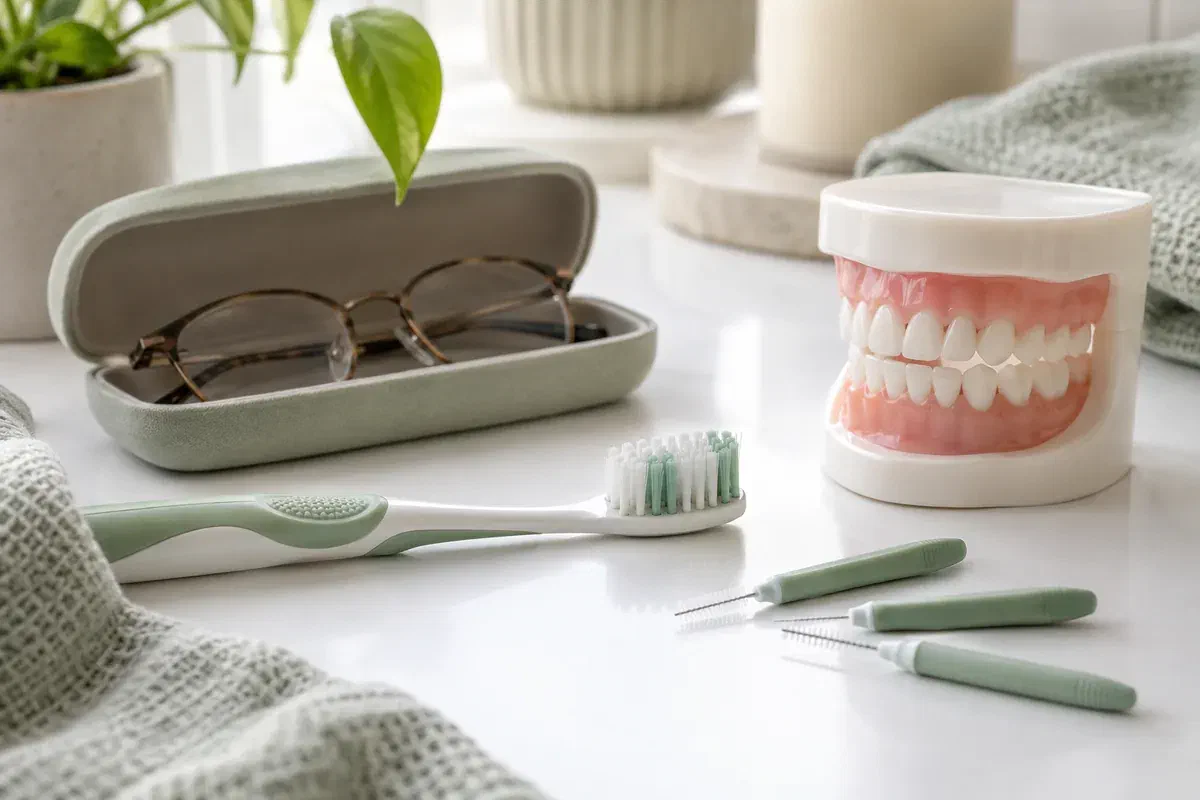
Easy-grip toothbrush, interdental brushes, dental model, and reading glasses
Everyday struggles worth raising

Home care that no longer feels manageable

You do not have to wait for pain. If brushing takes longer, certain areas are skipped, or a denture is hard to handle, those changes are reason enough to ask for advice.

Trouble around older fillings or crowns

Restorations that are harder to clean around can collect plaque at their edges. A rough edge, food packing in one spot or a new feeling when you bite are worth describing. The dentist examines the area before recommending monitoring, repair or replacement.

Dry, burning or tender tissue

A persistently dry mouth is not just part of ageing and often relates to medicines or medical conditions. It can make cleaning less comfortable too. A burning sensation, sore spot or unusual-looking patch should be examined rather than treated repeatedly at home.

Dentures that are hard to handle

Removing, cleaning and reinserting an appliance takes grip and coordination. If that has become difficult, say so. If the denture also rubs or moves, describe when, so it can be checked alongside the gums it rests on.

Not every change can be put down to age. Let us know about a sore that persists, a new lump, unexplained bleeding, or a new difficulty chewing or swallowing, so an appropriate assessment can be organised.

A plan your hands can follow

Realistic goals, achievable routines

The best plan is one you can actually carry out. It starts with what you want, such as keeping a particular tooth, wearing a denture without soreness, or getting through your routine without frustration, and with what the examination shows. Each suggestion should come with a clear reason and an idea of the upkeep involved.

Practical details deserve equal attention. Ask about the number of visits, any recovery time, costs and whether you would need help at home afterward. Treatment can sometimes be divided into stages. You should have enough information to compare choices, without the assumption that everyone your age wants identical results.

A plain-language review of your dental work

The dentist can point out which restorations are holding up well and which need closer watching. That helps you sort urgent needs from stable ones. A long-standing filling is not removed merely because of how many years it has been there.

Techniques matched to your grip

The team can show you wider handles, powered brushes, interdental aids and angles for awkward spots, then watch you try them. If someone helps you, they can practise too, so their support follows your preferences.

Adjustments as abilities change

Joint pain can flare and settle, and support at home may shift. Tell us when a routine or plan no longer works for you. Revisiting the approach is part of ongoing care, and explanations can be repeated whenever needed.

Your appointment

We talk, we look, we try things together

Bring a current medication list, recent health updates, the toothbrush and cleaning aids you use now, and any dentures. A short note of your main concerns helps keep the visit focused.

  1. Discuss health and daily routines

    We ask what brought you in, review medical history and medicines, and learn how you eat and clean your mouth. Describe which movements are hard. Let us know whether hearing, vision, positioning or communication support would make the visit easier.

  2. Examine teeth, gums and appliances

    The dentist checks gums, natural teeth, restorations and the tissues beneath any denture. Areas that are hard to reach at home get special attention. Imaging may be suggested when it would answer a specific question.

  3. Compare treatment and tools

    You will hear the reasonable options with their benefits, limits, costs and visit numbers. The team may also demonstrate cleaning aids so you can judge what feels manageable. If your physician or a specialist should be involved, the reason will be explained.

  4. Agree on a plan and a routine

    Confirm the treatment or monitoring plan, the home-care method you will use and when to come back. Written instructions are available. A helper may be included in practical arrangements with your consent, while decisions stay with you.

At the bathroom sink

Easier tools, same purpose

Home care should suit your teeth, dental work and appliances as well as your hands. Trying a couple of tools in the chair, with someone watching your technique, usually works better than buying several unfamiliar gadgets and hoping one suits.

Grip-friendly brushing

Brush natural teeth with fluoride toothpaste and choose an interdental cleaner you can hold securely. A powered brush or a thicker handle may reduce strain. Bring your current tools so the advice responds to what is actually difficult.

Safer denture handling

Clean the appliance as its material requires, over a folded towel or a basin of water to cushion drops. Clean your gums as well. Ask about wearing and resting times, and report rubbing or looseness instead of using more adhesive.

Dryness and medicines

Note when dryness started and whether it followed a new prescription or health change. Relief and protective steps can be discussed. Do not stop prescribed medicine on your own, and mention any fluid limits from your doctor.

Patient information: NIDCR — understanding persistent dry mouth · NIDCR — oral health resources for older adults

Choosing what comes next

Match the care to the result you want

Some plans aim to keep what works, others fix a specific problem, and some improve an appliance. Ask how the expected benefit compares with the visits and upkeep each choice brings.

When comfort and function are good

Keeping things stable

Here the plan supports natural teeth and current restorations with cleaning that suits your hands, preventive measures and regular reviews. Anything being watched has a clear trigger for treatment. Comfort is welcome, yet it is no substitute for an examination.

When a specific issue stands out

Treating one tooth or area

Decay, a gum problem or a sore restoration may need direct attention. Ask about conservative options, how long they tend to last and the follow-up involved. The recommendation should rest on findings and health, not on age.

When an appliance is hard to live with

Rethinking a denture

Options may include adjusting your current denture or considering other ways to replace teeth, including designs that are easier to handle. Fit with your mouth, health, preferences and upkeep all matter. Tell us what daily tasks you want to make simpler.

Practical questions

What can make home care easier?

You can ask about alternatives, the reasons for recommendations and how appointments are arranged. Bringing a list or a helper can make the conversation feel easier.

(905) 876-4488
Is an electric toothbrush easier to use with arthritis?
Many people find a powered brush helpful because it needs less wrist movement, and its handle is often thicker. It is not right for everyone. Bring your current brush and the team can help you compare options and practise the technique.
What can I use instead of string floss?
Interdental brushes, floss holders and other aids may be easier to manage, depending on the spaces between your teeth and your dental work. The team can recommend suitable sizes and show you how to use them safely.
Can my toothbrush handle be made easier to hold?
Wider handles are available, and some people add a grip to their existing brush. The aim is a hold that is secure and comfortable. Show the team how you hold it now so suggestions fit your hand.
I cannot see well enough to check my dentures are clean. What helps?
Good lighting, a magnifying mirror and a consistent routine can all help. Tell the team about your vision so they can suggest a method that relies less on sight. A helper can also be shown what to look for, if you would like.
What if someone else needs to brush my teeth for me?
That is quite common, and a demonstration can help your helper do it comfortably and thoroughly. You can say how you prefer things done. Let the team know who helps you and what support you want.
Are later appointments possible for people coming from Brampton?
Our practice is open Monday to Thursday until 7 pm, and Friday to Sunday by appointment. Tell us which times suit you and anyone bringing you, and the team will look for a practical slot.
Older adult dental care for Brampton

Simpler routines start with one visit

A call to our Bronte Street practice is the first step. Describe what has become hard, bring your brush and cleaning aids on the day, and we will look at your teeth, gums and any denture before talking through practical changes that suit your hands.

Let us know about hand, mobility, hearing, vision or seating needs when you call so we can prepare.

Visit Milton Dental Clinic
Unit 1, 342 Bronte St. S, Milton, ON L9T 5B7
Get directions Clinic hours
Monday–Thursday
11am–7pm
Friday–Sunday
By appointment only

Areas we serve

  • Milton
  • Oakville
  • Mississauga
  • Georgetown
  • Halton Hills
  • Acton
  • Campbellville
  • Brampton
  • Burlington
  • Puslinch
  • Rockwood
  • Erin
  • Caledon
  • Etobicoke
  • Old Milton
  • Bronte Meadows
  • Timberlea
  • Dorset Park
  • Dempsey
  • Clarke
  • Beaty
  • Coates
  • Harrison
  • Scott
  • Willmott
  • Ford
  • Bowes
  • Cobden
  • Walker
  • Mountain View
  • Milton Heights
  • Hawthorne Village
  • Valley View
  • Fallingbrook
  • Nassagaweya
  • Trafalgar
  • Esquesing
  • Nelson
  • Brookville
  • Moffat
  • Glen Williams
  • Norval
  • Limehouse
  • Stewarttown
  • Ashgrove
  • Hornby
  • Silver Creek
  • Speyside
  • Scotch Block
  • North Oakville
  • River Oaks
  • Glen Abbey
  • West Oak Trails
  • Palermo
  • Bronte Creek
  • College Park
  • Joshua Creek
  • Uptown Core
  • Preserve
  • Iroquois Ridge
  • Lisgar
  • Meadowvale
  • Meadowvale Village
  • Churchill Meadows
  • Erin Mills
  • Central Erin Mills
  • Streetsville
  • East Credit
  • Creditview
  • Heartland
  • Sheridan
  • Mount Pleasant
  • Credit Valley
  • Huttonville
  • Churchville
  • Springbrook
  • Northwest Brampton
  • Bram West
  • Fletcher's Meadow
  • Fletcher's Creek South
  • Alton Village
  • Orchard
  • Millcroft
  • Headon Forest
  • Tansley
  • Brant Hills
  • Tyandaga
  • Kilbride
  • Lowville
  • Aberfoyle
  • Morriston
  • Arkell
  • Hillsburgh
  • Freelton
  • Carlisle
  • Waterdown
  • Flamborough
  • Mountsberg

How can we help?

Milton Dental Clinic

Have a question about your smile? Choose the option that works best for you.

For urgent dental concerns, please call.
Messages are reviewed during clinic hours.